
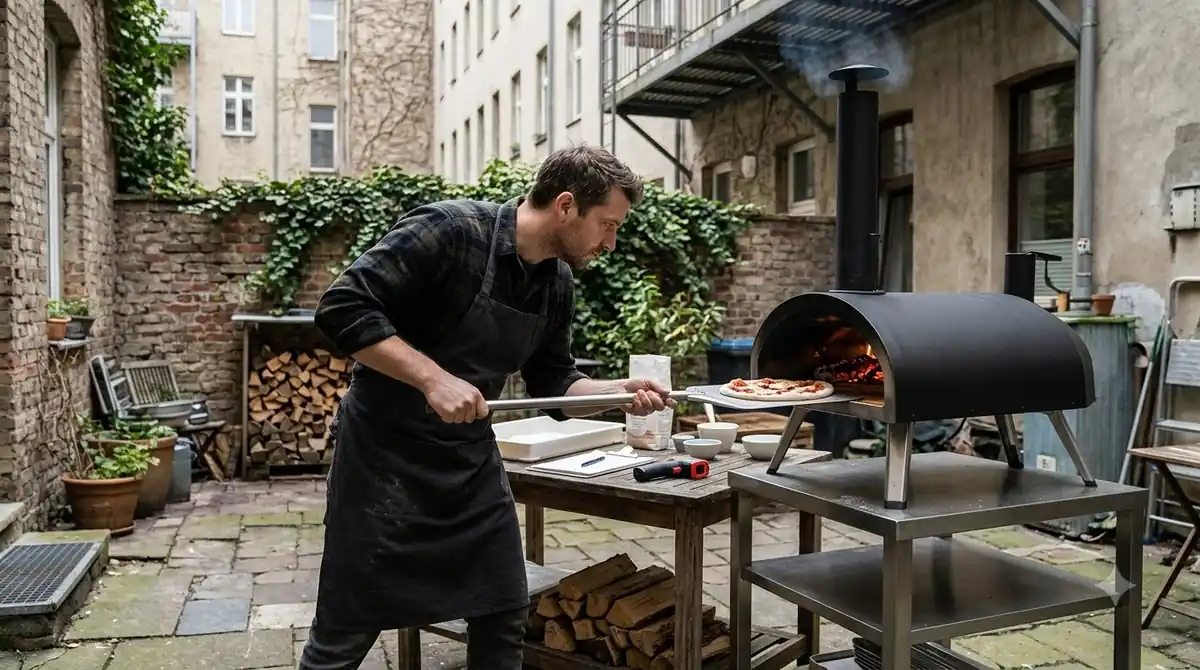

The charcoal pizza oven temperature that suits most pizzas sits between 400°C and 500°C (750°F to 930°F). Ovens differ, so treat that range as a starting point and check what your own model is designed to reach. The right number also depends on the style you cook and the oven you own.
Charcoal Pizza Oven Temperature: What to Aim For
Most pizzas cook at temperatures between 400°C and 500°C, so that is the working range to aim for with a charcoal oven. A charcoal supplier’s buying guide gives this range, but it does not say whether the figure refers to the air, the stone or the floor.
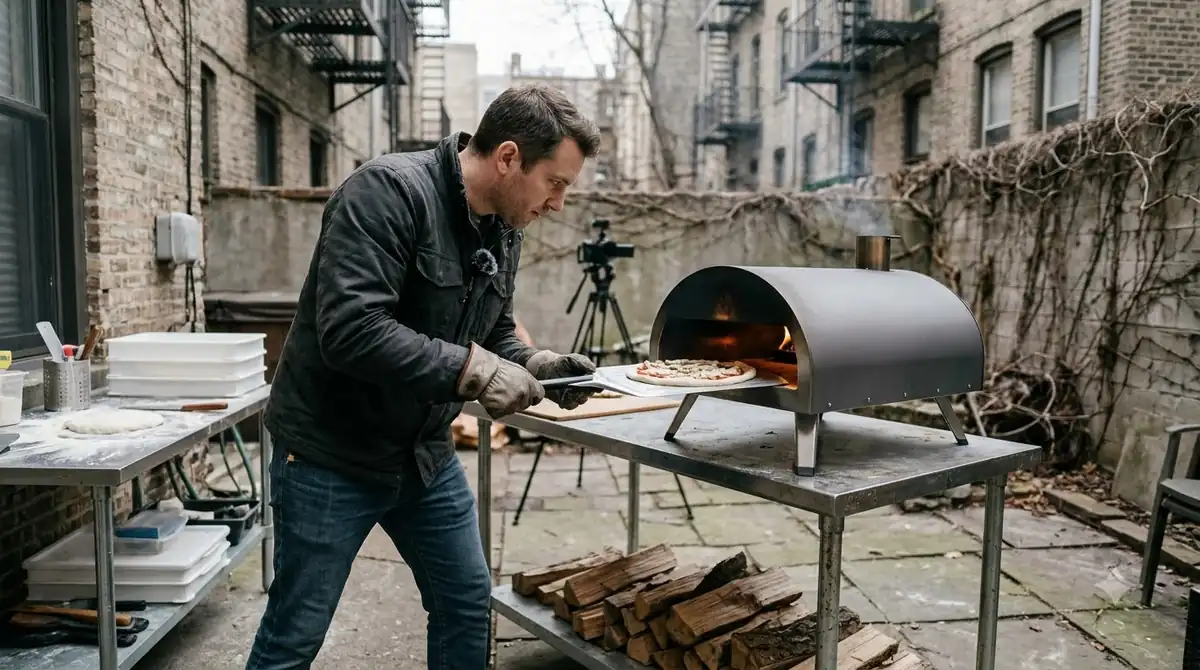
That gap matters. A dome reading and a stone reading can differ by a wide margin, and the base of the pizza is cooked by the stone. Use the range as a guide, then confirm the heat where the pizza actually sits before you slide it in.
A maximum and a target are different numbers. The Ooni Pro Essentials Guide states that the oven is designed to run at up to 500°C (932°F). The same guide lists charcoal control up to 450°C (840°F), so treat 500°C as the ceiling of the charcoal pizza oven temperature range, not the goal for every bake. For other fuels, see the pizza oven temperature guide.
A lower setting suits a longer, slower bake, while a hotter oven cooks a thin base quickly, much like a wood fire does in a wood-fired pizza oven. Choose the heat for the pizza you are making rather than one number for every cook, and see how hot a pizza oven gets for the wider range.
The practical goal is a stone that stays in the working range between pizzas, not a single peak reading that the oven reaches for a moment and then loses. A steady charcoal pizza oven temperature across several bakes matters more than a dramatic first reading.
Why Charcoal Heat Rises and Falls
Charcoal releases heat in bursts, so the temperature moves as the fuel burns down and as you add more. A steady charcoal pizza oven temperature depends on keeping the fire fed in small amounts rather than in large loads.
The Ooni guide advises adding fuel little and often to keep the oven at a consistent temperature. When a fire burns down, the charcoal pizza oven temperature drops, and a big new load can push the oven well past your target within minutes.
Fuel quality changes how the fire behaves. The charcoal supplier’s guide says dense hardwood charcoal burns hotter and lasts longer than lower-grade products. The same source notes that cheap charcoal burns unevenly and leaves more ash.
- Dense hardwood lumpwood usually burns hotter and for longer.
- Low-grade charcoal can burn unevenly and build up ash.
- Steady heat needs clear airflow through the grate.
Choosing Charcoal That Holds a Steady Heat
Regular high-quality charcoal is the fuel the Ooni Pro guide recommends, and it advises against instant-lighting charcoal and briquettes. The table below sums up the guidance for each type.
| Fuel | Ooni advice | Why it matters |
|---|---|---|
| Regular high-quality charcoal | Recommended | Steady, controllable heat |
| Instant-lighting charcoal | Avoid | Not recommended for this oven |
| Charcoal briquettes | Avoid | May block airflow through the grate in a long cook |
Briquettes are only worth using if your oven’s manufacturer specifically recommends them, and gas fans can compare propane pizza oven heat. Check the manual before you buy a bag, because the wrong fuel can make the charcoal pizza oven temperature harder to hold.
How to Light and Build a Charcoal Fire
Light a small base of charcoal first, then add more gradually until the fire is established and the oven begins to climb toward its working heat.
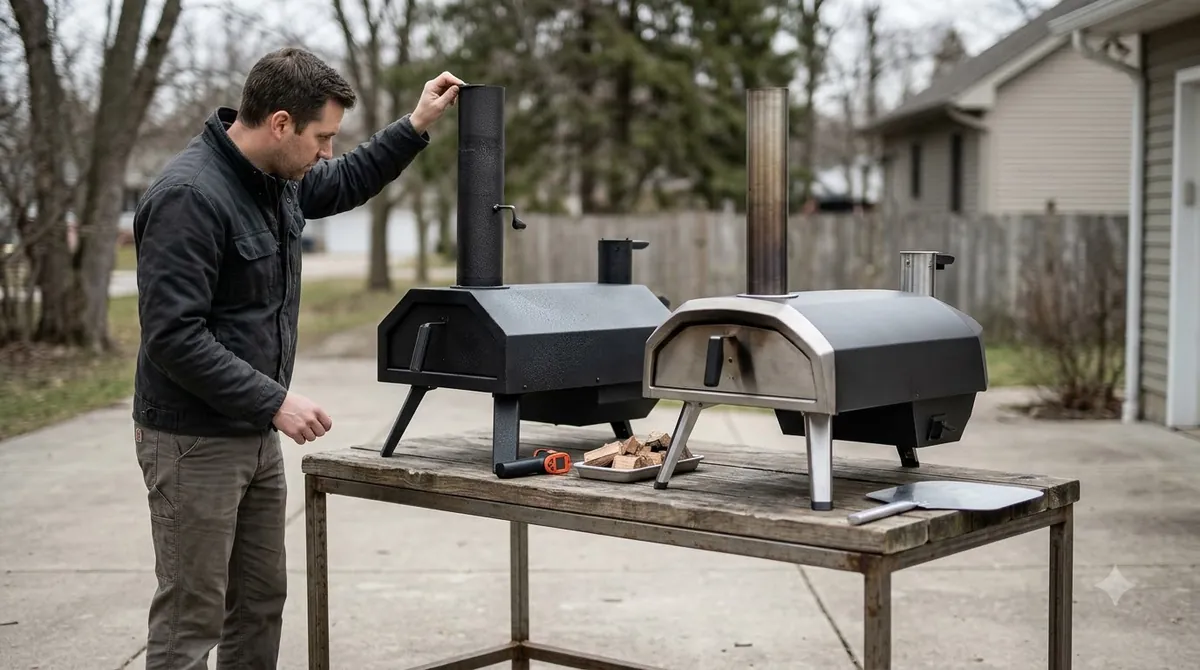
- Place a couple of handfuls of charcoal in the burner.
- Light it with a firestarter or a blow torch, following your manual.
- Once the charcoal is lit, add more gradually to build a good fire.
- Keep the hatch and the door with the thermometer closed for the best performance.
Let the fire settle before you judge the charcoal pizza oven temperature. The oven keeps climbing while the charcoal catches, so wait for a steady number before you cook the first pizza.
How to Read the Heat Accurately
A built-in thermometer gives a rough reading, so confirm the charcoal pizza oven temperature at the cooking surface before you put a pizza in. The thermometer on the door mostly shows the air inside the dome.
The stone is what cooks the base, so it is the reading that matters most for a crisp crust. An infrared thermometer lets you check the stone surface, and a few readings across the stone show whether one spot runs hotter than the rest.
Take each reading with the door closed for a few seconds. Opening the door lets heat out, so a reading taken in that moment can show a false low and tempt you to add fuel you do not need.
- Read the built-in thermometer for the trend, not for precision.
- Use an infrared thermometer on the stone for the cooking reading.
- Check again after each load of fuel, because the number changes quickly.
Managing Temperature During a Cook
When the oven runs hot, remove the fuel hatch and stop adding fuel to let heat out. Ooni’s guide lists this as the first response to an overheating oven.
The same guide suggests resting a cast iron pan on the stones to absorb extra heat. Once the temperature is back in range, add fuel in small amounts and keep the door and hatch closed between loads.
Between pizzas, add only a small amount of charcoal and wait for it to catch before you judge the change. This rhythm keeps the charcoal pizza oven temperature steady across a full session rather than spiking after each load.
Keep water away from the glass door while it is hot. Ooni warns that moisture can crack or break the glass, so wipe any spills only after the door has cooled.
Common Mistakes That Throw Off the Temperature
The most common errors are a large fuel load, poor-quality charcoal and blocked airflow. Each one shows up as a swing in the reading.
- Adding a big load of fuel at once, which can overheat the oven.
- Using cheap charcoal that burns too fast or unevenly.
- Cooking before the oven has settled into steady heat.
- Letting ash build up and block the airflow.
Fix the fuel and the airflow first. Once those are right, the charcoal pizza oven temperature becomes far easier to hold between pizzas.
Matching the Heat to the Pizza You Cook
Pick a setting within the range that fits your pizza, since thin bases and thicker doughs need different heat. A hotter oven cooks a thin base quickly, which suits a fast bake.
A thicker dough needs a little longer, so a slightly lower charcoal pizza oven temperature can help the middle cook through without scorching the base. Test with one pizza before you cook for guests, and note how the oven responded.
When you cook several pizzas in a row, expect the charcoal pizza oven temperature to drift as the stone absorbs heat. Check the stone before each pizza, and adjust the fuel by a small amount rather than a large one.
Frequently Asked Questions
Is 500°C too hot for a charcoal pizza oven?
Not as a charcoal pizza oven temperature target. The Ooni Pro Essentials Guide gives 500°C (932°F) as the design maximum for the oven, so it is the ceiling. For most pizzas, aim within the 400°C to 500°C range and watch the stone closely, especially on your first few cooks with the oven.
How long does a charcoal pizza oven take to heat up?
The charcoal section of the Ooni Pro Essentials Guide gives no fixed warm-up time. It describes building the fire gradually and adding fuel little and often. Warm-up depends on how much charcoal you use, the airflow and the weather, so plan for a longer heat-up on your first cook.
Can I use charcoal briquettes in a pizza oven?
Usually not without checking first. Ooni advises against briquettes because they may block airflow through the grate during a long cooking session. Use them only if the oven’s manufacturer recommends them.
Why does my oven temperature keep climbing?
Charcoal keeps burning and releasing heat after you stop adding fuel, so the charcoal pizza oven temperature can keep rising for a while. Add fuel in small amounts and stop well before your target to avoid overshooting it.
Do I need an infrared thermometer?
It is not essential, but it helps. An infrared thermometer reads the stone surface, which is what cooks the base, while the built-in gauge mostly reads the air. A few readings across the stone give a clearer picture of the charcoal pizza oven temperature.
For a first cook, build the fire gradually, keep the oven below its 500°C ceiling, and aim for a charcoal pizza oven temperature of 400°C to 500°C for most pizzas. Read the stone rather than the dome, and adjust the fuel in small amounts. Once you know how your oven responds, holding the heat becomes much easier.