
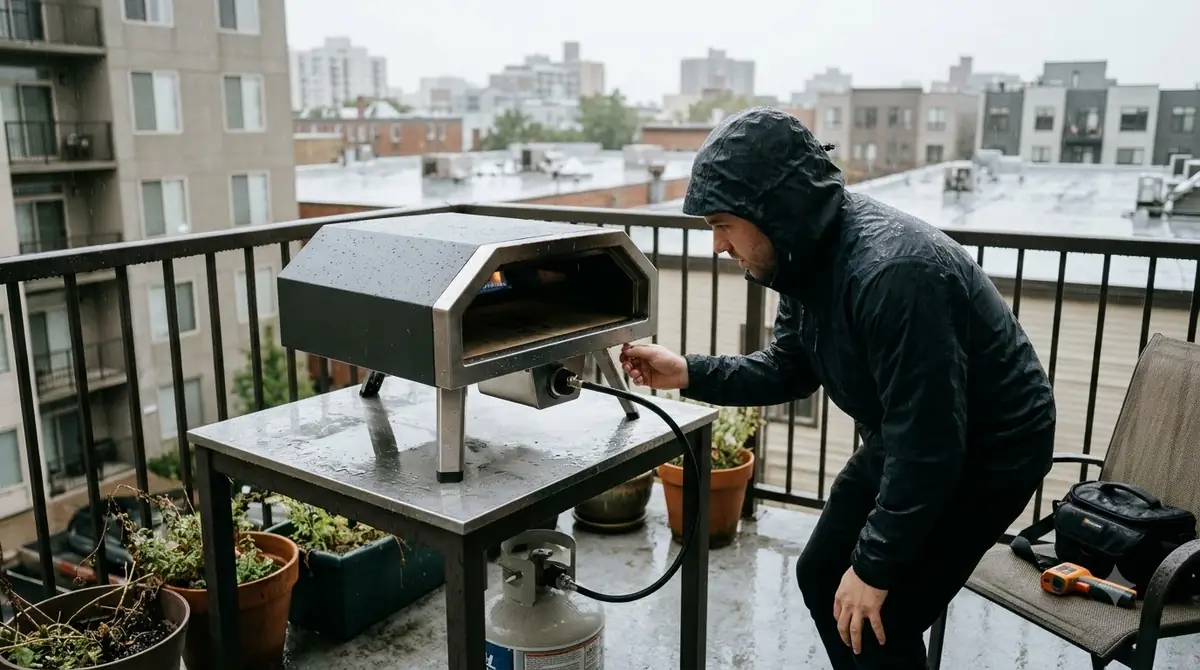

The ideal propane pizza oven temperature for most home pizza is about 750°F (400°C), measured in the center of the baking stone. The stone, not the air, cooks the crust, so that is the reading to trust. The manufacturer’s maximum is higher, and it is a limit rather than a target.
Measure the stone directly, keep the oven under the stated limit, and let the fuel burn down before you cook. The sections below explain each step.
What Propane Pizza Oven Temperature Works for Home Pizza
For a home propane oven, aim for about 750°F (400°C) on the stone before you launch the pizza. Ooni’s own guidance for its Karu 16 oven gives that same figure, and our pizza oven temperature guide shows how it compares with other oven types.
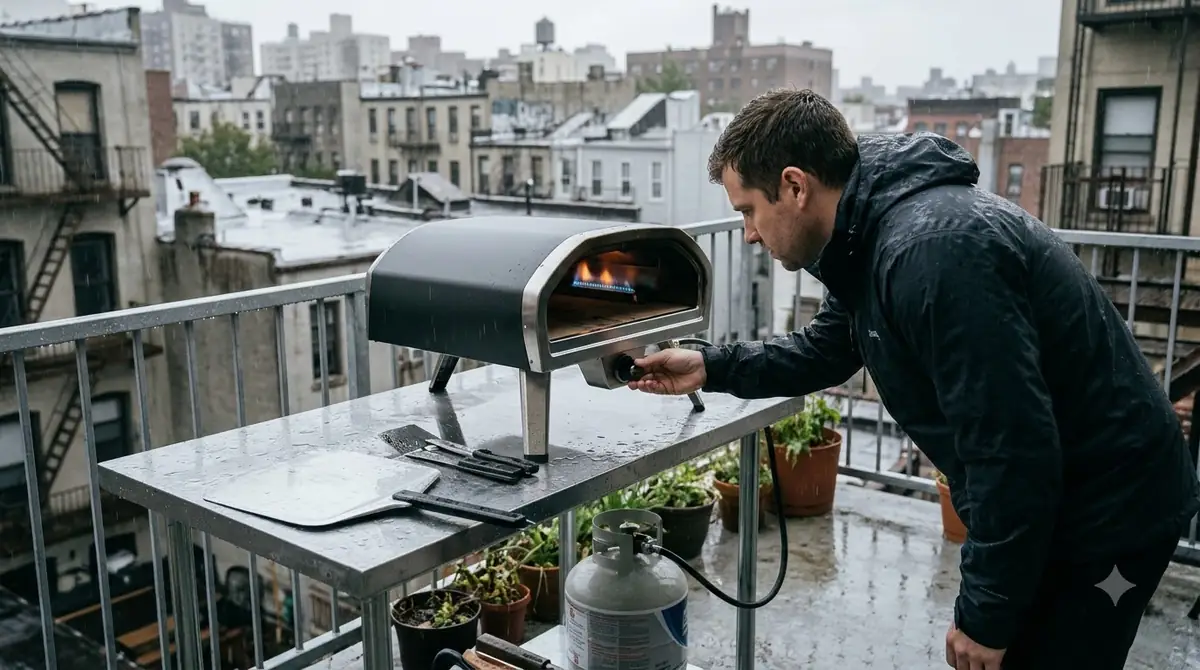
The Ooni Karu 16 essentials guide recommends preheating to 750°F (400°C) in the center of the stone, then launching the pizza and rotating it every 20 to 30 seconds. That single reading is the most useful number for a propane pizza oven temperature check at home.
Two minimums from testing help set a floor. America’s Test Kitchen looks for a home oven that reaches at least 700°F on the stone and at least 800°F in the air around the pizza. Those two numbers give you a benchmark to check your own oven against.
The stone floor is not one temperature. Ooni explains that the stone gets hotter the closer it sits to the flame, so the spot you read changes the result. That is why the guide asks you to read the center of the stone and rotate the pizza for an even bake. A consistent propane pizza oven temperature across the floor is what gives an even crust.
Neapolitan pizza, the style behind how hot a pizza oven gets, sets the highest bar. AVPN, the Associazione Verace Pizza Napoletana, recommends about 905°F in the air and about 716°F on the stone, a figure America’s Test Kitchen cites in its review. A true Neapolitan bake takes about 60 seconds, and Ooni says it needs a real flame to get there.
Stone Temperature Versus Air Temperature
Read the stone surface first, because the stone cooks the crust, then check the air above it and the oven ceiling as separate readings.
America’s Test Kitchen monitored the baking stone, the air just above the cooking surface, and the oven ceiling during its tests. Its portable pizza oven review describes that method, though it does not tell home cooks to track all three.
Air and stone readings can disagree, so a good air reading does not by itself mean the base is ready to cook.
An infrared thermometer is the simplest way to read the stone. Ooni recommends one, and it reads the stone surface you need to check.
A built-in air gauge, where your oven has one, works as a check rather than a replacement. When the two readings disagree, the number that counts is the stone, because that is the surface the crust touches. A propane pizza oven temperature that reads well in the air but low on the stone still needs more time before the pizza goes in.
Reference Temperatures at a Glance
The table below puts the home minimums, the Neapolitan reference points and the manufacturer maximum side by side, so you can see where each number comes from. It works as a quick reference for every propane pizza oven temperature mentioned in this article.
| Reference point | Temperature | Where it comes from |
|---|---|---|
| Home minimum, stone | At least 700°F | America’s Test Kitchen |
| Home minimum, air | At least 800°F | America’s Test Kitchen |
| Recommended stone target | 750°F (400°C) | Ooni Karu 16 guide |
| Neapolitan reference, air | About 905°F | AVPN, as cited by America’s Test Kitchen |
| Neapolitan reference, stone | About 716°F | AVPN, as cited by America’s Test Kitchen |
| Manufacturer maximum | 950°F (500°C) | Ooni Karu 16 guide |
The 950°F figure is a design limit for the Karu 16, not a cooking target for any pizza style, and other models list their own limits.
The table mixes two kinds of numbers. The America’s Test Kitchen minimums describe what a home oven needs to bake a good pizza, while the AVPN figures describe the traditional Neapolitan standard. Ooni’s 750°F stone target sits just above both stone figures, which is why it works as a practical propane pizza oven temperature goal at home. Use the stone column when you compare, and judge your propane pizza oven temperature by it, with the air column only as a check.
How to Reach the Right Temperature Before You Launch
Preheat the oven for about 15 minutes, let the fuel burn down, and confirm the stone before you cook. Follow the same order every time, because it keeps your readings consistent from one cook to the next.
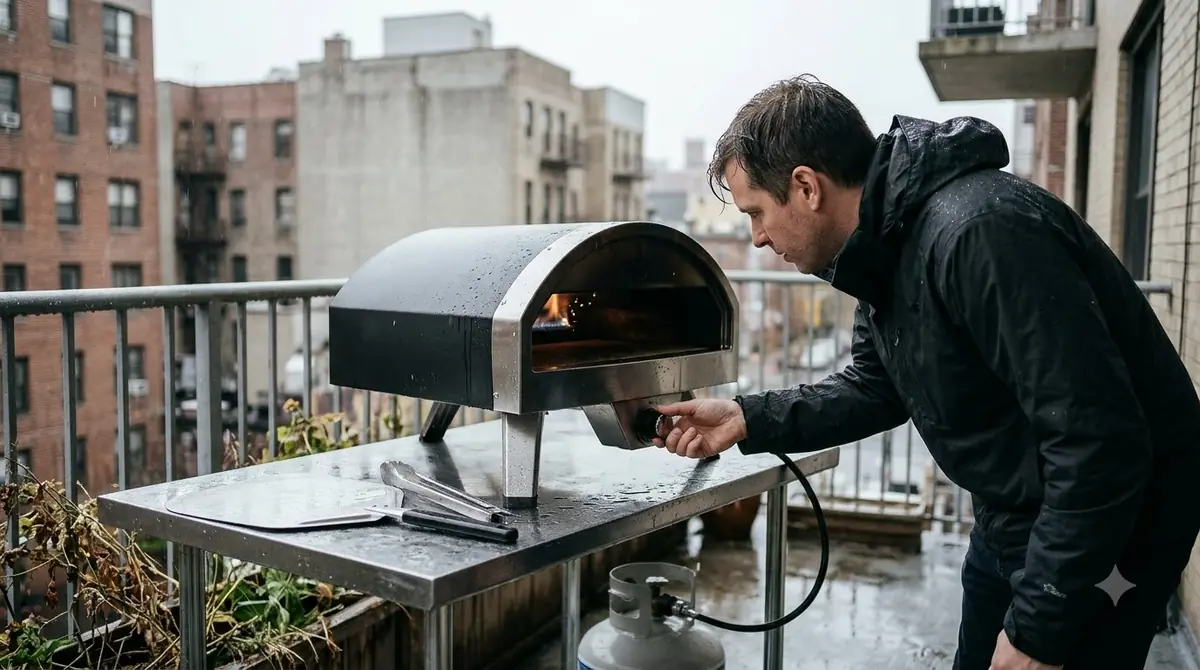
- Season a new oven by running it at top temperature for 30 minutes, then let it cool and wipe it with dry paper towels.
- Let new fuel burn for a couple of minutes before you add food, so the flame settles.
- Read the center of the stone with an infrared thermometer until it reaches about 750°F (400°C).
- Launch the pizza and rotate it every 20 to 30 seconds for an even bake, since the part of the stone nearest the flame runs hotter.
Ooni’s Karu 16 guide says that oven is ready to cook Neapolitan-style pizza in about 15 minutes. Other models vary, as the Ooni Koda 12 heat-up time shows, so use your own manual’s preheat time as the baseline. A patient preheat is the cheapest way to hit the propane pizza oven temperature you want before the first pizza goes in.
Trust the stone reading over the look of the flame. If you are comparing fuels, the electric pizza oven temperature guide covers how an electric oven differs.
Fuel matters too. The Karu 16 guide covers more than one fuel, so follow only the steps in your manual that apply to propane, and let new fuel burn for a couple of minutes before you add food to help the propane pizza oven temperature settle.
When Propane Pizza Oven Temperature Goes Too High or Too Low
Stay under the manufacturer’s stated maximum for your propane pizza oven temperature, which is 950°F (500°C) for the Karu 16, and switch off the flame if the oven goes above it.
That limit matters more than the target once the oven is hot, so keep an eye on the reading rather than leaving the oven unattended on high.
Hotter is not always better. America’s Test Kitchen says super-high temperatures are not necessarily helpful, so a reading far above the target adds risk without making the pizza better.
Three common mistakes to avoid:
- Launching before the stone reaches target, which can leave the base pale.
- Judging readiness by the air gauge alone and ignoring the stone.
- Rotating too late, so one side of the pizza browns before the other.
These figures come from the Karu 16 guide and general testing advice. Other models have their own limits, so check the manual for your propane pizza oven temperature limits before you cook near any maximum. If you are weighing natural gas instead of propane, our guide to the Gozney Dome on natural gas covers what that setup requires.
Frequently Asked Questions
Can a propane pizza oven reach 900°F?
Many can, and the Karu 16 guide lists 950°F (500°C) as its design maximum. Maximums vary by model, so check the manual for your oven before you run it near that figure.
How long does a propane pizza oven take to preheat?
Ooni’s Karu 16 guide says about 15 minutes to be ready for Neapolitan-style pizza. Other ovens can take longer, so use the preheat time in your own manual as the baseline.
Do I need an infrared thermometer?
Ooni recommends one because it reads the stone surface directly, which is the reading that matters most for the crust. It is the most direct way to confirm the propane pizza oven temperature target of 750°F before you launch, and it is the reading to trust when the air display looks ready early.
Is 700°F on the stone enough?
America’s Test Kitchen treats 700°F on the stone as a minimum for a home oven, with at least 800°F in the air. Neapolitan style runs hotter, with an AVPN reference near 716°F on the stone. Treat 700°F as a floor for the propane pizza oven temperature you aim for, not as a goal.
Trust the stone reading for your propane pizza oven temperature, not the look of the flame, and stay under the maximum in your manual. If the stone lags behind your target, give the oven more time before you launch the pizza. A few extra minutes of preheat costs far less than a pale, underbaked base, and it makes your next reading easier to compare with this one. If you cook often, note the stone reading at the start of each session, since it shows how your oven behaves on a given day and fuel load.