
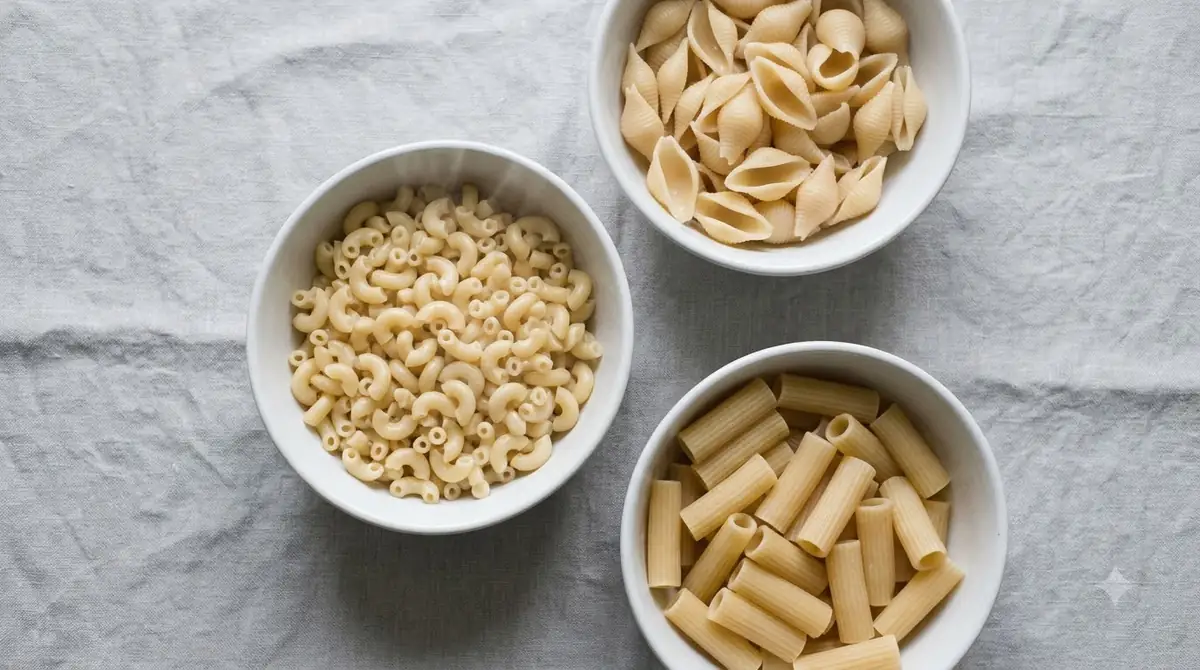

Paccheri pasta is a large, hollow tube pasta from Campania in southern Italy, especially Naples. Its wide opening holds thick sauces well, which is why cooks often fill and bake it. The shape is simple to recognize once you see it beside other tube pastas.
The main choices are smooth or ridged tubes, and dried or homemade dough. Dried paccheri follows the package time, while fresh tubes cook much faster.
What Is Paccheri Pasta?
Paccheri pasta is a large, hollow tube that is shorter and wider than rigatoni. It is traditionally made in Campania, and the Neapolitan cooks there have used it for a long time.
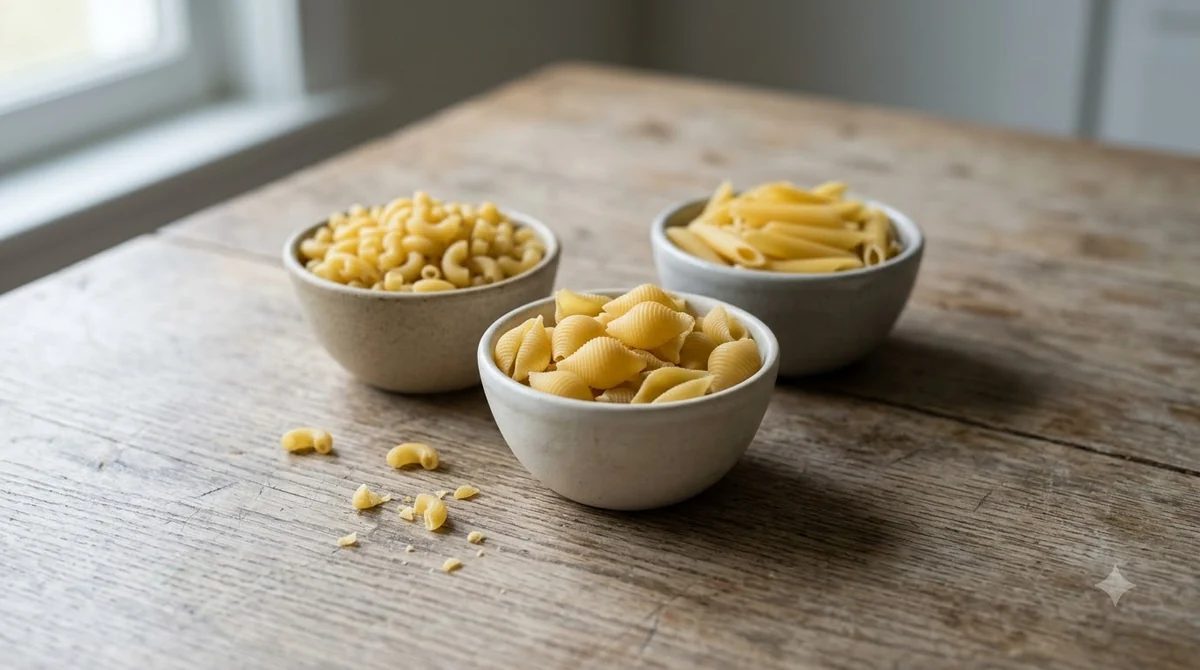
The name comes from the Neapolitan word paccharia, meaning “slaps.” Some sources say the name may refer to the slapping sound the tube makes when it is eaten. According to the Wikipedia entry on paccheri, food writer Arthur Schwartz described paccharia as the most popular large tube pasta in Campania in the late 1990s.
Smooth paccheri is the more common form, and a ridged version called paccheri millerighe is also sold. Some cooks call the same tube schiaffoni. The pasta was once considered poor food because its large pieces are very filling. Stuffed tubes are a close cousin of baked manicotti tubes, which are also filled and covered in sauce. In Campania the tube is also listed under the name tufoli rigati.
The tube has a distinctive way of eating. According to Wikipedia, paccheri split open into a flat sheet as they are eaten, which is part of why the shape feels different from short pasta. The Pasta Project also tells a food legend that paccheri was invented to smuggle garlic into Austria in the early 1600s. The site presents this as a story rather than established history, so treat it as folklore.
Best Sauces for Paccheri Pasta
Thick meat sauces, such as bolognese or a red wine ragù, are the classic match for paccheri pasta. The wide tube holds chunky sauce and filling, so thin sauces tend to run off the sides.
Food sources list these pairings for paccheri pasta:
- Thick bolognese or meat sauce for hearty dishes
- Red wine sauce for tubes stuffed with sausage or garlic
- Garlic white wine sauce for tubes stuffed with porcini
- Tomato sauce with Parmigiano-Reggiano in a baked, lasagna-style dish
- Zucchini, cabbage or squash topped with Parmigiano-Reggiano
Seafood also pairs well, and The Pasta Project describes paccheri as served with rich, robust sauces or delicate seafood. For a simple weeknight version, a garlic and olive oil sauce with a spoonful of pasta water keeps the tubes coated. Keep chunks of meat or vegetables large enough to sit inside the opening, since small pieces tend to fall out of the tube.
Traditional Neapolitan kitchens also serve paccheri with beans, or with ricotta and tomato sauce, according to Wikipedia.
How to Cook Paccheri Pasta
Cook dried paccheri pasta in plenty of salted boiling water and follow the package time. Fresh tubes need less time, so check them early.
- Bring a large pot of water to a rolling boil and add plenty of salt.
- Add the paccheri and stir in the first minutes so the tubes do not stick together.
- Start testing before the time on the package, because brands cook differently.
- Drain and toss the tubes with sauce while they are still hot.
Fresh paccheri usually cooks in 3 to 5 minutes, according to The Pasta Project’s paccheri notes. Homemade tubes take longer, around 7 to 10 minutes, which is the figure given in a homemade recipe from Glutto Digest.
The Pasta Project does not give an exact water or salt amount for paccheri. Use a large pot and plenty of salted water so the tubes have room to move while they cook. Because the tube is wide, cut one open to check the center, which is the last part to soften.
Paccheri Substitutes
Rigatoni is the closest swap for paccheri pasta, because the shapes are alike but paccheri is shorter and wider, and a rigatoni vs penne comparison shows how the tubes differ. The two options below cover most cases where the tube is hard to find. Mezzi paccheri matters most when you want the same look in a smaller portion, while rigatoni is the easier swap to find in most stores. Another Neapolitan shape, the ruffled ribbon mafaldine pasta, suits a different kind of dish but shares the same regional roots.
| Option | Why it works | Trade-off |
|---|---|---|
| Rigatoni | Similar tube shape that holds chunky sauce | Narrower and longer, so it holds less filling |
| Mezzi paccheri | Same tube at half the traditional size | Smaller bite, so less room for stuffing |
If a recipe calls for stuffing or baking whole tubes, expect a different result with rigatoni. The wider paccheri is the better match for those dishes.
Other large tubes can stand in if neither option is on the shelf, but check the package size first, since a narrower tube changes how much sauce and filling each piece holds.
Making Homemade Paccheri Pasta
One common homemade recipe uses 250 g of 00 flour, 50 g of durum semolina, and three eggs plus three extra yolks. The dough is mixed by hand, then rested and chilled before the tubes are shaped. Recipes differ, and some Italian cooks make homemade paccheri with only semolina and water, the same as commercial dried paccheri, while others mix flours with eggs and water.
- Mix the flours in a mound with a well, then add the yolks, eggs, 1 teaspoon of extra virgin olive oil and 1/2 teaspoon of salt.
- Knead for 8 to 12 minutes, adding a little flour if the dough is too sticky.
- Wrap the dough and rest it at room temperature for half an hour.
- Roll the dough into a sheet, cut small rectangles, wrap each around a pasta dowel, and seal the edges with water.
- Stand the tubes upright and chill them for at least half an hour before cooking.
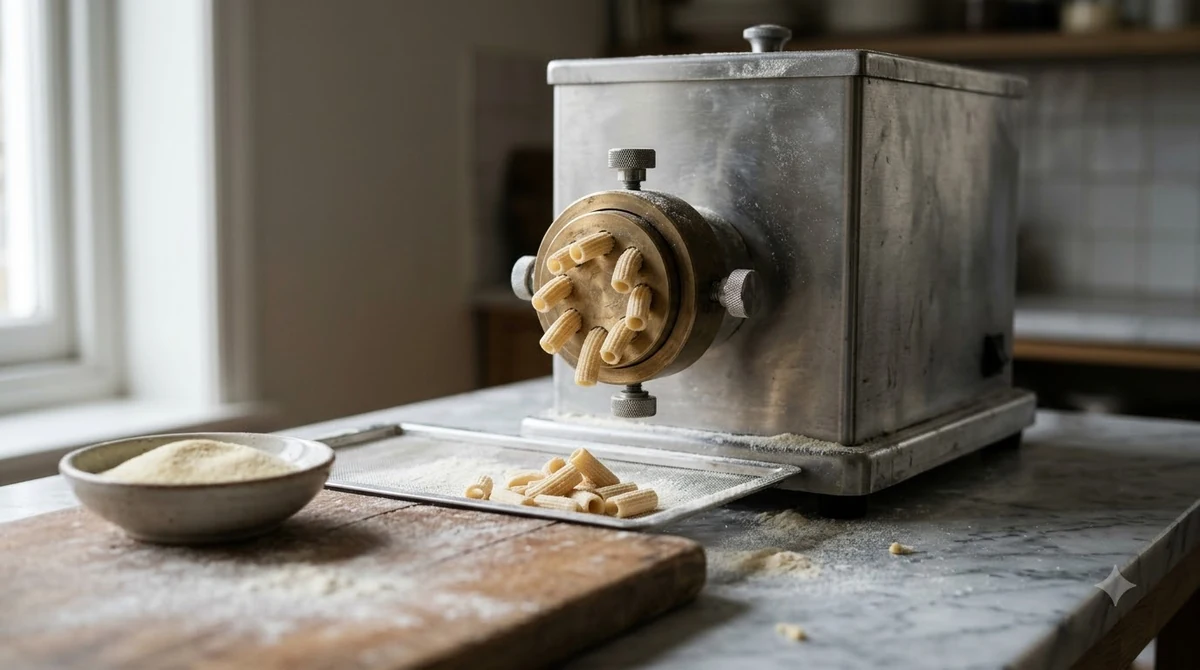
A paccheri maker cuts the extruded tube to length, but the dowel method works without one. Rolling by hand is harder to keep even, so flour the surface well and aim for an even thickness. Chilling matters too: standing the tubes upright and chilling them helps the texture turn al dente, according to Glutto Digest. Because the tubes are fragile, handle them gently when you slide them off the dowel.
Frequently Asked Questions
Is paccheri pasta the same as rigatoni?
No, but the shapes are close. Paccheri pasta is shorter and has a wider diameter than rigatoni, so it suits larger fillings and thicker sauces. Rigatoni is the closest common substitute when paccheri is not available.
What is the difference between paccheri and schiaffoni?
Schiaffoni is another name for the same large tube. The Pasta Project notes that the paccheri name also appears as schiaffoni. A reader reply on the same site adds that Mancini sells its tubes as tuffoli, so check the shape on the package rather than trusting the name alone.
How long should I cook paccheri pasta?
Cook dried paccheri pasta according to the package instructions, and start testing early. Fresh paccheri usually takes 3 to 5 minutes, while homemade tubes take about 7 to 10 minutes.
What is mezzi paccheri?
Mezzi paccheri is half the size of the traditional type, according to The Pasta Project. It has the same tube shape in a smaller format, which gives a lighter bite and a smaller space for filling. It is the better pick when a recipe calls for a smaller tube, and the traditional size is better for baked dishes.
Can I make paccheri pasta without a pasta machine?
Yes. Roll the dough by hand, cut small rectangles, wrap them around a pasta dowel, and seal the edges with water. A machine gives more even thickness, but it is not required for this shape.
If you want a hearty dinner with little effort, buy dried paccheri pasta and pair it with a thick meat sauce or a baked tomato dish. Make the homemade version only when you have time for resting and chilling, since shaping the tubes takes patience. Start with a sauce you already know well, then try the same tube with a second sauce to see how the wide opening changes the bite.