
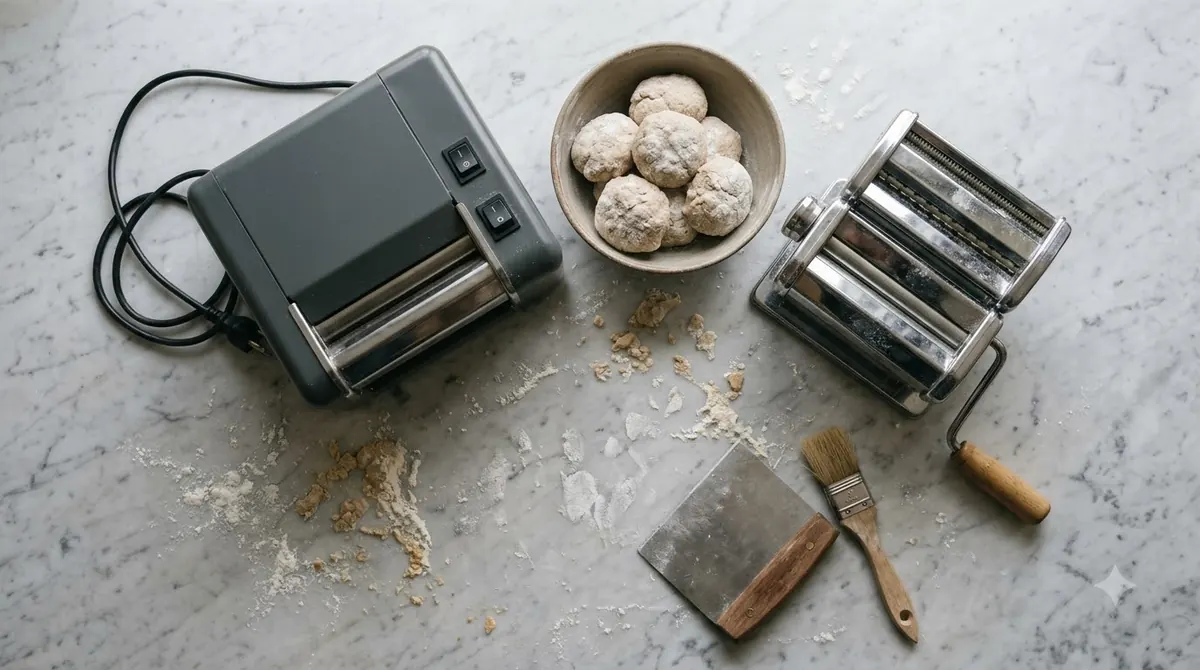

A stand alone pasta maker is a machine that works on its own on the counter, without a stand mixer, and either rolls dough by hand or shapes it with an electric motor. It is a separate appliance, so you do not need to own another machine first. Manual stand-alone rollers cost less and take less room, while electric stand-alone models do the mixing and shaping for you.
What a stand alone pasta maker is
A stand alone pasta maker is built as its own unit. Manual versions clamp to a table or counter and are turned with a crank. Electric versions have a motor, and some can mix, knead and shape the dough from a single bowl without any rolling.
Realhomes’ buying guide describes the two families clearly. Manual machines such as Imperia and Marcato models are the traditional choice for lower budgets, while electric machines let you skip the rolling entirely. That split is the first decision to make.
Stand alone vs attachment
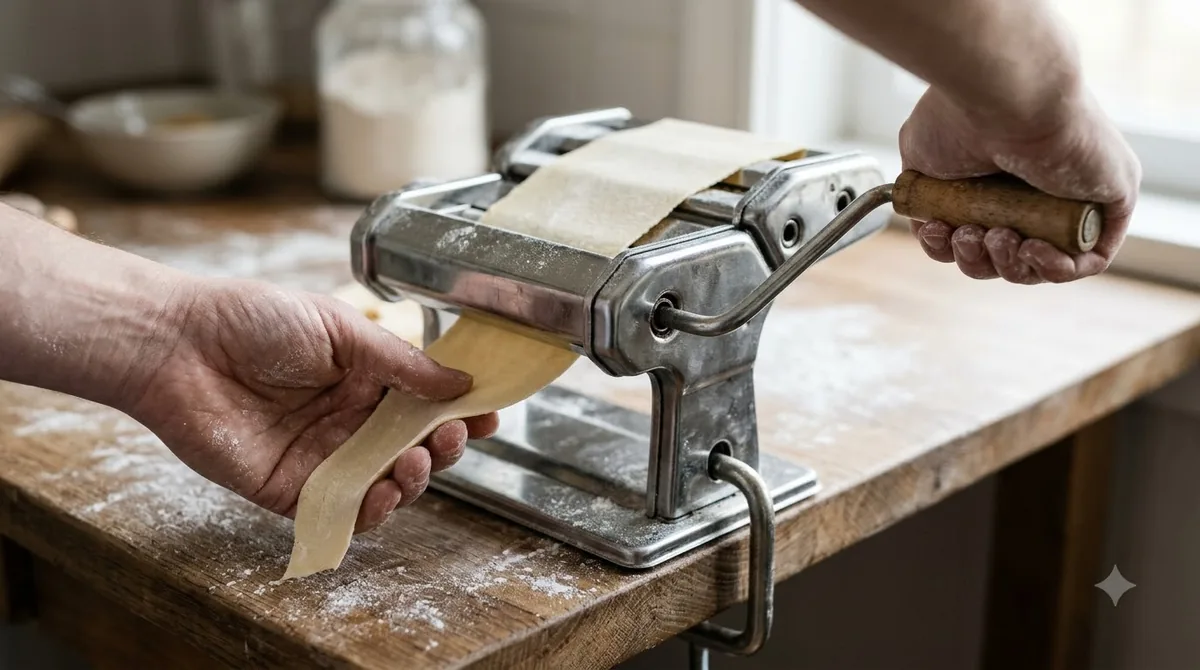
If you already own a stand mixer, an attachment can be cheaper than a separate machine. Realhomes notes that food mixer pasta attachments, such as those sold for KitchenAid and Cuisinart mixers, are an alternative to standalone machines. The downside is that the mixer must stay on the counter while you work, and attachment lists vary by brand.
A stand alone unit does not depend on another appliance. It is a good fit if you do not own a mixer, if you want a dedicated machine for pasta, or if your mixer is already busy with bread and cookie dough.
Manual or electric stand alone
A manual stand-alone roller is compact and affordable. It needs more effort, but many cooks like the control it gives over dough thickness. America’s Test Kitchen’s review of manual pasta machines explains the basics: anchor the base, start at the widest setting, and step down until the sheet is thin enough for your shape.
An electric stand-alone unit is faster and suits beginners. Realhomes says electric makers can produce fresh pasta in as little as six minutes, and some models use shaping discs to make several shapes without a separate cutter. The trade-off is a larger footprint and more parts to clean.
- Choose manual if you want a low price, a small footprint and hands-on control.
- Choose electric if you want speed, less effort and access to several shapes.
- Choose an attachment if you already own a stand mixer and cook pasta occasionally.
What to check before you buy
Weight and stability matter more than many shoppers expect. Realhomes points out that heavier units such as certain Imperia models stay put on the counter, while lightweight machines rely more on their clamp. Check that your counter edge is thick enough for the clamp you plan to use.
Check the included parts. Many manual machines sell cutters and attachments separately, so a low sticker price can grow once you add the ravioli or lasagna pieces you want. Also look at the warranty length. Realhomes notes that most pasta makers offer about two years, while one brand it covers offers ten.
Look closely at the cutter. ATK’s reviewers warn that dull or misaligned blades can perforate the sheet without cutting it, which means separating noodles by hand. A clean, even cut is the sign of a good stand-alone roller.
Think about the dough you plan to make most often. Egg pasta, spinach pasta and gluten-free dough behave differently, and a machine with a wide thickness range gives you more room to adjust. If you mostly cook one shape, a model that makes that shape well may serve you better than one with many options you never use.
Space is the other constraint. Manual rollers fold up small, but they still need a clear spot on the counter for cranking. Electric units take more room in the kitchen, so measure the area before you buy and make sure the cord can reach an outlet without stretching across a hot surface.
Cleaning and storage
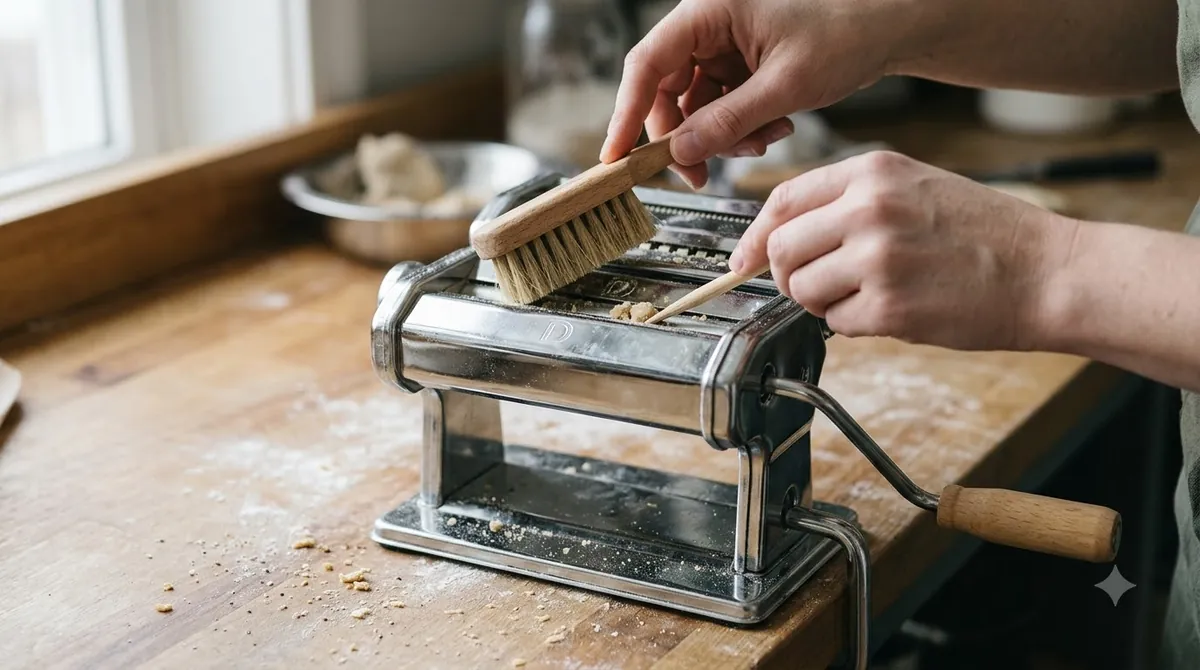
Cleaning is where stand-alone machines differ most. Realhomes reports that some manual machines are not dishwasher safe and should be brushed off, then wiped with a barely damp cloth and air dried. Electric models may have washable parts, but shaping discs can be fiddly, so clean them soon after use.
Store the machine somewhere dry, and keep the parts together. Dough that dries onto rollers or discs is much harder to remove later, so a quick brush after each session saves time.
Before your first batch, do a short dry run with a small piece of dough. It shows you how the clamp holds, how the knob turns and whether the cutter separates strands cleanly, so you can fix small problems before a whole meal depends on the machine.
Frequently Asked Questions
Is a stand alone pasta maker better than a mixer attachment?
It depends on how you cook. A stand-alone machine keeps pasta making separate from your mixer, while an attachment saves money if you already own the mixer.
Can a stand alone pasta maker make lasagna sheets?
Many roller models can, since they roll flat sheets before cutting. Check the product list, because some electric extruders do not make lasagna sheets.
Do stand alone machines need a counter clamp?
Manual models do, because the clamp holds the base steady while you crank. Electric units sit on the counter on their own base, though they still need a flat, stable surface.
How long does fresh pasta from a machine take?
Electric makers can be quick, and Realhomes cites as little as six minutes for some models. Rolling by hand takes longer, and you should also allow time for the dough to rest according to your recipe.
A stand alone pasta maker is the right choice if you want a dedicated machine. Choose manual for control and low cost, electric for speed, and check the cutter, weight and cleaning needs before you commit.
 6 min readBest PicksTop Rated Pasta Maker: Manual, Attachment or ElectricUpdated Nov 13, 2026
 5 min readBest PicksBest Spaghetti Maker: Roller, Cutter or Electric DiscUpdated Nov 13, 2026
 9 min readBest PicksBest Pizza Oven Under 200: Picks Compared for Home CooksUpdated Nov 14, 2026
 5 min readBest PicksAutomatic Pasta Maker Reviews: What Tested Results ShowUpdated Nov 13, 2026
 6 min readBest PicksAutomatic Pasta Maker Sale: What to Check Before You BuyUpdated Nov 13, 2026
 6 min readBest PicksBest Pasta Maker Consumer Reports: Reading the RatingsUpdated Nov 13, 2026