
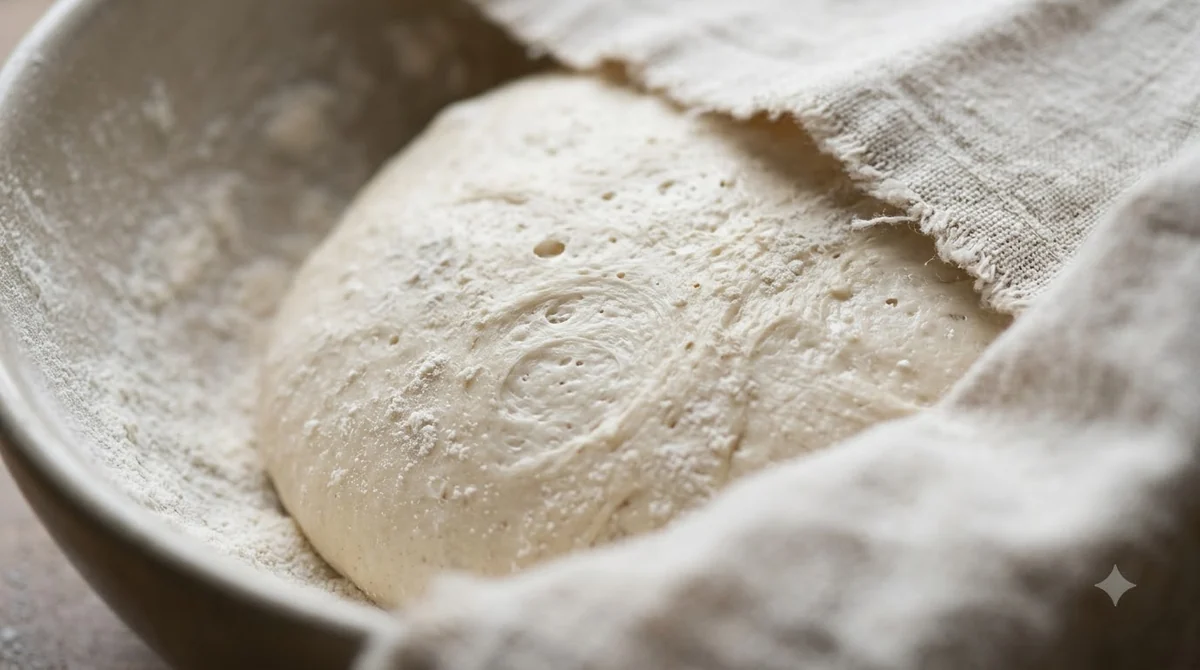

To store pizza dough in the fridge, knead it, place it in a lightly greased airtight container, and keep it cold while it slowly ferments. The dough can rest for several days, and a cold rest also gives a more flavorful crust. The key steps are a short rest before chilling, a steady fridge temperature, and a warm-up before you shape it.
Storage is not only about keeping the dough from drying out. The fridge controls how fast the yeast works, so the dough ripens over hours instead of rising quickly. The method below follows the practice described by Stadler Made and Food Republic, two sources read for this guide.
Prepare the dough before it goes in the fridge
Mix and knead the dough first, then store it. Stadler Made’s cold fermentation guide recommends kneading for about 5 minutes before the dough goes into storage. A dough that is properly kneaded holds its shape better in the fridge and rises more evenly once it warms up.
Stadler Made also suggests letting the dough start to work before it chills. Wait about 30 minutes in summer or about one hour in winter before you refrigerate it, so the yeast gets going and the dough is not cold from the start.
Choose the right container and cover
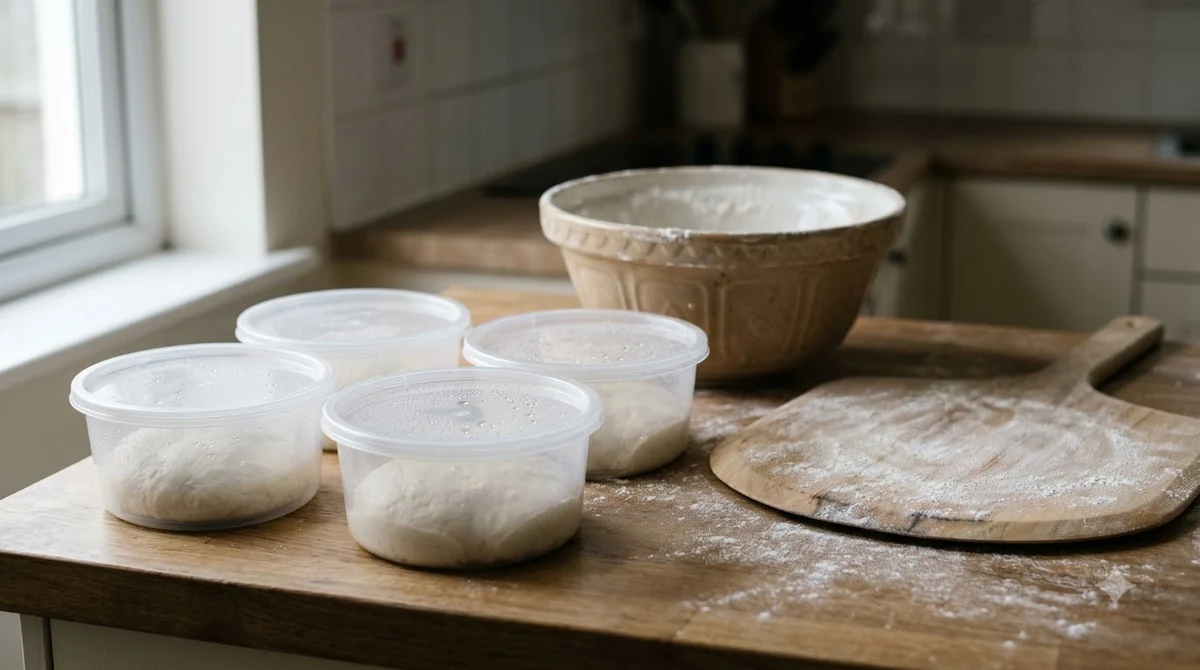
Use an airtight container that is large enough for the dough to grow. Lightly grease the inside of the container and the dough surface, so the dough does not stick and does not form a dry skin. Stadler Made’s guidance is to store the dough in a lightly greased, airtight container. The article does not name a specific oil, so a neutral cooking oil or a light olive oil both work for this step.
- Use a container with a tight lid, or a bowl covered with plastic wrap pressed onto the dough.
- Leave a little room at the top, since the dough keeps rising slowly in the cold.
- Label the container with the date, so you can track how long it has been stored.
- Portion the dough into individual balls before storing if you plan to make several pizzas.
Portioning before refrigeration makes the next step simpler. Each ball can come out of the fridge on its own schedule, and you avoid cutting a large cold mass that tears easily.
Store pizza dough in the fridge at a steady cold temperature
The dough needs a cool, steady environment. Stadler Made gives a target range of 4 to 7°C (39.2 to 44.6°F) for the fridge. A temperature in that range slows the yeast enough to build flavor without letting the dough over-ferment. Keep the dough toward the back of the fridge, where the temperature is usually more stable than in the door.
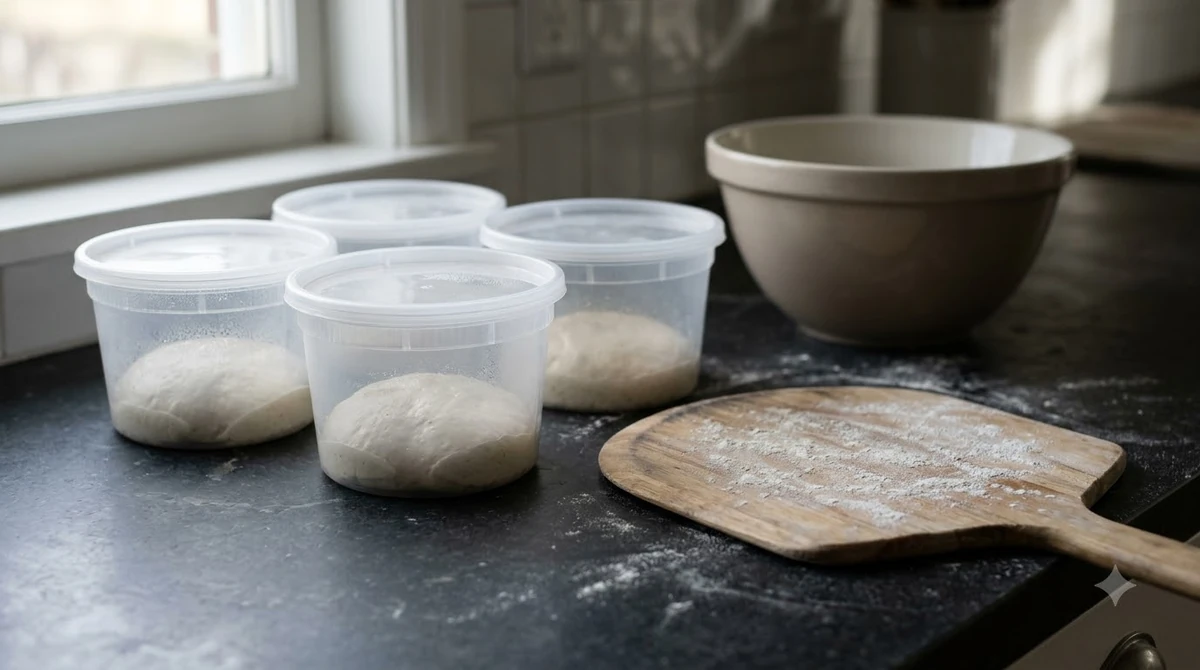
Avoid stacking the container under heavy items, and do not let it sit against the fridge wall where cold air can freeze the surface. If the dough is visibly bubbling or the container lid bulges, the dough is fermenting quickly, so use it sooner rather than later.
How long dough can stay in the fridge
Stadler Made gives a general window of 8 to 72 hours in the fridge. Food Republic’s cold fermentation guide says at least 24 hours, and it calls three to five days the sweet spot for flavor. Both sources agree that a longer rest gives more flavor, but the dough needs to stay cold and covered the whole time.
| Storage stage | What the sources describe |
|---|---|
| Before chilling | Knead about 5 minutes, then wait about 30 minutes in summer or about 1 hour in winter |
| In the fridge | 4 to 7°C (39.2 to 44.6°F), for 8 to 72 hours according to Stadler Made |
| Minimum cold rest | At least 24 hours, per Food Republic |
| Warm-up before shaping | 20 to 30 minutes out of the fridge, then 2 to 4 hours as portioned balls |
Bring the dough back to room temperature
Take the dough out of the fridge before you shape it. Stadler Made suggests waiting 20 to 30 minutes so the dough warms and relaxes. Portion it into balls if you have not already, cover them, and let them rest for 2 to 4 hours. The article says the centre of each ball should reach at least 18°C (64.4°F) before you shape it.
Food Republic describes a similar step: divide the dough into equal balls, roll them, and let them proof at room temperature for about five hours. Shorter or longer proofs both affect the final crust, so check the dough by feel. A ready ball is soft, slightly puffy, and stretches without tearing.
Frequently Asked Questions
Should I oil pizza dough before putting it in the fridge?
A light coat of oil helps. Stadler Made recommends a lightly greased, airtight container, and a thin layer of oil on the dough surface keeps it from drying out. Use only a little, since too much oil can make the crust greasy.
Can I put warm dough straight into the fridge?
It is better to let the dough rest for a short time first. Stadler Made suggests waiting about 30 minutes in summer or about one hour in winter so the yeast starts working before the dough is chilled.
How do I know the dough has gone too far?
Look for a bulging lid, a strong sour smell, or a surface that has turned very slack. If the dough collapses when you touch it, shape it sooner or use it as a flatbread rather than a classic round pizza.
Can I store pizza dough for longer than a few days?
Stadler Made gives 8 to 72 hours as its general fridge window. Beyond that window, the sources read for this guide do not give a safe holding time, so use the dough within it or check a food-safety source before keeping it longer.
Storing pizza dough in the fridge is simple when you keep three things in mind: knead first, keep the dough in a greased airtight container, and hold the fridge at a steady cold temperature. Give the dough a proper warm-up before you shape it, and check the texture by feel rather than by the clock alone.
 8 min readBest PicksWood Pizza Oven Temperature: What to Aim For and How to Reach ItUpdated Nov 7, 2026
 8 min readBest PicksPropane Pizza Oven Temperature: What Works for Home PizzaUpdated Nov 13, 2026
 8 min readBest PicksElectric Pizza Oven Temperature: What Heat Level to UseUpdated Nov 7, 2026
 9 min readBest PicksHow Hot Does a Pizza Oven Get? Temperatures by Oven TypeUpdated Nov 5, 2026
 8 min readBest PicksCharcoal Pizza Oven Temperature: What to Aim ForUpdated Nov 14, 2026
 8 min readBest PicksPizza Oven Temperature: What Heat to Use for Every PizzaUpdated Nov 10, 2026