
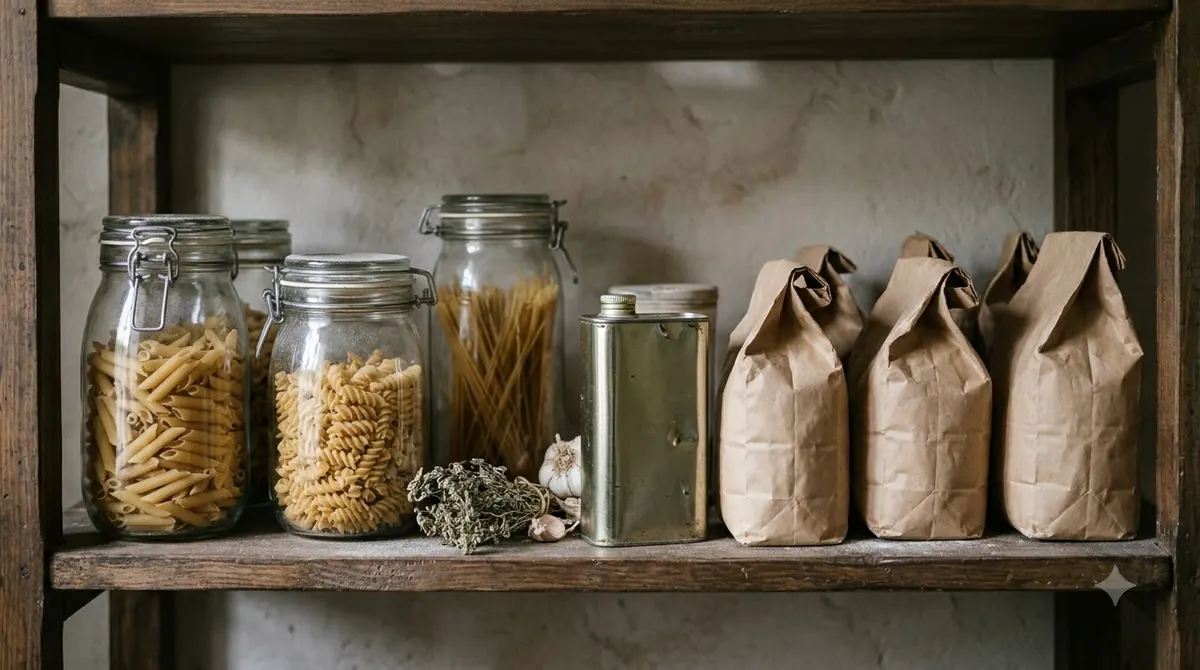

Knowing what is bronze cut pasta explains why some dried pasta costs more: it is shaped by forcing dough through bronze dies. Those dies leave a rougher, more porous surface that holds sauce better than smooth pasta. The difference shows up in texture, price and cooking water rather than in a guaranteed taste gap, so it suits sauce-heavy dishes more than tight budgets.
What Is Bronze Cut Pasta Made Of and How Is It Shaped?
Bronze cut pasta is dried pasta shaped by pushing dough through a bronze die, a metal plate with holes that cuts and forms each piece. Italian producers call it al bronzo, which simply means cut with a bronze die.
Making dried pasta follows the same basic path whether the die is bronze or Teflon. Durum wheat semolina is mixed with water into a stiff dough, pushed through the die, and then dried. According to Tasting Table’s pasta guide, the die is a metal plate whose holes depend on the pasta shape and type, and one die can make several pieces in the same run.
- Mix durum wheat semolina with water into a stiff dough.
- Push the dough through the die, which cuts and shapes it.
- Dry the pasta slowly at lower temperatures.
The die sets the surface, so two packs of the same shape can feel different on the plate. The shaping step is where the two styles part ways, and the rest of this guide follows from that single choice. If you wonder what is bronze cut pasta at its core, the answer is the die.
What Is Bronze Cut Pasta Like? Surface and Sauce Grip
Bronze dies leave pasta with a coarser exterior, which gives sauce more to grip. Smooth Teflon-die pasta is glossy, and thin sauces can slide off it and pool at the bottom of the plate.
America’s Test Kitchen describes bronze-cut pasta as winding up with a coarser exterior and better grip. Its tests used a blue dye to show how much the rough surface absorbs, which is a proxy for sauce adherence rather than a direct sauce test.
| Feature | Bronze die | Teflon die |
|---|---|---|
| Surface | Coarse, rough and porous | Smooth and glossy |
| Sauce grip | Holds sauce well | Sauce tends to slide off |
| Color after drying | Paler and matte | Deeper yellow |
| Production speed | Slower, fewer pieces per run | Faster and cheaper |
The grip difference matters most with chunky meat sauces and oil-and-cheese dressings, and it shows up on long shapes like spaghetti pasta as much as on short tubes like penne pasta. It matters less when the sauce is already thick, because the sauce has less loose liquid to slide away from the pasta.
Why Bronze Cut Pasta Costs More and Dries Slower
Bronze cut pasta costs more because the dies are pricier, the process runs more slowly, and output is limited. It is also dried at lower temperatures, often for more than a day.
Tasting Table notes that bronze dies are more expensive than Teflon dies from the start. The bronze process is also slower, which limits how much can be made and pushes the price up. As of 2026-11-05, bronze-cut pasta is more expensive than standard grocery store alternatives.
- The dies cost more to buy from the start.
- Extrusion through bronze runs slower, so fewer packs come out in a given time.
- Low-heat drying can take more than a day.
- Teflon-die makers can use high heat to speed up drying.
Once you know what is bronze cut pasta, the price makes sense. Tasting Table also says the grains used for bronze-cut flour are usually higher in quality, which adds to the cost of the bag. The cost is therefore a mix of equipment, speed and ingredients rather than one single factor.
Price varies by brand and store, so compare the price per 100 grams rather than the sticker price alone. Budget chains now carry bronze-cut pasta too, which narrows the gap for some shoppers.
What Is Bronze Cut Pasta on the Label? How to Spot It
Look for “bronze cut,” “bronze extruded,” “bronze-die,” or “al bronzo” on the package. America’s Test Kitchen notes that bronze-cut brands often print one of these terms on the label.
Packaging is an imperfect guide to what is bronze cut pasta, so check the back of the pack too. A pale, matte look and a rough feel are signs, but they are not proof on their own.
- “Bronze cut” or “bronze extruded” on the front.
- “Bronze-die” printed on the label.
- “Al bronzo” on Italian brands.
- A pale, matte surface with a rough feel when you touch it.
A label that names the die is a better answer to what is bronze cut pasta than a vague word like “artisan,” which does not say how the pasta was shaped.
Check the price as well as the label. Bronze-cut packs usually cost more than standard boxes on the same shelf, so a bronze-cut label should match a higher price per 100 grams.
Brand names can help too. America’s Test Kitchen lists De Cecco and Rustichella d’Abruzzo among bronze-die brands, and according to Tasting Table, Barilla released an al bronzo collection of spaghetti, fusilli and linguine at the end of 2022.
What Is Bronze Cut Pasta Like to Cook Compared With Standard Pasta?
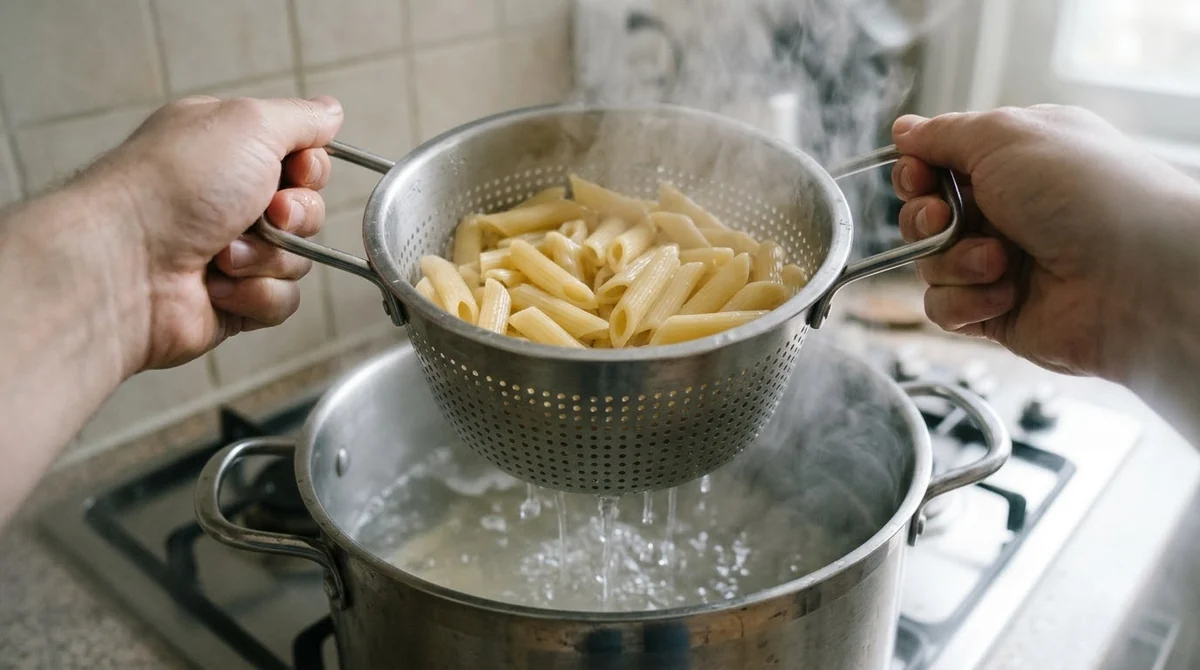
Bronze cut pasta releases more starch into the cooking water, so the water turns starchier than you may expect. Cook it for the time on the package, then drain it a few minutes early so it can finish in the sauce.
Tasting Table recommends around 5 quarts of water per pound of pasta. The coarse texture also makes the pasta very absorbent, so do not rinse it after draining, because the starch on the surface helps the sauce stick.
- Use about 5 quarts of water per pound of pasta.
- Cook for the time on the package and taste a piece near the end.
- Drain a few minutes early and keep some of the starchy water.
- Finish cooking in the sauce, adding splashes of the reserved water as needed.
Dry bronze-cut pasta looks paler and more matte than smooth Teflon-die pasta, so expect a different color from the brighter yellow of standard pasta. That paler look is part of what is bronze cut pasta in the pot as well as on the shelf.
Because the rough surface takes up more liquid, add sauce in stages and loosen it with a splash of the starchy cooking water rather than dumping it all in at once.
Why Italian Pasta Gets Its Reputation for Quality
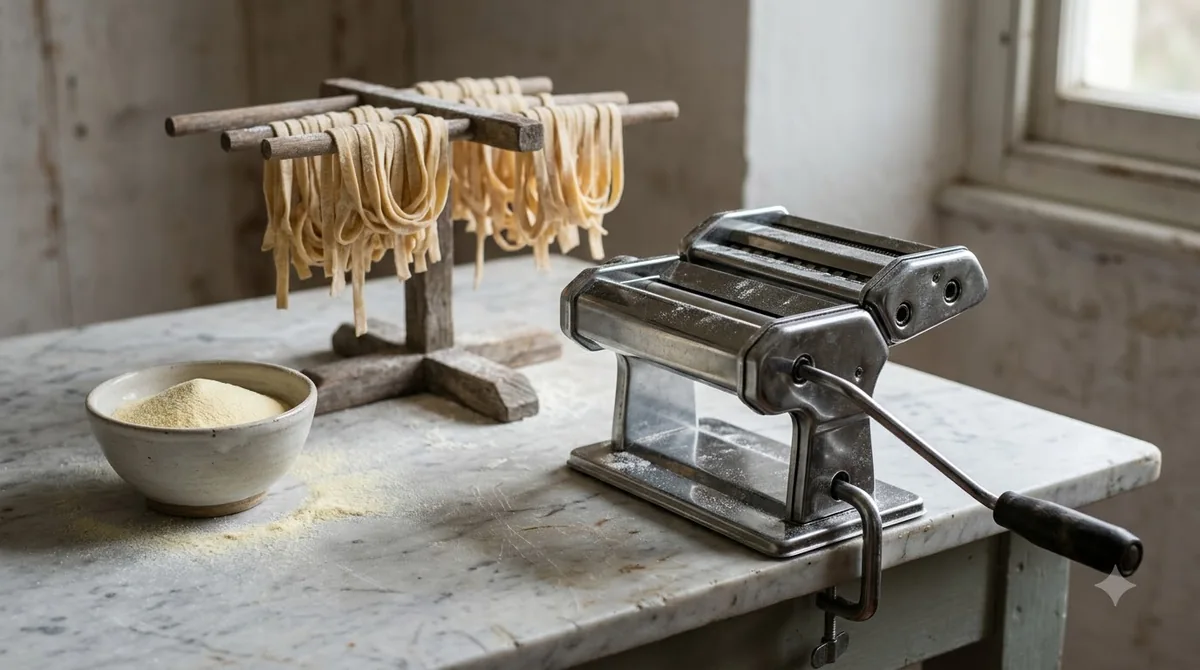
Many cooks link what is bronze cut pasta with Italian quality, a reputation built on three things: durum wheat semolina, bronze dies in many brands, and slow drying. Italian origin alone is not proven to make pasta better.
Durum wheat semolina is the base for most dried pasta sold as Italian, while the finer flour explained in our what is 00 flour guide is more common for fresh pasta and pizza. Bronze dies and slower drying are the two process choices that matter most for texture, and both are used by makers outside Italy too.
- Durum wheat semolina dough, the base for most dried pasta.
- Bronze dies, which roughen the surface for sauce grip.
- Slow drying, which Tasting Table links to a paler color and a better bite.
Brands helped carry the style to American shoppers. According to Tasting Table, Rustichella d’Abruzzo became popular in the United States after Dean and DeLuca used its pasta in New York dishes in the 1980s. That history shows bronze-cut pasta has long been valued by cooks, even after most grocery pasta moved to smooth dies.
Taste is harder to prove than texture, so what is bronze cut pasta is best judged by grip and bite rather than flavor claims. Dough ingredients matter as much as the die, so check the ingredient list for 100 percent durum semolina before you assume a label means better flavor.
Frequently Asked Questions
What is bronze cut pasta and does it taste different?
Sources disagree on whether bronze cut pasta tastes different, and the tests that exist focus on texture and sauce grip rather than a proven taste gap. Some producers say the dough ingredients shape flavor more than the die does, so compare the ingredient list before you decide.
Is bronze cut pasta worth the extra money?
Once you understand what is bronze cut pasta, it is worth trying when sauce grip matters, such as with chunky meat sauces or oil-and-cheese dishes. For simple dishes or a tight budget, standard pasta still cooks well and is the sensible everyday choice.
Does bronze cut pasta hold sauce better?
Yes, and that is the core of what is bronze cut pasta: the coarser surface gives sauce more to grip, which is the main reason cooks choose it. The tests on record measure absorption rather than sauce clinging directly, so the benefit is well reasoned but not a direct measurement.
How long should I cook bronze cut pasta?
Follow the cooking time on the package, then taste a piece near the end. If you plan to finish it in the sauce, drain it a few minutes early, since it keeps cooking there.
What is bronze cut pasta, and is it healthier?
No health claim is proven here. Bronze cut and standard pasta are both dried durum-based pasta, so compare the nutrition label on each pack rather than the die type.
Where can I find bronze cut pasta?
Check the pasta aisle for the label terms, and browse our pasta and pantry guides for shape and sauce pairings, including Italian import shelves and supermarket brands. Bronze-cut pasta is now sold at budget chains too, though selection varies by store.
Knowing what is bronze cut pasta helps you decide when the extra cost is worth it. Buy bronze cut pasta when sauce grip matters and the extra cost fits your budget. For everyday cooking with light sauces, standard pasta is a reasonable choice. That is the short answer to what is bronze cut pasta. Check the label for “bronze cut” or “al bronzo,” and compare the ingredient list before you pay more.