
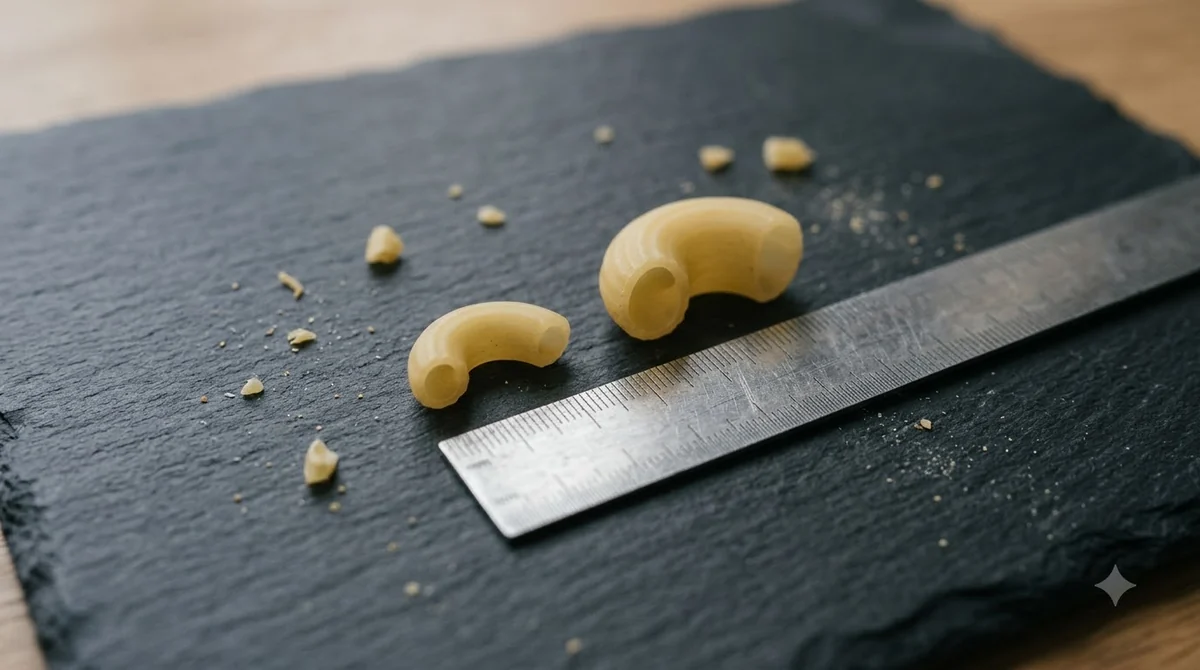

Calamarata pasta is a short, thick ring pasta from Naples that looks like sliced squid. Its name echoes calamari, and it is traditionally served with seafood. The rough, bronze-cut surface helps it hold chunky sauces.
It is a little shorter than paccheri, which makes paccheri the closest substitute. Check the cooking time on the package, because brands differ. For other shapes that catch chunky sauce, browse our pasta shape guides.
What Is Calamarata Pasta?
Calamarata pasta is an extruded durum wheat semolina pasta cut into short rings that resemble sliced calamari.
The name comes from calamari, the squid that the rings are meant to look like. Pasta Evangelists describes the rings as short and thick, with a shape close to paccheri but shorter. Because it is a dried pasta, you can keep a pack in the cupboard and cook it whenever a seafood sauce is on the menu.
The name can also be confusing on a menu. Pasta Evangelists notes that restaurants on the Neapolitan coast sometimes call it mezzi paccheri, meaning half paccheri, which reflects how close the two shapes are. If you see either name, you are looking at a ring-shaped pasta, not a squid dish.
Shape, Size and Texture
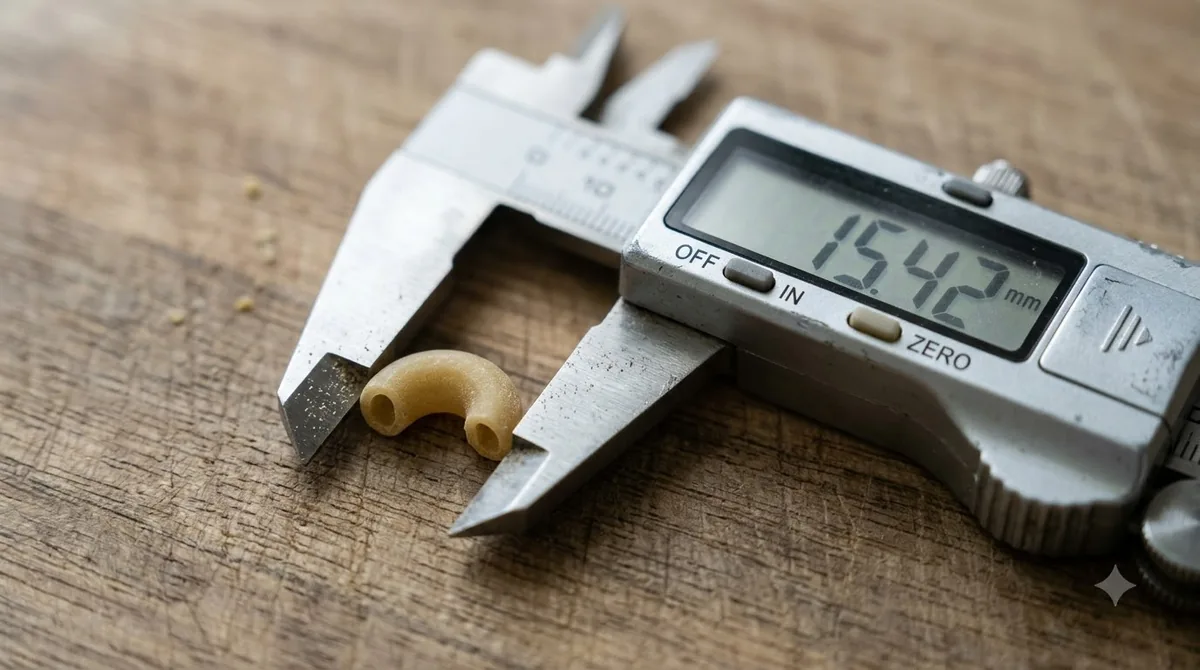
Garofalo’s N 20-2 calamarata pasta measures 22 mm long and 1.42 mm thick, with a rough surface from bronze drawing.
| Attribute | Garofalo N 20-2 | What it means |
|---|---|---|
| Length | 22 mm | Short enough to sit in a bowl with sauce |
| Thickness | 1.42 mm | Thick walls that keep a firm bite |
| Surface | Bronze drawn | Rough surface from the bronze die |
| Cooking time | 15 minutes | Other brands can differ, so check the package |
| Pack size | 454 g (1 lb) | About 8 servings per pack |
Calamarata pasta belongs to the paccheri family, so both are wide shapes that suit a chunky sauce. Garofalo describes its calamarata as a special shape that resembles squid rings, and it is made from durum wheat semolina.
Garofalo makes its calamarata from durum wheat semolina and draws it through bronze dies. For a home cook, the thick rings and rough surface suit a chunky sauce better than a thin one.
The trade-off is that the shape is not particularly efficient at adhering sauce to its surface, so a thin sauce will slide off the rings. If you prefer a sturdier tube for the same sauces, try rigatoni pasta, or conchiglie pasta if you want a shell that cups chunky pieces. Another cupped option is torchio pasta, a curved short shape that holds sauce well. The bronze-drawn surface and the thick walls help the pasta keep its texture, but the best results come from sauces with bits of squid, tomato and herbs that can settle between the rings.
Where Calamarata Pasta Comes From
Calamarata pasta comes from Naples in Campania, southern Italy, and it is also used along the coasts of Calabria and Sicily.
Naples is its home, and Neapolitan cooks have long served it with seafood. Pasta Evangelists adds that calamarata pairs especially well with seafood such as swordfish ragù, and its La Calamarata recipe calls for a tomato grown in the volcanic soil at the base of Mount Vesuvius. Wikipedia’s Calamarata entry places its origin in Naples and notes that it is often dyed with black squid ink to resemble sliced calamari.
The Pasta Project notes that calamarata is produced nearly always using artisan bronze dies, which is why many packs look rougher than standard pasta. Coastal Campania, Calabria and Sicily are the regions where it appears most often in traditional dishes, and Pasta Evangelists places it along the Tyrrhenian Sea coast.
Classic Sauces That Pair Well
The classic pairing for calamarata pasta is squid and tomato, cooked with white wine, garlic and chili.
Garofalo’s calamarata with squid recipe serves four and uses these ingredients:
- 500 g squid or baby squid
- 300 g fresh tomatoes, ideally ripe cherry tomatoes
- Half a glass of dry white wine
- 1 garlic clove and chili pepper to taste
- A pinch of sugar, salt and chopped parsley
The method is simple. Cut the squid body into rings of about 2 cm and the legs into pieces, then follow these steps:
- Brown the garlic clove and chili over a very low heat.
- Raise the heat, cook the squid for a couple of minutes, then pour in the wine and let it evaporate.
- Add the halved tomatoes, along with a pinch of sugar and salt.
- Cover the pan and cook for about ten minutes, until the squid is tender. Cooking time depends on the squid size.
- Drain the pasta, add it to the pan with chopped parsley, and stir well.
In Sicily, cooks often pair calamarata with swordfish and pachino tomatoes, as Pasta Evangelists notes. The same source says Calabrian pepperoncino chili peppers feature in its La Calamarata recipe, and The Pasta Project adds that meat sauces are rarely used. Toss the pasta into the squid sauce right away so the sauce stays glossy.
How to Cook Calamarata Pasta
Garofalo lists 15 minutes for its N 20-2 calamarata pasta, but other producers can be shorter or longer, so follow the label on your pack.
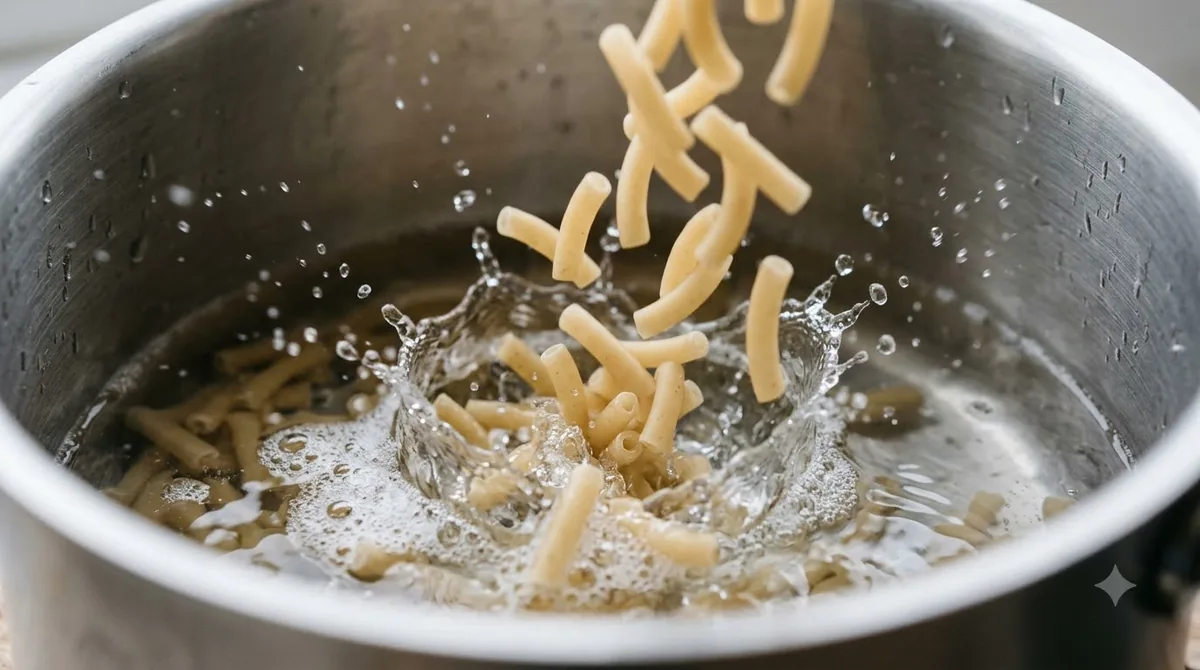
- Bring a large pot of salted water to a rolling boil.
- Add the calamarata and cook for the time on the package, which is 15 minutes for Garofalo N 20-2.
- Start tasting about two minutes before the end, as Garofalo’s recipe suggests.
- Drain while it is still firm, because it keeps cooking when tossed in the sauce.
Reserve a cup of pasta water before you drain. Add two to three tablespoons at a time while tossing, to loosen a sauce that has become too thick. Serve straight away, because the rings soften the longer they sit.
If you need to make the dish ahead, Pasta Evangelists suggests reheating it al cartoccio, wrapped in baking parchment or foil in the oven. Do not overcook the rings before that step, since soft calamarata loses the bite that makes it work with seafood sauces.
Calamarata vs Paccheri and Other Substitutes
Paccheri is the closest substitute for calamarata pasta because it is a wide tube from the same family, though it is longer and wider.
| Pasta | Shape | Best for |
|---|---|---|
| Calamarata | Short, thick ring | Squid and seafood sauces |
| Paccheri | Wide tube, longer and wider | Chunky sauces, the closest substitute |
| Calamaretti | Smaller ring | Dishes that call for a smaller ring |
Pasta Evangelists also points to paccheri as the common substitute when calamarata is not on the shelf. For a fuller profile of that shape, read our paccheri pasta guide. Cook the swap to its own package time and taste it before draining, since the shape and size will differ a little. Match the cooking time on the substitute’s own pack rather than the time you used for calamarata pasta.
Calamaretti is the one to be careful with. Pasta Evangelists calls it the smaller version of calamarata, so it suits a different plate and bite. Choose it only if you want a lighter portion or a smaller ring in the sauce, and not as a like-for-like swap.
Frequently Asked Questions
Is calamarata pasta the same as calamaretti?
No. Calamarata is a short, thick ring, while calamaretti is a smaller ring pasta. Check the package measurements before you buy, since sizes vary by brand.
Can I use paccheri instead of calamarata?
Yes. Paccheri is the closest substitute because it belongs to the same wide tube family. It is longer and wider, so the bite and sauce coverage will differ a little. Cook it to its own package time and taste before draining.
What sauce is best with calamarata pasta?
Chunky seafood and tomato sauces work best. The classic version is squid with tomato, white wine, garlic and chili. Thin sauces are a poor match, since the shape does not adhere sauce especially well.
Why is some calamarata black?
Some versions are dyed with squid ink to look like sliced calamari, according to Wikipedia. Pasta Evangelists notes that the ink gives a light briny taste. Plain versions keep the natural color of durum wheat semolina, so check the label to see which kind you are buying.
How long should I cook calamarata?
Garofalo’s N 20-2 calamarata lists 15 minutes on the package. Other brands can differ, so follow their label. Start tasting about two minutes before the time, and drain while the pasta is still firm.
Where can I buy calamarata pasta?
Italian grocers and online pasta shops sell calamarata pasta. Look for a bronze drawn label if you want the rough texture. Garofalo’s N 20-2 comes in a 454 g (1 lb) pack with about 8 servings.
Choose calamarata pasta when you want a seafood or chunky tomato sauce, and use paccheri if the ring shape is not on the shelf. Check the package time and taste before draining so the rings stay firm.