
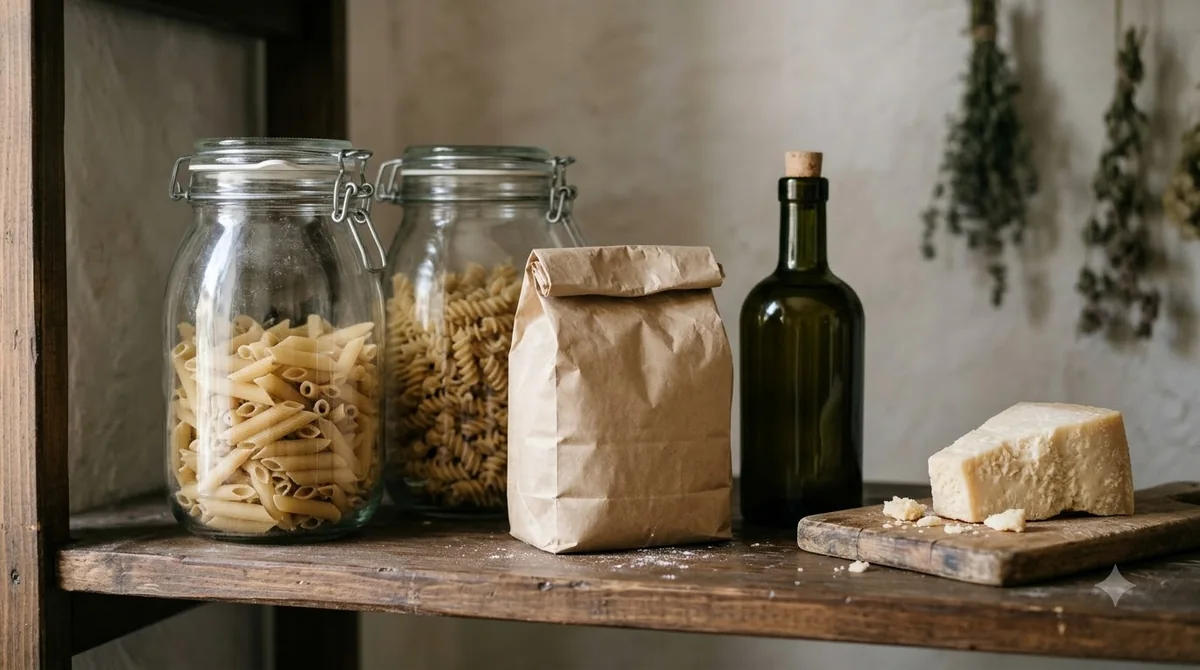

Fusilli bucati pasta is a hollow, corkscrew-shaped pasta from southern Italy, and its name means “hollow fusilli.” The hole running through the center is what separates it from the solid spirals most shoppers know as plain fusilli.
Short and long versions both carry the name. Check the package for the word bucati or col buco before you choose a cooking time.
What Is Fusilli Bucati Pasta?
Fusilli bucati is a hollow corkscrew pasta, and the name translates roughly as “holed” or “hollow,” according to The Pasta Project.
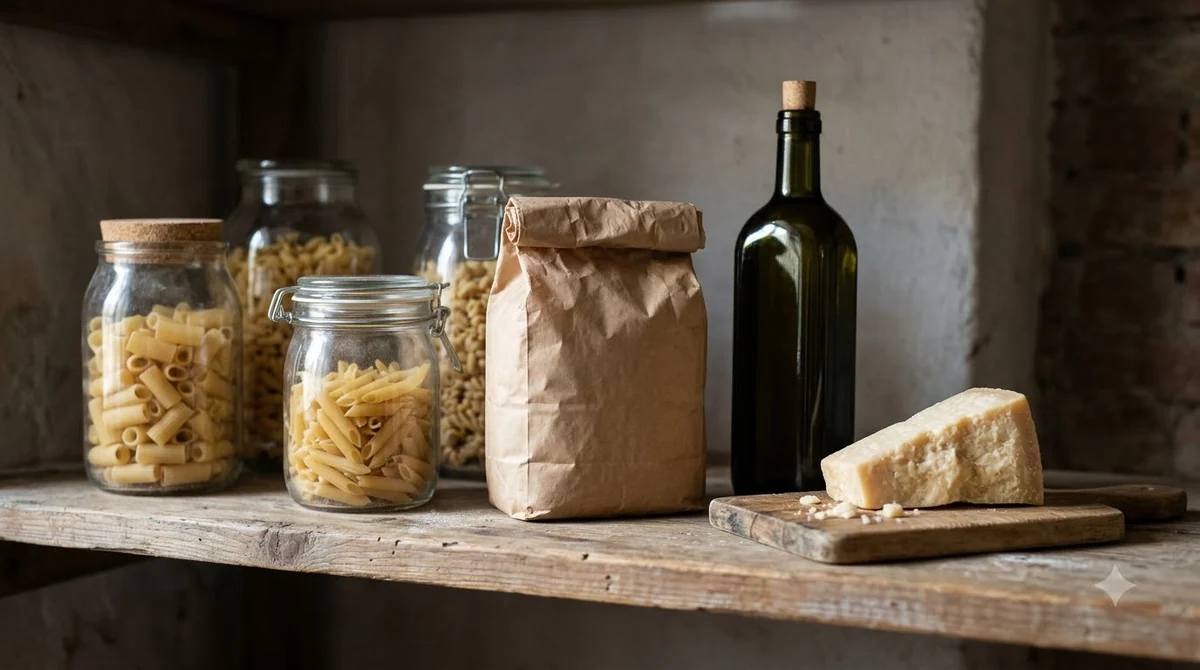
The name has two parts. Fusillo, the singular of fusilli, means little spindle, and bucati refers to the hole. Wikipedia’s entry on fusilli notes that the traditional shape came from wrapping dough around a spindle, which explains the tight spiral.
Fusilli bucati pasta comes in two lengths. The short form is called corti and the long form is called lunghi, and both are hollow. The Pasta Project notes that the hole lets sauce work into the pasta, which is one reason to choose this shape over a solid spiral.
How Fusilli Bucati Differs From Regular Fusilli
Regular fusilli is a solid spiral, while fusilli bucati pasta is hollow, so the two differ in how sauce sits on the pasta and in the words printed on the label.
| Feature | Fusilli bucati | Regular fusilli |
|---|---|---|
| Form | Hollow spiral | Solid spiral |
| Lengths | Short (corti) and long (lunghi) | Short, with fusilli Sorrento as the long solid version |
| Sauce | Sauce fills the hollow center | Sauce coats the outside of the spiral |
| Label words | Bucati or col buco | Fusilli, or rotini in the US and Canada |
Solid fusilli is the plain version of the shape. A long spiral is not automatically hollow, so read the package for the hollow word before you assume the shape. Some long solid spirals are sold as fusilli Sorrento, which the same Wikipedia entry lists as the long solid form.
Texture is the other difference. Regular fusilli pasta is a solid spiral, so sauce clings to the outside only, while the hollow center of fusilli bucati gives the sauce somewhere to settle. In the US, the short solid spiral is also sold as rotini pasta, and our fusilli vs rotini comparison covers the label overlap.
Where Fusilli Bucati Comes From
Fusilli bucati pasta is traced to Campania in southern Italy, the region around Naples where dried pasta production grew. The Pasta Project places the traditional short spiral in Campania as well.
DeLallo’s history of fusilli says the shape was likely developed in southern Italy, specifically Campania, because Naples was at the center of pasta manufacturing beginning in the 18th century. The sources do not fully agree, though. DeLallo’s fast facts list the place of origin as the Lazio region, so Campania is the most widely cited answer rather than a settled date.
Hand-made fusilli was shaped by twisting a thin rope of dough around a long needle or thin rod. Factory fusilli is pushed through dies instead, and The Pasta Project adds that industrial processing later made it possible to produce different types of hollow pasta. According to Garofalo’s product page, its N° 64 Fusilli Bucati Corti is bronze-drawn, made from durum wheat semolina, and certified as Pasta di Gragnano PGI.
Fusilli Bucati, Col Buco and Other Names on the Label
Fusilli bucati pasta and fusilli col buco both mean “with a hole,” but brands do not use the two labels the same way.
- Bucati is the hollow word, and The Pasta Project uses it for both the short and long hollow forms.
- Col buco also means “with a hole.” DeLallo describes its fusilli col buco as a long hollow pasta.
- Corti means short and lunghi means long, so the length word often tells you more than the shape name.
- Rotini is the name Wikipedia gives to the short helicoidal shape in the US and Canada. It does not describe a hollow rotini.
Because the labels overlap, the safest check is the product name plus a look at the pieces. If the box does not say bucati or col buco, assume the pasta is solid.
Why the Hollow Center Matters for Sauce
The hollow center lets fusilli bucati pasta hold sauce inside the spiral, which makes it a good match for chunky and meaty sauces that cling to the pasta.

DeLallo says the hollow center and curves help the pasta capture sauce. Its suggested pairings include:
- Classic fresh or jarred tomato sauce
- Pesto
- Olive oil with sautéed mushrooms, Italian sausage or leafy greens
- Rustic meat ragù and bolognese
The Pasta Project also recommends fusilli bucati pasta for baked dishes and pasta salads, where the shape holds up during cooking. DeLallo adds that bronze-die pasta has a rougher surface that grips sauce better, so look for bronze-drawn on the label when grip matters.
Pasta salad is a good fit too, because The Pasta Project says short fusilli bucati can be baked, used in pasta salads or served with vegetable, fish or fairly heavy sauces. DeLallo also lists soups such as chicken noodle soup and pasta fagioli, with the pasta broken into shorter pieces before it goes into the broth.
How Long to Cook Fusilli Bucati Pasta
Fusilli bucati pasta takes about 9 minutes for Garofalo’s short version and about 11 minutes for DeLallo’s fusilli col buco, so the package time is the final guide.
Times differ by brand and by length, which is why the sources do not agree on one number. Follow these steps for either style.
- Use about 5 quarts of water for every pound of pasta, as DeLallo recommends.
- Salt the water generously.
- Add the fusilli bucati pasta and stir so the pieces do not stick together. For a rougher, sauce-gripping surface, look for bronze-drawn pasta such as bronze cut pasta.
- Start testing for doneness a little before the package time.
DeLallo’s own page gives a range of 11 to 12 minutes for its fusilli col buco, so a package that says 9 and one that says 11 can both be right. Neither page gives a cooking time for fresh homemade fusilli, so follow your recipe for that.
Choosing and Substituting Fusilli Bucati
Choose fusilli bucati pasta when you want sauce inside the spiral, and check the label for the hollow word before swapping in solid fusilli.
The hollow shape suits chunky sauces, meat ragù, pesto and baked dishes, where the hole can hold the sauce. Solid fusilli works well with lighter sauces that coat the outside of the spiral. DeLallo also lists soups such as chicken noodle soup and pasta fagioli for its fusilli col buco, with the pasta broken into shorter pieces.
If a recipe calls for fusilli bucati pasta and your store has only solid fusilli, the swap still works, but each piece will carry less sauce inside. Use the cooking time printed on the package you actually bought, since the two brands in these sources differ by about 2 minutes.
Frequently Asked Questions
Is fusilli bucati pasta the same as regular fusilli?
No. Fusilli bucati pasta is a hollow corkscrew, while regular fusilli is a solid spiral. Both are spirals from southern Italy, but the hollow center lets sauce sit inside each piece. The word bucati or col buco on the label tells you which one you have.
Is fusilli bucati the same as rotini?
Not necessarily. Wikipedia says fusilli is called rotini in the United States and Canada, but it does not describe a hollow rotini. Check the product name and whether the pasta has a hole before you treat the two as interchangeable in a recipe.
How long does fusilli bucati take to cook?
Garofalo lists 9 minutes for its short fusilli bucati, and DeLallo’s fusilli col buco takes about 11 minutes. Follow the time on your package, and start testing a little before it ends so the pasta stays al dente.
What does col buco mean?
Col buco is Italian for “with a hole,” which describes the hollow center of the pasta. DeLallo uses the name for its hollow fusilli, and some sellers use it alongside bucati. Read the full product name before you buy.
Does fusilli bucati hold sauce better than solid fusilli?
For many sauces, the sources suggest it does. DeLallo says the hollow center and curves help the pasta capture sauce, and The Pasta Project says the hole lets sauce work into the pasta. Chunky sauces and meat ragù suit it best.
Which sauces go best with fusilli bucati?
The sources recommend tomato sauce, pesto, mushrooms with olive oil, sausage, meat ragù and bolognese. The Pasta Project also suggests baked dishes and pasta salads, where the shape keeps its form during cooking.
Choose fusilli bucati pasta when you want the sauce to sit inside the spiral, such as with a thick ragù or a baked pasta, and see cavatappi pasta for another corkscrew shape. For a tiny toasted Sardinian pasta instead, see what fregola is. Read the label for bucati or col buco, and follow the cooking time on that package rather than a generic one.