
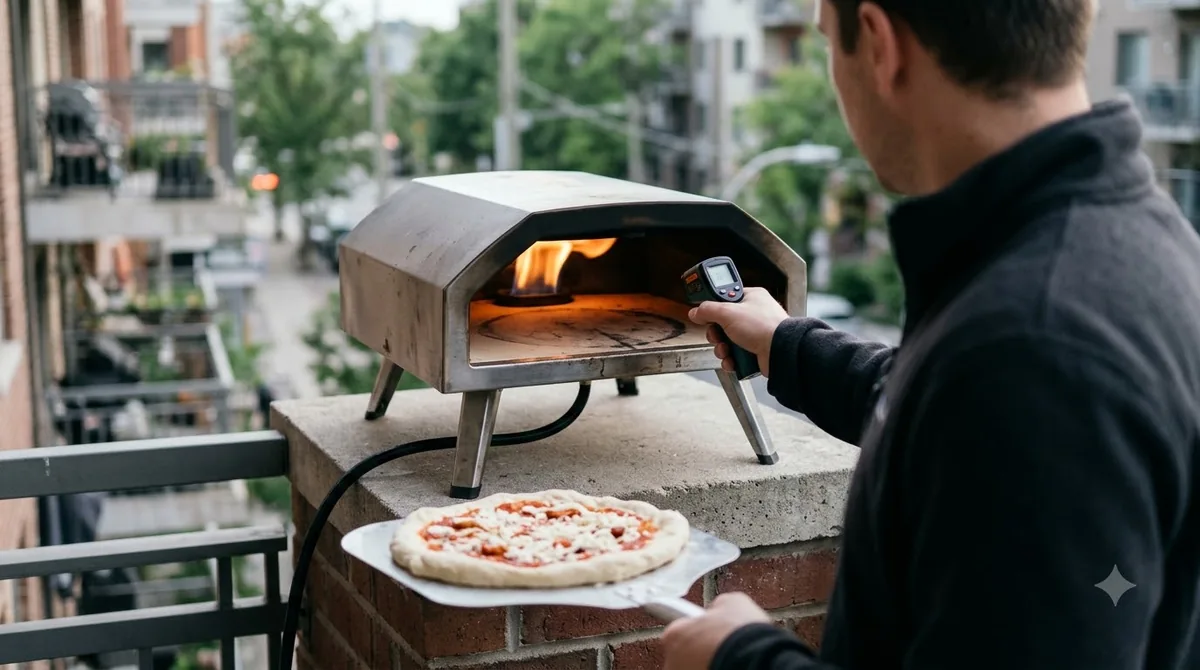

The Gozney Dome temperature can reach up to 950°F (500°C), according to Gozney, but most dishes need far less heat. Pizza, roasted vegetables and fish each have their own setting, and the published figures do not all measure the same thing. Read the Gozney Dome temperature figures as guides, then confirm the real heat before you cook.
How Hot the Gozney Dome Temperature Gets
Gozney says its ovens reach up to 950°F (500°C), well above a home oven that usually tops out at 500 to 550°F (260 to 290°C). The figure comes from Gozney’s pizza oven guide, which describes Gozney ovens in general rather than the Dome alone.
The same guide gives a typical pizza oven range of 600 to 900°F (315 to 482°C), and our pizza oven temperature guide shows how that range plays out across oven types. That makes 950°F a ceiling for the Gozney Dome temperature, not a cooking target. Most food never needs the top of the scale, and a dish that runs too hot can scorch its toppings before the base is cooked.
The guide is not fully consistent. In different places it gives 500°F and 600°F as the lower end of the pizza range, and elsewhere it gives 700 to 900°F as the summary range. Treat these as starting points and check the Gozney Dome temperature on your own oven. The smaller portable Gozney oven has its own figures in our Gozney Roccbox temperature guide.
Gozney Dome Temperature for Pizza
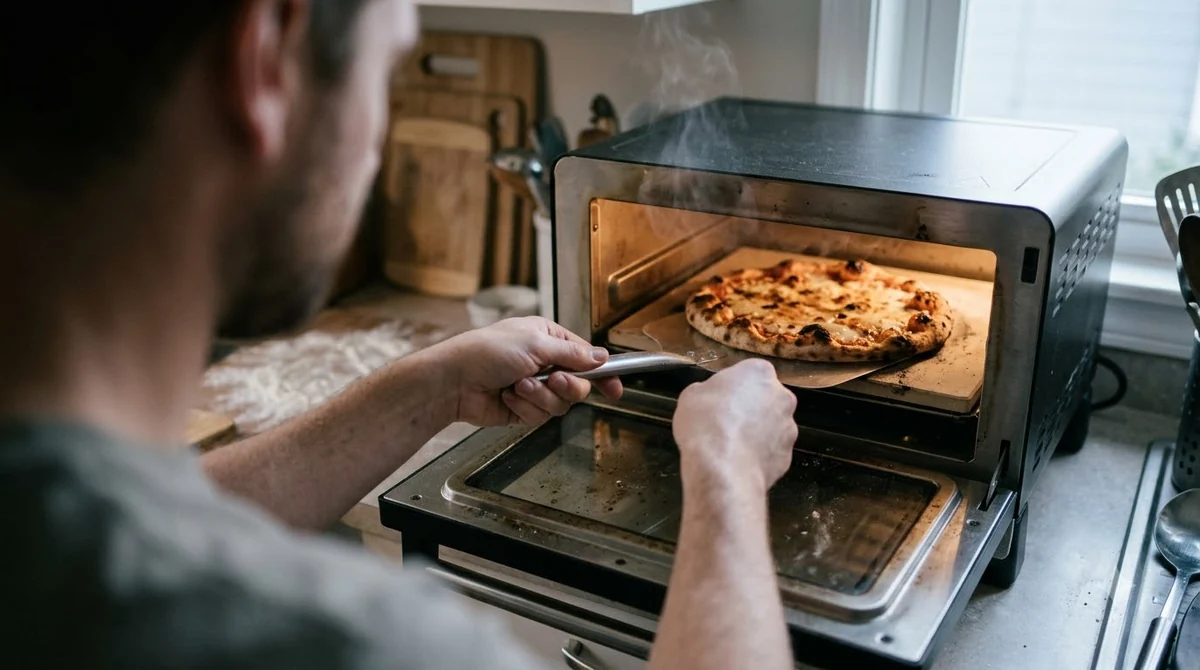
For pizza, Gozney’s guide gives 800 to 900°F (427 to 482°C) for thin crust and 400 to 450°F (204 to 232°C) for deep dish. Deep dish needs a lower heat and a longer bake, so the two styles are not interchangeable.
| Style | Temperature | Notes |
|---|---|---|
| Thin-crust pizza | 800 to 900°F (427 to 482°C) | Highest setting in the guide |
| Deep-dish pizza | 400 to 450°F (204 to 232°C) | Longer cook time |
| Any pizza oven | 600 to 900°F (315 to 482°C) | General range, not Dome-only |
The guide does not publish a separate Gozney Dome temperature setting for each pizza style, so the table shows general ranges for pizza ovens. Choose a target inside the range for your style, then check it before the first pizza goes in. Once you find a reading that works, write it down so the next bake starts from the same point.
The Gozney Dome manual does tie Gozney Dome temperature to flame size when you fire the oven on wood. Large rolling flames mean 750°F and above, which is the setting for fast cooks such as Neapolitan pizza. Smaller flames and embers give lower heat for other food. For wood-specific numbers, see our wood pizza oven temperature guide.
- Large rolling flames, 750°F and above: fast cooks such as Neapolitan pizza, fed with small pieces of kiln-dried hardwood kindling (1 to 2 inches). The manual says not to use the door.
- Small flames, 400 to 650°F: finishing meats, charring vegetables or small cast iron dishes such as lasagna, with larger pieces of hardwood (2 to 4 inches). The door may be used only when ajar, and never left unattended.
- Embers, below 400°F: slow roasting meats or vegetables and baking bread, once the fire has died down after the oven is saturated. The door can be closed or ajar.
The same chapter says the flame should roll across the roof of the oven, and that flames should never come out of the mouth of the oven. If that happens, step away and wait for the fire to die down.
Temperatures for Roasting and Fish
For Gozney Dome temperature settings, the recipe page lists 350 to 400°C (660 to 750°F) for puff bread, 300°C (570°F) for roast cauliflower and 180 to 200°C (350 to 392°F) for glazed salmon. Each dish has its own cook time. Our guide to Gozney Dome recipes walks through all three dishes.
- Puff bread: a couple of minutes at 350 to 400°C (660 to 750°F), with the dough rolled out to about 1 cm thick, until it puffs up and turns golden brown with some charred areas.
- Roast cauliflower: 40 to 50 minutes at 300°C (570°F) wrapped in foil, then 5 minutes unwrapped if you want more color. The recipe has you rest the cauliflower for 5 minutes before opening the foil.
- Glazed salmon: preheat the Dome to 180 to 200°C (350 to 392°F) using wood or gas, after bringing the fish to room temperature and resting it with salt for 15 minutes. Cook it for 15 to 20 minutes, basting and turning.
The recipe page gives no separate preheat for the bread or the cauliflower, and it does not say whether its figures refer to the dial, the stone or the air inside the oven. Pick one reading method for your Gozney Dome temperature checks and use it every time, so you can compare results from one cook to the next.
How to Measure the Heat Accurately
Accurate Gozney Dome temperature readings start with the digital display, which shows oven and probe temperatures, and its sensor reads the temperature from within the oven. The manual says to feed the sensor cable into the dock at the rear of the display, which is held in place with a magnet.
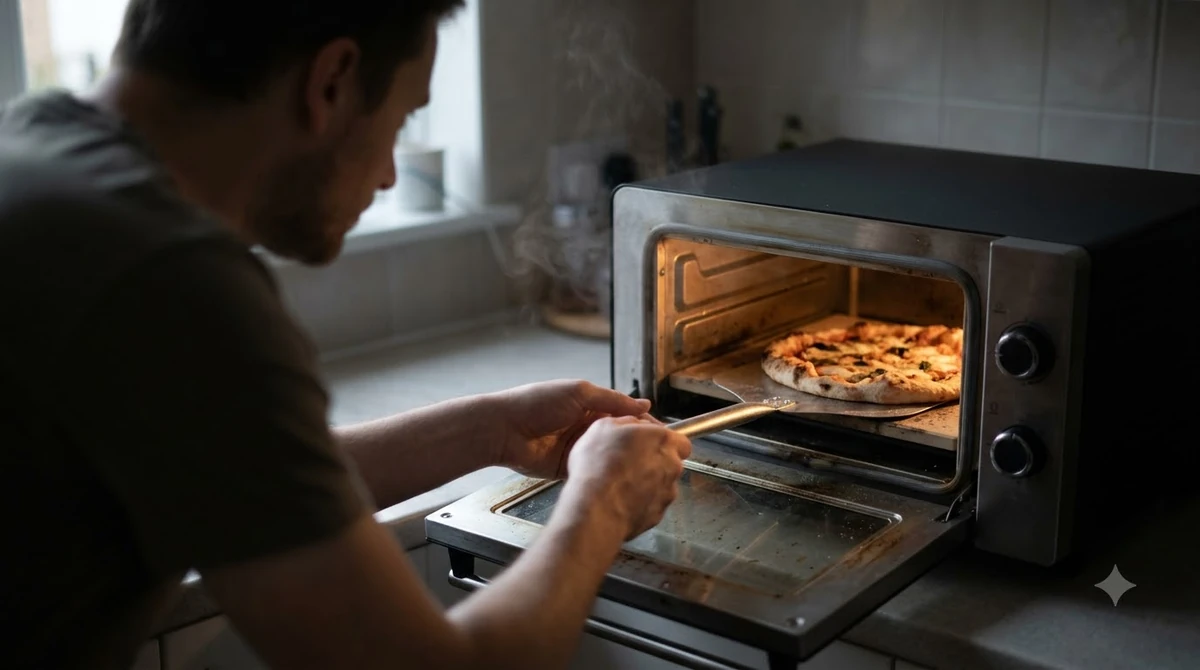
When probes are connected, the display cycles through the oven reading and each probe reading. For meat, the Gozney Dome manual advises putting the probe in the coldest part, which is the centre of the thickest piece, with the tip away from bone, fat and gristle. Keep the probe leads away from the flame, since direct contact with fire damages the device.
The manual also reproduces the FDA safe minimum internal temperatures. Check your food against these figures, and check the current USDA or FDA guidance before you rely on them for a specific food.
| Food | Safe minimum internal temperature |
|---|---|
| Fresh beef, veal, lamb or pork | 145°F, with a 3 minute rest |
| Ground beef, pork, veal or lamb | 160°F |
| Poultry, including ground chicken or turkey | 165°F |
| Fish with fins | 145°F |
Gas Heat Control and Cooling Down Safely
For Gozney Dome temperature control, the manual says the first firing should run on a medium to low flame for about 30 minutes to cure the oven, then move to high heat. After curing, you can bring the oven up to the temperature you want straight from ignition. If the oven has sat unused for a long time, cure it again as if it were a first firing.
A healthy flame is yellow and rolls along the top of the oven. Low heat can also come from the fuel supply. The manual lists a near-empty cylinder, a cylinder that is too small and an ambient temperature below 0°C as causes of a small flame, and it recommends a 9 kg cylinder as a minimum. For fuel questions, see our Gozney Dome natural gas guide.
If the oven probe passes 700°C (1,292°F), the display shows error E3. The manual says to turn the gas off and let the oven cool naturally, and warns that rapid cooling may crack the stone floor. To shut down, turn the gas off at the cylinder first, wait three minutes, and only then remove the regulator and set the dial to off.
Gozney Dome temperature on wood has its own rules. The manual says to bring the oven up to temperature slowly the first time to prevent thermal shock to the stone floor, and to keep the first fire at a moderate level for 30 to 60 minutes.
Frequently Asked Questions
What happens if the oven goes above 700°C?
The Gozney Dome temperature display shows error E3 once the oven probe passes 700°C (1,292°F). The manual says to turn the gas off and let the oven cool naturally. Do not try to cool it quickly, because rapid cooling may crack the stone floor or stress the oven.
How long should a new Dome cure before cooking?
The manual recommends about 30 minutes on a medium to low flame for the first firing. That cures the oven before you raise it to high heat. Cure it again after a long period without use, following the same steps.
Why does my flame look small?
When the Gozney Dome temperature stays low, check the flame. The manual lists a near-empty gas cylinder, a cylinder that is too small, an ambient temperature below 0°C and a blocked burner as common causes. It recommends a 9 kg cylinder as a minimum. If the burner is blocked, follow the cleaning steps in the manual.
Do the recipe temperatures match the oven dial?
The recipe page does not say whether its Gozney Dome temperature figures refer to the dial, the stone or the air. Use one consistent reading from the Dome’s display, and treat each recipe figure as a target to check against your own thermometer.
Check the Gozney Dome temperature on the display before you cook, and keep a probe ready for meat. Use the published ranges as a starting point, then adjust for your oven, your fuel and your food. If the heat or the flame behaves in a way the manual does not describe, stop and follow the manual before you continue. For a full walkthrough, see our Gozney Dome manual guide.