
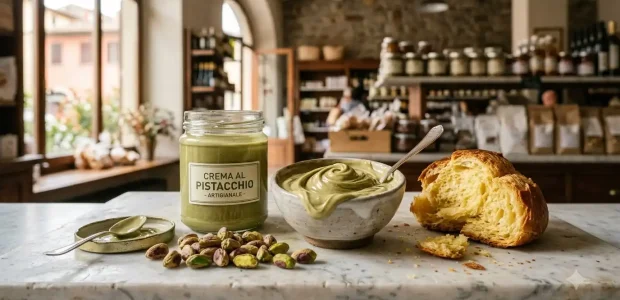

For most home buyers, the best Italian pistachio spread brand is the one whose label declares a high pistachio share, around 40 to 45 percent, and Pistì and L’Oro Del Sud both state 45 percent. Gusto Etna makes sense when you buy by the kilo. Campo D’Oro offers two different products: a milder sweet cream and a pure paste for pastry work. Below you’ll find a side-by-side comparison, a shortlist by use, and the label checks that keep you from paying premium prices for a jar that is mostly sugar.
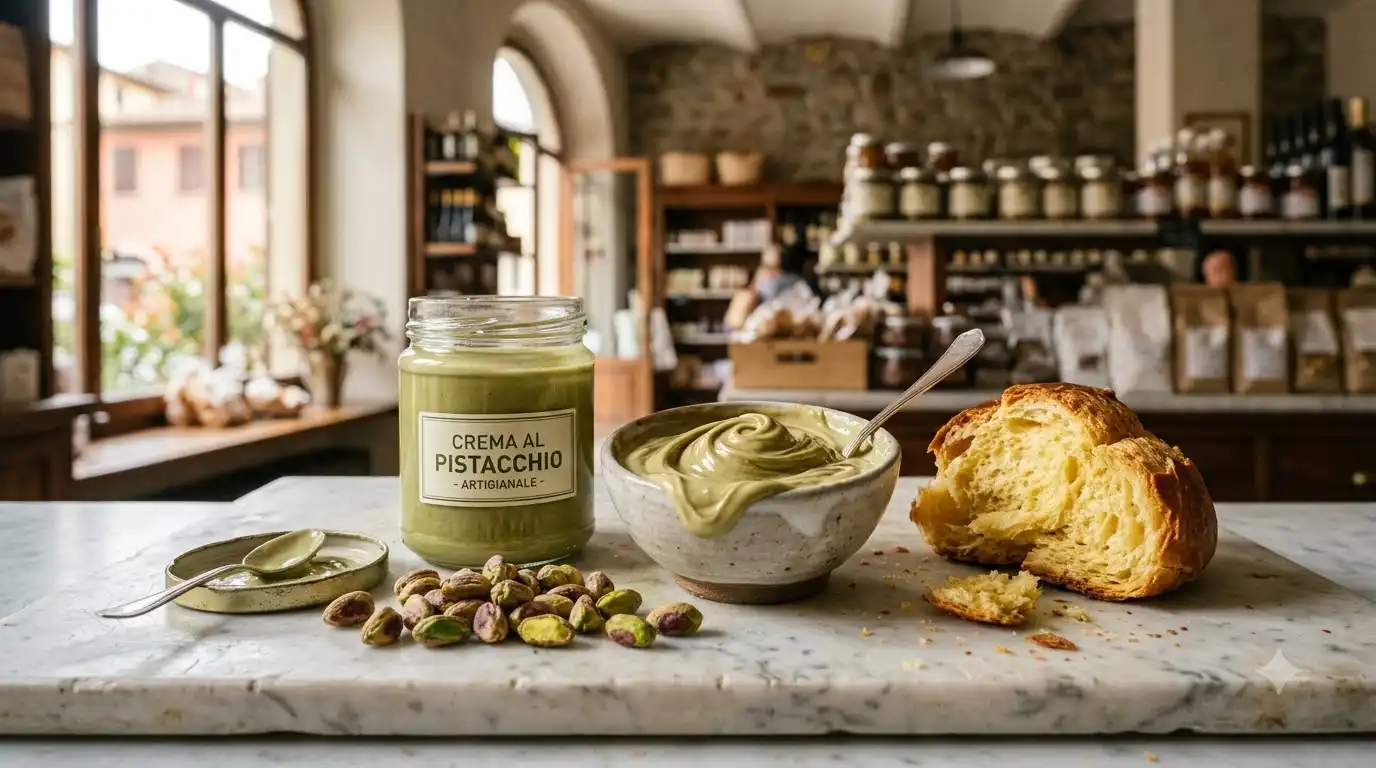
What separates a great Italian pistachio spread from an average one?
The pistachio percentage on the label, and where pistachio sits in the ingredient list, tell you more than any Sicilian branding does.
Most sweet pistachio creams blend nuts with sugar, milk powder and vegetable fat. The ratio decides whether you taste pistachio or sweetened fat. Under FDA labeling rules, packaged foods must list their ingredients from heaviest to lightest by weight. A jar whose list starts with sugar therefore contains more sugar than anything else.
Before you weigh brand reputation, run these checks:
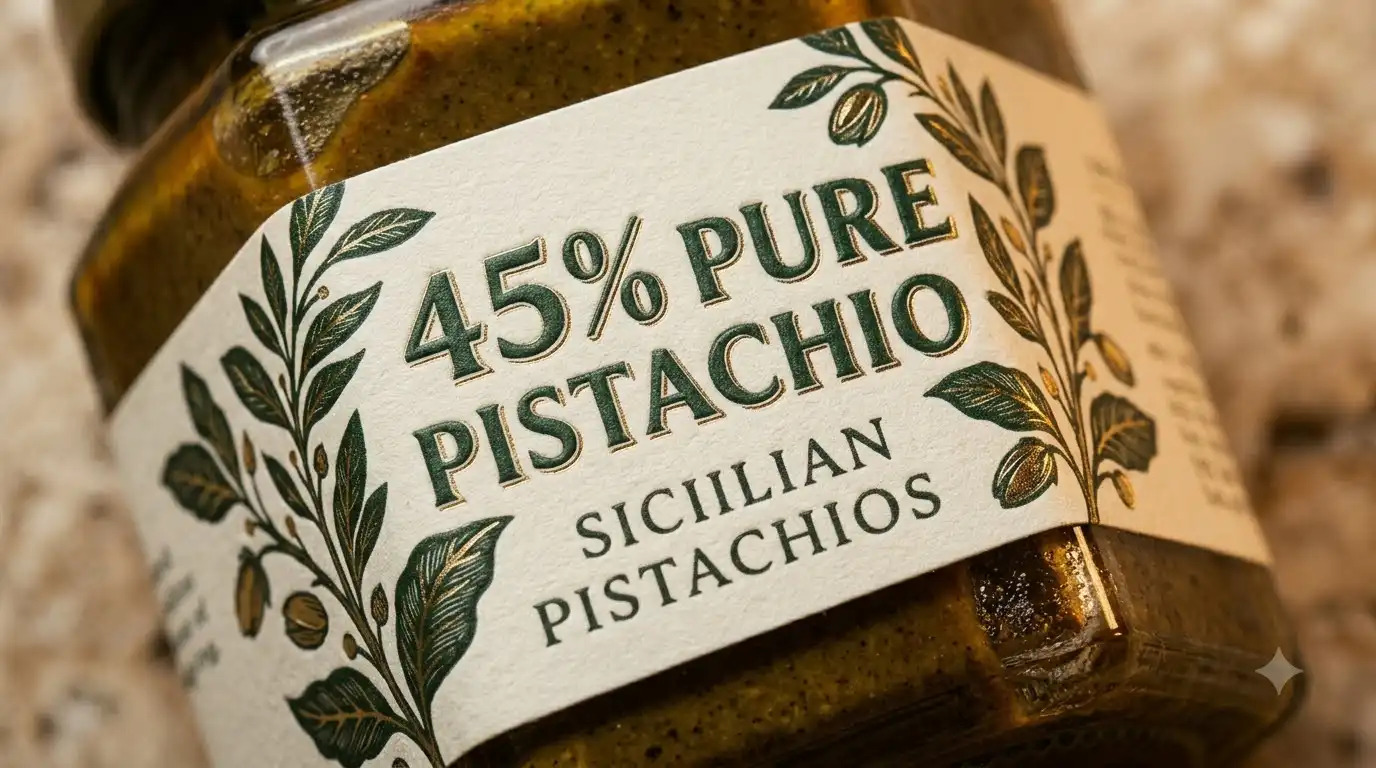
- The label declares a pistachio share of 40 percent or more. That generally gives a more pronounced nut flavor than jars in the low 20s.
- Pistachio is the first ingredient, or at least appears ahead of sugar.
- The fat blend is one you’re comfortable with. Some brands state they avoid palm oil and others say nothing.
- The origin wording matches what you’re paying for, which the next section covers.
- The jar size matches how fast you’ll use it, because a kilo tub only saves money if you finish it.
The most common buying mistake is treating “Sicilian” or “Italian” on the front label as a quality score. Those words tell you where the product was made or where some of the nuts came from. They say nothing about how much pistachio is in the jar.
Why “made in Bronte” is not the same as Bronte DOP
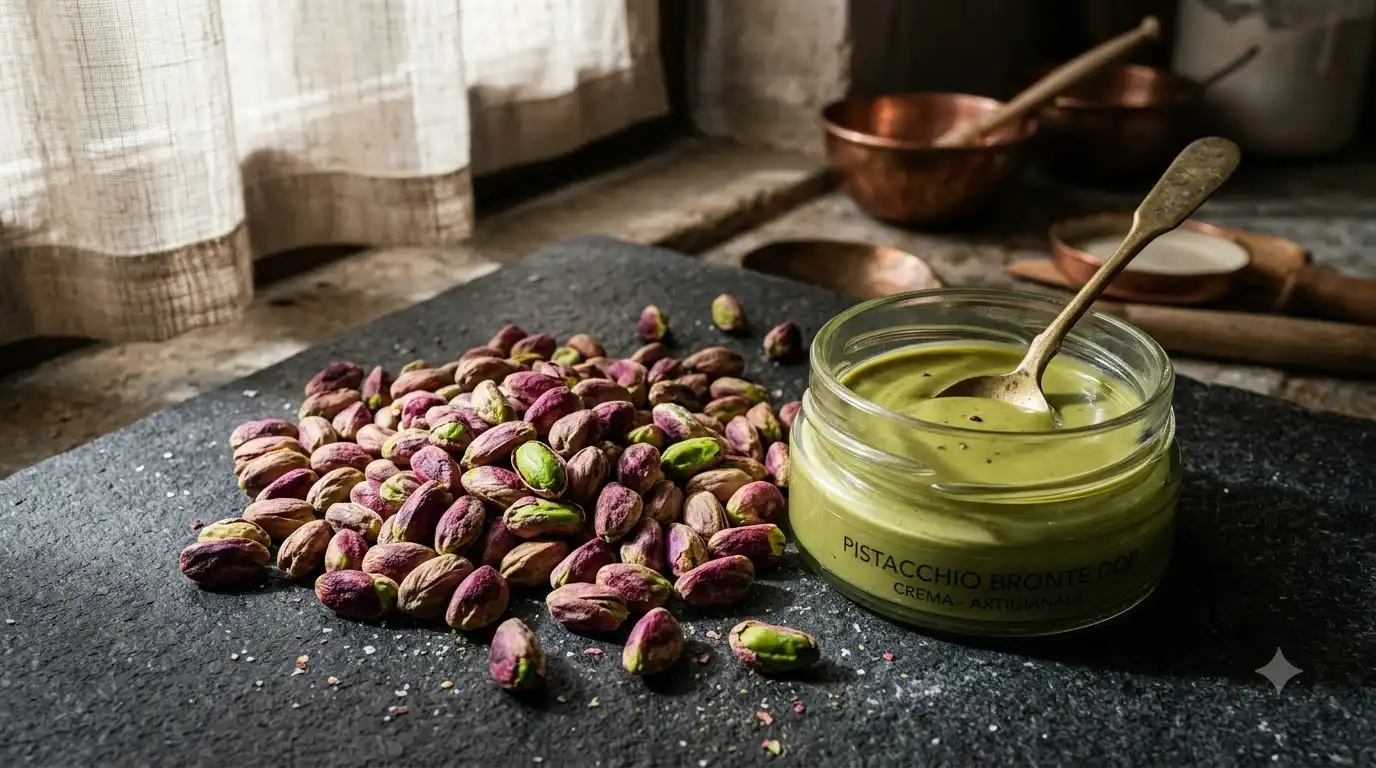
Only a jar that prints the full name Pistacchio Verde di Bronte DOP is claiming the protected nut. A company based in Bronte does not automatically use DOP pistachios in every product.
The protected designation covers pistachios grown in Bronte, Adrano and Biancavilla in the province of Catania. They are picked by hand every two years, generally between August 20 and October 10. That limited, alternate-year supply is one reason true DOP creams cost more.
Pistì, a producer based in Bronte, shows how this works in practice. Its online shop sells a dedicated DOP pistachio cream as a separate product from its standard 200 g jar, whose ingredient panel lists pistachio at 45 percent without a DOP designation. If protected origin matters to you, look for the full DOP name on the label, not just the town. The Bronte consortium lists stepping up checks on the DOP product among its main objectives.
How do the best Italian pistachio spread brands compare?
Pistì and L’Oro Del Sud lead on declared pistachio share. Gusto Etna wins on bulk formats, and Campo D’Oro offers both a milder sweet cream and a pure paste.
| Brand and product | Stated pistachio share | Sizes seen | Price checked Sept 17, 2026 | Best fit |
|---|---|---|---|---|
| Pistì pistachio cream | 45% | 90 g, 200 g, 600 g, 1 kg | €6.70 per 200 g on Pistì’s Italian shop | Spreading, gifting, eating by the spoon |
| L’Oro Del Sud pistachio cream | 45% (crunchy version 40%) | 200 g | $5.50 per jar at Wholesale Italian Food | Everyday spreading at a lower US price |
| Gusto Etna Sicilian pistachio cream | 35% (squeeze pouch 20%) | 190 g, 200 g pouch, 1 kg, 3 kg | $8.10 per 190 g, $28.90 per 1 kg | Bakeries, cafés, frequent bakers |
| Campo D’Oro sweet pistachio cream | Listed after sugar and oils | 180 g, 600 g, 2 kg | Varies by size | Milder, sweeter fillings |
| Campo D’Oro pure pistachio paste | 100% per product title | 520 g, 2 kg | Varies by size | Unsweetened pastry work; confirm the label first |
Prices and stock change often, so treat these figures as a snapshot from September 17, 2026.
Pistì vs L’Oro Del Sud.
These two are close on pistachio share, so the difference comes down to price and access.
- Pistì’s 200 g jar lists pistachio at 45 percent, is labeled gluten-free and palm-oil-free, and sells for €6.70 on the brand’s Italian shop. That works out to about €3.35 per 100 g before shipping.
- L’Oro Del Sud’s 45 percent jar costs $5.50 at Wholesale Italian Food and drops to $4.95 per jar at 240 units. At the single-jar price, that’s about $2.75 per 100 g.
- For US buyers, Pistì is harder to get directly. Pistì’s own shop quotes shipping rates only for Italy and Europe and limits orders to 20 jars. The Walmart listing for Pistì shows jars sold by third-party sellers.
Gusto Etna.
The 1 kg tub states 35 percent pistachio and is described as a sweet cream, not a pure paste. It was listed at $28.90 but marked sold out when checked. That is about $2.89 per 100 g, slightly more than L’Oro Del Sud with less pistachio. The tub earns its place through convenience for heavy users, not value per nut.
Campo D’Oro.
On the 180 g sweet cream, sugar and vegetable oils come before pistachio in the ingredient list. A 2023 page on Campo d’Oro’s own site puts pistachio at 22 percent in its roasted pistachio sweet cream. That style works well for sweeter fillings, but it isn’t the pick if you want intense pistachio flavor.
Venchi.
The chocolate maker has sold a limited-time spread made with 40 percent pistachio paste. Its US product page returned an error on September 17, 2026, though, so treat it as a seasonal find rather than a reliable staple.
Which jar fits the way you’ll actually use it?
Match the jar to the job: a 45 percent cream for spreading, a kilo tub for weekly baking, and pure paste when you need unsweetened pistachio flavor.
- Toast, croissants or eating by the spoon. A 45 percent jar such as Pistì or L’Oro Del Sud gives the most pistachio per bite. If you want texture, L’Oro Del Sud also makes a crunchy version with 40 percent pistachios.
- Bakeries, cafés and weekly pastry filling. Gusto Etna’s 1 kg tub drops to $25.43 per unit at 120 tubs, and the brand also sells a 3 kg bulk tub.
- Dubai-style chocolate bars. Gusto Etna sells a 2.2 lb filling that already combines 30 percent pistachio cream with crispy kataifi, priced at $29.20. It saves you toasting and mixing the pastry yourself.
- Gelato bases or pastry creams where you control the sugar. Campo D’Oro lists a 520 g pure pistachio paste labeled 100 percent pistachio.
- A squeezable topping for lattes or pancakes. Gusto Etna’s 200 g pouch is convenient but states only 20 percent pistachio, so expect a milder taste.
A kilo tub only beats small jars if you use it up while it’s still at its best. The product notes advise keeping it tightly sealed and stirring if the oil separates. Home cooks who open a jar once a week are often better served by two 200 g jars than by one tub that sits half-used.
Check allergens too. Every sweet cream in this comparison contains milk, and Pistì also lists soy and warns that the cream may contain other tree nuts.
What should you check before paying a premium price?
Spend two minutes on the label and the listing. The costliest mistakes usually come from mismatched product descriptions, not from bad brands.
- Find the declared pistachio percentage on the jar photo or ingredient panel, not only in the product title.
- Check whether pistachio comes before sugar in the ingredient list. For example, one sweet spread marketed on its Sicilian pistachios lists 16 percent roasted pistachio plus 4 percent pistachio. That’s a fine treat, but a very different product from a 45 percent cream.
- Compare the listing text with the label photos. Listings can contradict themselves:
- Campo D’Oro’s 2 kg pure paste listing is titled as unsweetened 100 percent pistachio, yet it also shows an ingredient line that includes sugar and vanilla flavoring.
- An FAQ block on the same retailer’s site says a Gusto Etna tub contains 28 percent pistachios, while the Gusto Etna 1 kg product page says 35 percent.
When the text and the label disagree, trust the printed label, and ask customer service before you order in bulk.
- Check the fat blend on the jar you actually receive. A 2024 nutrition database entry for Pistì lists palm fat among the ingredients, while the brand’s current shop listing describes the cream as palm-oil-free. Recipes and export versions can differ over time.
- Work out the price per 100 g, including shipping, before assuming the bigger or cheaper jar is the better deal.
Where does Wholesale Italian Food fit for US buyers?
Wholesale Italian Food is a practical choice if you want several of these brands in one US order, though it doesn’t carry every brand on this list.
- Background. The company describes itself as a direct importer operating since 1979, shipping anything from a single unit to a full truckload.
- Brands carried. Its brand menu includes L’Oro Del Sud, Gusto Etna and Campo D’Oro. Pistì is not among them, so if you’ve settled on Pistì you’ll need another seller.
- Shipping. In September 2026 the site advertised free shipping on orders of $99 or more, applied automatically at checkout. A few pistachio jars won’t reach that on their own, so the threshold is most useful when you’re also stocking up on pasta, oil or tomatoes.
- Discounts. The store runs a monthly deals section alongside volume pricing across its catalog. Before you pay, check whether a current promo code beats the volume price on your cart.
For spreading and tasting, start with a 45 percent cream. Choose Pistì if you can get it at a fair price once shipping is included, or L’Oro Del Sud if you want a lower US price and plan to buy other Italian staples in the same order. Choose Gusto Etna if you bake or make pistachio drinks every week and will finish a kilo tub. Reach for Campo D’Oro’s pure paste only when you need unsweetened pistachio and have confirmed the label. If the Bronte name is why you’re paying more, skip any jar that doesn’t print Pistacchio Verde di Bronte DOP. Prices and stock here were checked on September 17, 2026, so recheck them before you order.
Last updated: September 18, 2026

Elliot Long spent seven years buying paid search and social traffic for e-commerce brands before starting Couponaro. That work taught him how much of the coupon web runs on codes that expired years ago. He runs this site on his own, dates every page he updates, and would rather tell you a brand has no working code than waste your time at checkout.