
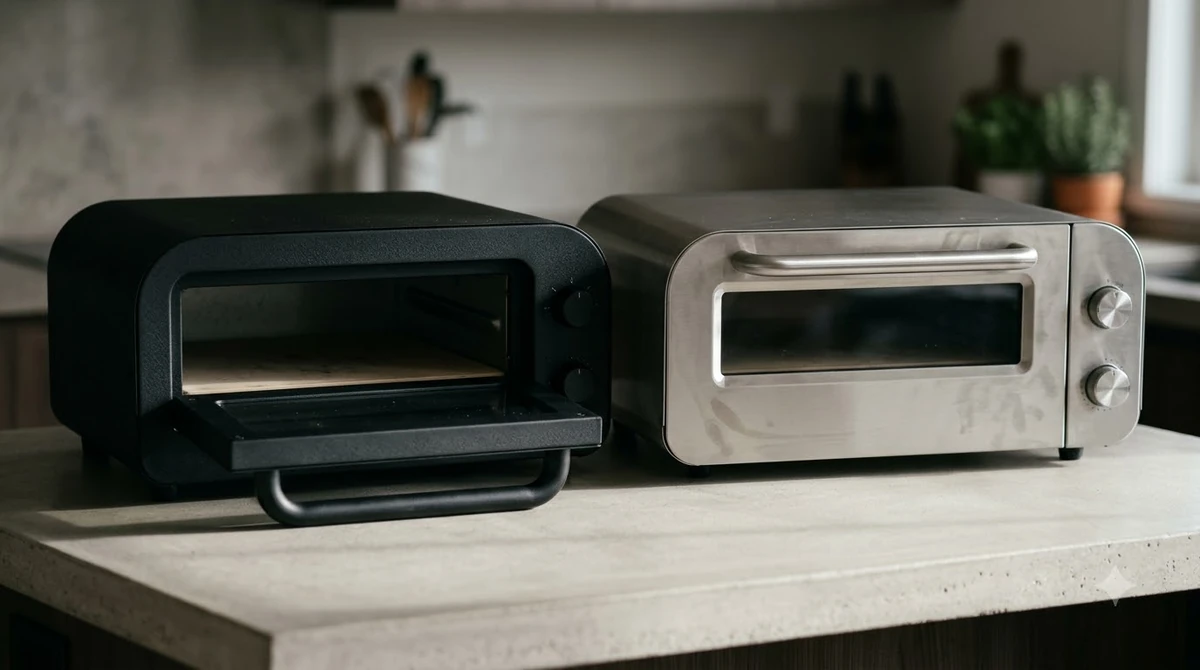

A pizza oven cover is a fitted shell that keeps rain, sun, dust and debris off an outdoor pizza oven when it is not in use, and the best pizza oven cover combines waterproofing, UV protection, a secure closure and a vent. Most covers are made from polyester or PVC-coated polyester. Fit matters as much as the fabric, because a loose cover blows off in wind and a sealed cover can trap moisture.
This guide explains what to check before you buy, how the main materials differ, and how to measure your oven so the cover stays put. Because the manufacturers’ own product specifications for many models could not all be checked here, the comparison focuses on the criteria that matter most and on the figures we could confirm.
How we chose the best pizza oven covers
We judged each pizza oven cover type on five criteria: the fabric, how well it sheds water, UV protection, breathability and fit. These criteria come from how the materials behave, and they are the same questions to ask of any model you consider.
- Fabric: the base material and its weight or denier rating.
- Waterproofing: a water-repellent coating and taped or sealed seams.
- UV protection: a coating or stabiliser that slows sun damage.
- Breathability: a vent, mesh panel or a fabric that lets moisture escape.
- Fit and closure: the cover should match your oven’s measurements and secure with drawstrings, elastic or tie-downs.
We did not test these covers ourselves. The points below rely on material science references and on specifications that the cover makers publish, which we label as manufacturer claims.
Top pizza oven cover picks by type
The best pizza oven cover depends on how you use your oven and how wet or sunny your climate is. The table below sorts the main cover types by what they do well, so you can shortlist models before comparing prices.
| Cover type | Best for | Key fact to check |
|---|---|---|
| PVC-coated polyester | Heavy rain and exposed sites | Heavier and less breathable, so check for a vent |
| Solution-dyed polyester with a PU coating | Everyday outdoor use in mixed weather | Confirm the UV rating and the denier figure |
| Covers with an air mesh panel or vents | Humid or damp climates | Mesh may not be offered on very low heights |
| Custom-fit covers | Ovens with non-standard shapes or stands | You supply the measurements, so accuracy decides the fit |
The covers below are each made for a named oven, so match the model before you order: the Ooni Koda 16, the Ooni Karu 12 and Karu 2, and the Gozney Dome. Use them as examples of the criteria above, and check the listing for fabric, UV and vent details.

Ooni Koda 16 Protective Pizza Oven Cover
Pros & ConsViewHide
Reasons to buy
- Made by Ooni for the Koda 16, with an elasticated edge for a snug fit
- Waterproof design with cast aluminum buckles and padded carry handles, per the listing
- Light at 6.3 oz and doubles as a carry cover
- 82% of 3.6K Amazon ratings are 5-star
Reasons to avoid
- Costs more than third-party covers for the same oven
- Covers the oven only, so check clearance if you leave a regulator or hose attached

Ooni Karu 12 & Karu 2 Carry Cover
Pros & ConsViewHide
Reasons to buy
- Waterproof and weatherproof cover sized for Karu 12 and Karu 2
- 82% of Amazon ratings are 5-star
- Light at about 5 ounces
Reasons to avoid
- Let the oven cool fully before covering it
- Cover only, no stand or bag

ZJYWSCH Pizza Oven Cover for Gozney Dome Dome S1
Pros & ConsViewHide
Reasons to buy
- Made to fit the Gozney Dome and Dome S1
- 600D polyester with a waterproof coating
- Drawstring hem helps hold it in wind
- Strong rating across roughly 475 Amazon reviews
Reasons to avoid
- Does not fit the Dome Gen 2 or Dome XL Gen 2
- Third-party cover, not made by Gozney
- Protects against weather only

Pizza Oven Cover for Ooni Koda 16,Outdoor Pizza
Pros & ConsViewHide
Reasons to buy
- Listed as a fit for the Ooni Koda 16, with adjustable straps and bottom snaps
- Oxford cloth with PVC coating, with a carry-bag shape
- Among the lowest-priced Koda 16 covers in the search
- 74% of 366 Amazon ratings are 5-star
Reasons to avoid
- Seller asks you to confirm model and size before buying
- 7% of ratings are 1 or 2 stars, the highest of the three covers here
Materials: what to look for in a pizza oven cover
Polyester is the most common base material for an outdoor pizza oven cover because it is a hydrophobic material that absorbs very little water. Its ester bonds can, however, break down under strong acidic or basic conditions, so a cover that sits in harsh chemicals for long periods will wear faster. Model-specific fit notes are in covering a Cuisinart 3-in-1 oven.
Sun is the bigger long-term threat. Ultraviolet light breaks chemical bonds in common polymers and forms free radicals, which can make the surface discolour and crack. Manufacturers reduce this with UV absorbers and antioxidant stabilisers added to the fabric or applied as a coating, so a UV rating on the spec sheet is worth checking.
Canvas is another option. Modern canvas is usually cotton or linen, and treated versions such as waterproof or waxed canvas are sold for outdoor use. Untreated canvas will soak up water and dry slowly, so it suits only sheltered spots.
- Polyester: light, water-shedding and inexpensive, but it needs UV protection to last.
- PVC-coated polyester: adds a heavier waterproof layer and is often the choice for harsh weather.
- Treated canvas: a natural look and good for sheltered spots, but it is less water resistant than coated synthetics.
Denier and fabric weight
Some pizza oven cover makers list a denier rating, which describes how thick the fabric yarn is. One custom-cover maker lists an 8 oz, 600 denier, solution-dyed polyester cover with a PU coating on one side, and a 13 oz, 1000 denier PVC-coated polyester cover. These are the manufacturer’s own figures. A higher denier or weight usually means a tougher fabric, but compare covers on the full spec, not on one number alone.
We could not check the general definition of the denier unit against an independent reference during this review, so treat denier as a maker’s rating and use it to compare covers from the same brand.
Waterproof vs water-resistant covers
A waterproof pizza oven cover uses a water-repellent coating and taped seams, while a water-resistant cover only copes with light rain and may let water through over time. The terms are not precisely defined across the industry, so read the pizza oven cover wording closely.
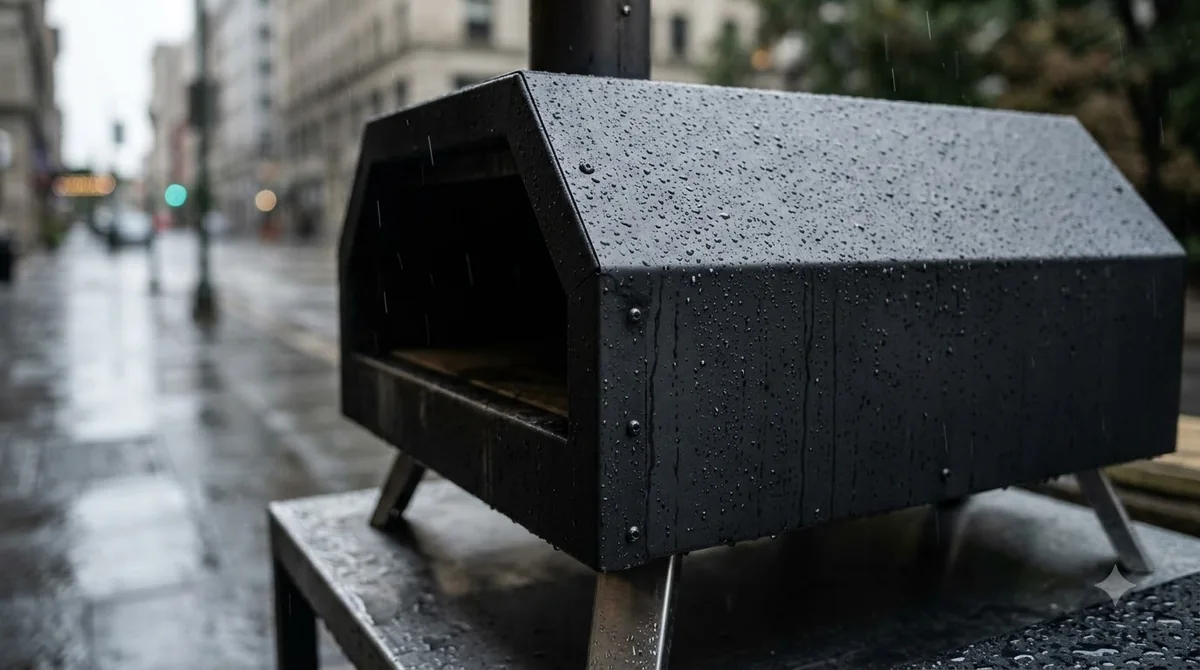
Textile references describe three grades. A showerproof fabric is treated with a water-resisting coating and handles light rain. A water-resistant fabric is similar, perhaps slightly better. A waterproof garment or fabric has a water-repellent coating and sealed seams, and waterproof fabrics are often given a hydrostatic rating that runs from about 1,500 for light rain to 20,000 for heavy rain. Pizza oven covers rarely publish a hydrostatic figure, so ask the maker for one if you live where storms are frequent.
- Light rain only: water-resistant is usually enough for a covered patio.
- Frequent rain or snow: choose a waterproof cover with taped or sealed seams.
- Sun-exposed sites: check for a UV rating alongside the waterproof claim.
Ventilation and why a sealed cover can trap moisture
A pizza oven cover that seals out all air can trap moisture, and that is a risk outdoors. Condensation forms when warm, humid air meets a cooler surface, so a sealed cover can collect water on its inner face when the temperature drops, especially after a hot day.
Ventilation solves this. Look for a vent panel, a mesh section or a fabric that lets moisture escape while still shedding rain. One custom-cover maker lists breathable construction and an optional air mesh panel, but says the mesh cannot be supplied when the cover height is below 24 inches. That kind of limit is common, so check it before ordering.
- Choose a cover with at least one vent or a mesh panel if you live in a humid area.
- Let the oven cool completely before covering it, so hot air does not condense inside.
- Remove the cover on dry, sunny days so the inside can air out.
How to measure and fit a pizza oven cover
A pizza oven cover should fit the oven’s real dimensions, not its name. Measure the oven, including its chimney or flue and any stand, before you order, and compare the cover’s listed sizes with your numbers.
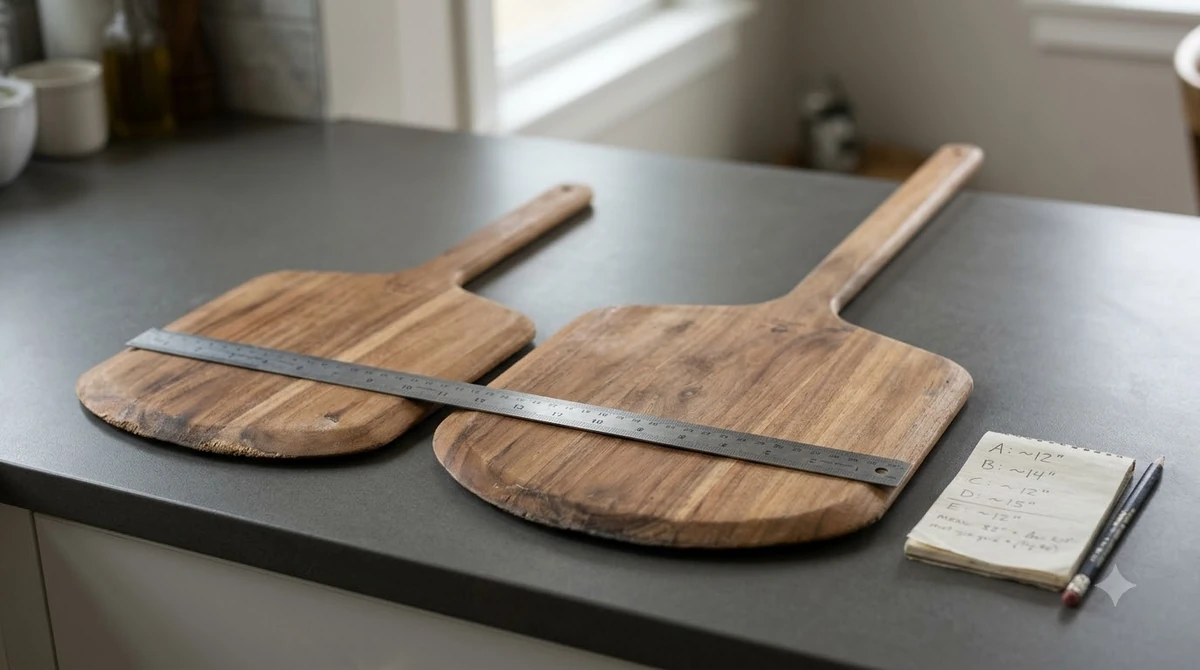
- Measure the total height from the base to the top of the dome or flue.
- Measure the bottom width and depth where the cover will sit.
- Measure the front height and the top width and depth.
- Measure the inclined length of any sloped surface.
- Add 1 to 2 inches of leeway to every measurement so the cover slips on easily. If the oven sits on a stand, measure that too, and see our pizza oven table guide for stand sizes.
Closure matters as much as size. Drawstrings, elastic hems and grommets for tie-downs keep a cover in place in wind. A custom-fit maker lists these as options, and tie-downs are the safer choice for exposed gardens or balconies. For model-specific advice, see our guides to the Ooni Koda 16 cover and the Gozney Dome cover.
Care tips for a pizza oven cover
Keep your pizza oven cover clean and dry, because wet fabric left folded can grow mildew. Brush off ash and debris, rinse with water if needed, and let the cover air-dry fully before you store it or put it back on the oven.
- Brush off ash and loose dirt after each use.
- Dry the cover completely before folding it away.
- Replace the cover when the surface looks cracked, chalky or faded, because UV damage weakens the fabric.
Frequently Asked Questions
Can I leave a pizza oven outside under a cover?
Yes, if the cover is waterproof, has UV protection and sits securely with tie-downs or a drawstring. Check the oven’s own manual for its outdoor rules, especially in freezing weather.
Should a pizza oven cover be waterproof?
For outdoor use, yes. A waterproof cover has a water-repellent coating and taped or sealed seams, so rain runs off rather than soaking in.
Do pizza oven covers need vents?
Many do. A vent or mesh panel lets moisture escape, which reduces condensation under the cover, especially in humid weather.
What does denier mean on a cover?
Denier describes the thickness of the fabric yarn. A higher number usually means a heavier, tougher fabric, but it is a maker’s rating, so compare it only within the same brand.
How much leeway should I add when measuring?
Add one to two inches to each measurement. That is the allowance one custom-cover maker recommends, and it leaves room for the cover to slide over the flue and any stand.
Can I use a tarp instead of a cover?
A tarp can keep rain off, but it usually has no fitted shape, tie-downs or vents. Loose sheeting can trap moisture and blow off in wind, so a fitted cover is the safer choice.
Start with fit and the UV rating, then compare waterproofing and vents. A pizza oven cover that matches your oven’s measurements, sheds rain and lets moisture escape will protect the oven for longer than a cheaper cover that fits loosely. For other add-ons, see our pizza oven accessories kits guide or browse more gear and pantry guides.
 6 min readGear & PantryBertello Outdoor Pizza Oven Pizza Peel: Size and Type GuideUpdated Nov 15, 2026
 9 min readGear & PantryBest Ninja Artisan Pizza Oven Covers: What to Check Before You BuyUpdated Nov 11, 2026
 6 min readGear & PantryCuisinart 3 in 1 Pizza Oven Cover: Fit and Weather GuideUpdated Nov 15, 2026
 6 min readGear & PantryNinja Woodfire Pizza Oven Cover: 4 Fit and Size ChecksUpdated Nov 15, 2026
 7 min readGear & PantryOoni Koda 2 Cover: What the Carry Cover Does and How to Store the OvenUpdated Nov 10, 2026
 9 min readGear & PantryBest Wood Pellets for Pizza Oven: Types and How to ChooseUpdated Nov 10, 2026