
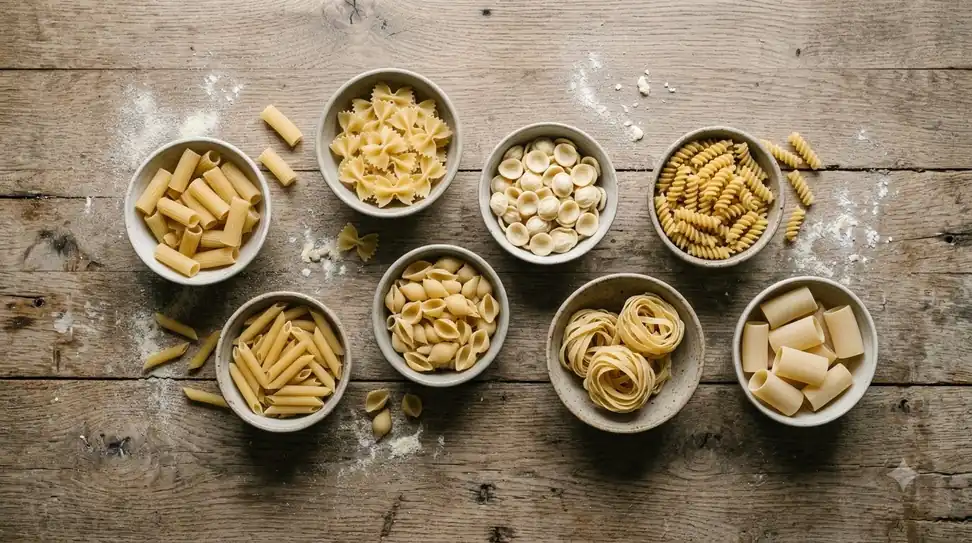

Bucatini pasta is a long Italian pasta shaped like thick spaghetti, with a hole running through its center. It is made from durum wheat flour and water, and it is especially associated with Lazio and Rome. Cooks value it because the hollow center lets sauce reach the inside of every strand.
The hollow center also explains why bucatini pasta is so often paired with rich, clingy sauces. If you cannot find it in your local store, spaghetti pasta is the closest everyday swap, though it does not fill with sauce the same way.
What Is Bucatini Pasta?
Bucatini pasta is a tubed pasta made from hard durum wheat flour and water, usually 25 to 30 cm long with a diameter of about 3 mm. It is common throughout Lazio, particularly Rome, where it has long been a staple.
The name comes from the Italian word buco, which means hole. According to the Wikipedia entry on bucatini, the shape is called bucatini around Rome and perciatelli around Naples, so you may see either name on a box.
The tube is formed during production. Dough is pushed through a disk with tiny circular perforations, which forces it out as long hollow strands. That process is why the hole runs the full length of each piece rather than being added afterward.
Because it is made from simple ingredients, the quality of bucatini depends mostly on the semolina and the drying process. Look for a box that lists durum wheat semolina as the first ingredient, and check that the strands look smooth and even rather than cracked.
How Bucatini Differs from Spaghetti
Bucatini is wider than spaghetti, and its hollow center is the feature that changes how it cooks and how it takes sauce. The two pastas look alike at first glance, so the differences are worth knowing before you substitute one for the other. Our bucatini vs spaghetti comparison goes into more detail.
In a comparison of the two shapes, Tasting Table calls width the biggest factor that separates them, and notes that bucatini boils for about seven to nine minutes until al dente, which is a little shorter than spaghetti.
| Feature | Bucatini pasta | Spaghetti |
|---|---|---|
| Shape | Long tube with a hole through the center | Solid round strand |
| Width | Wider, about 3 mm in diameter | Thinner than bucatini |
| Cook time | About 7 to 9 minutes to al dente | Usually a little longer |
| Sauce | Coats the outside and fills the center | Coats the outside only |
Use the table as a guide, not a rule. Cooking times vary by brand and by the thickness of the strand, so check the package directions and taste a strand a minute before the time listed.
Best Sauces for Bucatini Pasta
The best sauces for bucatini pasta are thick and clingy, such as a tomato sauce with cured pork or a cheese and pepper sauce, because they coat the outside of the strand and fill the hollow center at the same time.
Amatriciana is one of the most common sauces served with bucatini. The traditional version is a tomato sauce made with guanciale, a cured pork jowl, which gives the sauce a rich, savory flavor that the hollow strands carry well.
Gricia is another classic pairing. It uses guanciale and pecorino cheese with no tomato, so the sauce depends on the fat and cheese coating the pasta. The hollow center helps the sauce stay inside the tube as you toss the pasta in the pan.
Sporked also suggests bucatini for oil-based sauces, including traditional carbonara, which is built from egg, cheese, and guanciale. These sauces cling well, so they are a good choice when you want the pasta to carry the flavor rather than just sit under it.
- Amatriciana: tomato sauce with guanciale
- Gricia: guanciale and pecorino, with no tomato
- Carbonara: egg, cheese, and guanciale
- Other oil-based sauces, which Sporked notes as a good match
Bucatini Substitutes
Spaghetti is the closest substitute for bucatini pasta because it has the same long shape and a similar cooking window. It lacks the hollow center, so pair it with a sauce that clings well to make up for that difference. Linguine is another long-pasta option, and linguine vs spaghetti shows how it differs from the round strand.
Perciatelli is the other name for the same tube shape, mainly used around Naples. If a store lists perciatelli, you are buying the same kind of pasta under a different label, so it works as a direct swap. If you want a short tube instead of a long strand, mezze maniche pasta is a ridged shape that suits hearty sauces.
When you substitute spaghetti, expect less sauce inside each strand. Thicker sauces with bits of meat or grated cheese help close that gap, and a spoonful of cooking water helps the sauce cling to the solid strand.
- Spaghetti: the closest everyday swap
- Perciatelli: the same hollow tube under another name
- Check labels for bucatini or perciatelli before you buy
Making Homemade Bucatini Pasta
Homemade bucatini pasta needs only durum wheat flour and water, plus a die that forms the hollow tube. The hole does not come from a separate step, because the dough is shaped as it is pushed through the die.
Per Wikipedia, the dough is forced through a disk with tiny circular perforations, which makes the long hollow tubes. Home cooks can follow the same logic with a pasta extruder fitted with a tube-shaped die.
- Mix durum wheat flour and water into a stiff, smooth dough.
- Load the dough into a pasta extruder fitted with a tube-forming die.
- Extrude the tubes slowly so the hole stays open along the full length.
- Cut the tubes to the length you want, then dry or cook them right away.
Fresh bucatini cooks faster than dried, so check it early and taste as you go. For most home cooks, dried bucatini from the store is the simpler choice, since the shape and texture are already set.
Cooking Bucatini Pasta Well
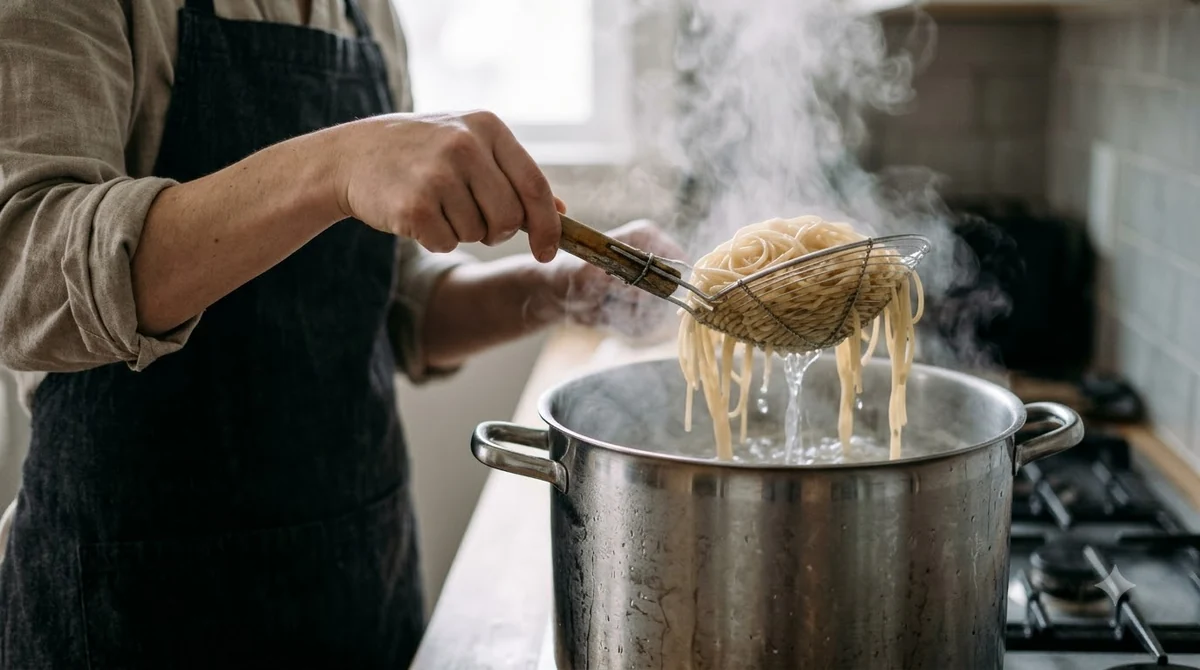
Cook bucatini pasta for about seven to nine minutes until al dente, because each strand cooks from the inside and the outside at the same time. Start testing a minute or two before the lower end of the range.
Use a large pot of water with plenty of salt, and stir during the first minute so the long strands do not stick together. A pot that is too small drops the water temperature and makes the pasta gummy.
- Bring a large pot of salted water to a rolling boil.
- Add the bucatini and stir during the first minute.
- Taste a strand at seven minutes and keep testing until it is al dente.
- Reserve a cup of the starchy cooking water before draining.
A good test is to look at the sauce after tossing. If it pools at the bottom of the bowl, the pasta needs a little more cooking water and another toss. If it slides off the strands without clinging, the sauce may need a spoonful of grated cheese or a bit more fat to grab onto the pasta.
Drain the pasta and toss it in the sauce right away, adding a splash of cooking water if the sauce looks tight. Serving it hot helps the sauce fill the hollow center before it cools.
Frequently Asked Questions
What is the difference between bucatini and perciatelli?
Bucatini and perciatelli describe the same hollow tube. Wikipedia notes that bucatini is the name around Rome, while around Naples the shape is called perciatelli. Either label means the same pasta, so you can use one name for the other.
Why does bucatini have a hole in the middle?
The hole is created during shaping. Dough is forced through a disk with tiny circular perforations, which forms long hollow strands. The name comes from buco, the Italian word for hole, which is why the shape is so easy to identify.
Does bucatini hold more sauce than spaghetti?
Yes. Tasting Table says bucatini holds onto sauces better than spaghetti because the center hole lets sauce coat the outside and fill the inside at the same time. Thick, clingy sauces get the most benefit from that design.
Is bucatini thicker than spaghetti?
Yes, bucatini is wider than spaghetti. Tasting Table identifies width as the biggest difference between the two shapes, and bucatini is also hollow. That combination is why the pasta feels heartier on the fork.
Where does bucatini pasta come from?
Bucatini comes from Italy and is common throughout Lazio, particularly Rome. It has remained a staple of Roman cooking, where it is often served with amatriciana or gricia.
Final Thoughts on Bucatini Pasta
A simple way to decide is to ask how the sauce should behave. If you want it to coat the outside and fill the center, bucatini pasta is the better choice. If you want a lighter, smoother bite with a thinner strand, spaghetti may suit you better, and it is easy to find in almost any store.
Whichever shape you choose, cook it to al dente, reserve some starchy water, and finish the pasta in the pan with the sauce. That habit does more for the final dish than any single ingredient, and it works for both bucatini and spaghetti.
Choose bucatini pasta when you want a sauce to fill the pasta as well as coat it, and keep spaghetti in mind as a backup if the shape is hard to find.