
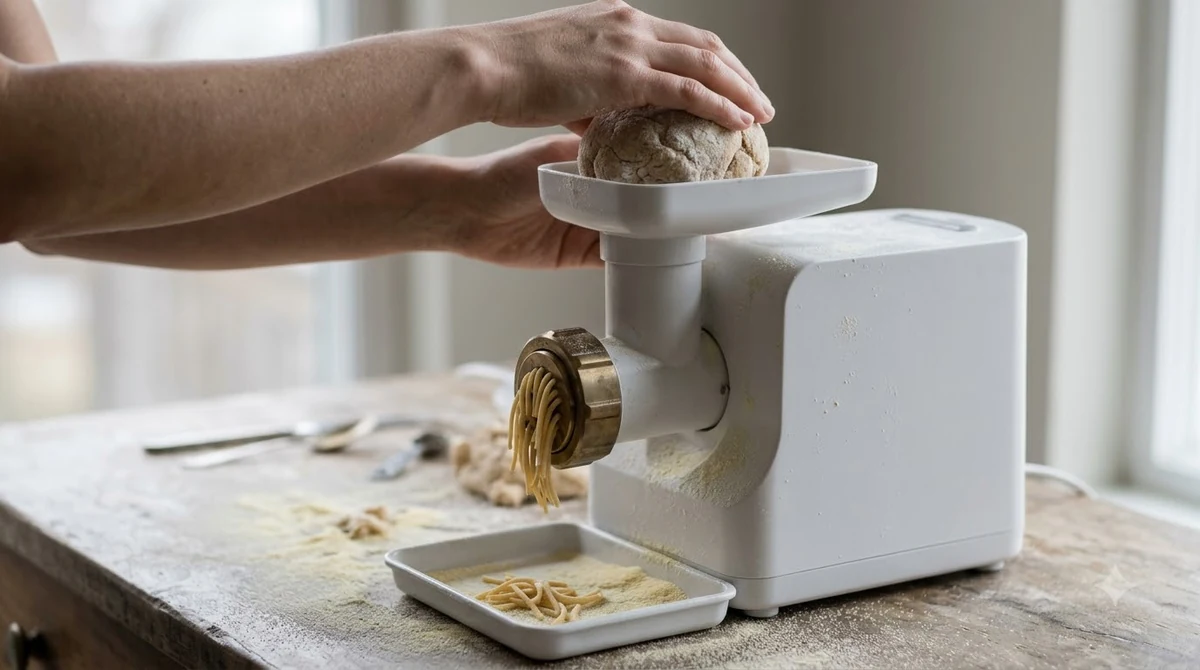

Mezze maniche pasta is a short, ridged tube pasta from Italy whose name means “half sleeves.” Dried versions are usually grooved and about half the size of rigatoni, so they suit sauces that cling to the ridges.
Its ridges make mezze maniche pasta a good match for hearty sauces, and it works in both baked and cold dishes. Some recipes suggest rigatoni or penne as a stand-in when the shape is hard to find.
What Does Mezze Maniche Mean?
Mezze maniche means “half sleeves” in Italian, and the name points to the short, hollow tube that defines the shape. Mezze means half, and maniche means sleeves, so the pair describes a sleeve cut in half. Both translations describe the same short tube, so the name and the shape point in one direction.
Some English sources give “short sleeves” as the meaning instead. The pasta blog The Pasta Project gives both readings, so the two translations are interchangeable for most readers.
How Mezze Maniche Pasta Looks and Feels
Dried mezze maniche is usually grooved, which Italians call rigate, and it is roughly half the size of rigatoni. The ridges are what sets it apart from smooth short tubes.
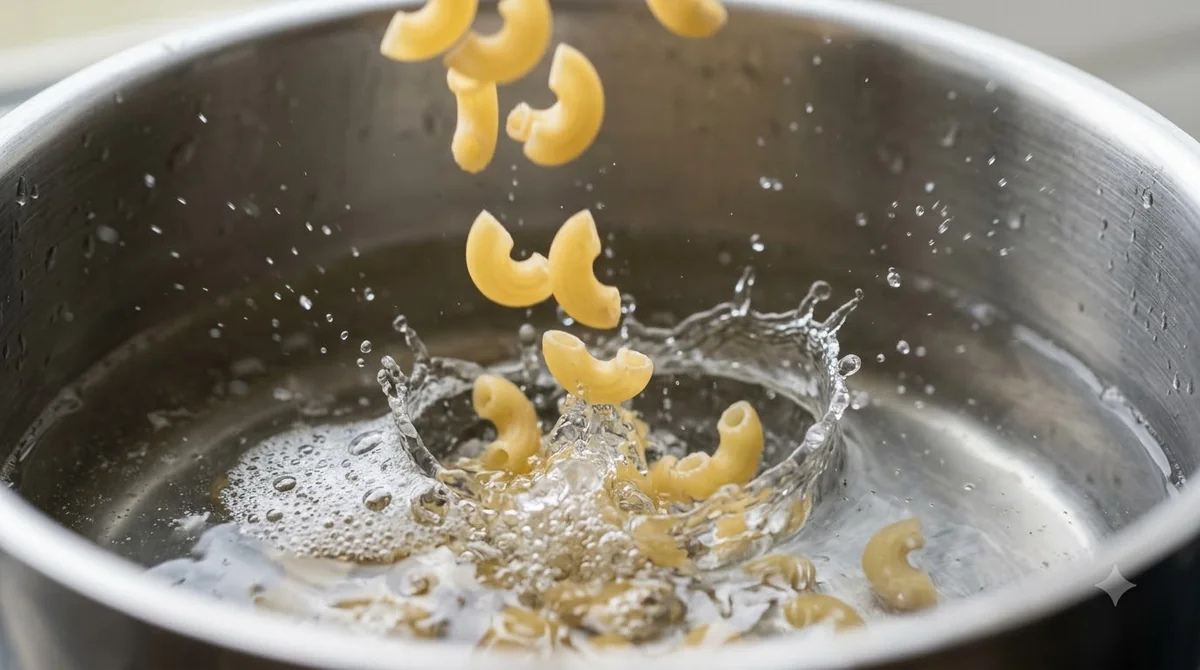
The hollow centre matters too. A tube lets a thin sauce run inside and collect around the pieces, while the grooves on the outside give thicker sauces something to hold. That combination is why mezze maniche pasta is often paired with sauces that have small bits in them.
Garofalo, an Italian pasta maker, describes its high-protein mezze maniche rigate as having deep ridges and a round, open shape that holds condiments well. The same product page says the bronze-drawn surface adds a slightly rough texture that helps sauce grip.
Brands cut the tube to slightly different lengths, so the measurement on your own package is the one to trust. The Pasta Project describes the dried shape only as about half the size of rigatoni.
Where Mezze Maniche Pasta Comes From
Mezze maniche is usually linked to northern Italy, although sources do not fully agree on its home region. The Pasta Project says it is said to come from the north, while other search results tie it to Lazio or to central Italy.
The blog also describes a traditional fresh version from Piacenza in Emilia-Romagna, called mezze maniche dei frati, or monks’ sleeves. It found only that one traditional fresh recipe, which suggests the dried shape is the one most cooks know today.
Regional names for pasta shapes often travel across Italy, so a name on a package does not always reveal the place where a shape started. That is one more reason to read the label rather than rely on the name alone.
Because the origin claims conflict, treat any single region as a probable origin rather than a settled fact. The shape itself is consistent across sources: a short tube with grooves on the outside. Whichever region you credit, the mezze maniche pasta you buy today is most likely a dried, grooved tube.
How to Cook Mezze Maniche Pasta
Cook mezze maniche in a large pot of salted, rapidly boiling water, and check the package time before you start. Cook times differ by brand, so the printed time on your own pack is the one to follow.
- Bring a large pot of water to a rolling boil and salt it generously before adding the pasta.
- Add the mezze maniche and stir once or twice so the tubes do not stick together.
- Start tasting at the low end of the package time, then keep tasting until the pasta is tender with a slight bite.
- Drain the pasta, keep a splash of the cooking water, and finish it in the sauce for about a minute so the ridges take up flavor.
Use plenty of water so the temperature stays high when the pasta goes in. A crowded pot cools down, and mezze maniche pasta can cook unevenly and stick to itself. Keep a small cup of the cooking water before draining, since the starchy liquid helps a sauce cling to the tubes.
Garofalo lists 12 minutes for its high-protein mezze maniche rigate. That time applies to that product line only, so treat it as an example and follow your own box.
Fresh pasta cooks much faster than dried, so if you find a fresh version, check it early and do not rely on the dried timing.
Which Sauces Go Best With Mezze Maniche?
Mezze maniche works with vegetable, meat and seafood sauces, and it also suits cold pasta salads. The shape holds chunky sauces because the grooves catch small pieces of vegetables, meat or cheese. A thick, chunky sauce is usually a safer match than a thin, watery one, because the grooves hold on to the pieces rather than the liquid.
The Pasta Project links recipes for several classic Italian dishes that use mezze maniche pasta:
- Amatriciana, with tomato, guanciale and pecorino
- Alla norma, with fried eggplant and tomato
- Alla gricia, with guanciale, pecorino and black pepper
- Carbonara, with egg, cheese and cured pork
- Puttanesca, with olives, capers and tomato
The same blog notes that mezze maniche is not normally served with a meat ragu or al forno, although the author thinks it can work with them. The shape therefore suits vegetable, meat and seafood dishes alike, including a simple homemade marinara sauce.
Mezze Maniche Compared With Rigatoni
Mezze maniche is the shorter tube of the two, so it fits smaller bites and baked dishes more easily. Both shapes are commonly ridged, which makes them useful for similar sauces.
| Feature | Mezze maniche | Rigatoni |
|---|---|---|
| Size | About half the size of rigatoni | Larger reference size |
| Surface | Usually grooved (rigate) | Usually grooved (rigate) |
| Pairings | Vegetable, meat and seafood sauces, pasta salad | Similar sauces, since both are usually ridged |
Choose between them by sauce and portion rather than by name. Our guide to penne vs rigatoni shows the same approach for two other ridged tubes. A short tube suits a sauce with small pieces, a baked casserole, or a bowl where you want each forkful to carry a bit of everything. Mezze maniche pasta gives you that size, and it is worth comparing with rigatoni on a shelf before you decide which one to buy.
If the shop has only rigatoni, use it and let the sauce guide the amount; the rigatoni pasta guide explains the shape. Expect larger pieces, and taste as you go instead of trusting one timing for both shapes.
How to Choose a Good Pack
Shoppers often see mezze maniche pasta sold in both dried and fresh forms, and in several brands. The packaging is the fastest way to tell what you are getting, and the printed details matter more than the shape name alone.
Read the label before you buy, because the same name can cover very different products. Check the points below to match the pack to your sauce.
- Look for rigate on the label if you want the grooved shape.
- Look for bronze-drawn on the packaging if you want a rougher surface.
- Read the cook time printed on the box and start tasting near the low end.
- Confirm whether it is dried or fresh, since fresh cooks far faster.
- Check the ingredients for wheat or gluten-free flours if that matters to you.
Frequently Asked Questions
Is mezze maniche pasta the same as rigatoni?
No. The Pasta Project describes dried mezze maniche pasta as about half the size of rigatoni. Both are usually grooved, so they suit similar sauces, but the shorter shape changes the bite and the portion size. Choose by sauce and serving style, not by name alone.
How long does mezze maniche pasta take to cook?
Garofalo lists 12 minutes for its high-protein mezze maniche rigate, but other brands differ. Follow the time printed on your package, and start tasting near the low end. Stop when the pasta is tender with a slight bite, which is the texture most cooks aim for.
What does mezze maniche mean in English?
The name means “half sleeves” in Italian, and the pasta blog The Pasta Project also gives “short sleeves” as a reading. Both describe the short, hollow tube that defines the shape of mezze maniche pasta, so the meaning matches the look of the pasta.
Can I use penne or rigatoni instead?
Yes, some recipes suggest rigatoni or penne as a stand-in when mezze maniche pasta is hard to find, and our penne pasta guide covers the second option. The size is different, so adjust the cooking time by tasting rather than following the same timing. Keep the sauce quantity close to your recipe and judge the result by texture.
Is mezze maniche always dried pasta?
No. The Piacenza tradition includes a fresh form called mezze maniche dei frati, or monks’ sleeves. The Pasta Project found only that one traditional fresh recipe, so the dried, grooved mezze maniche pasta is the version most shoppers will find on store shelves.
If ridges matter to your sauce, choose a rigate pack of mezze maniche pasta and check its printed cook time before you start. Taste the pasta as it cooks, since the timing on a box is a starting point rather than a guarantee. For more shapes, browse our pasta shape guides.