
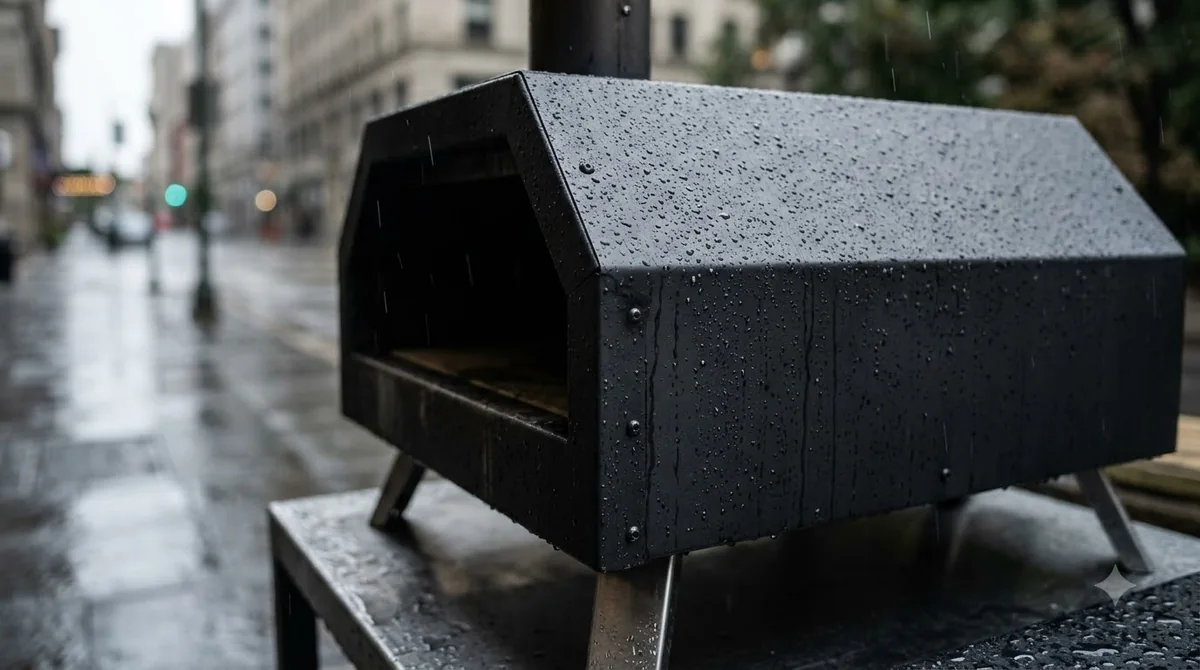

For most models, the answer to can you leave pizza oven outside is yes, as long as it stays covered and out of heavy weather. Ooni advises storing its ovens indoors when possible, so outdoor storage is a practical compromise rather than the ideal. Wind, freezing temperatures and an unsuitable surface underneath are the real limits.
Can You Leave Pizza Oven Outside Overnight?
Yes, most outdoor pizza ovens can stay out overnight if they are fully cooled and covered. Ooni says covering is highly recommended whether the oven is stored indoors or outside, so a cover is the first thing to get.
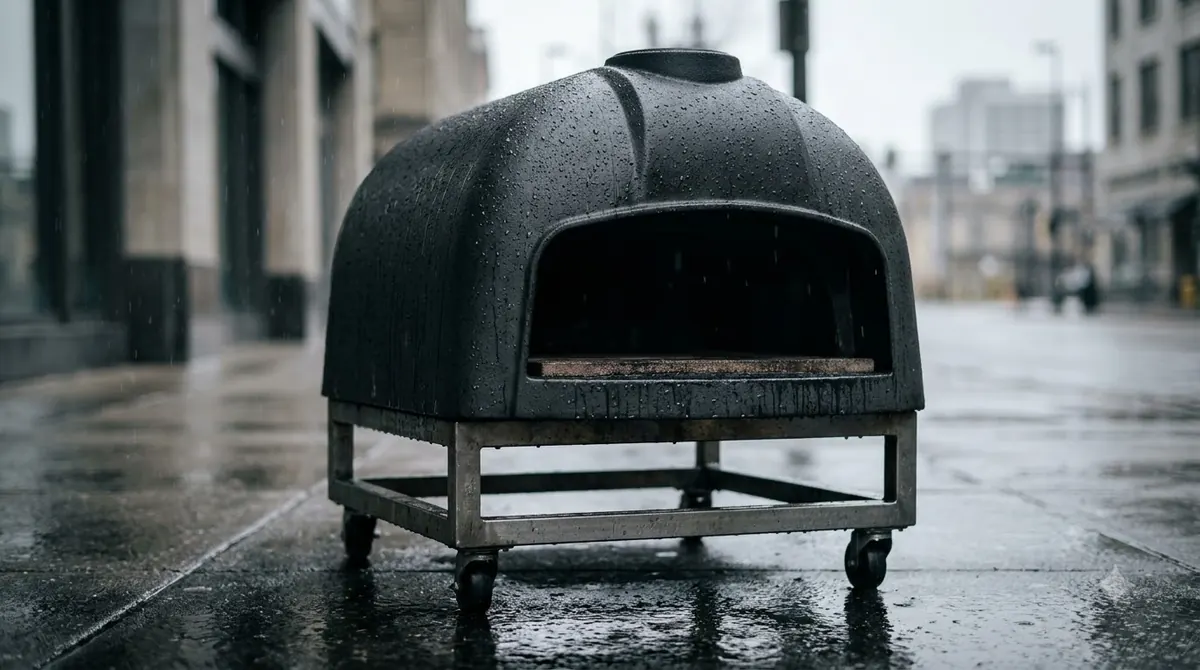
Indoors is still the better place, so when you ask can you leave pizza oven outside for long periods, the honest answer is that indoor storage is kinder to it. Ooni’s storage guidance says to keep the oven indoors when possible and out of direct sunlight, especially for longer periods. Outdoor storage works, but the cover does most of the protective work, and it has to fit the model well.
Ooni describes its ovens as tough against the elements, which is why the answer to can you leave pizza oven outside through ordinary showers is a cautious yes. Its weather guidance says light rain and snow won’t affect performance, so a covered oven that gets damp overnight is not a problem. The same guide asks owners to keep the oven out of harsh conditions such as heavy rain and strong winds.
Before you leave the oven outside, follow this order. The steps below are general; your own manual may add model-specific steps, such as how to store the gas tank or pellet hopper.
- Let the oven cool completely, and cover it only after it has cooled. Before the next cook, see the pizza oven temperature guide for the heat you need.
- Remove the pizza stone and any detachable parts. Ooni advises storing the pizza stone indoors once it has fully cooled.
- Put on a cover made for your model. Use the cover the maker sells for your oven, since a generic cover may not fit.
- Check your manual for where the gas tank should sit in wet weather, and see propane pizza oven heat if you run on gas.
How Rain and Wind Affect a Pizza Oven Left Outside
Light rain will not harm a hot pizza oven, but wind is the bigger problem. Big Horn Outdoor’s windy weather tips say a breeze of 10 to 15 mph can cost an oven about 25 percent of its power.
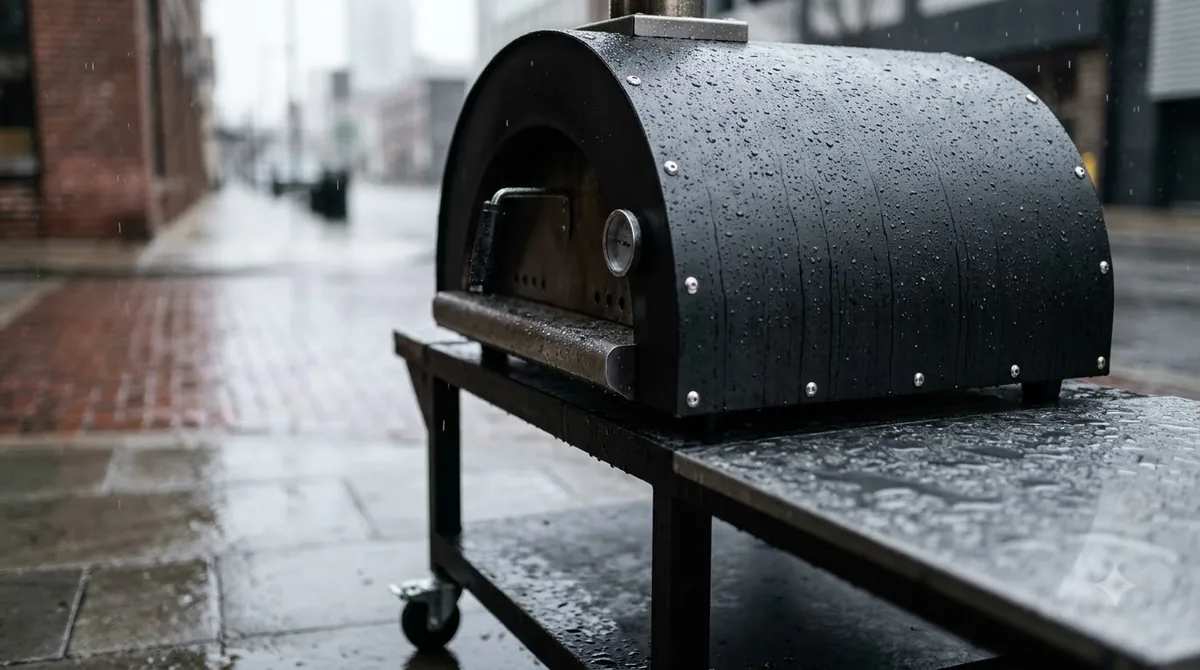
Rain mostly affects the stone and the cover, so when you ask can you leave pizza oven outside in wet weather, the stone is the part that matters most. Big Horn says a little rain or snow won’t hurt an oven once it is hot, but the pizza stone should stay dry between sessions. Store the stone indoors when you are finished, so it does not soak up moisture over several days, and read how to clean a pizza stone before it goes back in.
So, can you leave pizza oven outside during a rainy week? Usually yes, if it is covered and the stone is inside. Ooni’s guidance is to keep the oven out of heavy rain and strong winds, so pause a cook if the weather turns severe. Let the oven cool, then move the stone indoors.
- Big Horn says gusts over 30 to 35 mph are too strong for cooking.
- Preheat for at least 40 to 45 minutes when conditions are windy.
- Do not use tarps, plywood or cardboard as a windbreak.
Wind Clearance and Fire Safety
Big Horn advises leaving 10 feet of space around the oven and keeping a fire extinguisher close by. For anyone asking can you leave pizza oven outside near a fence or house, that 10 feet is the figure to remember.
Storing a Pizza Oven Outside in Winter
In winter, the main risk is cold, not rain. So, can you leave pizza oven outside through a freezing spell? Only with extra care, because cold affects the gas as well as the stone. Gozney’s winter guide warns that if temperatures drop below freezing, the gas could freeze, which can affect flame size and performance.
Gozney recommends keeping the oven in a shed or garage if you live in a very cold region. For anyone in a freezing climate who wonders can you leave pizza oven outside all winter, that shelter is the safer plan. Its guide also says that starting from room temperature helps the oven heat up faster and more efficiently, so a sheltered spot pays off on the next cook.
When it is particularly cold, Gozney recommends a low, slow fire-up to prevent thermal shock to the stone. Gozney’s covers are made to keep out rain, snow, wind and sunlight during storage, and the Dome cover is breathable so moisture can escape.
Can You Put a Pizza Oven on a Glass Table or Use a Heat Shield?
Do not assume a glass table or a heat shield is safe under a pizza oven. Ask the table’s maker whether the glass is rated for heat, and follow the surface and clearance guidance in your oven’s manual.
The question can you leave pizza oven outside also covers where it sits, because a spot that is fine for storage may not suit a hot oven. The manual, not appearance, tells you which surfaces are allowed.
A heat shield is sold with its own rating, so confirm that rating for your oven before you rely on it.
- Check the clearance figures in your oven’s manual before choosing a spot.
- Confirm with the table maker that the top is rated for heat.
- Confirm the shield’s own heat rating, since many are sold for other appliances.
Common Mistakes When Keeping an Oven Outdoors
Most problems come from a few habits that are easy to fix. The biggest one is covering an oven before it has cooled. Owners also tend to leave the stone outside, or to pick a cover that does not fit the oven.
Wind causes a different set of mistakes. Big Horn warns against tarps, plywood and cardboard as windbreaks. Shortening the preheat in a breeze is another common error, since Big Horn says wind can cost an oven about 25 percent of its power, and how hot a pizza oven gets drops with it.
- Covering the oven before it has cooled completely.
- Leaving the pizza stone outside between cooks.
- Using a generic cover that does not match the model.
- Skipping the extra preheat time on a windy day.
None of these mistakes needs special equipment to fix, only a little planning before and after each cook. The same habits apply whether the oven runs on gas, wood or pellets, although each fuel has its own manual. If you avoid these four habits, the question of can you leave pizza oven outside becomes a simple matter of climate and cover quality, not guesswork.
Frequently Asked Questions
Should I cover my pizza oven when it is not in use?
Yes. When people ask can you leave pizza oven outside, Ooni’s answer starts with a cover, which it says is highly recommended whether the oven is stored indoors or outside. Wait until the oven has cooled completely, then put on a cover made for your model. A generic cover may not fit well enough to protect every part.
Can you use a pizza oven in the rain?
Light rain generally does not stop a hot oven from working, according to Ooni’s guidance, so a rainy forecast alone does not mean you cannot leave pizza oven outside. Heavy rain and strong winds are harder conditions, so pause the cook if the weather worsens. Keep the pizza stone dry between sessions and store it indoors.
Can you leave pizza oven outside in winter?
Can you leave pizza oven outside in winter? You can, if it is covered and kept out of freezing conditions where possible. Gozney warns that below-freezing temperatures can freeze the gas and affect flame performance, so a shed or garage is the better option in cold regions.
Can you leave pizza oven outside on a glass table?
Not without checking first. Ask the table maker whether the glass is rated for heat, and follow the surface and clearance guidance in your oven’s manual.
Does wind affect how a pizza oven cooks?
Yes. Big Horn says a breeze of 10 to 15 mph can cost an oven about 25 percent of its power. Allow at least 40 to 45 minutes of preheat when it is breezy, and pause the cook if gusts pass 30 to 35 mph.
Indoor storage is the safest choice whenever you have room, especially in winter. If the oven has to stay outside, the answer to can you leave pizza oven outside depends on your climate, so use a cover that fits, let it cool first, and keep it on a stable, heat-safe surface. Your manufacturer’s manual has the final word for your model.