
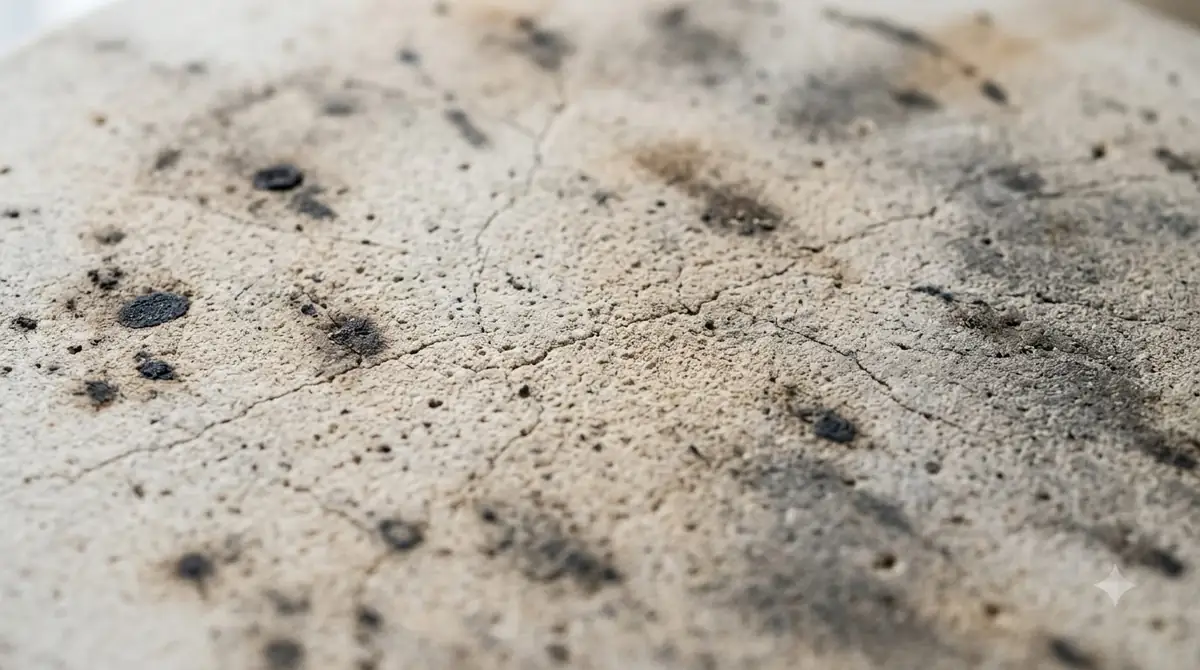

Learning how to clean pizza stone takes three steps: let it cool fully, brush off loose food, and dry it before the next bake. The unglazed ceramic absorbs liquid, so skip soap and soaking.
Most burnt-on residue burns off the next time you preheat, so you rarely need hard scrubbing. A pizza steel needs different care, which has its own section below.
Why a Pizza Stone Needs Gentler Care Than a Pan
A pizza stone is unglazed, porous ceramic, so it needs dry scraping, slow temperature changes and no soap. Water on a hot stone can crack it, which is why the cleaning rules differ from those for a metal pan.
The stone’s surface takes in liquid, so anything you add to it can stay in the pores. That is why brushing and scraping work better than soaking. Once you understand this, learning how to clean pizza stone is mostly a matter of timing and technique.
Grease and food bits left on a stone harden with each bake. Cleaning once the stone has cooled keeps that buildup small, so each session stays quick and gentle on the surface.
A stone is not a skillet, so it needs a different approach. Knowing how to clean pizza stone properly starts with matching the method to the material, which is porous ceramic. Each step in the sections below follows from that one fact.
How to Clean Pizza Stone After Each Bake
Wait until the stone is fully cool, which can take an hour or more, then brush off loose food with a stiff brush.
The Food Network cleaning guide recommends a fixed order: cool, brush, rinse briefly, then dry. Learning how to clean pizza stone well starts with that order.
- Wait until the stone is fully cool. Do not clean it while it is still hot.
- Brush off loose food with a stiff brush. Scrape off food blobs or excess char with a scraper, and do not wash them off.
- Rinse briefly with warm water if needed. Never soak the stone.
- Dry it thoroughly before storing it or heating it again. For how to clean pizza stone safely, America’s Test Kitchen advises letting the stone air-dry fully before you use it, so give it time.
Use this routine whenever you ask how to clean pizza stone after a bake, even when the surface looks clean. A few minutes of drying is what keeps the stone ready for the next pie. If you wonder how to clean pizza stone after a heavy, cheesy bake, the same order still applies.
Is It Safe to Use Soap on a Pizza Stone?
No, soap is not recommended on a pizza stone, because the porous surface can trap it and make later pizzas taste soapy.
The America’s Test Kitchen guide calls soap unnecessary for a stone. Once soap sits in the pores, it can come back out in your next pie. Learning how to clean pizza stone without soap means relying on a brush and a brief rinse instead.
Most people asking how to clean pizza stone worry about soap first, but the answer stays the same. Water and a stiff brush handle nearly every day’s cleaning.
How to Remove Stubborn Burnt-On Residue
Most burnt-on residue turns to harmless ash when the stone preheats to 500 degrees Fahrenheit, so scrubbing is rarely needed.
According to America’s Test Kitchen, any food residue becomes harmless ash the next time the stone is preheated to 500 degrees Fahrenheit. To see how hot a pizza oven can run, read our pizza oven temperature guide. Once the stone is cool, a stiff brush can remove the ash that is left behind.
Color change and some staining are normal, according to Food Network. If a spot still will not lift, Food Network suggests coarse salt or baking soda, but warns against overdoing it. Knowing how to clean pizza stone residue safely means using the gentlest method first.
A thin dusting of ash usually needs only a brush, while a thick crusted patch may need the gentle abrasive option. Check the stone after each attempt before you reach for more force. Matching the method to the residue is how to clean pizza stone without wearing down the surface.
How to Clean and Season a Pizza Steel
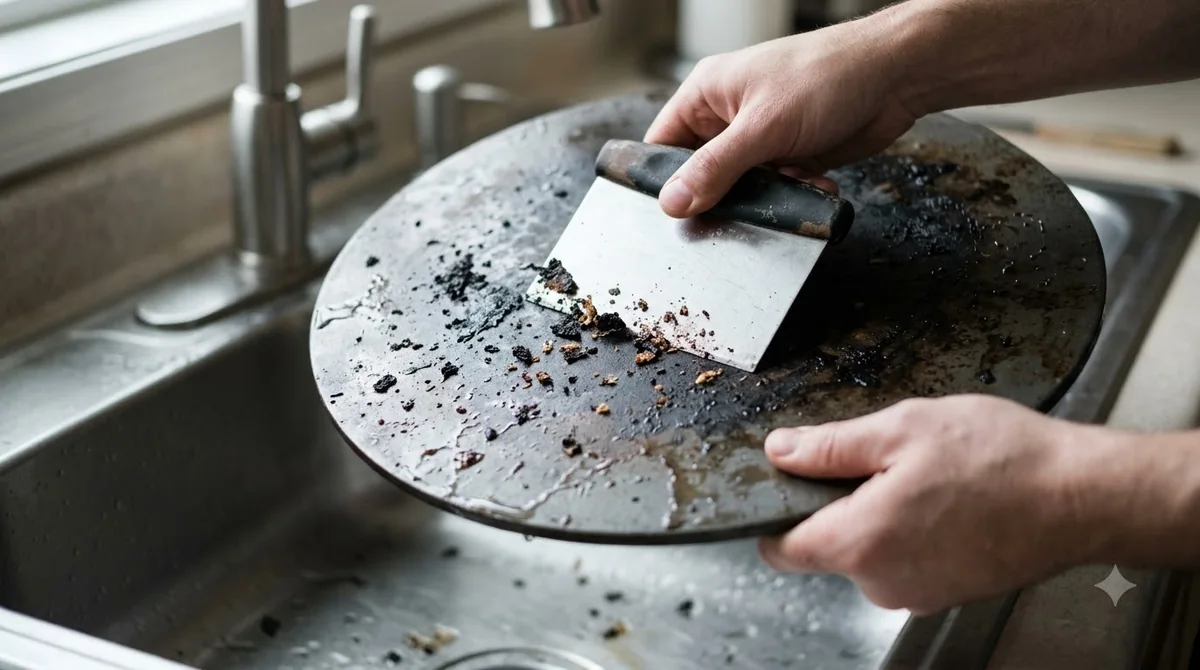
Scrape a warm pizza steel with a bench scraper or metal spatula, dry it fully, and re-season it only when it looks dull or food starts to stick.
According to Baking Steel’s care guide, most users only need to re-season once or twice a year. Here is how to season pizza steel in three steps:
- Apply a thin, even layer of a high smoke point oil. Baking Steel names organic flaxseed oil as its top choice, with grapeseed, canola or vegetable oil also working.
- Spread the oil over the top and bottom, then wipe off as much as you can, leaving a micro-thin layer.
- Bake the steel in a preheated 400 degree Fahrenheit oven for one hour, then let it cool completely inside the oven.
Soap is allowed on steel. Baking Steel says hot, soapy water is safe whenever needed, though some people skip soap during daily cleaning to protect the seasoning. For rust, scrub it off with a cleaning brick, wash, dry completely, and then re-season. That is where how to clean pizza steel differs most from the stone.
Cleaning a Stainless Steel Pizza Oven Safely
Stainless steel pizza ovens vary by model, so the maker’s manual is the safest guide for cleaning one.
Cleaning steps differ between models. If you are looking for how to clean stainless steel pizza oven surfaces, start with the manual and follow its cleaning and heat instructions exactly.
Harsh abrasives and long soaks are best avoided unless the manual says otherwise. Find the cleaning section before you use any product on the unit.
Common Mistakes That Crack a Pizza Stone
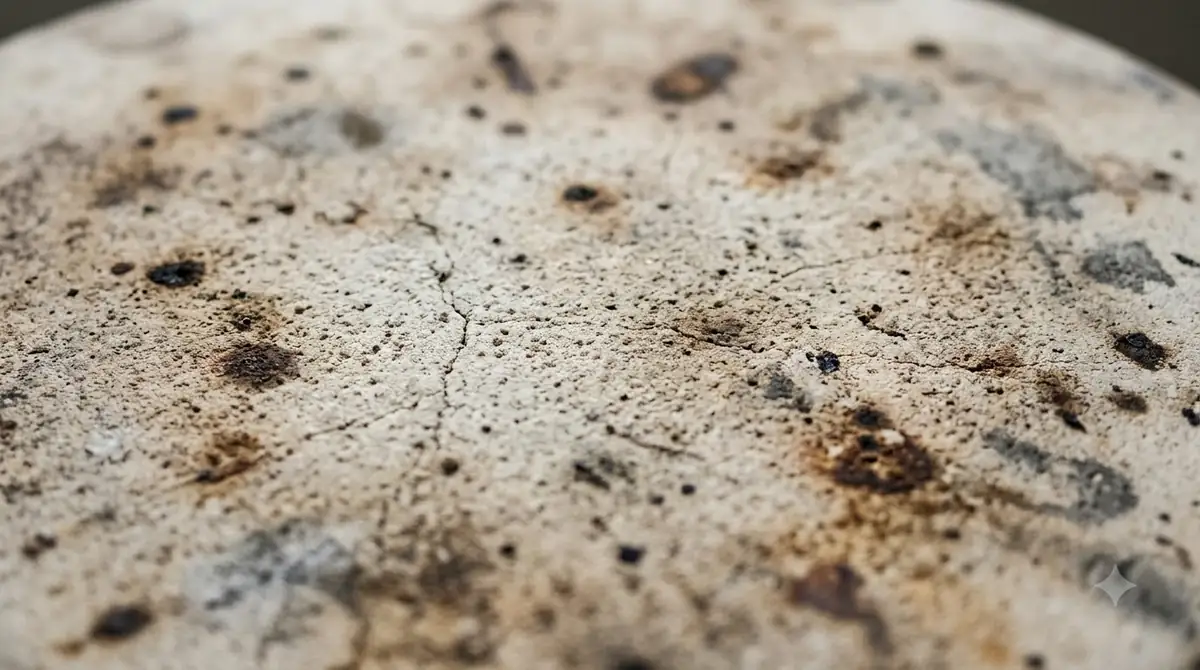
The two biggest mistakes are putting water on a hot stone and cooling it too fast, because a sudden change in temperature can crack it.
Watch out for these three habits:
- Rinsing or pouring water on a stone that is still hot.
- Moving a hot stone to a cold counter. Let it cool right in the oven when you can.
- Soaking the stone, when the advice is a brief rinse and never a soak.
Avoiding these errors matters as much as the cleaning steps when you learn how to clean pizza stone. Keep these rules in mind for every bake. Cracks are rarely random, and they usually trace back to one of these habits.
Frequently Asked Questions
Can you soak a pizza stone to loosen burnt food?
No. The Food Network guide says to rinse briefly and never soak the stone. Knowing how to clean pizza stone without soaking means brushing off the loose pieces first, then letting the stone dry completely before its next use. Scraping after the stone has cooled is safer than wetting it.
How long should a pizza stone cool before cleaning?
Wait until it is fully cool, which can take an hour or more. Let it cool right in the oven if you can, because a slow change in temperature helps prevent cracking. Cleaning a hot stone is risky, because water and sudden temperature changes can crack it.
Is it normal for a pizza stone to change color?
Yes. Food Network notes that changes in color and some staining are normal. Food residue that stays on the surface usually turns to harmless ash when the stone preheats to 500 degrees Fahrenheit, so you rarely need to scrub it off.
How often should you re-season a pizza steel?
Re-season a pizza steel only when it looks dull and gray or when food starts to stick. Baking Steel says most users need to do this once or twice a year, depending on how often they bake. Re-seasoning means a thin oil layer baked at 400 degrees Fahrenheit for one hour.
Why did my pizza stone crack?
The usual causes are water touching a hot stone and a sudden drop in temperature, a problem called thermal shock. Keep water away from the stone while it is hot, and let it heat and cool gradually. Those two habits matter most when you learn how to clean pizza stone safely.
Should you use salt or baking soda to scrub a pizza stone?
Only as a last resort. Food Network says coarse salt or baking soda can help with a stubborn spot, but you should not overdo it. Scrape off loose food first, then use the abrasive lightly, and dry the stone fully afterward.
Keep these habits in mind and cleaning your stone becomes a quick task after each bake. If your stone or steel came with a manual, follow it wherever it differs from general advice, as Food Network also recommends. A stone that stays dry and cools slowly stays ready for the next pizza night, and a good dough such as our pizza dough with bread flour makes the most of it. If you also own a pasta maker, our guide to cleaning a pasta machine covers that tool, and our learn guides cover more kitchen basics. Whenever you need to know how to clean pizza stone safely, come back to these four steps.