
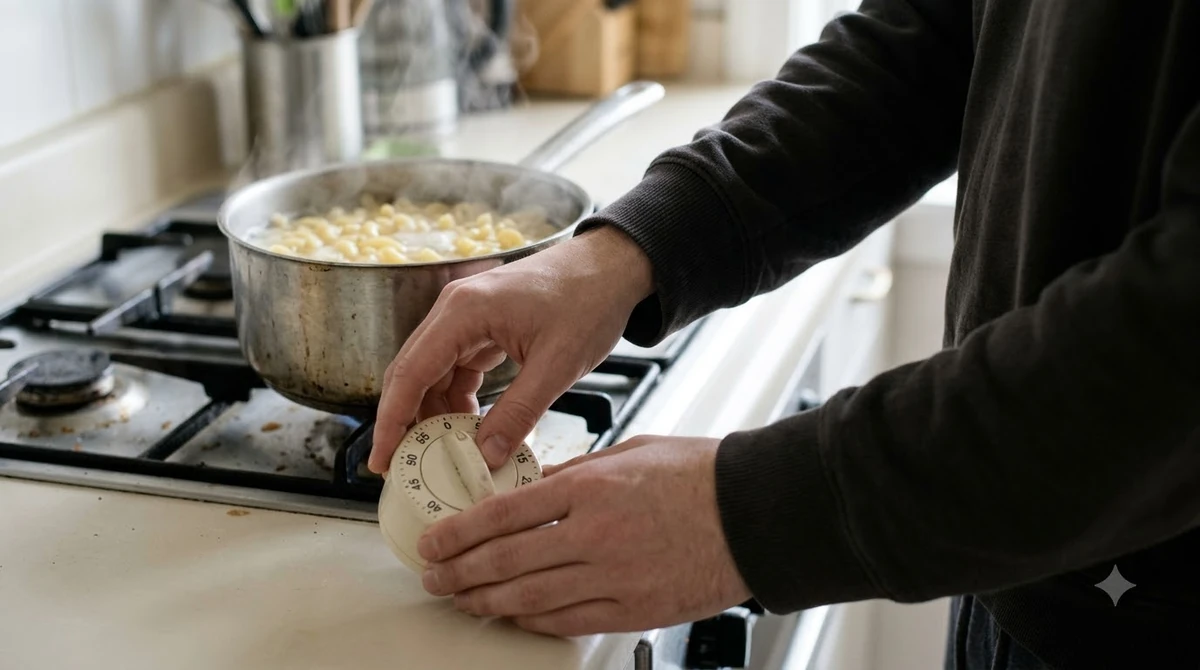

Cold ferment pizza dough means letting the dough rise slowly in the refrigerator for at least 24 hours. The slower rise builds deeper flavor and a chewier, airier crust than a same-day dough.
The gain comes from slower yeast activity, not from adding more yeast. Keep the fridge between 39 and 45°F, and plan to start the dough a day or more before you bake.
What cold fermentation does to pizza dough
Cold fermentation slows yeast activity in the fridge, so flavor builds over 24 hours to 5 days.
Food Republic gives 24 hours as the minimum and three to five days as the sweet spot. In the cold, the yeast works far more slowly than it does at room temperature, which leaves more time for flavor compounds to form. Three things change during the rest:
- Enzymes break complex carbohydrates into simple sugars.
- Yeast produces organic acids and alcohol, which add aroma and tang.
- Gluten develops in a more controlled way, giving the dough better elasticity and a lighter texture.
A same-day dough takes a different route. Food Republic puts the warm first rise at about two hours, until the dough doubles, followed by about five hours of second proof at room temperature. Cold ferment pizza dough stretches that work over days, so the flavor has time to develop before the dough meets the oven.
How long to cold ferment pizza dough
Most doughs rest 24 to 48 hours in the fridge, and the right window depends on the protein content of the flour.
Stadler Made lists a fridge rest of 8 to 72 hours overall. For flour around 12% protein, such as W280 or W300 grades, it recommends 24 to 48 hours. Choose a window inside that range and keep it the same for each batch of cold ferment pizza dough, so you can judge the results.
Flour bags rarely print a W grade, so check the protein figure on the label or the maker’s specification before you pick a window.
| Dough type | Suggested fridge time |
|---|---|
| Flour around 12% protein (W280 to W300) | 24 to 48 hours |
| General range for most doughs | 8 to 72 hours |
| Long ferment, the sweet spot for flavor | 3 to 5 days |
Over-fermentation is the main risk of a long rest, so keep an eye on the dough. It should feel soft and elastic, not slack or sticky. For a different slow-rise route, compare it with an overnight pizza dough recipe or a poolish pizza dough.
A practical way to plan is to count backward from dinner. Allow roughly 2.5 to 4.5 hours between taking the dough out of the fridge and shaping it, which covers the 20 to 30 minute warm-up plus the 2 to 4 hour final rest, then decide the fridge day from there.
Fridge temperature for cold ferment pizza dough
Keep the fridge between about 39 and 45°F (4 to 7°C), and let the dough reach at least 64°F (18°C) inside before shaping.
Stadler Made’s cold fermentation guide gives 39 to 41°F in its introduction and 39 to 44.6°F in its method steps. A fridge that runs warm speeds up fermentation and makes the dough harder to handle, so a fridge thermometer is a cheap check.
- Place a thermometer on the shelf where the dough sits, not on the door.
- Keep the cold ferment pizza dough covered so it does not dry out or pick up odors.
- Let the dough reach at least 18°C (64.4°F) inside before you shape it.
Step-by-step method to cold ferment pizza dough at home
Mix the dough, rest it 30 minutes to 1 hour, chill it covered for 24 to 48 hours, then warm it 20 to 30 minutes before shaping.
The method for cold ferment pizza dough has a short rest before the fridge and a warm-up plus final rest after it. Follow these steps for a standard batch:
- Knead the dough until it is smooth.
- Rest it at room temperature for 30 minutes in summer or about 1 hour in winter.
- Divide it, cover it, and refrigerate for 24 to 48 hours for 12% protein flour.
- Take it out and let it warm for 20 to 30 minutes.
- Give it a final rest of 2 to 4 hours at room temperature before shaping and baking.
Cold dough is stiff and resists stretching, so the 20 to 30 minute warm-up is not optional. Skipping it can make the dough tear when you shape it.
Use a covered container with enough room for the dough to grow. A lid keeps the surface from drying and forming a skin, which is easier to avoid than to fix once the dough is cold.
How much yeast to use for cold fermented dough
Stadler Made says 0.5% to 1% yeast works well for cold fermentation, with little difference in results within that range.
Because the fridge slows the yeast, cold ferment pizza dough does not need the large dose a same-day dough uses. Amounts above the range behave differently:
- At 0.5% to 1%, results are consistent across the fridge window.
- Above 1%, the dough makes a large rise in the first hours in the fridge.
- High yeast can over-ferment the dough once it moves to room temperature.
Why cold fermented dough tastes better
Enzymes break complex carbohydrates into simple sugars, and yeast makes organic acids and alcohol, which together give cold ferment pizza dough a fuller flavor.
Food Republic’s breakdown adds that slower fermentation allows better gluten development, which is why the crust feels chewy and airy when baked. For a classic style to try this on, see the Neapolitan pizza dough recipe. If you want a bolder topping for that dough, our diavola pizza recipe shows a spicy home version.
Flavor is also a matter of time. A short rest gives the enzymes and yeast little room to work, so cold ferment pizza dough chilled for only a few hours will taste closer to a same-day dough than one that rests for several days.
Common mistakes and how to fix them
Sticky or flat cold ferment pizza dough usually comes from too much yeast, too long a ferment, or a fridge that runs too warm.
| Problem | Likely cause | Fix |
|---|---|---|
| Sticky, slack dough | Too much yeast or too long a rest | Use 0.5% to 1% yeast and stay inside the fridge window |
| Dough rises fast in the fridge | High yeast or a fridge running warm | Lower the yeast and hold the fridge at 39 to 45°F |
| Weak dough after leaving the fridge | Over-fermentation at room temperature | Shorten the fridge rest and watch the 2 to 4 hour final rest |
When you see one of these signs, adjust the yeast or the fridge time on the next batch rather than the current one.
Frequently Asked Questions
How long can I cold ferment pizza dough?
Stadler Made lists 8 to 72 hours overall and 24 to 48 hours for flour around 12% protein. Food Republic gives 24 hours as the minimum and three to five days as the sweet spot. Keep the window inside those ranges and check the dough’s texture before baking.
Does cold fermented pizza dough need more yeast?
No. Stadler Made says 0.5% to 1% yeast works with little difference in results. Higher amounts cause a fast early rise in the fridge and can over-ferment the dough later at room temperature, so a small, steady dose is the safer choice for a long rest.
What fridge temperature is best for cold ferment?
Stadler Made recommends 39 to 45°F (4 to 7°C) for storage. A fridge that runs warm speeds up fermentation and makes the dough harder to handle, so check it with a thermometer placed on the shelf where the dough sits, not on the door.
Do I need to bring cold dough to room temperature?
Yes. Let the dough warm for 20 to 30 minutes, then give it a final rest of 2 to 4 hours at room temperature before shaping. Cold dough resists stretching and tears more easily, and the dough should also reach at least 64°F (18°C) inside before you shape it.
Is a cold fermented pizza dough recipe better than same-day dough?
Many cooks prefer cold ferment pizza dough because the longer rest develops more complex flavor and a chewier texture. Food Republic makes the same point, but the gap depends on your flour, yeast and bake, so test one batch against a same-day dough.
Can I cold ferment pizza dough for less than a day?
Food Republic gives 24 hours as the minimum for cold fermentation, so a shorter rest does not reach the flavor change described above. A rest of a few hours is closer to a regular dough and can be useful when you need a quick schedule.
Start your cold ferment pizza dough with a 24-hour rest and adjust once you know your fridge and flour. Check the dough by feel before you shape it, because a soft, sticky ball means it has gone too far. Keep the fridge cold, and the dough will reward the wait. If you bake only part of the batch, learn whether you can freeze pizza dough for later.