
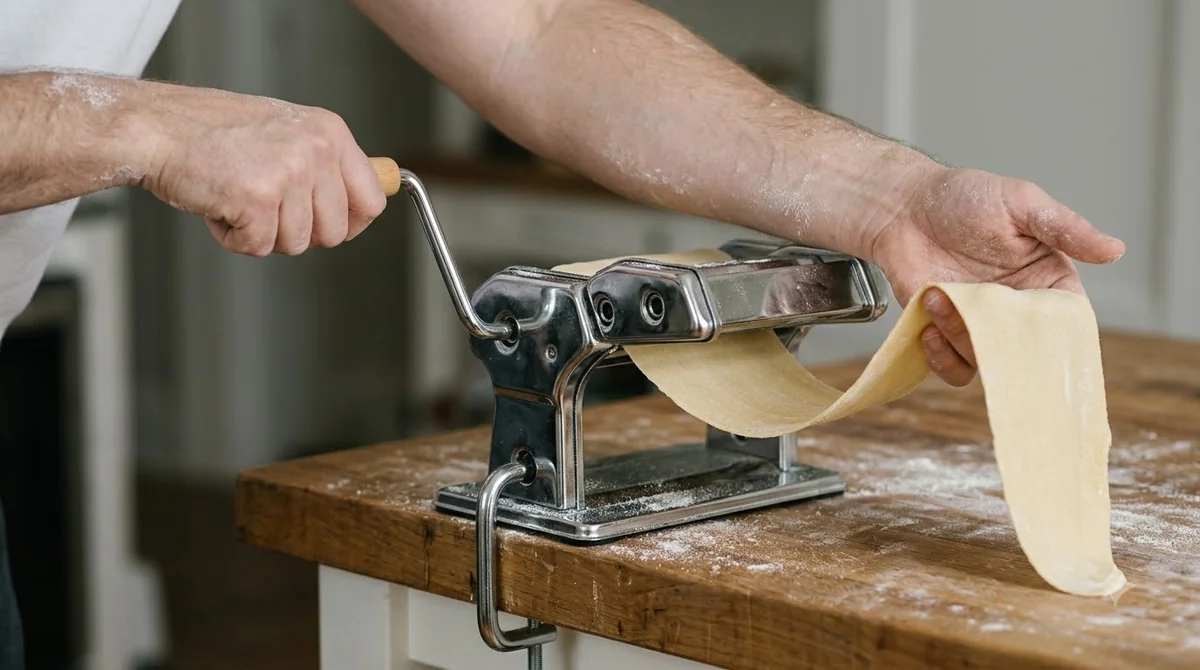

To fix sticky pasta dough, add flour a small amount at a time, knead until the dough stops clinging to your hands, and let it rest before you roll. Most sticky dough is simply too wet for the flour in the bowl. Adjust in small steps, because too much flour makes the finished pasta dense and tough.
The fix is usually quick, but it depends on what the dough is telling you. A dough that sticks to your palms but holds its shape needs a little flour. A dough that crumbles needs a little water. The sections below walk through the checks in order, so you can rescue the batch without ruining the texture.
Why fresh pasta dough gets sticky
Sticky dough is usually a moisture problem. Tasting Table’s interview with pasta cook Danny Freeman puts it simply: sticky dough that forms a big ball is usually too wet. Freeman’s advice is to measure as you go, because egg sizes vary and the same recipe can behave differently from one batch to the next.
Flour type also plays a part. Bread flour has more protein than 00 flour, and the protein can make pasta too sticky and dense. A Tasting Table guide to common pasta mistakes recommends 00 flour for fresh pasta for this reason.
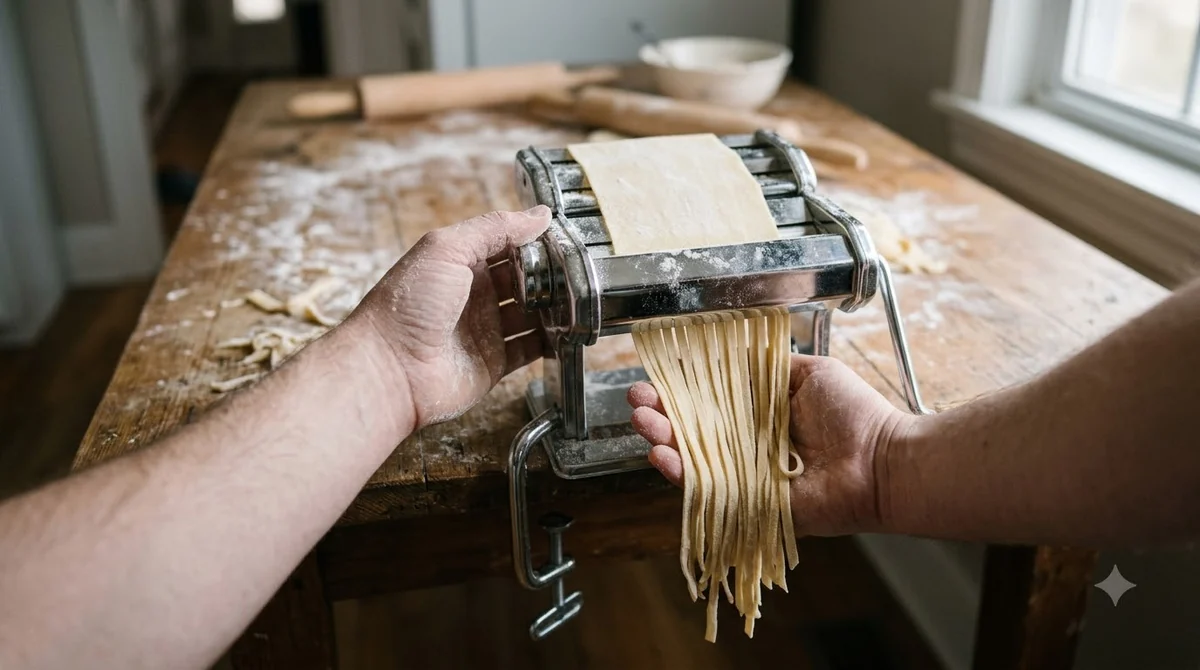
Fix sticky pasta dough by adding flour in small amounts
When the dough clings to your hands or the counter, add flour a little at a time and keep kneading. The same Tasting Table guide suggests adding about a tablespoon of 00 flour at a time, which is small enough to stop before the dough turns stiff. After each addition, knead for a minute and check the texture again.
- Dust your hands and the board lightly, not heavily.
- Stop as soon as the dough no longer sticks to your fingers.
- Keep a little flour aside, so you can still adjust after the rest.
- Avoid adding a large handful at once, which makes the pasta dry and chewy.
Freeman’s approach is to keep adjusting until the dough behaves. Pasta is forgiving, so a small correction during kneading is far easier than trying to fix a dense sheet after it has been rolled and cut.
Rest the dough before you roll it
A short rest lets the flour absorb the moisture evenly, so the dough can feel different after resting. Wrap it tightly in plastic wrap so it does not form a dry skin. The Tasting Table guide cites Eataly’s advice to rest the dough for a minimum of 30 minutes, and it also notes that firm, springy dough that is hard to work usually needs more time for the gluten to relax.
- Knead until the dough is smooth and holds a ball shape.
- Wrap the dough tightly and set it on the counter.
- Rest it for at least 30 minutes before you roll or cut.
- Check the texture again, and only then add flour if it still feels wet.
Rolling and cutting a dough that is still tacky
Some tackiness can remain after resting, and the rollers can handle it if you dust properly. Use flour on the sheet and the rollers as you work, but choose the right dusting flour for the final step. The same Tasting Table guide recommends dusting with rice flour or semolina when cutting, because 00 flour soaks back into the pasta and can leave a gummy coating after cooking.
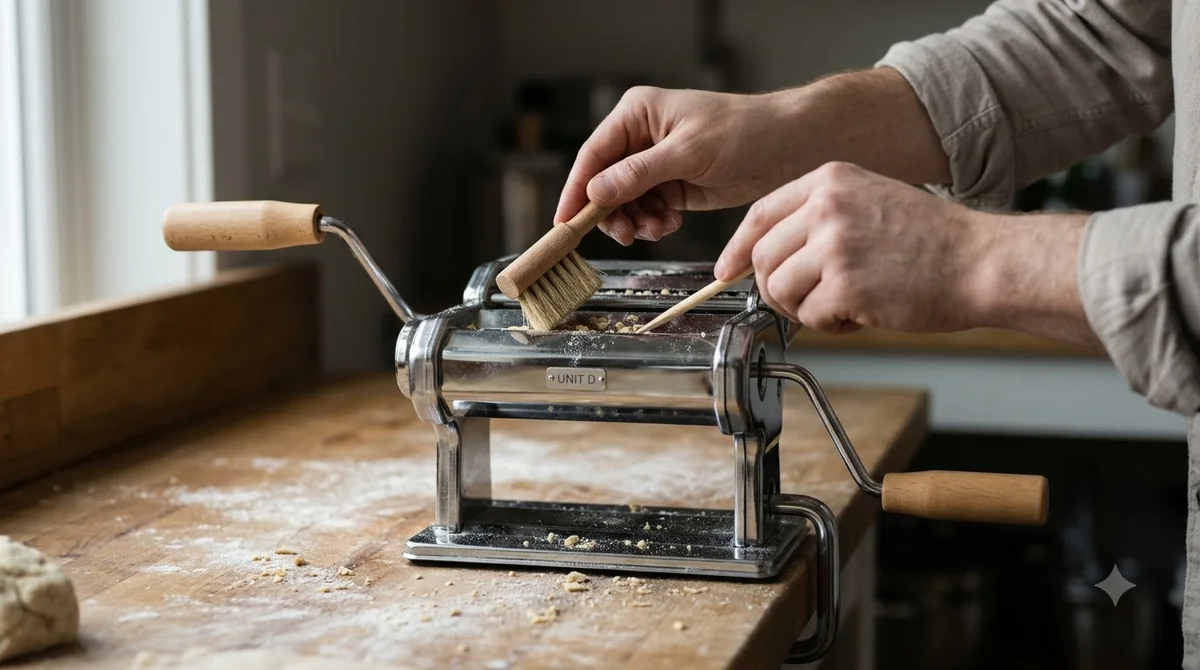
If the sheet tears or sticks as it passes through the rollers, stop and dust both sides with a light layer of flour before you try again. Work with a sheet that is slightly firm rather than wet, and let the cut strands rest on a floured tray until you cook them.
When the dough is too dry instead
If you overcorrect and the dough starts to crumble, the fix runs the other way. The same guide advises adding a bit of water or about a tablespoon of 00 flour at a time, so the dough does not turn watery. Work the change into the dough with your fingertips, then knead again for a minute.
Humidity matters too. Air in a humid kitchen can make the dough wetter, while a dry room or a draft from an open window can dry it out. Keep the bowl covered during the rest and keep your windows closed while you work.
Signs the dough is too wet or too dry
Before you adjust anything, look at how the dough behaves in your hands. Freeman’s test is simple: if the dough sticks to your hands while you knead, it needs more flour, and if it crumbles and will not come together, it needs a little water. Both fixes are small, and both are easier to judge after a short knead than during the first rough mix.
A wet dough usually looks glossy and feels slack when you lift it. It tears easily, and the surface stays tacky even after a few minutes of kneading. A dry dough looks matte and cracks at the edges when you fold it. Its surface can feel rough, and it resists being stretched.
Kitchen conditions change the dough too. The same guide notes that humid air or moisture on your hands can change the moisture balance, and an open window can dry the dough quickly. If your kitchen is humid, expect to use a little more flour than a recipe suggests, and cover the dough tightly during the rest so it does not dry out.
If you are unsure, make one small change at a time and wait. Add a teaspoon of flour, knead for a minute, and feel the dough again before you add more. This keeps the texture soft and avoids the dense, chewy pasta that comes from too much flour.
Frequently Asked Questions
How much flour should I add to sticky pasta dough?
Add it in small amounts, about a tablespoon at a time for a standard batch, then knead and check. Stop as soon as the dough stops clinging to your hands. Adding too much at once makes the pasta tough.
Should I use bread flour to stop pasta dough from sticking?
No. Bread flour has more protein, which can make fresh pasta too sticky and dense. Tasting Table recommends 00 flour for fresh pasta, which has a lower protein content and a finer texture.
Does resting pasta dough help with stickiness?
Yes. Resting lets the flour absorb moisture evenly and lets the gluten relax, so the dough is easier to roll. Wrap the dough and rest it at least 30 minutes before you judge its texture.
Can I use oil to fix sticky pasta dough?
Oil does not solve a wet dough. Flour is the right adjustment for stickiness, and a small amount of water is the fix if the dough is too dry. Oil can make the surface slick, but it does not change the moisture balance of the dough.
A sticky pasta dough is usually fixable with patience. Add flour in small steps, rest the dough before you roll it, and dust with the right flour when you cut. Once the dough feels soft and only slightly tacky, the rest of the process is much easier.
 6 min readBest PicksTop Rated Pasta Maker: Manual, Attachment or ElectricUpdated Nov 13, 2026
 6 min readBest PicksAutomatic Pasta Maker Sale: What to Check Before You BuyUpdated Nov 13, 2026
 5 min readBest PicksStand Alone Pasta Maker: Manual or Electric ComparedUpdated Nov 13, 2026
 5 min readBest PicksAutomatic Pasta Maker Reviews: What Tested Results ShowUpdated Nov 13, 2026
 6 min readBest PicksBest Pasta Maker Consumer Reports: Reading the RatingsUpdated Nov 13, 2026
 5 min readBest PicksTop 10 Pasta Makers: The Features That Matter MostUpdated Nov 13, 2026