
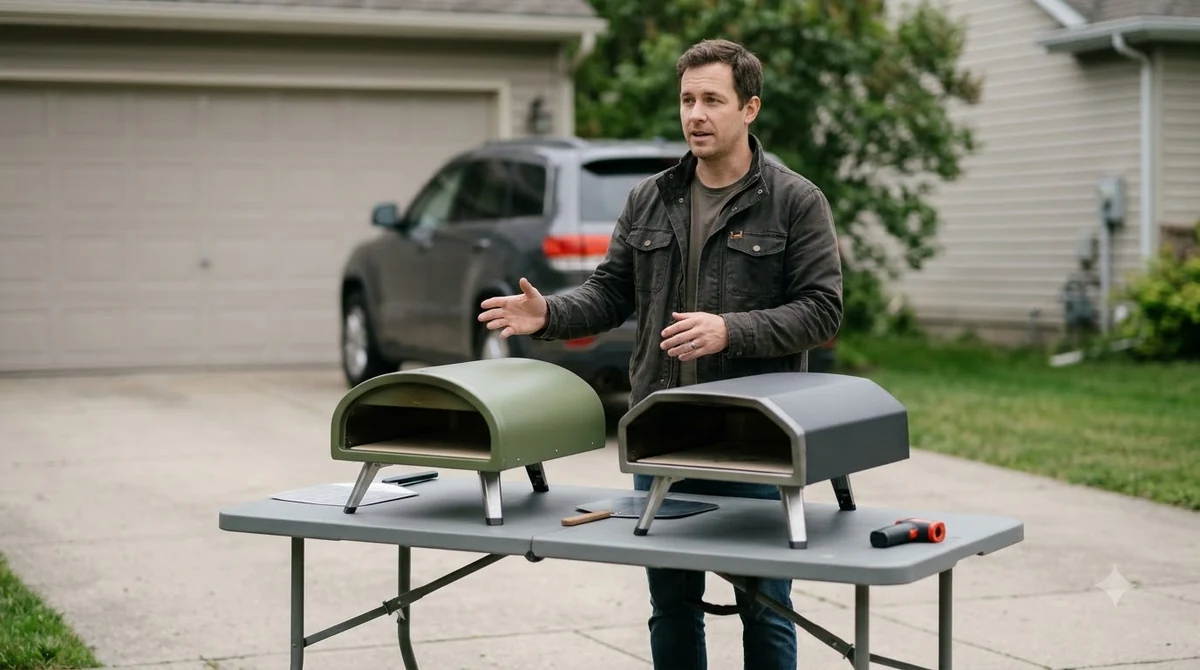

A gas vs electric pizza oven choice depends on how the oven is heated and where you plan to cook. Gas models burn propane or natural gas, while electric models use heating elements and a power outlet. Both can bake a pizza at home, so the right pick starts with your space and your fuel access.
In a gas vs electric pizza oven choice, gas suits outdoor cooks who already have a fuel connection or a gas cylinder. Electric suits indoor or covered spaces where an open flame or gas line is not practical. Check your power and fuel access before you compare models.
Safety note: Gas and electric cooking equipment has installation and ventilation requirements set by the manufacturer and local rules. Follow the manual and use a qualified installer where one is required.
Gas vs Electric Pizza Oven at a Glance
A gas pizza oven burns fuel to heat its stone, while an electric pizza oven uses heating elements powered from a wall outlet, and that is the core of the gas vs electric pizza oven difference. The table below shows the differences that matter most before you buy.
| Feature | Gas pizza oven | Electric pizza oven |
|---|---|---|
| Heat source | Burner flame from propane or natural gas | Heating elements powered by electricity |
| Where it fits | Outdoors or a well-ventilated area | Indoors or a covered space with a suitable outlet |
| Connection needed | Fuel supply or gas cylinder, connected as the manual describes | Power outlet that matches the rated wattage in the manual |
| Main running cost driver | Local fuel price and how often you cook | Local electricity price and how often you cook |

Ooni Koda 2 Propane Gas Pizza Oven
Pros & ConsViewHide
Reasons to buy
- About 35 lb, light enough to move between spots
- Thicker stone for back-to-back pizzas, per Ooni
- Regulator and hose included for propane
Reasons to avoid
- Propane only and not compatible with natural gas
- 14-inch pizzas at most, smaller than the Koda 2 Pro
- Gas bottle is not included

Solo Stove Pi Prime Propane Pizza Oven
Pros & ConsViewHide
Reasons to buy
- Propane-fired and portable for patios and trips
- Listing says it preheats in about 15 minutes
- Listing says pizza can cook in as little as 90 seconds
- Lower listed price than the Gozney Arc models
Reasons to avoid
- Takes 12-inch pizzas at most
- Needs a propane supply for every cook
- No built-in thermometer listed on the comparison page we read

Ooni Volt 2 Electric Indoor Pizza Oven
Pros & ConsViewHide
Reasons to buy
- Ooni lists a 70°F to 850°F range
- 13.3-inch pizza stone for 12-inch pizzas
- Three pizza presets plus Dough Proofing and two custom slots
- Three-year warranty when registered within 60 days, per Ooni
Reasons to avoid
- Indoor use only, per Ooni
- Weight and wattage are not on Ooni's getting-started page
- Fewer Amazon ratings than the Breville at 66 so far

Ninja Artisan Pizza Oven, 12-in Pizza in 3-Min
Pros & ConsViewHide
Reasons to buy
- Electric, no live flame, with 90 to 700°F temperature control
- Five pizza settings plus bake, broil, warm and proof
- Chef's View window on the door
- Fits a 12-inch pizza, a 12-inch pan or a sourdough loaf
Reasons to avoid
- Tops out at 700°F, cooler than 950°F gas or wood ovens
- Needs a power outlet outdoors
- About 18 minutes of preheat before the pizza goes in
How Each Type Heats Your Pizza
Gas ovens heat with a flame and the hot gases it produces, while electric ovens heat with elements that switch on to hold a set temperature. Both types can reach the heat a pizza stone needs, so in any gas vs electric pizza oven comparison the difference shows up in the feel of the heat and in the setup.
Alfa Forni’s guide to Neapolitan baking temperatures puts the ideal oven air at 430 to 500 degrees Celsius (800 to 930 degrees Fahrenheit) and says most home ovens top out at 350 to 400 degrees Celsius (660 to 750 degrees Fahrenheit). Neither fuel type is guaranteed to reach the top of that range, so check each model’s rated maximum. The electric pizza oven temperature and propane pizza oven temperature guides compare real figures.

A gas flame is adjusted with a burner control, and the stone takes on heat from the flame and the hot air around it. Many cooks describe gas as the choice for a live-fire feel, which is why it is popular for outdoor pizza nights. The flame also needs a steady fuel supply, so you should check the cylinder or line before each cook.
Ooni’s Volt 2 shows how this works in practice: it is an electric oven rated up to 850 degrees Fahrenheit, with presets such as Neapolitan at 810 degrees, and its manual limits cooking meat or fatty foods to 480 degrees or below. Electric ovens use heating elements and a thermostat, so the heat switches on and off to keep the set temperature. That makes the controls simple, and there is no flame to manage. The trade-off is that an electric unit depends on your outlet and circuit rather than on fuel.
On environmental grounds, Wikipedia’s pizza oven entry notes that electric pizza ovens have a smaller carbon footprint than wood-fired pizza ovens. The same entry says the Associazione Verace Pizza Napoletana allows certified gas or electric ovens when a wood-fired oven is impractical, citing environmental and health concerns.
Setup, Power and Installation
Electric models need a suitable outlet and a check of the rated wattage, while gas models need a proper fuel connection and clear ventilation, which is the practical side of a gas vs electric pizza oven decision. The setup you already have at home usually decides which gas vs electric pizza oven is practical for you.
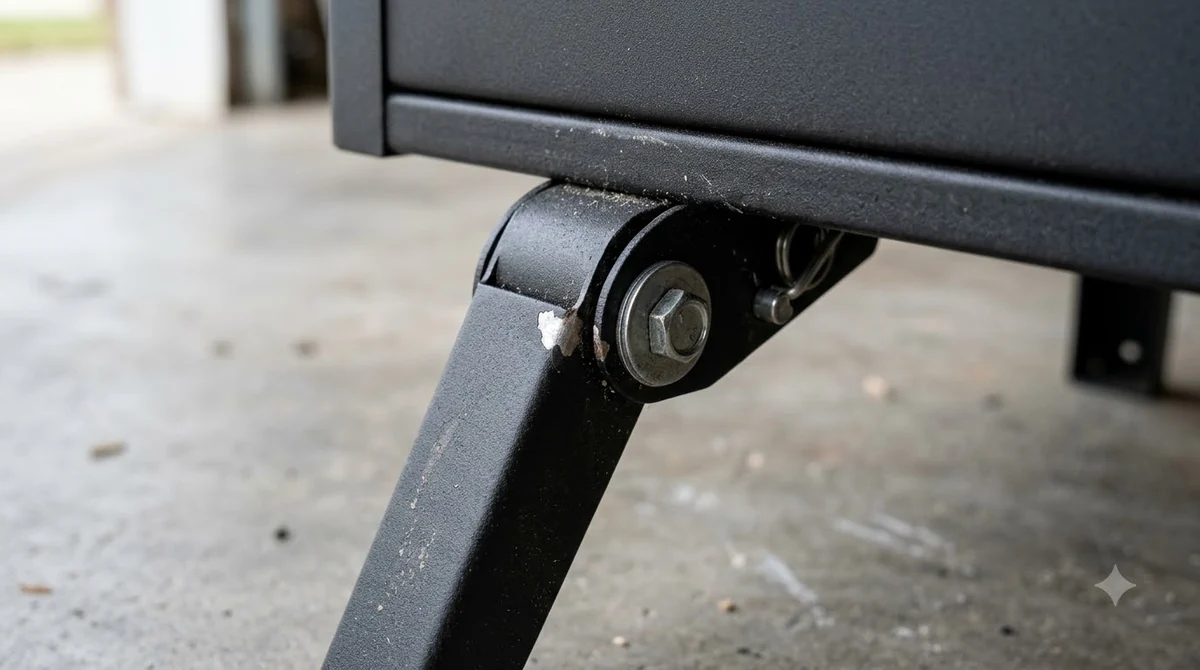
Power draw is easiest to understand by comparison. Wikipedia’s electric stove entry gives a typical consumption of 1 to 3 kW for one heating element, depending on its size. A pizza oven has its own rated wattage in the manufacturer’s manual, so compare that figure with your outlet and circuit before you buy.
Gas ovens need a correct connection to a fuel source, a leak check following the manual, and a location with enough ventilation.
Ooni’s Koda 2 Max US manual shows what that looks like for a gas model: outdoor use only, never in a garage or enclosed area, at least 1 m (40 in) from structures or combustible material, and 7.5 m (25 ft) from flammable liquids. It also calls for a propane cylinder under 20 lb (9.1 kg) and a leak test with a leak detector or soap solution, never a naked flame. Never run a gas oven in an enclosed space unless the manual allows it. For an electric oven, a dedicated circuit may be needed for high-draw models, so ask a licensed electrician if you are unsure.
Portability matters too. A gas cylinder can move with the oven, but it must be stored and replaced safely. An electric oven stays near an outlet, which suits a fixed spot in a kitchen or a covered patio. The Volt 2 manual asks for about 4 in of space on each side and 6 in above the oven, and it lists 1600 W at 120 V, which the Ooni Volt 2 power consumption guide turns into amps and running cost. Wood is the third common fuel, and gas vs wood fired pizza oven covers that choice, while indoor vs outdoor pizza oven helps if your main question is where to cook.
Which One Should You Choose
When you weigh a gas vs electric pizza oven, choose gas if you cook outdoors and already have a fuel connection or a cylinder you can use safely. Choose electric if you cook indoors or in a covered area and do not have a gas line.
- Start with where you will cook. In a gas vs electric pizza oven choice, outdoors suits gas, while indoors or covered spaces suit electric.
- Confirm the fuel or power supply the manual requires, and check that it is available at the spot you plan to use.
- Compare the rated wattage or fuel input in the manual with your home setup before you buy.
- Weigh running cost against how often you cook, using your local fuel and electricity prices.
- Compare the maximum temperature and preheat time in each manufacturer’s spec sheet, not in marketing copy.

Frequently Asked Questions
Is a gas pizza oven better than an electric one?
Neither side of the gas vs electric pizza oven question is better for everyone. A gas pizza oven suits outdoor cooks who have a fuel connection, while an electric pizza oven suits indoor or covered spaces with a power outlet. The right choice depends on where you cook and what you can connect.
Can you use an electric pizza oven indoors?
In the gas vs electric pizza oven choice, indoor use usually points to electric, and many electric pizza ovens are used indoors, but the manufacturer’s manual sets the clearances and ventilation you need. Check those details before you place the oven on a counter or in a cupboard space.
Do electric pizza ovens have a smaller carbon footprint?
Wikipedia notes that electric pizza ovens have a smaller carbon footprint than wood-fired pizza ovens. That comparison does not rank gas directly, so check the energy sources in your area if this matters to you.
Do I need a special outlet for an electric pizza oven?
For an electric model in a gas vs electric pizza oven decision, check the rated wattage in the manual and compare it with your home circuit before you plug in. A dedicated circuit may be needed for high-draw models, and a licensed electrician can confirm your setup.
Is gas or electric cheaper to run?
For a gas vs electric pizza oven running cost, the answer depends on local fuel and electricity prices and on how often you cook. Compare the rated input in the manual with your local rates, because no single answer applies everywhere.
Start with where you will cook and what you can connect, because that narrows a gas vs electric pizza oven choice quickly. Then compare the manual specs, including maximum temperature and preheat time, before you buy a gas vs electric pizza oven. A safe installation matters more than any small difference in flavor.
 9 min readReviews & VersusGas vs Wood Fired Pizza Oven: Which Should You Choose?Updated Nov 14, 2026
 7 min readReviews & VersusOoni Koda vs Gozney Arc: Which Gas Pizza Oven to ChooseUpdated Nov 14, 2026
 8 min readReviews & VersusGozney Arc vs Ooni Koda 2 Pro: Which Gas Pizza Oven to ChooseUpdated Nov 14, 2026
 9 min readReviews & VersusGozney Arc vs Ooni Koda 16: Which Gas Pizza Oven Should You Buy?Updated Nov 14, 2026
 7 min readReviews & VersusGozney Tread vs Ooni Koda 2: Which Portable Gas Oven to ChooseUpdated Nov 15, 2026
 9 min readReviews & VersusOoni vs Ninja Pizza Oven: Which Electric Model Fits Where You CookUpdated Nov 14, 2026