
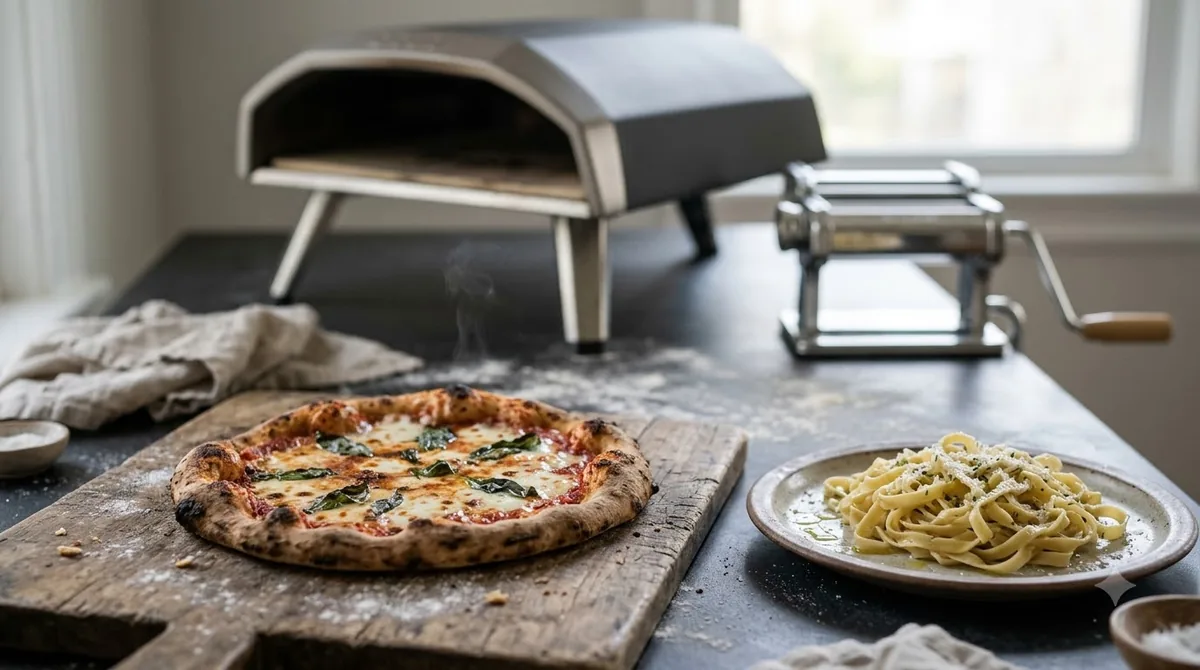

If you are asking how much dough for a 12 inch pizza you need, the answer is about 250 grams of dough per ball for a classic hand-stretched crust. That weight comes from Ooni’s classic pizza dough recipe, which divides its dough into four 250 gram balls for 12 inch (30 cm) pizzas. Thin crusts use less, and thick or deep-dish styles use more.
Your final dough weight also depends on hydration, the flour you use and how far you plan to stretch the dough. The guide below gives the starting numbers, the math behind them and a few checks you can make at home.
How Much Dough for a 12 Inch Pizza Depends on the Crust Style
A classic 12 inch pizza uses about 250 grams of dough, a thin crust uses about 175 grams, and a thick crust can go up to 300 grams. The crust style matters more than the topping, because the dough ball sets how thick the finished base will be.
| Crust style | Dough per 12 inch pizza | Source |
|---|---|---|
| Classic hand-stretched | About 250 g | Ooni classic dough recipe |
| Thin crust | About 175 g | Prepa Pizza blog (seller guide) |
| Thick crust | Up to about 300 g | Prepa Pizza blog (seller guide) |
The thin crust figure is a useful lower limit. If you want a crisp, cracker-like base from an oven that gets very hot, start near 175 grams and check the bake before you add more dough; the method for that style is in this thin crust pizza dough recipe. A thick crust needs the heavier ball and usually a longer rise, so do not use the thick figure as your default.
Where the 250 Gram Figure Comes From
The 250 gram ball is the figure Ooni gives for its classic recipe, which makes four balls for 12 inch or 30 cm pizzas. The recipe starts with 613 grams of “00” flour, 368 grams of lukewarm water and 18 grams of sea salt, which works out to about 60% hydration (a ratio calculated from those amounts, not stated by Ooni). Ooni’s page states the four-ball yield for 12 inch pizzas directly.
The same recipe says the dough should rest and rise for 2 hours, or until doubled, before you divide it. After dividing, the balls rise again for 30 to 60 minutes. For a 12 inch pizza, that means you weigh each ball first, then let it rest so it stretches without tearing. You can read the full method on Ooni’s classic pizza dough guide.
Ooni’s recipe also gives a 16 inch yield of three 330 gram balls. That is less dough per ball than the simple area math would suggest, so the 16 inch number is the one to check against your own pan or stone before you commit to a batch.
How to Scale Dough Weight for Other Pizza Sizes
Dough weight grows with the area of the pizza, not with its diameter, so a rough starting point is to scale 250 grams by the square of the diameter. This is simple geometry applied to the 250 gram figure, and the table shows the result next to the published reference numbers.
| Pizza size | Area compared with 12 inch | Scaled dough (calculated) | Published figure |
|---|---|---|---|
| 10 inch | 0.69 times | About 175 g | About 180 g (Prepa Pizza) |
| 12 inch | 1.00 (reference) | 250 g | 250 g (Ooni) |
| 14 inch | 1.36 times | About 340 g | About 350 g (Prepa Pizza) |
| 16 inch | 1.78 times | About 445 g | 330 g per ball in three-ball yield (Ooni); 400 to 500 g (Prepa Pizza) |
The calculated column and the published figures agree for 10 and 14 inch pizzas. The 16 inch figures do not agree, because Ooni uses a different yield and the seller guide gives a wide range. If you are making a 16 inch pie, weigh a test batch and decide the final ball weight by how thin you can stretch it without holes.
Flour and Water Needed for Each 12 Inch Dough Ball
Each 250 gram dough ball holds about 153 grams of flour, about 92 grams of water and about 4.5 grams of salt. These values are calculated from the Ooni recipe ratio, where 613 grams of flour, 368 grams of water and 18 grams of salt make 999 grams of dough.
Yeast is excluded from those totals. The recipe lists 3.5 grams of active dry yeast for the whole batch, so a single 250 gram ball carries less than 1 gram of it. If you change the hydration, keep the dough weight fixed and adjust the water, because the water changes how the dough handles while the weight per pizza stays the same.
- Weigh the total dough before you divide it, so you know the batch size.
- Divide the batch into four equal balls for 12 inch pizzas, or three larger balls for 16 inch pizzas.
- Rest the balls covered for 30 to 60 minutes, as the Ooni method describes.
- Stretch each ball to about 12 inches and check the thickness before topping.
Practical Tips for Weighing and Dividing the Dough
Weighing the dough is more reliable than measuring it by volume, because flour can vary a lot in how much a cup holds. A digital kitchen scale that reads in single grams is enough for this task, and it lets you check the ball weight before every bake.
When you plan a batch, the answer to how much dough for a 12 inch pizza does not change with the number of pizzas. Each ball is still about 250 grams, so a four-pizza batch is about 1 kilogram in total, and a pizza dough calculator can scale the flour and water for any other batch size. Weigh the whole batch first, then the balls, so any error shows up before you shape the dough.
Divide the dough while it is still covered so the balls do not dry out, and if you end up with spare balls, see whether you can freeze pizza dough for later. Shape each ball by pulling the edges under and dusting it lightly with flour. Avoid adding extra flour during the stretch, since it can make the base dry and dense.
Common Mistakes When Sizing Dough for a 12 Inch Pizza
Most sizing errors come from using the wrong reference for the crust style, not from the math itself. Check the crust type first, then the size, and only then the batch.
- Using the thick crust weight for a thin crust, which gives a heavy base that does not crisp.
- Forgetting to zero the scale with the bowl on it, which adds the bowl weight to every dough ball.
- Confusing the flour weight with the dough weight, which is about 1.6 times larger in this recipe.
- Dividing the dough before weighing, so the balls differ by a large margin.
- Changing the hydration without changing the ball weight, which affects how the dough stretches.
Frequently Asked Questions
How many grams of dough is a 12 inch pizza?
A classic 12 inch pizza uses about 250 grams of dough. Ooni’s classic recipe makes four 250 gram balls for 12 inch or 30 cm pizzas. A thin crust can use about 175 grams, while a thick crust can go up to about 300 grams.
Is 250 grams of dough enough for a 12 inch pizza?
Yes, 250 grams is the standard starting weight for a classic 12 inch pizza, and it is the figure most people use as their baseline for how much dough for a 12 inch pizza they need. If you stretch it very thin, you may have dough left over, and if you want a thicker rim, add weight in small steps. Check the result on your first bake.
How much dough for a 16 inch pizza?
Ooni’s recipe gives three 330 gram balls for a 16 inch pizza. Other guides give a wider range of about 400 to 500 grams. Because the sources disagree, weigh a test ball and adjust it to the stretch and thickness you want.
How many 12 inch pizzas can I make from 1 kilogram of dough?
At 250 grams per ball, 1 kilogram of dough makes four 12 inch pizzas. This is a simple division, and it assumes you use the whole weight with no trimming or scraps.
Does a thin crust need less dough than a classic crust?
Yes. A seller guide lists about 175 grams for a thin 12 inch crust, compared with about 250 grams for a classic one. The thinner ball spreads out wider with less dough, so the difference shows in the finished texture.
If you are still unsure how much dough for a 12 inch pizza your oven needs, bake one test ball first and judge the crust before you scale the batch. For most home ovens, a 250 gram ball is the best place to start a 12 inch pizza. Weigh the dough, rest it as the recipe says, and adjust the next batch based on how the first crust bakes; the full routine is in a guide to how to make pizza at home. Keep a note of the ball weight that gave you the crust you liked.