


A pizza dough calculator converts a number of pizzas into exact ingredient weights using baker’s percentages, where flour is always 100 percent. The method is simple and removes most of the guesswork from home dough.
Hydration, the ratio of water to flour, changes how dough handles and bakes, so the right setting depends on your pizza style. This guide explains the math and shows where a calculator stops being useful.
What a Pizza Dough Calculator Does
A pizza dough calculator sets flour at 100 percent and scales water, salt and yeast as percentages of that flour weight, so every ingredient can be weighed in grams.
This system is called baker’s percentages. Flour is the constant, and every other ingredient is written as a share of its weight. Once the percentages are fixed, the same ratios hold whether you make one pizza or ten, so a batch can be scaled up or down without changing how the dough is built.
A pizza dough calculator is useful for three jobs: scaling a recipe to the number of pizzas you need, keeping batches consistent, and checking that a recipe’s ratios make sense. Its output is only as accurate as the weights you enter, so the scale matters as much as the tool.
How Baker’s Percentages Work
In Caputo’s worked example, 1,000 g of flour at 60 percent hydration needs 600 g of water, 30 g of salt and 3 g of dry yeast.
| Ingredient | Baker’s percentage | Grams per 1,000 g flour |
|---|---|---|
| Flour | 100 percent | 1,000 g |
| Water | 60 percent | 600 g |
| Salt | 3 percent | 30 g |
| Dry yeast | 0.3 percent | 3 g |
Read the table from top to bottom. Every percentage is measured against the flour, not against the finished dough. That is why water shows 60 percent even though it makes up only part of the total dough weight. The figures come from a generalized example, so use them as a template for the ratios rather than as a fixed recipe.
When you enter numbers into a pizza dough calculator, the flour amount acts as the anchor. Change the flour, and every other amount changes in the same proportion. Keep that in mind when you adjust a recipe for fewer or more pizzas, because the ratios stay fixed while the totals move.
Choosing the Right Hydration for Your Pizza Style
Gozney puts Neapolitan dough at 58 to 65 percent hydration and New York style dough at around 65 percent, according to Gozney’s hydration guide.
- Neapolitan: 58 to 65 percent hydration
- New York style: around 65 percent hydration
- Home oven: no separate range is given, so treat these figures as a starting point
Higher hydration changes how the dough behaves. According to the same guide, it becomes stickier and harder to handle, and it also becomes softer and more elastic. The baked crust tends to be more open, lighter and airier. If you want that texture but struggle to shape the dough, change the water in small steps rather than jumping across the whole range.
If you want a full method for the 58 to 65 percent range, our Neapolitan pizza dough recipe shows ratios, mixing and rise. If you search for a neapolitan pizza dough calculator or a pizza dough hydration calculator, set the hydration first. The tool then scales flour, salt and yeast around that figure, so you only need to choose the number once.
A pizza dough calculator also lets you test a few hydration settings quickly. Using a pizza dough calculator to compare two or three figures on paper is far cheaper than mixing three full batches to see which one handles better in your hands.
Working Out Dough Weight for Several Pizzas
Multiply the number of pizzas by the dough ball weight to get the total dough, then divide that total by 1 plus the sum of the percentages to find the flour weight.
- Multiply the number of pizzas by the weight of one dough ball. The result is the total dough weight.
- Convert each percentage to a decimal and add them together. At 60 percent hydration, 3 percent salt and 0.3 percent yeast, the sum is 0.633. Add 1 to get 1.633.
- Divide the total dough weight by 1.633 to get the flour weight, then calculate each other ingredient from the flour.
Take a total of 1,000 g of dough at those same percentages. Dividing by 1.633 gives about 612 g of flour. That leaves about 367 g of water, 18 g of salt and 2 g of yeast. The figures are rounded to the nearest gram, so the four amounts add up to roughly 1,000 g.
For help choosing a per-pizza figure, see how much dough you need for a 12-inch pizza. Weigh the whole batch once before you divide it into balls, so every ball stays close to the planned weight. A pizza dough calculator plans the totals, but the division step is where small differences between balls creep in.
A pizza dough weight calculator runs this arithmetic for you, and a dough ball weight calculator gives the per-pizza figure. Working it out once by hand is still worth the time, because it shows exactly which number changes when you adjust the hydration.
Common Mistakes With a Pizza Dough Calculator
The most common error is measuring by volume, since the percentages only hold when every ingredient is weighed in grams.
- Measuring flour by the cup, which gives a different weight each time
- Mixing percentages of total dough with percentages of flour, which skews every amount
- Entering the total dough weight where the calculator expects the flour weight
- Changing the water without rechecking the total dough weight
A digital kitchen scale is the one tool you need. Set it to grams, zero the bowl, then add each ingredient in turn. A small error in the flour weight shifts every other amount, so weigh carefully. Before you trust any pizza dough calculator, check which unit it uses and whether its input is flour weight or total dough weight.
Rounding can also add up. If every ingredient is rounded down, the total can fall short of the dough weight you planned, so compare the sum of the rounded amounts with your target before you mix.
What a Calculator Cannot Tell You
A calculator outputs ratios, not a finished dough, so it cannot measure how your flour absorbs water or how warm your kitchen is.
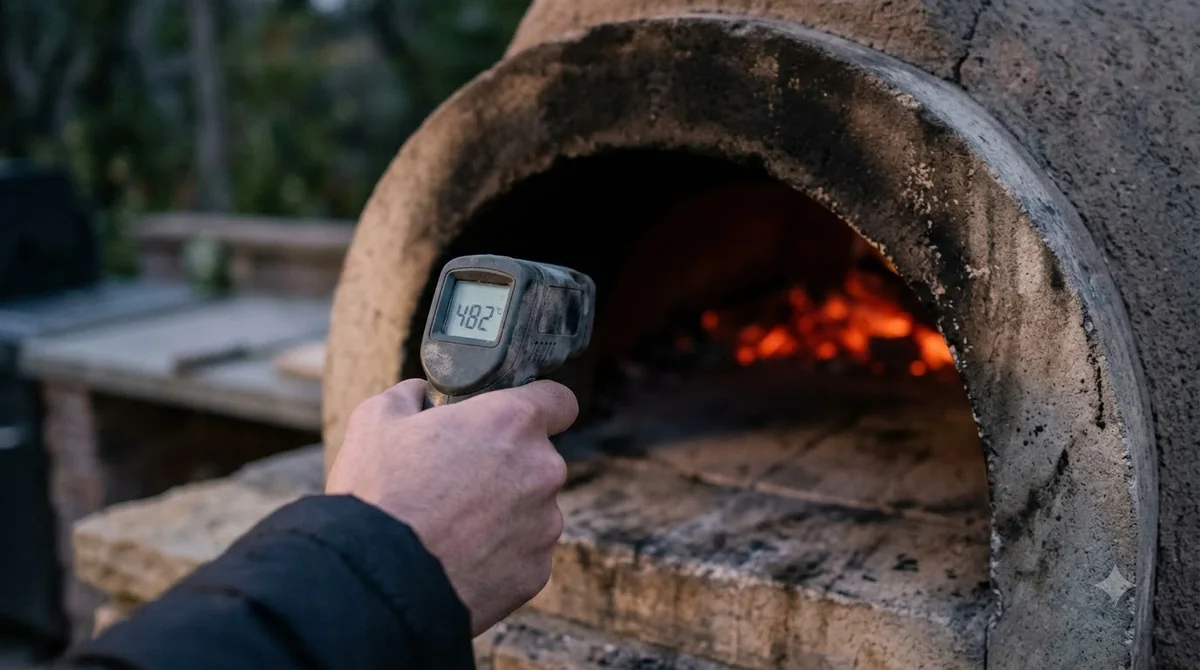
Two batches with identical numbers can still behave differently. Flour type, resting time and room temperature all change how the dough feels and rises. Treat the result as a starting point for a test batch, not a guarantee of the finished crust. A pizza dough calculator is a planning tool, not a substitute for judging the dough by hand.
Several neighboring topics fall outside this page. Preferment dough methods such as poolish pizza dough, the link between yeast type and fermentation time (see cold ferment pizza dough), and pizza oven temperature with pizza stones each deserve their own guide. For now, one test batch will teach you more than any calculator. Keep a short log with the date, flour brand, total weight, hydration and how the dough handled, so the next batch starts from real results.
Frequently Asked Questions
Is 60 percent hydration right for a home oven?
Gozney gives no separate home-oven range and calls its recipe suggestions a starting point, so test within the 58 to 65 percent Neapolitan range and adjust from there. Keep notes on each batch so you can see how the crust responds.
How much yeast goes with 1,000 g of flour?
Caputo’s worked example uses 3 g of dry yeast for 1,000 g of flour, which is 0.3 percent of the flour weight. Check your yeast package for guidance on how much to use with your fermentation time.
Should I weigh ingredients or measure them by volume?
Weigh them in grams. A pizza dough calculator reports its percentages by weight, so a measuring cup of flour cannot reliably match the gram figure. A scale removes that guesswork and makes each batch repeatable.
Can I use a pizza dough calculator for bread?
The baker’s percentage method works for any dough, but the target hydration may differ by bread type. Check the recommended range for the bread you plan to make before entering numbers into the tool.
Why is my dough sticky even though I used the calculator?
Gozney notes that higher hydration makes dough stickier and harder to handle. Reduce the water in small steps and recheck the flour weight before mixing again.
Does a calculator account for flour type?
No. A pizza dough calculator that works from weights alone cannot tell how a particular flour will behave at the same hydration. Test each new flour with a small batch first.
Choose a hydration within the range for your pizza style, weigh every ingredient in grams, and make one test batch before scaling up. Once that first batch works, a pizza dough calculator can handle the scaling for any number of pizzas, so you can focus on shaping and baking.