


Neapolitan vs roman pizza comes down to shape, dough and heat. Neapolitan is a round pie with a thin center, baked in a very hot wood-fired oven, while roman pizza is usually a thicker rectangular slice baked at a lower heat.
The dough, fermentation time and bake time also differ, so the better choice depends on the crust you want and how much time you can give the dough.
Where Neapolitan and Roman Pizza Come From
In neapolitan vs roman pizza, the origins are different cities: Neapolitan pizza comes from Naples in the Campania region, while roman pizza is tied to Rome in Lazio, where its best-known form is pizza al taglio, or pizza by the slice. The sources we read do not give a founding date for either style.
Neapolitan pizza is governed by the rules of the Associazione Verace Pizza Napoletana (AVPN), which set out the flour, yeast, salt, water, forming and oven standards for the style. Wikipedia’s Neapolitan pizza article describes the same traditional style, with dough that is fat-free and sugar-free.
Roman pizza has no single rulebook in the sources we read, which is one reason neapolitan vs roman pizza comparisons are harder than they look. The Wikipedia article on pizza al taglio says the style is baked in large rectangular trays, is also called pizza al trancio, and is common across Italy, with traditional shops often using a wood-fired oven and many modern ones using electric ovens.
Neapolitan vs Roman Pizza: Shape, Thickness and Crust Compared
In neapolitan vs roman pizza, shape is the first split: Neapolitan pizza is round with a center no thicker than 0.25 cm, while roman pizza is cut from rectangular trays and described as thicker and moister.

The AVPN recipe sets a Neapolitan pizza at 22 to 35 cm across, built from a dough ball of 200 to 280 g. The center stays thin under those rules, so the rim is the part that rises most during the bake.
| Feature | Neapolitan | Roman |
|---|---|---|
| Shape | Round | Rectangular tray or square slice |
| Thickness | Center no more than 0.25 cm under AVPN rules | Described as thicker, moister and heartier |
| Baking format | Single round pie | Large rectangular trays, sliced to order |
Roman pizza is usually sold by weight, often priced per kilogram or per 100 grams, and the rectangular shape makes it easy to cut portions to the buyer’s wishes, according to Wikipedia. That is why the format matters to buyers as much as to bakers. Put side by side, neapolitan vs roman pizza is a contrast between a round pie and a tray slice.
Dough, Flour and Hydration
In neapolitan vs roman pizza, Neapolitan dough is made from 00 or 0 flour, yeast, salt and water, with no oil or sugar, and the AVPN recipe works out to a hydration of roughly 56 to 63 percent.
For a full recipe, see our Neapolitan pizza dough recipe. The AVPN recipe page lists 1.6 to 1.8 kg of flour for every liter of water, with 40 to 60 g of sea salt per liter of water. Dividing one kilogram of water by that flour range gives a hydration of roughly 56 to 63 percent. That figure is our own calculation from the flour ratio, not a number the standard states. The AVPN page also allows a sourdough starter (madre) at 5 to 20 percent of the flour weight as an alternative to yeast.
Roman dough is harder to pin to one number. For a Roman-style bake, see our Roman pizza dough recipe. The pages we read did not give a hydration figure for either a Roman tonda or pizza al taglio, so this article does not quote one. Food Republic reports that Roman makers use a more refined flour, and that one maker ages his flour for three to five months before use.
For a home baker comparing neapolitan vs roman pizza, the practical point is that a Neapolitan recipe should follow the AVPN flour and water ratio, while a Roman recipe should be checked for its own stated water amount before mixing. Mixing the two recipes without checking each one will give an unpredictable result. Some bakers also blend durum flour into the dough; see our guide to semolina pizza dough for that variation.
Oven Temperature and Bake Time
For neapolitan vs roman pizza, heat is the big split: Neapolitan pizza bakes for 60 to 90 seconds in a very hot oven, while roman pizza is baked at a lower heat, and the sources we read give no bake time for it.
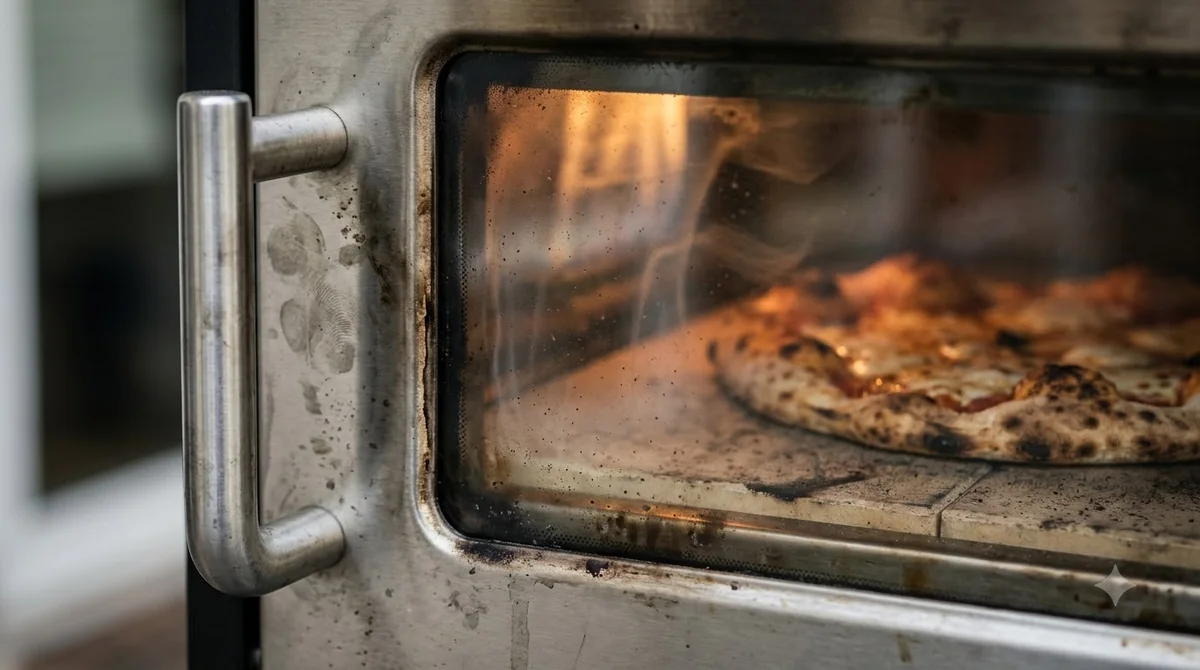
The sources disagree on the Neapolitan oven temperature. The Wikipedia summary gives 485 °C (905 °F), while the AVPN recipe page gives a range of 430 to 480 °C, wood-fired, measured between the hearth and the vault. Both agree on the 60 to 90 second bake time, and the difference is one to keep in mind when you set a home oven.
Food Republic describes Roman pies baking at “500-600 degrees”, but it gives no unit, so the number cannot be converted with confidence. The same article says Neapolitan pies use “much hotter fires”, which supports the idea that the roman oven is cooler. Check the unit in any Roman recipe before you set your oven.
For a home test of neapolitan vs roman pizza, the oven is the real limit. Our guide to how hot a pizza oven gets explains the ranges. Most home ovens do not reach the 430 to 480 °C range that AVPN describes for a wood-fired oven, so a home Neapolitan will be a different result from the restaurant style. Plan for a longer bake and adjust the oven to the bake you can reach.
Fermentation Time and Dough Rest
In neapolitan vs roman pizza, rest time differs sharply: Neapolitan dough ferments for 8 to 24 hours in total under the AVPN recipe, while the Roman dough described by Food Republic is given a 60 to 90 hour cold rise.
The dough timeline is a second way neapolitan vs roman pizza differ. The AVPN recipe page sets total fermentation at a minimum of 8 hours and a maximum of 24 hours, plus up to 4 hours of working time. The recipe leaves the second rise in crates to vary with conditions, so the exact timing is a matter of judgment at the bench.
Food Republic describes Roman dough as having three separate fermentation stages and a cold rise of 60 to 90 hours at “41 degrees”, with the unit not stated. It also mentions one shop that proofs its dough for 96 hours. A long cold rise is the step that most separates the two doughs in the sources we read.
If you adapt a Roman recipe to a home kitchen, plan the timeline first. A Roman cold rise of 60 hours or more needs days of planning, while the AVPN window of 8 to 24 hours fits into a single day.
Which Style to Choose at Home
Deciding between neapolitan vs roman pizza starts with the crust you want. Choose Neapolitan if you want a thin, round pie with a quick bake in a very hot oven, and choose roman pizza if you want a thicker rectangular slice that is easy to share and cut by weight.
- Pick Neapolitan when your oven can get very hot and you want a pizza that cooks in about a minute and a half once it is in.
- Pick roman pizza when you want a tray-style slice that feeds a group and divides into even portions by weight.
- Plan a longer dough timeline if you follow a Roman recipe with a cold rise of 60 hours or more, as reported by Food Republic.
- Check the temperature unit in any recipe before you set your oven, because the sources use inconsistent units.
Neither side of neapolitan vs roman pizza is simply better. The right choice depends on the oven you own and the time you can give to the dough.
Common Mistakes When Comparing the Two
Most confusion about neapolitan vs roman pizza comes from treating the two styles as variations of one dough. The sources show they differ in flour, rise time and oven heat, so a fix that works for one may fail for the other.
- Using the AVPN 430 to 480 °C range as a home target without checking whether your oven can hold it.
- Assuming roman dough is Neapolitan dough with a longer rise, when the sources describe three fermentation stages.
- Copying a temperature without a unit, such as the “500-600 degrees” figure, into a recipe.
- Judging the crust by shape alone, since a rectangular tray and a round pie are cooked and cut in different ways.
Before you decide on neapolitan vs roman pizza for dinner, read the unit, the stated water amount and the bake time together will avoid most of these errors before you start mixing.
Frequently Asked Questions
Is roman pizza thicker than neapolitan pizza?
Yes. In neapolitan vs roman pizza, Food Republic describes roman pizza as moister, thicker and heartier. Neapolitan pizza must keep its center under 0.25 cm under the AVPN rules, so the gap between the two is large.
Can I make neapolitan pizza in a home oven?
You can make a Neapolitan-style pizza at home, but most home ovens cannot reach the 430 to 480 °C range that AVPN describes for a wood-fired oven, so the result will differ from the standard.
Is pizza al taglio the same as roman pizza?
The sources treat them as closely related. Wikipedia describes pizza al taglio as pizza by the slice, baked in large rectangular trays and sold by weight. The rectangular slice is the form most often linked to the name roman pizza.
Why do sources give different neapolitan oven temperatures?
The Wikipedia summary gives 485 °C (905 °F), while the AVPN recipe page gives 430 to 480 °C. The sources we read do not explain the gap, so check the AVPN page directly if you need the exact figure.
How long should neapolitan dough ferment?
The AVPN recipe sets total fermentation between 8 and 24 hours, plus up to 4 hours of working time. The roman dough in Food Republic’s account rises for 60 to 90 hours in a cold stage.
For neapolitan vs roman pizza, decide on the crust first and the oven second. Neapolitan suits a very hot oven and a short bake, while roman pizza suits a cooler oven and a sliceable tray format. Check the units in any recipe before you bake. If you are also weighing Sicilian pizza, read Neapolitan vs Sicilian pizza, or browse more pizza and pasta guides.