
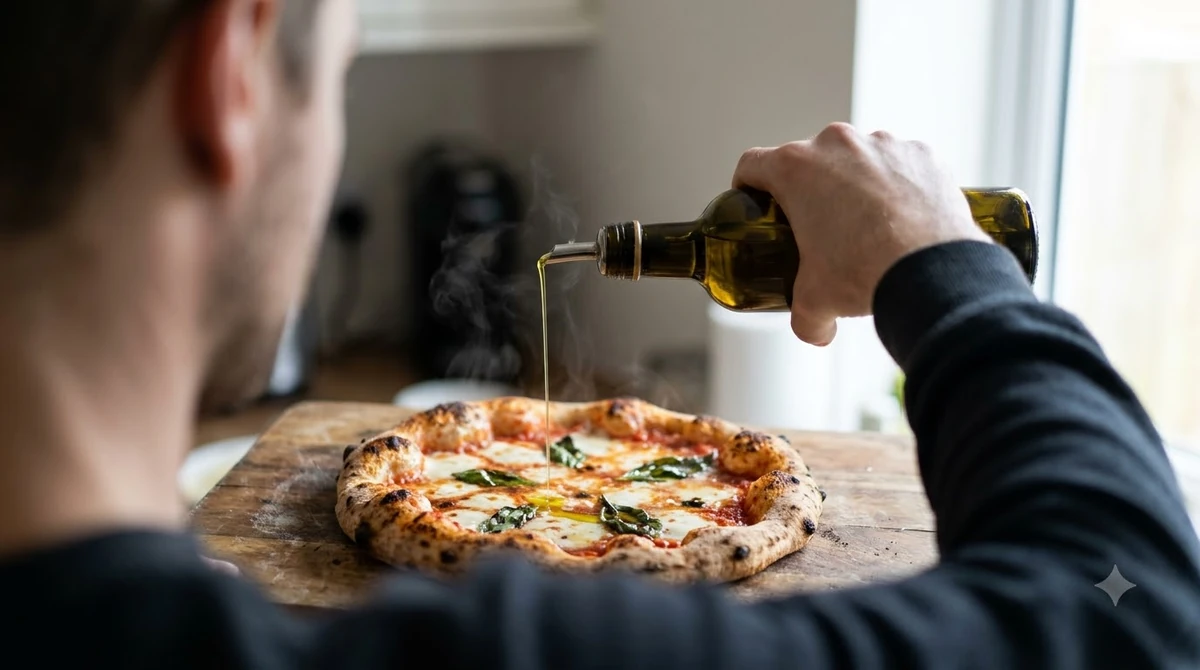

Neapolitan vs Sicilian pizza comes down to shape and crust: Neapolitan is thin, round and cooked fast in a very hot oven, while Sicilian is thick, often rectangular and baked in a pan. Both styles are Italian, but the dough, toppings and bake time all differ, so the right choice depends on the crust you want.
| Pick | Best for | Key fact |
|---|---|---|
| Neapolitan | A thin, soft crust with a quick bake | AVPN rules give a bake of 60 to 90 seconds at 485 °C (905 °F) |
| Sicilian | A thick slice that holds heavier toppings | Traditionally thick and often rectangular, baked in a deep pan |
Where Neapolitan and Sicilian Pizza Come From
Neapolitan pizza is thought to date to the 18th century in Naples, according to The Takeout, while Sicilian pizza was popular in western Sicily by the mid-19th century.
Neapolitan pizza is a round pie with a thin, soft crust and raised edges, usually made in Naples in the Campania region. Traditional toppings use San Marzano or pomodorini del Piennolo del Vesuvio tomatoes, with mozzarella di bufala campana or fior di latte di Agerola. Wikipedia’s Neapolitan pizza article summarizes these traditional rules. To bake it yourself, see our Neapolitan pizza recipe and the matching Neapolitan pizza dough recipe.
Sicilian pizza, known in Italian as pizza siciliana (our guide to Sicilian pizza covers it in detail), has many local names. Palermo calls its version sfincione, Syracuse uses pizzolu, and Catania uses scacciata. The style most Americans picture grew thicker and more often square after it reached North America.
That history explains why a neapolitan vs sicilian pizza comparison can confuse readers. Both are often grouped together as “Italian pizza”, yet they come from different places and were cooked in different ways. Knowing where each style started makes the differences in crust and baking easier to predict.
Neapolitan vs Sicilian Pizza: Shape, Crust and Thickness
Neapolitan pizza is round with a thin center and a puffed rim, while Sicilian pizza is usually rectangular and thick.
| Feature | Neapolitan | Sicilian |
|---|---|---|
| Shape | Round | Usually rectangular or square, though it can also be round |
| Crust | Thin, soft center with raised edges | Thick and sturdy, with dough over an inch thick in the US style |
| Cooking vessel | Wood-fired oven (AVPN rules) | Deep baking dish or pan |
| Bake | 60 to 90 seconds under AVPN rules | Longer cooking time in the pan |
Sicilian crust is much thicker than Neapolitan crust. According to Wikipedia’s Sicilian pizza article, the American version has dough over an inch thick, and Palermo sfincione uses more dough and sauce, with less cheese, than a Neapolitan pie.
In the American version, the Sicilian style is typically square and served in thick slices, which is why many diners see it as a separate pizza. Traditional Sicilian pizza, by contrast, can be round, so the neapolitan vs sicilian pizza difference is not only about the outline of the pie.
Thickness is the most reliable test when you compare neapolitan vs sicilian pizza. Shape alone can mislead, because traditional Sicilian pizza is not always rectangular. Look at the crust and the pan before deciding which style you are eating.
Dough and Ingredients: What Each Style Uses
Neapolitan dough under AVPN rules uses only flour, water, salt and yeast, with no fat or sugar added.
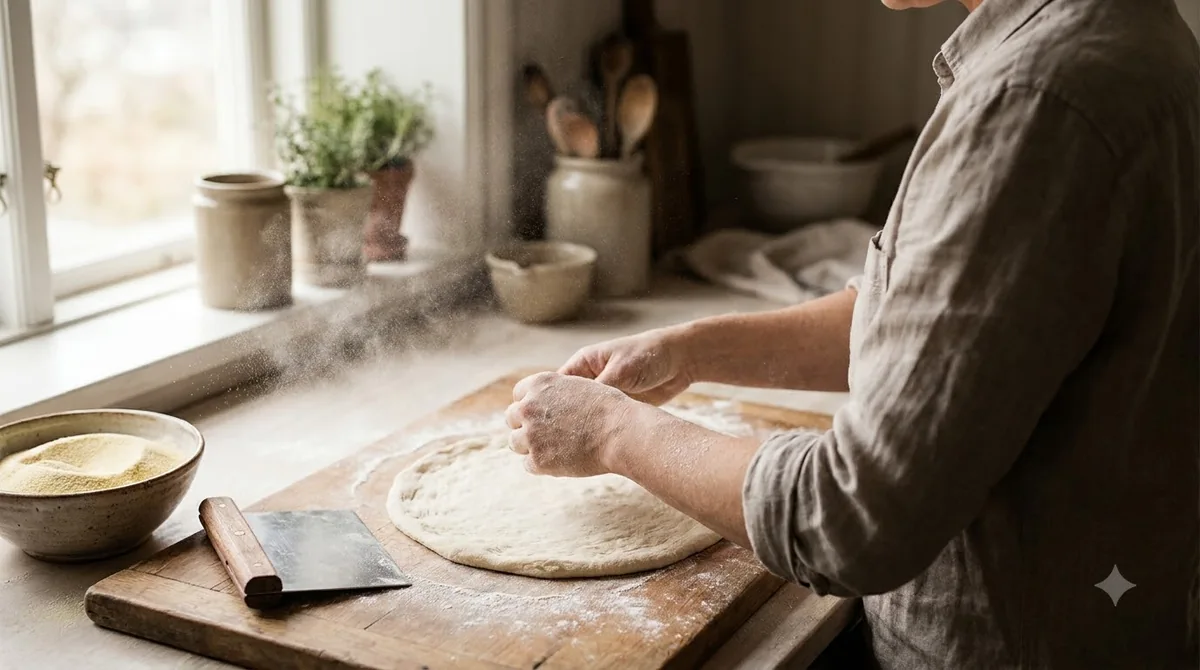
As summarized by Wikipedia from the AVPN rules, the flour should be medium-strength, with a W value of 250 to 320 and 11 to 13.5 percent protein. No more than 20 percent of the flour may be strong flour. The dough is kneaded by hand or with a low-speed mixer, and shaped by hand without a rolling pin.
Sicilian dough is harder to pin down. The sources reviewed give no fixed amounts of flour, oil or water for it, so recipes vary widely.
If you want a Neapolitan result at home, follow a four-ingredient method of flour, water, salt and yeast, with no sugar or fat, as the AVPN rules describe. The dough is the point where a neapolitan vs sicilian pizza choice is made, because the flour, hydration and rise decide whether the crust ends up thin and blistered or thick and tender.
Flour strength matters for both styles. The AVPN limit on strong flour is part of the rules for a soft, extensible Neapolitan dough. The sources for Sicilian pizza describe a heavier, thicker base, but they do not give flour strength figures for it.
How Each Style Is Baked
Neapolitan pizza bakes for 60 to 90 seconds at 485 °C (905 °F) in a wood-fired oven under AVPN rules, while Sicilian pizza bakes longer in a pan.
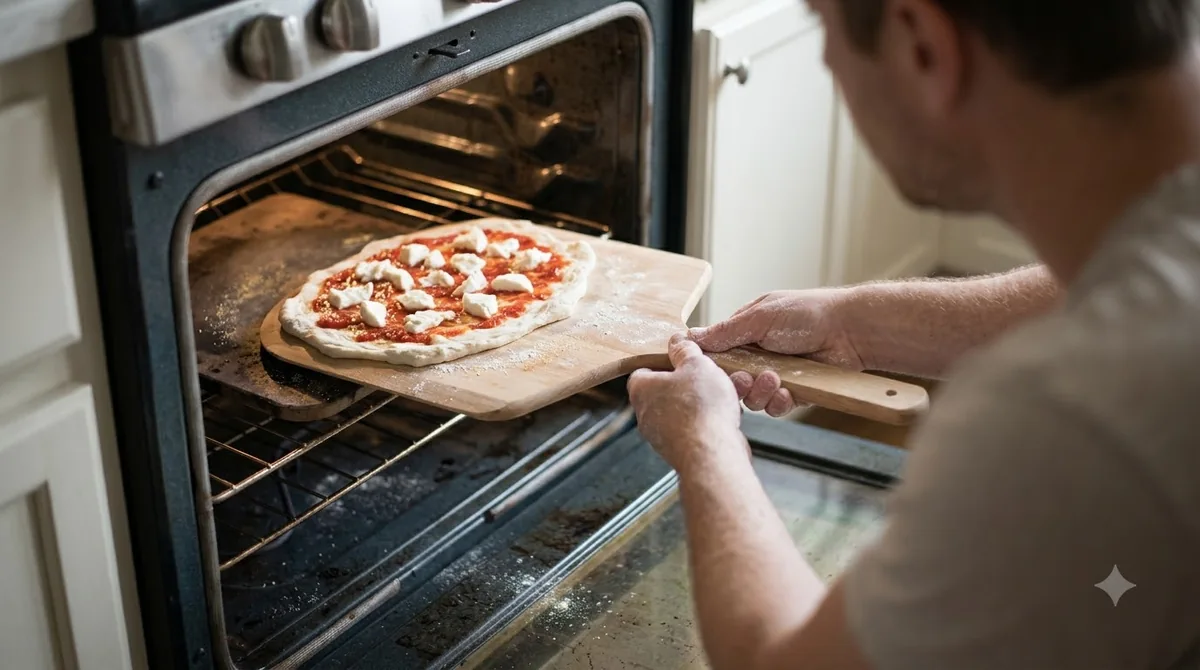
The 485 °C figure and the 60 to 90 second bake are reference points for the traditional Neapolitan method, and they are the clearest bake contrast in any neapolitan vs sicilian pizza comparison. Most home ovens cannot reach that heat (see how hot a pizza oven gets), so the bake time is a guide rather than a setting to copy on a standard kitchen oven.
Timing is the biggest practical difference in a neapolitan vs sicilian pizza bake. A Neapolitan pie spends under two minutes in the oven, so the dough and toppings must be ready before the oven is hot. A pan pizza gives you more margin, because the pan supports the dough during a longer bake.
Sicilian pizza goes into a deep baking dish or pan and needs a longer cooking time. That extra time lets the thick base cook through, but the top can brown before the center sets if the oven runs too hot.
Toppings and How Each Style Is Served
In neapolitan vs sicilian pizza toppings, Neapolitan uses minimal toppings, usually tomato and mozzarella, while Sicilian pizza carries heavier toppings such as onions and anchovies.
Sicilian toppings often include tomatoes, herbs, onions, anchovies, and strong cheeses such as caciocavallo and toma. Some versions have no cheese at all. In sfincione, the sauce is sometimes layered over the other toppings so it does not soak into the thick dough.
Neapolitan pizza is best eaten straight from the oven. The AVPN rules say it should be eaten as soon as it comes out, and it cannot be frozen or vacuum-packed for later sale.
In a neapolitan vs sicilian pizza choice on toppings, Neapolitan rewards speed and fresh ingredients, but a thin pie loses its texture while it waits. Sicilian can carry heavier toppings because its base is thick (another thick pan pie is covered in our Detroit-style pizza recipe), but it takes longer to bake and to serve.
How to Choose Between Them
In a neapolitan vs sicilian pizza choice, pick Neapolitan for a thin, soft crust and a quick bake, and choose Sicilian for a thick slice with heavier toppings.
- Pick Neapolitan if you want a light, puffed crust with simple toppings.
- Pick Sicilian if you want a thick, sturdy slice that holds heavy toppings.
- Skip Neapolitan at home if your oven cannot get very hot, because the classic result depends on high heat.
- Skip Sicilian if you expect a thin, crisp base, since its strength is a thick base.
Both styles reward good dough and a hot oven. Start with the style that matches the crust you want, then adjust the bake to the equipment you have. A clear neapolitan vs sicilian pizza decision saves you from ordering or baking the wrong crust. For another comparison with a rectangular slice, see how Neapolitan vs Roman pizza differs in shape, dough and heat.
When you read a menu, look for the crust description before the toppings. A thin, round pie with a note about a short bake points to a neapolitan vs sicilian pizza split in favor of Neapolitan. A thick, rectangular slice served from a pan points to Sicilian. Those two cues settle most choices before you order.
Frequently Asked Questions
Is Sicilian pizza thicker than Neapolitan pizza?
Yes. In a neapolitan vs sicilian pizza comparison, Neapolitan has a thin center with a puffed rim, while Sicilian has a thick, often rectangular base. Wikipedia’s Sicilian pizza article says the American version has dough over an inch thick. Traditional Sicilian pizza has no single thickness figure, so compare typical versions side by side.
Can Sicilian pizza be round?
Yes. In neapolitan vs sicilian pizza terms, Sicilian is usually thick and rectangular, but it can also be round and look like Neapolitan pizza. Shape alone therefore does not settle the question. Check the crust thickness and the pan before deciding which style you have.
What is sfincione?
Sfincione is the Palermo variety of Sicilian pizza, with a thick base, tomatoes, onions and strong cheeses. Sources describe it as having more dough and sauce, and less cheese, than a Neapolitan pizza. Sicilian pizza also goes by other local names, including pizzolu in Syracuse and scacciata in Catania.
Is Neapolitan pizza protected?
Yes, within the European Union. Pizza napoletana has been recognized as a traditional specialty guaranteed since 5 February 2010. The art of the Neapolitan pizzaiolo was added to UNESCO’s intangible cultural heritage list in 2017, and the AVPN checks compliance with mystery shoppers.
Which is easier at home in neapolitan vs sicilian pizza?
For a beginner, the equipment decides: Sicilian is more forgiving at home because a pan holds the dough and the bake runs longer, without extreme heat. Neapolitan needs very high heat for 60 to 90 seconds, which most home ovens cannot match. Choose based on the equipment you have rather than on which style sounds better.
If you want a light, fast-baked pie, start with Neapolitan. If you want a thick slice that can carry heavy toppings, Sicilian is the better match. Either way, the dough and the heat do more for the result than the name on the menu. For most readers, a clear neapolitan vs sicilian pizza choice comes down to whether they want a light, fast bake or a sturdy, pan-cooked slice.