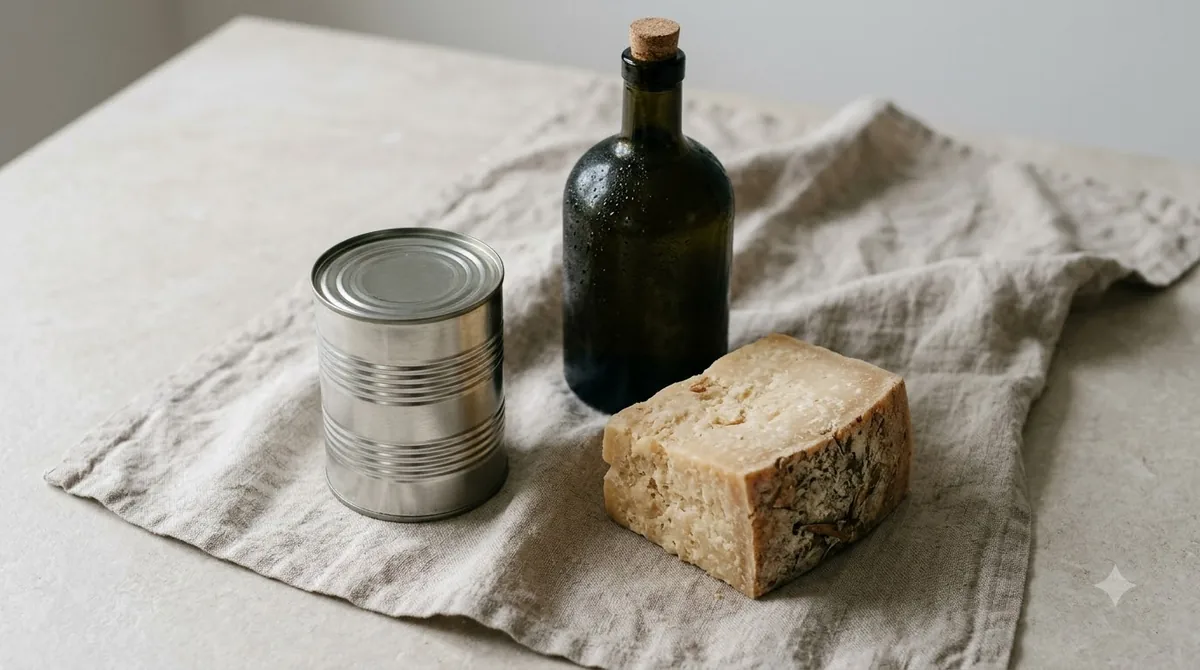

Parmigiano reggiano vs parmesan comes down to legal status. Parmigiano Reggiano is a protected Italian cheese, while parmesan is a general name anyone can use. Parmigiano Reggiano must come from a defined area of northern Italy and follow strict rules on milk, ingredients and aging.
When you weigh parmigiano reggiano vs parmesan for cooking, the two can usually be swapped, but labels and flavor differ. Read the rind and the wording on the package before you buy, so you know which cheese you are getting.
| Pick | Best for | Key fact |
|---|---|---|
| Parmigiano Reggiano | Finishing pasta, risotto and salads | Protected name, aged at least one year |
| Parmesan | Everyday grating and baked dishes | General name, not restricted in the US |
| Pecorino Romano | Recipes that need a bolder cheese | Made from sheep milk, not cow milk |
Parmigiano Reggiano vs Parmesan: What Parmigiano Reggiano Is
Parmigiano Reggiano is a protected designation of origin cheese (see our guide to what DOP means) made in a set area of northern Italy. The official Consorzio website describes that area as the provinces of Parma, Reggio Emilia, Modena and Mantua, with the Po and Reno rivers marking its edges.
The protection works as a land rule as well as a recipe rule. The Consorzio states that protecting the designation means safeguarding the land where the cheese is produced, which is why the production zone is fixed.
Cheese educators also note that part of the province of Bologna is included in the zone, so the protected area is not limited to four provinces. Only cheese made inside that zone and under the rules can carry the Parmigiano Reggiano name.
When people compare parmigiano reggiano vs parmesan, this protected zone is the first difference to know. According to Cheese Scientist, genuine wheels are made from raw, unpasteurized cow milk in those areas, and wheels that fail the standards lose their rind markings and cannot be sold under the name.
Parmigiano Reggiano vs Parmesan: How Parmesan Is Defined
In the parmigiano reggiano vs parmesan question, parmesan is the general name for hard Italian-style grating cheese, and in the United States no rule restricts it.
Inside the European Union, a court decision says the word parmesan may refer only to Parmigiano Reggiano made under the protected name. Outside the EU the name is looser, and cheesemakers in other countries use it for cheeses inspired by the Italian original.
That is why many products sold as parmesan in the United States are not made to the Parmigiano Reggiano standard. The same word can therefore describe very different products on a US shelf. Food writers describe most American parmesan as an imitation, although some of those cheeses are good options in their own right.
Parmigiano Reggiano vs Parmesan: Aging, Milk and Ingredients
Parmigiano Reggiano must age at least one year and follows a short ingredient list. The Cheese Professor’s comparison notes that the protected recipe uses only three ingredients: cow milk, salt and rennet, with no preservatives.
- Minimum aging: Parmigiano Reggiano ages at least one year, while parmesan can be sold after as little as 10 months, a figure sellers cite.
- Ingredients: Parmigiano Reggiano uses cow milk, salt and rennet, while general parmesan recipes can differ.
- Grated versions: pre-grated parmesan may contain cellulose powder to stop clumping and potassium sorbate as a preservative.
Aging affects texture as well as taste. A wedge aged longer usually turns harder and more granular, so the age on the label is a useful clue about what you are buying. For a parmigiano reggiano vs parmesan comparison, the age is one of the first numbers to check.
Generic parmesan is often made with pasteurized milk and may contain colorants, preservatives and calcium chloride, according to Cheese Scientist. That is why the ingredient list is worth reading before you buy.
How to Tell Parmigiano Reggiano vs Parmesan on the Label
Genuine Parmigiano Reggiano wheels carry the name and the dairy producer stamped into the rind. That stamp is the clearest sign you are buying the protected cheese, so check the rind when you buy a whole wedge.
- Rind stamp: look for the Parmigiano-Reggiano name and the producer on the rind of a whole wheel or wedge.
- Wording: packages that say only parmesan may be imitations, especially shelf-stable products sold in green tubes.
- Other names: refrigerated wedges sometimes use names such as Parmezano or Real Parma with an Italian-style label, and those are not the protected cheese.
Pre-grated packages hide the rind, so the front label and ingredient list are your main clues. If the list includes additives, you are looking at a general parmesan rather than the protected product.
The rind itself carries more detail than the name. Cheese Scientist describes a consortium logo, a production month and a dotted pattern on genuine wheels, so a missing mark is a warning sign. Checking labels is the simplest way to settle any parmigiano reggiano vs parmesan question at the shop.
Parmigiano Reggiano vs Parmesan: How They Taste and Cook
Parmigiano Reggiano has a grainy texture and a nutty, umami-rich flavor that many cooks save for finishing dishes.
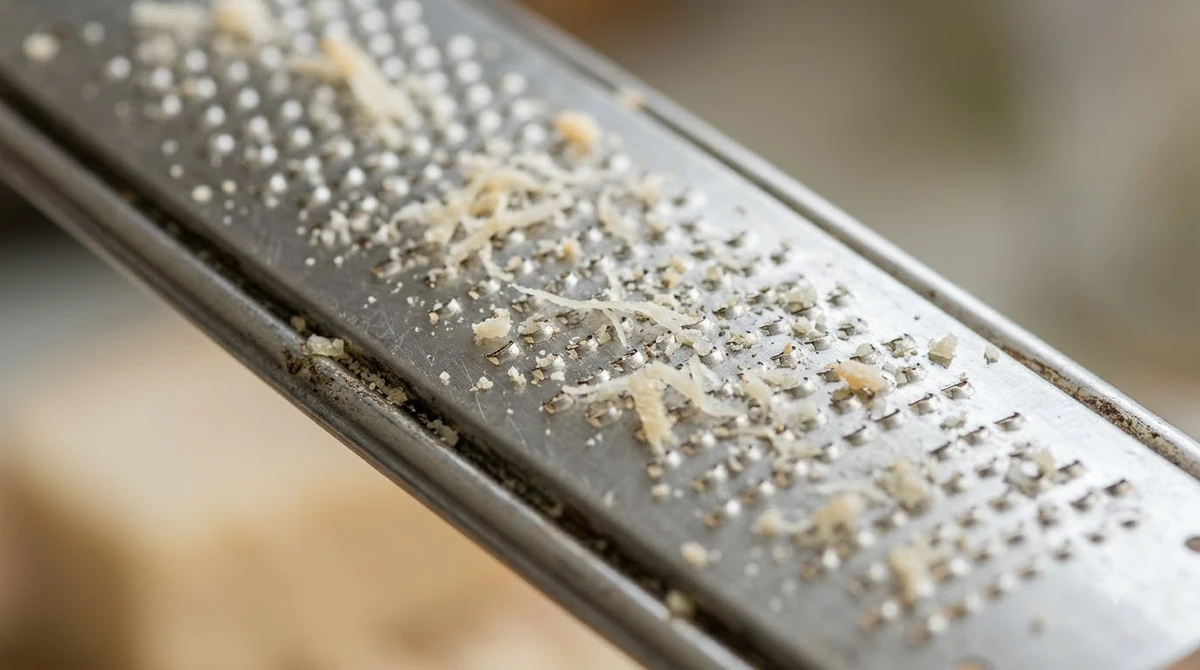
Grate it over spaghetti pasta, risotto or roasted vegetables just before serving, when its flavor is easiest to notice. Many cooks also keep the rind and simmer it in soup, broth or a pot of homemade marinara sauce, since it adds savory depth without extra effort.
Texture is one of the clearest differences in parmigiano reggiano vs parmesan. Cheese Scientist describes Parmigiano Reggiano as pale straw-colored, granular and crystalline, with crunchy crystals that form inside the wheel, while many parmesans look smoother and more golden. The same source describes a nutty cheese with hints of fruity sweetness and umami, and says most parmesans taste generally milder.
Parmigiano Reggiano is usually served in chunks or wedges at room temperature, taken out of the fridge a while ahead so the flavor opens up.
Many American parmesans are good options in their own right. Their flavor depends on the maker and the age, so tasting two or three is the simplest way to find one you like.

Can You Swap Them in Recipes?
For most cooking you can swap parmesan for Parmigiano Reggiano, though you should expect some difference in flavor and texture. A general parmesan works well in baked dishes, sauces and everyday grating.
When the cheese carries the whole dish, the parmigiano reggiano vs parmesan choice matters more, and a wedge of Parmigiano Reggiano is the safer pick. Simple recipes with only pasta, cheese and pepper leave nowhere to hide a weaker flavor.
In a parmigiano reggiano vs parmesan comparison for cooking, the flavor difference usually matters more than the label. A milder or less granular cheese changes a finished dish, even when the swap looks harmless on paper.
Pecorino Romano is a different case from parmigiano reggiano vs parmesan. It is made from sheep milk rather than cow milk, so it tastes different and changes a dish more than a swap between two cow-milk cheeses does. For another hard Italian cheese, one cheese guide lists Pecorino Romano or Grana Padano as substitutes.
Fior di Latte and Neapolitan Pizza
Fior di latte is a mozzarella made from cow milk, and it is a common choice for a cooked Neapolitan pizza.
Buffalo mozzarella is made from buffalo milk, so it is a different cheese even though both are sold as mozzarella.
Many cooks choose fior di latte for a classic cooked pie, and either choice works, so pick the one that suits your oven and your taste. For more cooking basics, browse our learn guides.
Frequently Asked Questions
Parmigiano reggiano vs parmesan: are they the same?
No. Parmigiano Reggiano is a protected Italian cheese made in a defined area under strict rules, while parmesan is a general name. Many parmesan products sold outside Italy are imitations that do not follow the protected rules.
Can I use parmesan instead of Parmigiano Reggiano?
Yes, for most everyday cooking such as sauces, baked dishes and grating over pasta. Expect a difference in flavor and texture, and taste the cheese before you season the dish, since salt levels vary between products.
How long must Parmigiano Reggiano age?
Parmigiano Reggiano must age at least one year. Parmesan can be sold after as little as 10 months, according to sellers, so check the label for the product name and the age before you buy.
Is Parmigiano Reggiano vegetarian?
Check the label or ask the producer before you buy if you follow a vegetarian diet. Hard cheeses rely on rennet to set, and the source of that rennet can vary between producers, so the label is the reliable guide.
What is the difference between pecorino romano and Parmigiano Reggiano?
Pecorino Romano is made from sheep milk, while Parmigiano Reggiano is made from cow milk. That difference in milk changes the flavor, so pecorino is not a like-for-like swap in most recipes.
If you are choosing between parmigiano reggiano vs parmesan, look for the name on the rind and read the label for the age and ingredients. For everyday cooking, a general parmesan does the job, so decide by taste and buy a wedge to grate just before serving.