
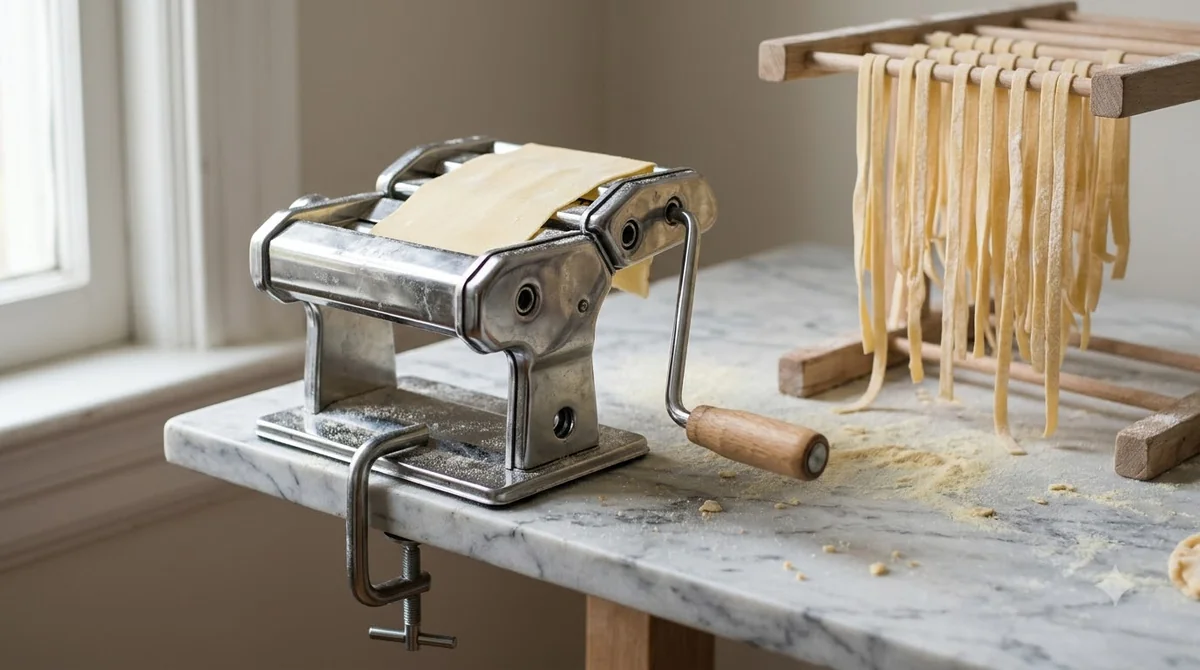

A spaghetti maker is a machine that turns pasta dough into long, thin strands. It can be a hand-cranked roller with a cutter, a stand mixer press attachment, or an electric extruder with a spaghetti die. Once the dough has rested, the machine does the thinning or pushing, and you mostly feed it and handle the strands as they come out.
Most people who search for a spaghetti maker want three answers: what type to buy, what dough to feed it, and what setting to use. This guide covers all three using a published pasta recipe, a semolina dough guide, and a manufacturer’s speed chart, and it points you to your own machine’s manual wherever the settings differ.
What Counts as a Spaghetti Maker?
A spaghetti maker is any pasta machine that produces long, thin strands, and most home versions fall into one of three types.
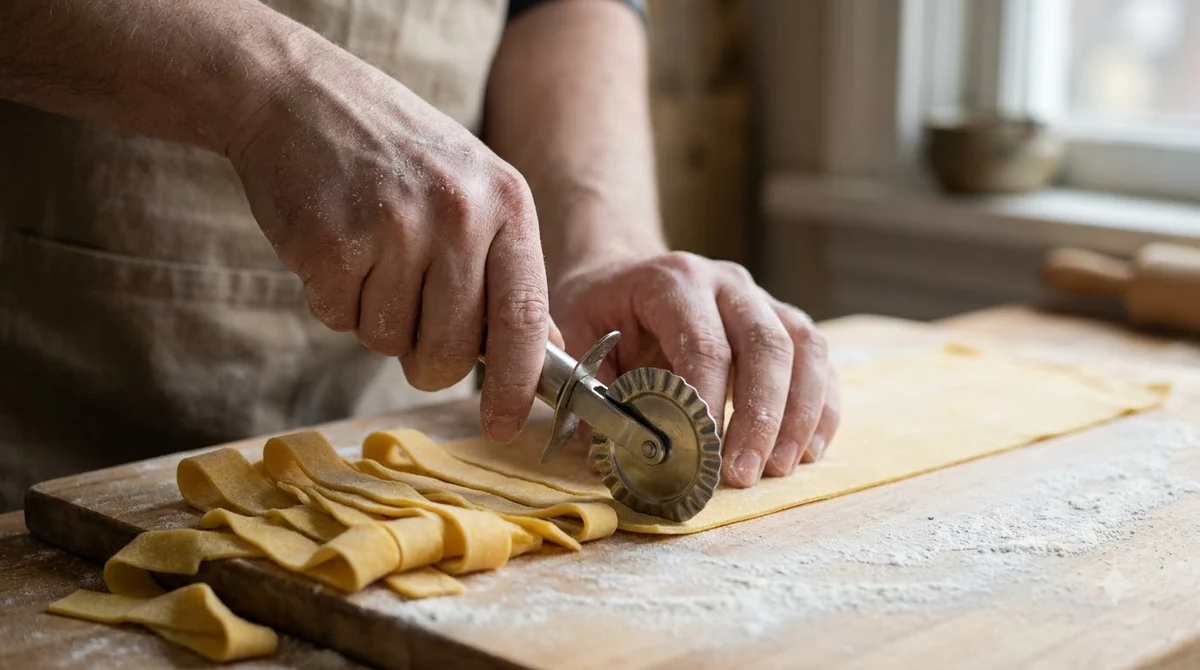
The first is the hand-cranked roller with a cutter. You feed a sheet of dough through rollers that get thinner with each pass, then pass the sheet through a cutting head that slices it into strands. This type gives you the most control over thickness, which matters if you want a firmer or more delicate bite.
The second is the stand mixer press attachment. It fits onto the power hub of a stand mixer and pushes dough through interchangeable dies. The KitchenAid pasta press is one example, and its shape list includes spaghetti and bucatini.
The third is the electric extruder. A motor forces dough through a die, so you only need to load the dough and change the die to switch shapes. It suits people who make pasta often and want less hands-on work.
How a Spaghetti Maker Turns Dough Into Strands
A spaghetti maker either thins dough into a sheet and cuts it, or pushes dough through a round die, and the speed you choose controls how smoothly the strands come out.
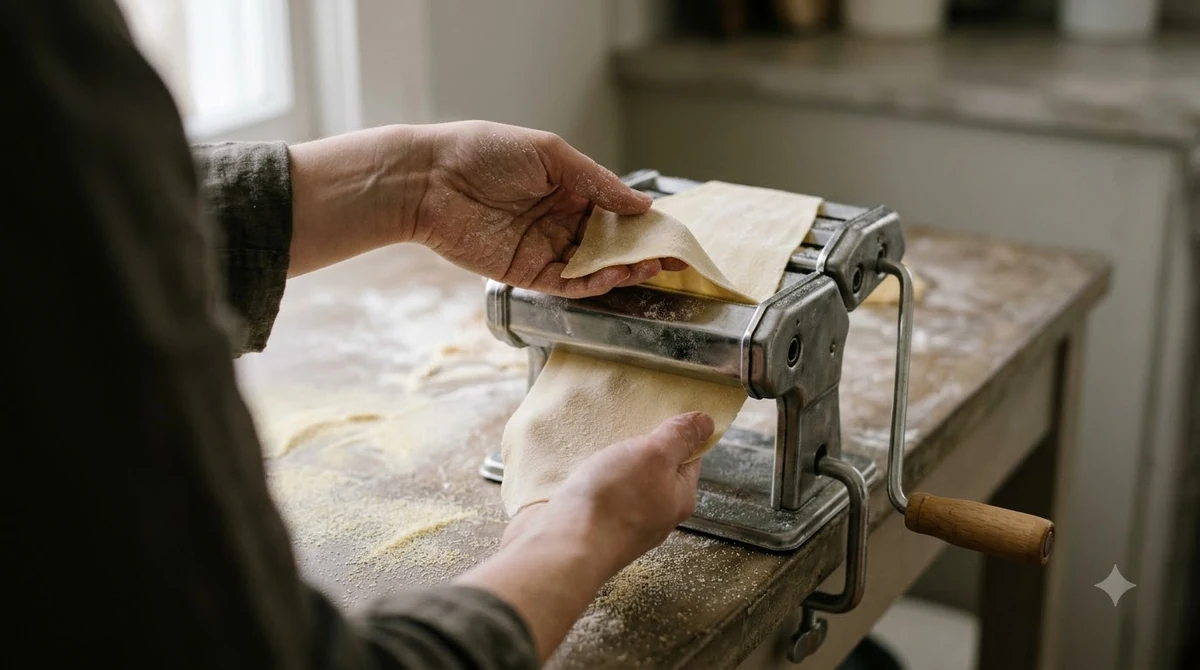
In a press or extruder, the dough is loaded into the chamber and forced through the die by a screw or a plunger. Feed it in small pieces, keep the flow steady, and cut the strands to length as they leave the die. Pushing too fast can cause the strands to stick together or break.
For a KitchenAid press, the shape chart lists Speed 10 for spaghetti, the same setting it gives for bucatini. That number applies to that attachment only. Other machines use different scales, so check the manual before you copy the setting.
Which Dough Works in a Spaghetti Maker?
Two published doughs work well in a spaghetti maker: an egg dough and a flour-and-water semolina dough, and each gives a different texture.
The PBS fresh egg pasta recipe uses 3 cups of all-purpose flour, 4 large eggs, 1 teaspoon of extra virgin olive oil and ½ teaspoon of salt. It says to let the dough rest at least one hour at room temperature, or up to a day in the refrigerator, before you roll or feed it.
The Caputo semolina dough guide uses 300 g of semolina and 160 to 180 g of room-temperature water. It recommends kneading for 8 to 10 minutes until smooth, then resting the dough wrapped for between 30 minutes and 6 hours at room temperature. Past 6 hours, refrigerate it and bring it back to room temperature for at least two hours before use.
Flour weights vary by brand, so the cup measures in the egg recipe are approximate. If you can weigh the flour, the semolina version gives more repeatable results.
Choosing and Caring for a Spaghetti Maker
Choose the type that fits how often you cook pasta, and clean the machine before the dough dries on it.
Dried dough is much harder to remove than wet dough. Brush or wipe the rollers, dies and cutter right after use, and follow the cleaning steps in your manual. Do not soak parts unless the manual allows it.
| Type | How it makes strands | Usually suits |
|---|---|---|
| Hand-cranked roller with cutter | Thins a sheet, then cuts it into strands | Cooks who want control over thickness |
| Stand mixer press attachment | Pushes dough through a die | People who already own a stand mixer |
| Electric extruder | A motor forces dough through a die | Frequent batches with less hands-on work |
Common Mistakes When Using a Spaghetti Maker
Most problems come from dough that is too dry or too wet, or from feeding dough that has not rested.
- Skipping the rest. Both the PBS and Caputo recipes call for resting before you shape the dough.
- Adding too much water. The Caputo guide says to adjust hydration in small amounts, not in large additions.
- Running the machine too fast. Start at a lower setting and increase only if the strands come out smooth.
- Letting dough dry on the parts. Clean as soon as you finish each batch.
How Should You Store and Cook Fresh Spaghetti?
Fresh spaghetti from a homemade batch should be cooked soon or dried fully before storage, and it cooks much faster than dried pasta.
Dust the strands lightly with semolina or flour and spread them on a tray in a single layer so they do not clump. Cook them in a large pot of well-salted water, and check for doneness by tasting, since fresh pasta takes less time than dried.
If you are not cooking the spaghetti the same day, dry it fully on a rack before sealing it in a container. Keep the container away from heat and moisture so the strands do not soften or pick up mould.
Frequently Asked Questions
Is a spaghetti maker the same as a pasta machine?
In broad terms, yes. A pasta machine becomes a spaghetti maker when it has a spaghetti cutter or a spaghetti die.
What speed should I use on a spaghetti maker?
The KitchenAid pasta press lists Speed 10 for spaghetti. Other machines use different scales, so check the manual for your model.
Does spaghetti dough need eggs?
No. The Caputo semolina dough uses only semolina and water, while the PBS recipe uses eggs. Both work in a machine, and they give different textures.
How long should spaghetti dough rest?
The PBS egg dough rests at least one hour at room temperature. The Caputo semolina dough rests between 30 minutes and 6 hours at room temperature.
A spaghetti maker rewards a patient approach: rest the dough, feed it steadily and clean the machine right after each batch. Start with a dough you can weigh, use the speed your manual recommends, and adjust the dough a little at a time rather than changing everything at once.
 5 min readBest PicksBest Spaghetti Maker: Roller, Cutter or Electric DiscUpdated Nov 13, 2026
 6 min readBest PicksBest Rated Automatic Pasta Maker: How Ratings Really WorkUpdated Nov 13, 2026
 8 min readBest PicksItalian Pasta Maker: How to Choose a Good OneUpdated Nov 12, 2026
 8 min readBest PicksPropane Pizza Oven Temperature: What Works for Home PizzaUpdated Nov 13, 2026
 6 min readBest PicksItalian Cooking Gifts: How to Choose the Right OneUpdated Nov 13, 2026
 10 min readBest PicksBest Pizza Oven for Home Use: How to Pick the Right TypeUpdated Nov 12, 2026