
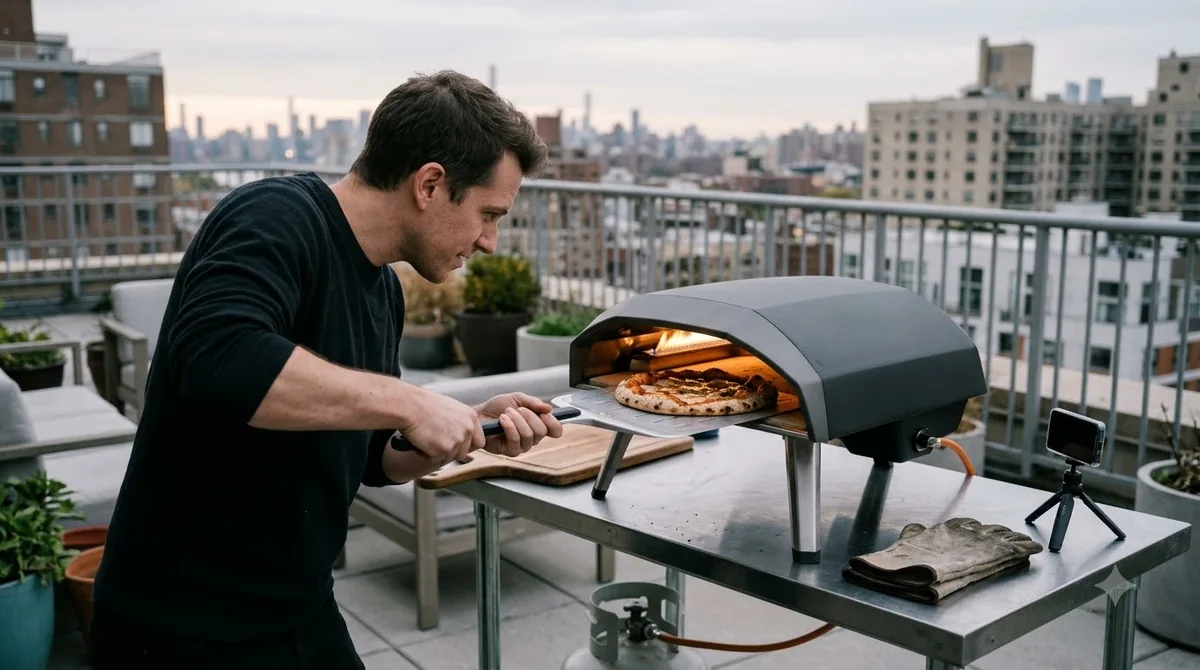

The pizza oven temperature that works in a standard home oven is about 450 to 500°F (232 to 260°C), while a dedicated pizza oven can reach 600 to 900°F. The right setting depends on your oven type and the style of pizza you want to make. As of 2026-11-05, these ranges match current guidance from major pizza oven makers.
Your oven decides the target, because a home oven cannot match the heat of a pizza oven. Use the table below to pick the row that fits your equipment.
How Hot Should a Pizza Oven Be?
A pizza oven should reach 450 to 500°F in a standard home oven and 600 to 900°F in a dedicated pizza oven. Most regular home ovens top out around 500°F, and some reach 550°F (288°C), according to Gozney’s guide to pizza oven heat.
The higher the pizza oven temperature, the faster the base sets and the topping cooks. A home oven works well for most pizzas, but it needs a longer bake and a hot stone to get a crisp base. Dedicated pizza ovens are built to hold far more heat (see how hot a pizza oven can get), which is why they suit thin, blistered crusts.
Keep these three ranges in mind when you choose a setting:
- Standard home oven: 450 to 500°F, with a maximum near 500 to 550°F.
- Electric or gas countertop pizza oven: 450 to 752°F, depending on fuel and model.
- Wood-fired or Neapolitan-style oven: 800 to 900°F for the fastest bake.
A useful rule is to match the pizza oven temperature to the crust you plan to make, not to the number that sounds most impressive. A thick, bready base needs time at moderate heat, while a thin base needs intense heat for a short bake.
Pizza Oven Temperature by Oven Type
Electric pizza ovens run at 450 to 500°F, gas portable ovens reach 649 to 752°F, and wood-fired ovens sit near 850°F. The table compares the usual setting and cook time for each type.
| Oven type | Typical temperature | Cook time |
|---|---|---|
| Standard home oven | About 500°F (260°C), up to 550°F | Longer bake, lower heat |
| Electric pizza oven | 450 to 500°F (232 to 260°C) | Longer bake, gentler finish |
| Portable gas pizza oven | 649 to 752°F (343 to 400°C) | Several minutes |
| Benchtop pizza oven (Breville Pizzaiolo) | 750°F (399°C) | About 3 to 5 minutes |
| Wood-fired pizza oven | About 850°F (454°C) | Depends on fire and dough |
| Neapolitan style in a pizza oven | 800 to 900°F (427 to 482°C) | 60 to 90 seconds |
Breville’s guide gives a benchtop pizza oven a target of 750°F with a cook time of about 3 to 5 minutes, and says Neapolitan pizza cooked at 900°F takes only about 90 seconds. Home ovens take much longer at their lower ceiling. If you own a standard oven, expect the bake to run several minutes longer than the figures above. For the traditional Neapolitan standard that wood-fired ovens follow, see our guide to Neapolitan pizza bake times and ratios.
Each row lists the pizza oven temperature you aim for, not a fixed limit. Read the table from left to right. The temperature column tells you the setting, and the cook time column tells you how long to watch the pizza. A higher pizza oven temperature always shortens the bake, so a 900°F oven needs you at the door, not walking away to set the table. Fuel changes the pizza oven temperature too, so each type has its own guide, from electric pizza oven settings and propane pizza oven heat to wood-fired pizza oven heat.
Pizza Stone and Steel Temperature
Preheat a pizza stone or steel for the full oven heat-up before you bake, so the base starts cooking at once. Sage’s pizza oven guide advises that you always preheat the stone before baking, since a cold stone pulls heat out of the dough.
Follow these steps to get the stone ready for your pizza oven temperature:
- Set the oven to your target temperature and place the stone inside before you turn it on.
- Keep the stone in the oven for the whole heat-up, not just the last few minutes.
- Slide the pizza onto the hot stone once the oven has reached the set temperature.
A thicker stone holds more heat, so it needs longer to come up to the same pizza oven temperature as a thin one. Set the stone and the oven together, so the stone reaches the same heat as the air. A thin steel heats quickly but can also lose heat quickly when you open the door, so plan to keep the oven shut between bakes. Once the stone has cooled, read how to clean a pizza stone before you scrub it.
Some cooks use an infrared thermometer to read the stone surface, because the air reading does not always match the stone. Sage notes that an infrared thermometer can check both the chamber and the stone, which is useful when you are chasing the right pizza oven temperature for a thin crust.
How Temperature Changes by Pizza Style
Deep-dish pizza needs a lower pizza oven temperature than thin crust, usually 400 to 450°F for a longer bake. Thin-crust Neapolitan pizza is the opposite, needing 800 to 900°F for a bake of about 90 seconds.
Breville’s guide puts deep-dish pizza at roughly 400°F with a cook time of 20 to 28 minutes, so the thick base has time to cook through before the top browns. Match the setting to the crust rather than the other way round.
If you make a standard thin-crust pizza in a home oven, set the oven as high as it goes and preheat well. The bake will run longer than in a pizza oven, so check the base early and often. Many home cooks find that the first pizza is the one to watch most closely, because the oven and stone are still gaining heat, so the pizza oven temperature may still be settling.
Preheating and Checking Your Oven Temperature
Preheat a gas or electric pizza oven for about 30 minutes, and give a wood-fired oven up to an hour before you bake. Build that time into your plan so the pizza oven temperature is stable before the first pizza goes in. Sage’s guide gives these preheat times for common pizza oven types.
- Gas or electric oven: about 30 minutes to reach temperature.
- Wood-fired oven: up to 1 hour, so light the fire early.
- Stone or steel: heat it with the oven for the full time.
The dial on a home oven is not always accurate, so an oven thermometer is a useful check before a long bake. Place it on the rack where the pizza will sit, wait for the oven to settle, and compare the reading with the dial. If the reading is well off, adjust the setting by the same amount each time you preheat.
If your pizza browns too fast or stays pale, the pizza oven temperature is the first thing to check. Adjust in small steps, and keep a note of the setting that gave the best base so you can repeat it.
Reheating and Keeping Pizza Warm
Reheating leftover pizza takes much less heat and time than a full bake. A conventional home oven works for a few minutes, and a pizza oven can crisp a slice quickly at well below its baking heat.
Use a baking sheet or stone for thicker slices, so the base reheats as well as the top. Reheating at a much lower heat than a full bake keeps the cheese soft without over-cooking the crust. Reheating does not need the full pizza oven temperature used for baking.
Frequently Asked Questions
How long to cook pizza at 500 degrees?
Cook time at 500°F depends on the crust style, the oven and how many toppings you add. Check the pizza early, because a home oven at this heat can brown the base faster than the top. Use the table in this guide as a starting point and adjust from there.
Is 500°F hot enough for pizza?
Yes, for most home-oven pizza. Sage gives 450 to 500°F as the usual range for electric pizza ovens, so 500°F sits at the top of that range and suits most home bakes.
What temperature to cook pizza in a pizza oven?
Neapolitan-style pizza bakes at 800 to 900°F in a pizza oven, and the bake takes about 60 to 90 seconds. Benchtop models usually run cooler, around 750°F, with a bake of about 3 to 5 minutes.
How do I preheat a pizza stone?
Preheat the stone for the full heat-up time of your oven before you bake. Put it in the oven as the oven heats, not after it reaches temperature, so the stone can store heat evenly.
How hot should a pizza oven be?
A dedicated pizza oven reaches 600 to 900°F, while a standard home oven tops out near 500°F. Choose the setting from the oven you own and the crust you plan to make.
Pick the row that matches your oven, then choose the crust you want, since the two decide the right pizza oven temperature. Whatever the oven, a steady pizza oven temperature matters more than a single peak number. A standard home oven does well at 450 to 500°F for most pizzas, while thin Neapolitan-style crust needs a dedicated oven that reaches 800°F or more.