

The sourdough pizza dough recipe replaces commercial yeast with a ripe starter, so the dough ferments slowly and gains a tangy flavor and a chewy crumb. The recipes reviewed here make two to four pizzas and run from about 62% to 70% hydration.
What Is a Sourdough Pizza Dough Recipe?
A sourdough pizza dough recipe uses a ripe starter instead of packaged yeast, so the dough rises slowly over many hours and tastes more sour than yeast dough.
A starter is a live mix of flour and water that carries wild yeast and bacteria. When it is ripe, it has been fed recently and can raise the dough without packaged yeast. The recipes reviewed here use between 48 g and 250 g of starter per batch, depending on how much dough they make.
The slow ferment builds a mild tang and a chewy crumb. The trade-off is time. The Perfect Loaf timeline starts with mixing at 9:00 am, then 2.5 hours of bulk and 5 to 6 hours of proof, so a same-day dough takes roughly 7.5 to 8.5 hours from mixing to a finished proof.
Sourdough Pizza Dough Ingredients and Hydration
Each sourdough pizza dough recipe reviewed here lands between about 62% and 70% hydration, which is the water weight divided by the flour weight. That single number controls how soft and sticky the dough feels when you handle it.
| Ingredient | King Arthur Baking (4 pizzas) | The Perfect Loaf (2 pizzas) | A Beautiful Plate (3 pizzas) |
|---|---|---|---|
| Flour | 475 g ’00’ pizza flour plus 13 g rye and 13 g whole wheat | 288 g Type 00 plus 32 g whole wheat | 250 g Type 00 plus 125 g high-protein bread flour |
| Water | 275 g warm water | 215 g | 225 g at 90 to 95°F (32 to 35°C) |
| Ripe starter | 50 g ripe starter, built into a 200 g levain with 100 g flour and 100 g water | 48 g ripe starter, no separate levain | 250 g ripe starter at 100% hydration |
| Salt | 15 g table salt | 6 g | 15 g kosher salt |
| Hydration (calculated) | about 62% | about 67% | about 70% |
None of the three pages states hydration for its sourdough pizza dough recipe, so the percentages are calculated from the listed weights. The A Beautiful Plate figure also counts the flour and water inside its starter. The King Arthur Baking figure counts the levain’s flour and water and assumes a 100% hydration starter. Salt works out to roughly 2 to 3% of the flour weight in all three recipes.
Choosing Flour for Your Dough
Type 00 is a finely milled Italian flour (our guide explains what 00 flour is and when to use it), and bread flour has more protein, which is covered in pizza dough with bread flour. The A Beautiful Plate sourdough pizza dough recipe blends 250 g of Type 00 with 125 g of high-protein bread flour. The Perfect Loaf uses mostly Type 00 with a small amount of whole wheat.
Step-by-Step Sourdough Pizza Dough Recipe Method
Mix the flour, water, starter and salt, do three stretch-and-folds over about 2.5 hours, shape the dough, and proof it at room temperature before refrigerating. Most of the process is waiting, so plan the mixing time around your day.
- Mix. Following the A Beautiful Plate method, combine 225 g of water at 90 to 95°F with 15 g of kosher salt, add 250 g of ripe starter, then add 250 g of Type 00 and 125 g of bread flour. Mix until no dry bits remain.
- Rest. Cover the shaggy dough and let it rest for about 20 minutes at 72°F (22°C).
- Stretch and fold. Give the dough three stretch-and-folds at 30-minute intervals across about 2.5 hours, as The Perfect Loaf timeline describes.
- Bulk. Let the dough rise at 72°F (22°C) for about 3 hours, until it has grown at least 50% and has rounded edges.
- Divide and shape. Divide the dough into equal pieces and shape each one into a tight ball. With the A Beautiful Plate weights, three pieces come to about 280 g each.
- Proof or chill. Proof the balls at room temperature for about 4 hours, then refrigerate them overnight.
The Perfect Loaf sourdough pizza dough recipe describes a dough as ready when it has relaxed outward and feels soft. Use that check before you move on to shaping, because the dough feel tells you more than the clock alone.
Fermentation Schedule: Same Day or Cold Ferment
A cold ferment in the fridge gives a sourdough pizza dough recipe the most time to develop flavor, while a same-day dough works but has less time to build tang. The three schedules below show how each recipe handles the wait.
| Schedule | Timing as published |
|---|---|
| Same day (The Perfect Loaf) | Mix at 9:00 am, bulk about 2.5 hours, proof 5 to 6 hours at about 75°F (23°C) |
| Room proof, then overnight (A Beautiful Plate) | About 4 hours at room temperature, refrigerate overnight, then rest 2 to 3 hours at 72°F (22°C) before use |
| Long cold ferment (King Arthur Baking) | Levain 3 to 4 hours, bulk about 4 hours, then refrigerate the dough balls for 24 to 48 hours |
The recipes do not give a fridge temperature. Check that your fridge runs cold enough with a fridge thermometer before you leave dough inside overnight.
The longest method is the cold ferment in the King Arthur Baking sourdough pizza crust recipe, a full sourdough pizza dough recipe with its own schedule. It divides the dough into four pieces of 225 to 235 g each and refrigerates them for 24 to 48 hours. Most of the other recipes here cold ferment overnight.
Warming the Dough Before Baking
Take the dough out of the fridge at least 2 hours before baking. A Beautiful Plate suggests resting the chilled balls at 72°F (22°C) for 2 to 3 hours so they relax enough to stretch.
Baking Sourdough Pizza Dough on a Steel or Stone
Bake this sourdough pizza dough recipe on a steel or stone preheated to about 500°F to 550°F (260°C to 285°C) in a home oven, for a short and very hot bake.
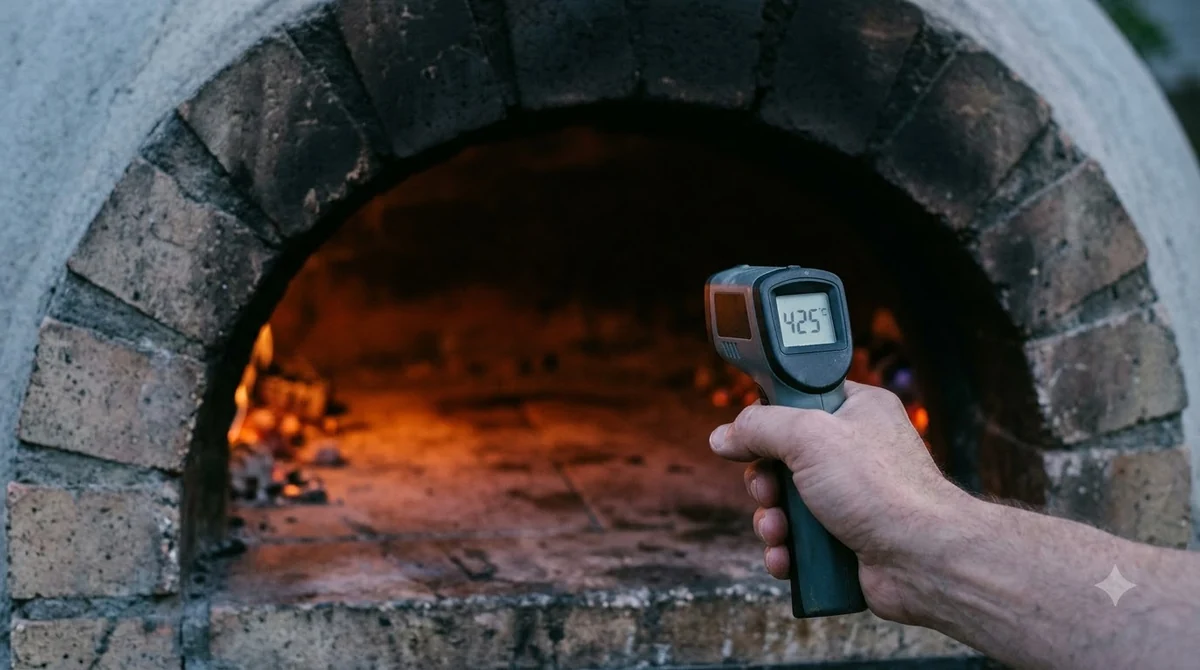
The steel or stone is the key tool because it stores heat and passes it to the base of the pizza. Preheat it fully before the first pizza, and reset the oven to temperature between bakes. When it has cooled, learn how to clean a pizza stone before you store it.
| Setup | Temperature | Bake time |
|---|---|---|
| Home oven with steel (The Perfect Loaf) | 550°F (285°C) with the broiler | Broil 1.5 to 2 minutes, then bake 4 to 5 minutes |
| Home oven with steel (A Beautiful Plate) | 500°F (260°C), preheated at least 1 hour | 4 to 5 minutes per pizza, then broil the edges |
| Home oven with steel or stone (King Arthur Baking) | 500°F (260°C), preheated about 1 hour | 10 to 15 minutes, until the crust is as dark as you like |
According to the The Perfect Loaf method, you broil the pizza for 1.5 to 2 minutes, then bake it for 4 to 5 more minutes at 550°F, rotating after the first minute. Repeat the process for each dough ball, because the steel needs to recover heat between pies.
If you plan to bake sourdough pizza dough for Ooni ovens, the heat logic is the same. Heat the stone until it is fully hot, then cook the pie briefly. Follow the manufacturer’s preheat guidance for your model, check the stone temperature before you launch, and see the pizza oven temperature guide for heat targets by oven type.
Regional styles such as Neapolitan and New York call for different dough sizes and oven heat, as the Neapolitan pizza dough ratios and the guide to what New York style pizza is show. For a topping to try on the baked crust, there is a pesto pizza recipe made for home ovens.
Common Sourdough Pizza Dough Mistakes and Fixes
Dense crust, sticky dough and a burnt base are the most common problems with a sourdough pizza dough recipe, and each one has a clear fix in the steps above.
- Dense crust: this sourdough pizza dough recipe was not bulked enough. Let it grow by at least 50% before you divide it.
- Sticky dough that tears: the hydration is high for your flour. Hold back a little water next time, or add an extra stretch-and-fold.
- Burnt base and pale top: the base is taking more heat than the top. Use the short broil or the mid-bake rotation from the methods above, and keep each bake short.
- Weak rise after the fridge: the balls went cold before they had proofed. Give them about 4 hours at room temperature first.
Note the room temperature and timings of each batch, and change one variable at a time.
Frequently Asked Questions
Can I make sourdough pizza dough the same day?
Yes. The Perfect Loaf sourdough pizza dough recipe mixes at 9:00 am, bulks for about 2.5 hours and proofs for 5 to 6 hours before the dough is ready to bake. The flavor is milder than a cold-fermented dough because it has less time to develop.
How long can sourdough pizza dough stay in the fridge?
The recipes reviewed here cold ferment overnight, and the King Arthur Baking recipe refrigerates the dough balls for 24 to 48 hours. Follow the time your own sourdough pizza dough recipe gives, and take the dough out at least 2 hours before you bake.
Can sourdough pizza dough be frozen?
The pages read for this guide do not test freezing a sourdough pizza dough recipe, so this article does not give a verified freezing method. If you freeze dough, follow the author’s own instructions and thaw it fully in the fridge before shaping. For general steps on freezing pizza dough made with commercial yeast, see our separate guide.
Do I need a baking steel for sourdough pizza dough?
A steel or stone is the tool that every sourdough pizza dough recipe reviewed here relies on, because it holds heat and cooks the base quickly. The Perfect Loaf preheats a steel at 550°F, while A Beautiful Plate and King Arthur Baking preheat to 500°F.
What hydration is best for a first attempt?
Each sourdough pizza dough recipe reviewed here ranges from about 62% to 70% hydration, calculated from its listed weights. A lower hydration is firmer and easier to shape, so it suits a first attempt. Move up in small steps once you know how your flour behaves.
Why does my sourdough pizza dough burn on the bottom?
The base is probably taking more heat than the top, or the pizza stayed too long on one side. Rotate the pizza during the bake and finish the top under the broiler, as the steel methods above describe. A fully preheated steel also keeps the bake short, which helps the crust avoid scorching.
Start with a sourdough pizza dough recipe that lists grams, and make the cold-ferment version once before you change anything. Keep a fridge thermometer and a steel in the oven, and note each bake so you can repeat what worked.