
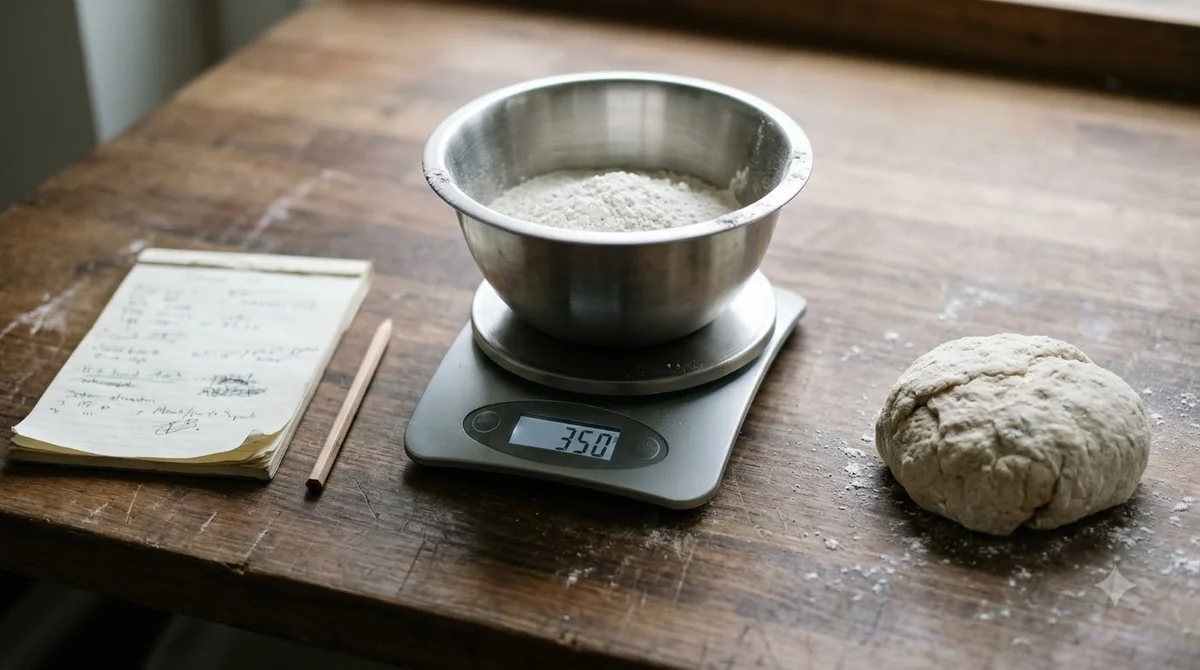

Pizza dough with bread flour gives a chewier, sturdier crust than all-purpose flour, because bread flour has more protein to build gluten. Bread flour is a practical choice for a crust with real chew at home. A weighed recipe and a few small adjustments to the water get you most of the way there.
Why Pizza Dough With Bread Flour Makes a Chewier Crust
Bread flour has 12 percent or more protein, according to America’s Test Kitchen, which is enough to build a strong gluten network and a chewy, sturdy crust.
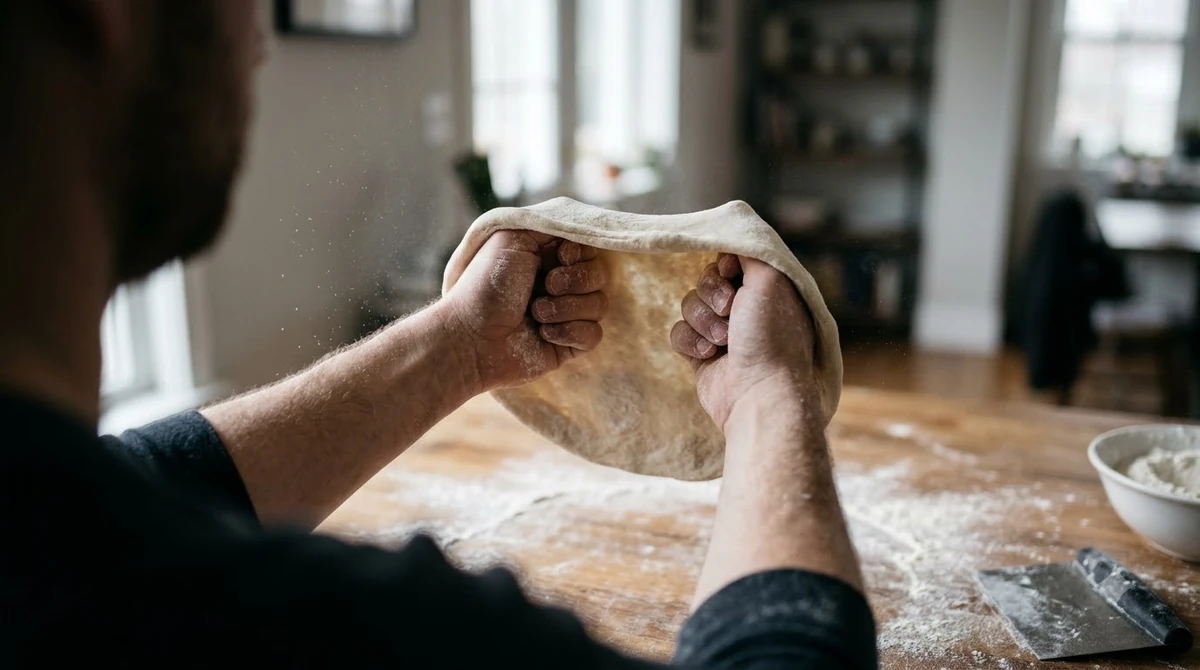
Gluten is the protein network that forms when flour is mixed with water and kneaded. The more gluten a dough builds, the better it traps the gas from the yeast and holds its shape, and that structure is what gives a baked crust its bite.
The test kitchen links the protein in bread flour to strong gluten development, which produces a sturdy dough that is easier to handle. It also credits bread flour with a chewy texture and a crisp crust, which are the two results to look for in a home crust.
If your crust comes out soft and bready rather than chewy, the flour is the first thing to check. Pizza dough with bread flour depends on that protein level, so compare the protein figure on the bag with the 12 percent benchmark for bread flour.
Bread Flour vs All-Purpose Flour for Pizza Dough
Pizza dough with bread flour makes a chewier, crisper crust than all-purpose flour, because it has 12 percent or more protein versus 9 to 12 percent in all-purpose flour.
| Flour | Protein level | Crust result | Feel with the same water |
|---|---|---|---|
| Bread flour | 12 percent or above | Chewy texture, crisp crust | Supple, workable dough |
| All-purpose flour | 9 to 12 percent | Softer, less crisp crust | Soft, sticky dough |
The protein gap looks small on paper, but it shows up in how the dough handles. Pizza dough with bread flour feels supple and workable with the same water that makes an all-purpose dough soft and sticky. That difference matters most when you stretch the dough by hand.
Unbleached all-purpose flour is the type the test kitchen used for its comparison, and it is the flour most people have in the pantry. If you only have all-purpose flour, you can still make pizza, but expect a less crisp result.
Italian 00 flour is a finely milled flour that many Neapolitan-style doughs use. Its protein figure varies by brand, so check the bag before you swap it into a pizza dough with bread flour recipe, since the swap changes how the dough handles. Our Polselli 00 flour review covers one option in detail.
Pizza Dough With Bread Flour Recipe, Step by Step
Pizza dough with bread flour starts with 567 grams (20 ounces) of flour, about 1 3/4 cups of water split between warm and room-temperature water, and 2 tablespoons of olive oil. Knead for about 5 minutes, then let the dough rise 1 1/2 to 2 hours until doubled.
- Warm half the water to 105 to 115 degrees F, and keep the rest at room temperature. Use 1/2 cup of the warm water and 1 1/4 cups of the room-temperature water.
- Combine 567 grams of bread flour with the water and 2 tablespoons of olive oil. Add the yeast and salt as the full recipe directs.
- Knead until the dough is smooth and elastic, about 5 minutes.
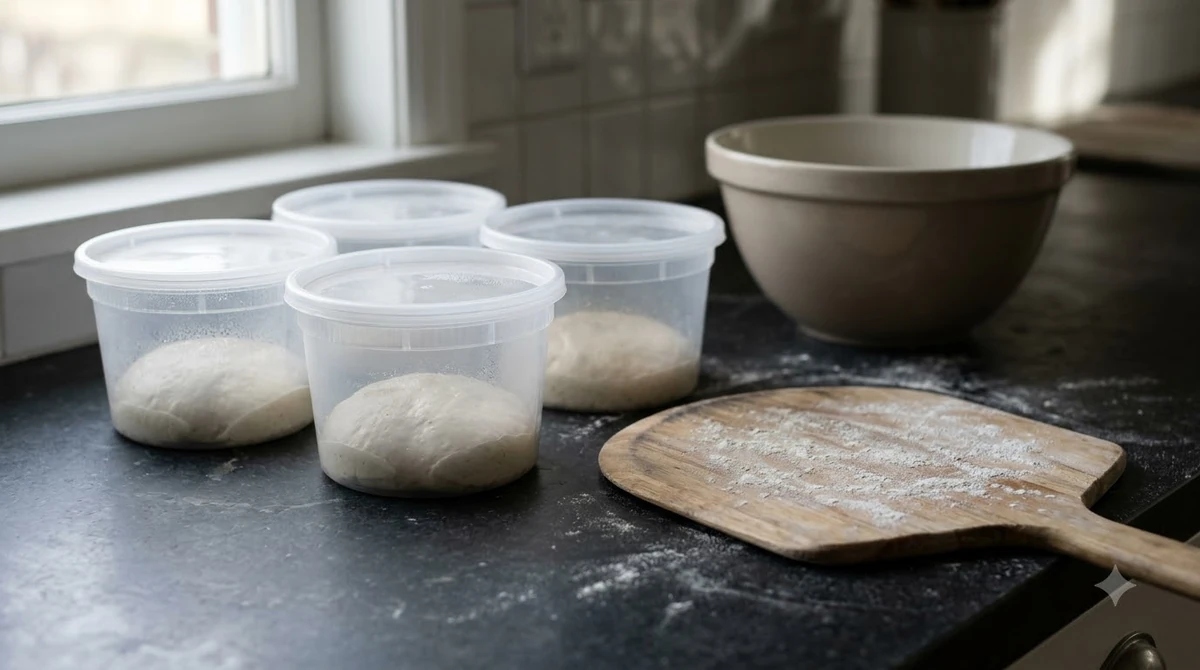
- Let the dough rise until doubled in size, 1 1/2 to 2 hours.
- Shape the risen dough and bake it according to your oven’s guidance.
The full formula is in America’s test kitchen recipe for standing-mixer pizza dough, which weighs the flour in grams and gives the kneading and rise times used here.
Weighing the flour matters more than the cup measure. A cup of flour can vary a lot in weight depending on how it is scooped, so the gram figure gives you a more repeatable dough.
Timing matters for pizza dough with bread flour too. Give the dough the full 1 1/2 to 2 hours to rise, and check that it has doubled in size rather than trusting the clock alone, because room temperature changes how fast it moves.
How Water Changes When You Use Bread Flour
Pizza dough with bread flour absorbs water differently from all-purpose flour, so the water in an all-purpose recipe may not be the right amount. Adjust the water by feel rather than copying the old formula exactly.
The goal is a supple, workable dough that is smooth and springs back when pressed. A dough that is too wet sticks to the bench, while a dough that is too dry feels stiff and tears when you stretch it.
- If the dough feels stiff and dry during kneading, add a small splash of warm water.
- If the dough sticks heavily to the bench, knead a few more minutes with only a light dusting of flour.
- If the dough is smooth and elastic, leave the water alone and move on to the rise.
Tips for a Chewier Crust at Home
A fully preheated oven and a stone or steel help the bottom of a crust made from pizza dough with bread flour turn crisp while the inside stays chewy. Give the oven plenty of time to heat before you bake. For more on keeping the base crisp, see how to get crispy pizza crust at home.
- Weigh the flour in grams instead of using cups.
- Let the dough rise until doubled before you shape it.
- Preheat the oven and the stone or steel fully before baking.
- Adjust the water by feel instead of copying an all-purpose recipe.
Shape the dough gently so the gas from the rise stays in it. Pressing hard on a well-risen dough pushes out the air that gives the crust its open, chewy interior.
Neapolitan-style doughs use different flours and a different oven setup, so they are a separate topic from a home bread flour crust. See Polselli Classica vs Caputo Pizzeria for two Italian flours compared. For a dough built on those rules, see our AVPN dough ratios for Neapolitan pizza, and for a crisp rolled base try a thin crust pizza dough.
When All-Purpose Flour Is Fine
All-purpose flour can stand in for bread flour in a pinch, but America’s Test Kitchen says the crust will be less crisp.
Use all-purpose flour when you have no bread flour and a softer, less crisp base is acceptable. For a chewy crust that holds up to toppings, pizza dough with bread flour is still the better pick. Other flours change the crust as well: see whole wheat pizza dough for a nuttier crust, or gluten free pizza dough for guests who avoid wheat.
Frequently Asked Questions
Is pizza dough with bread flour better than all-purpose flour?
Yes, for chew. Bread flour has 12 percent or more protein, while all-purpose flour has 9 to 12 percent, so bread flour builds more gluten and a chewier crust, according to America’s Test Kitchen. The difference is most noticeable in the texture of the baked crust.
Can I use 00 flour instead of bread flour?
You can try 00 flour, but check the protein figure on the bag first, because it varies by brand. A lower-protein 00 flour may give a softer crust, while a higher-protein one behaves closer to bread flour, so the result depends on the specific bag you buy. Polselli Super vs Classica 00 flour shows how two 00 flours differ.
How much water does pizza dough with bread flour need?
The America’s Test Kitchen recipe uses 1 3/4 cups of water in total for 567 grams of bread flour, with part of it warm. Adjust the water by feel, because flour brands absorb water differently and a dough that feels stiff needs a little more.
How long should bread flour pizza dough rise?
Let the dough rise until doubled in size, which takes 1 1/2 to 2 hours in the test kitchen method. Room temperature changes the timing, so check the dough rather than the clock.
How long should you knead bread flour pizza dough?
Knead for about 5 minutes, until the dough is smooth and elastic. Once it reaches that point, stop kneading and let the dough rise, since the goal is a smooth, elastic dough rather than a longer knead.
Can I use all-purpose flour instead of bread flour?
Yes, in a pinch. America’s Test Kitchen says unbleached all-purpose flour can be used, but the resulting crust will be less crisp than a bread flour crust.
For a chewy crust, make pizza dough with bread flour and weigh it in grams. If you only have all-purpose flour, the pizza still works, but expect a softer, less crisp base. Browse more pizza and pasta guides for related basics.