
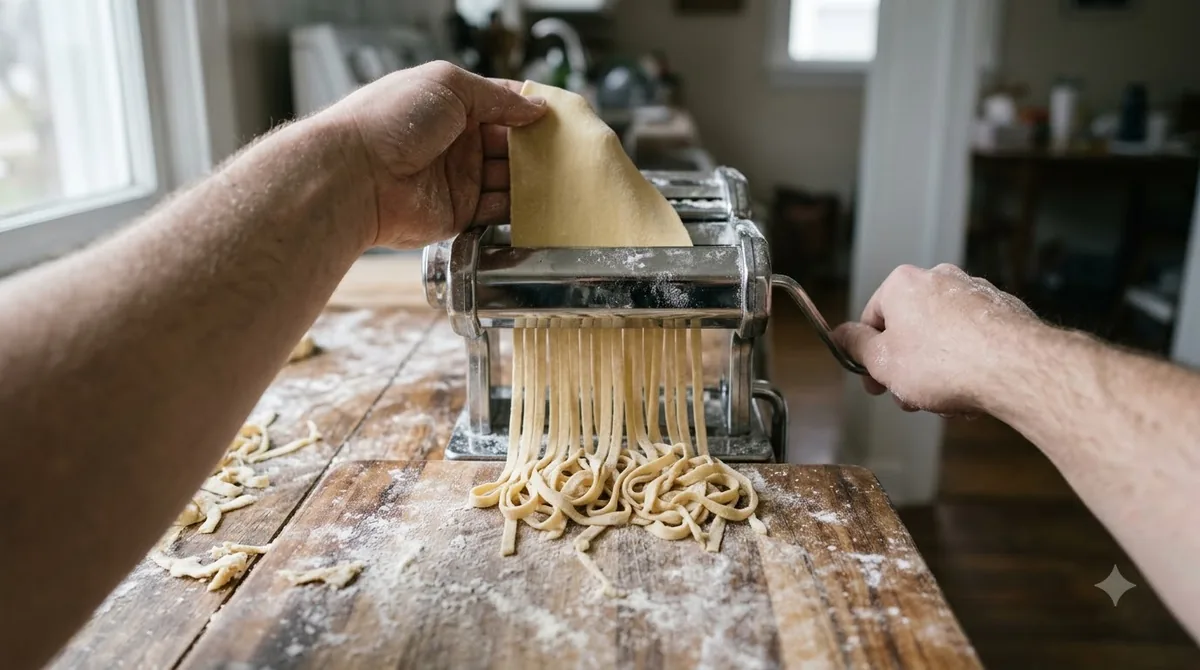

Mafaldine pasta is a flat, ribbon-shaped Italian pasta with ruffled edges, about ½ inch wide, that comes from the Naples area. It is also called reginette, which means “little queens” in Italian. The wavy edges give the shape a look that plain ribbons do not have.
Its ruffles hold thick, chunky sauces well, and it cooks much like fettuccine. If you cannot find it, pappardelle is the closest swap.
What Is Mafaldine Pasta?
Mafaldine pasta is a ribbon pasta with wavy edges on both sides, made from durum wheat semolina and water, and about ½ inch wide.
The artisan version from DeLallo’s artisan mafaldine listing is a long, flat ribbon with ruffled edges. It is made with durum wheat semolina and mountain spring water.
The ruffle is the feature that sets the shape apart. According to Wikipedia, mafaldine is also called reginette, and both edges carry the ruffle.
A flat-edged ribbon lacks those ruffles, so it grips a sauce differently. Check the edge before you assume two ribbon shapes will behave the same way.
Where Mafaldine Comes From
Mafaldine comes from the Naples area of Italy and is named after Princess Mafalda of Savoy, according to DeLallo.
DeLallo describes its artisan version as made in Naples, and it says the shape was named to honor the princess. The name is tied to her, not to a single recipe.
Before that name, the shape was known in the Naples area as “fettuccelle ricce,” according to Wikipedia. The name reginette is Italian for “little queens.”
How Mafaldine Compares With Similar Shapes
Mafaldine is thicker than fettuccine and has ruffled edges, while pappardelle has a similar form with flat edges.
| Shape | Edges | How it compares with mafaldine |
|---|---|---|
| Mafaldine pasta | Ruffled on both sides | Reference shape, about ½ inch wide |
| Pappardelle | Flat | Similar form, according to The Pasta Project |
| Fettuccine | Flat | Thinner, according to DeLallo |
If you are choosing between mafaldine pasta and a near match, compare the width and the edge first. The width sets how much sauce the ribbon can carry, and the edge decides whether the sauce clings or runs.
How to Cook Mafaldine Pasta
Cook dried mafaldine for 9 to 11 minutes in 4 quarts of salted boiling water, stirring it often.
- Bring 4 quarts of water to a rolling boil and salt it generously.
- Add the pasta and stir right away so the ribbons do not stick together.
- Cook for 9 to 11 minutes, stirring often, and check the texture near the end.
- Drain the pasta and add it to the sauce while it is still hot.
| Form | Cook time | Water |
|---|---|---|
| Dried mafaldine (DeLallo) | 9 to 11 minutes, stirring often | 4 quarts of salted boiling water |
| Fresh mafaldine (Pasta Evangelists) | About 3 minutes | Generously salted boiling water |
DeLallo gives the 9 to 11 minute window for its dried pasta, so start checking near the low end. Wikipedia notes that mafaldine is prepared much like linguine and fettuccine.
The most common mistake is cooking in too little water, which lets the wide ribbons clump together. Egg ribbons such as tagliatelle need the same roomy pot.
Fresh mafaldine cooks much faster, in about 3 minutes, as covered in the homemade section below.
Start your timer when the water returns to a boil after you add the mafaldine pasta, not when you first drop it in. Because the ribbons are wide, finish them in the pan with a ladle of the cooking water, which loosens a thick sauce and helps it coat the ruffles.
Sauces That Suit Mafaldine
Mafaldine suits cheese sauces, cream sauces such as Alfredo, chunky tomato sauces and meat ragù such as Bolognese, according to DeLallo.
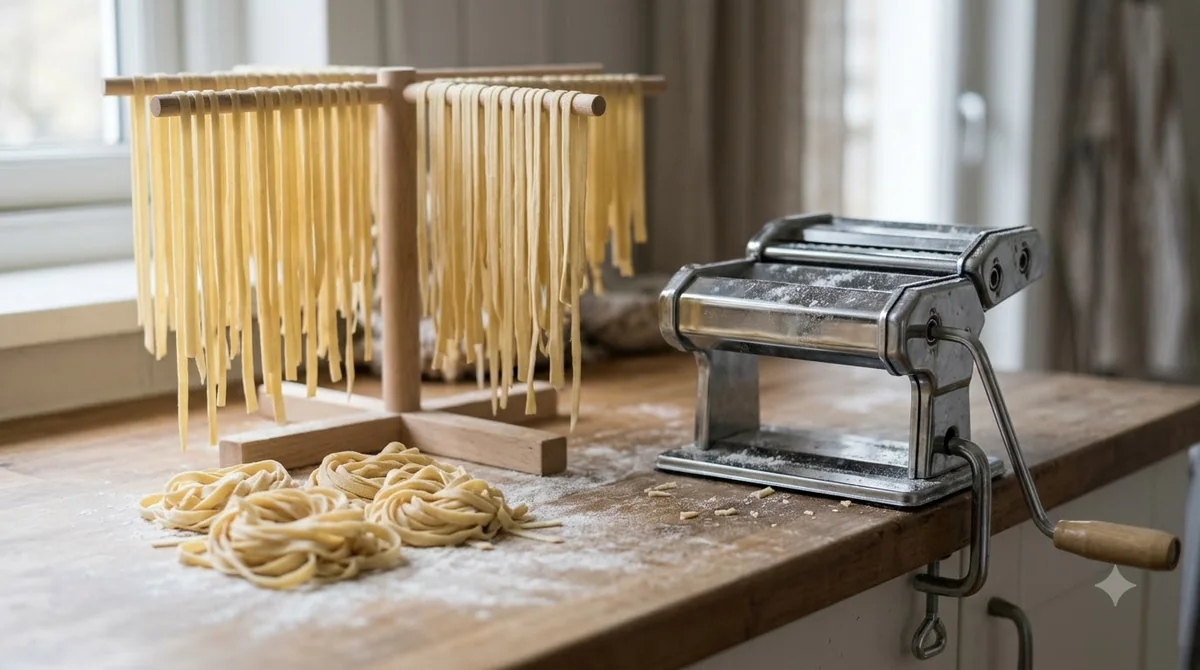
- Cheese sauces
- Cream sauces such as Alfredo
- Chunky tomato sauces
- Meat ragù such as Bolognese
The ruffled edges help sauce cling to the pasta, according to The Pasta Project, so a thicker sauce stays on the ribbon.
In Naples, the shape is also served with ricotta, lardo and pecorino, or with chickpeas, according to The Pasta Project. These are rich, creamy dishes rather than thin ones.
A thin, watery sauce slides off the wide ribbon, so reduce it a little before you toss in the pasta. The rich Naples pairings above show the idea: each one is thick enough to stay on a ribbon about ½ inch wide.
The Pasta Project also says seafood and meat sauces are common with mafaldine pasta in the Naples area, so a seafood sauce with some body is a good match.
Mafaldine Substitute Options
Pappardelle is the closest swap for mafaldine, and fettuccine is a thinner option, but both lack the ruffled edge.
The Pasta Project describes mafaldine as similar to pappardelle, so pappardelle pasta is the best match for a wide ribbon. Its edges are flat, so you lose the ruffle.
Fettuccine is thinner than mafaldine, according to DeLallo, so it gives a lighter bite; fettuccine is the usual alternative. Pappardelle is the closer swap for a heavy meat ragù.
Spaghetti and linguine are long and thin, so they lack the broad surface that mafaldine pasta offers for a chunky sauce.
If you cannot find mafaldine pasta at all, start with pappardelle and check the package for the cook time.
Cook any substitute to its package time, since the ruffle is the one detail you cannot match at home.
Homemade Mafaldine Recipe
Homemade mafaldine needs 400 g of “00” flour, 4 large eggs, a pasta machine and a mafalde cutter attachment.
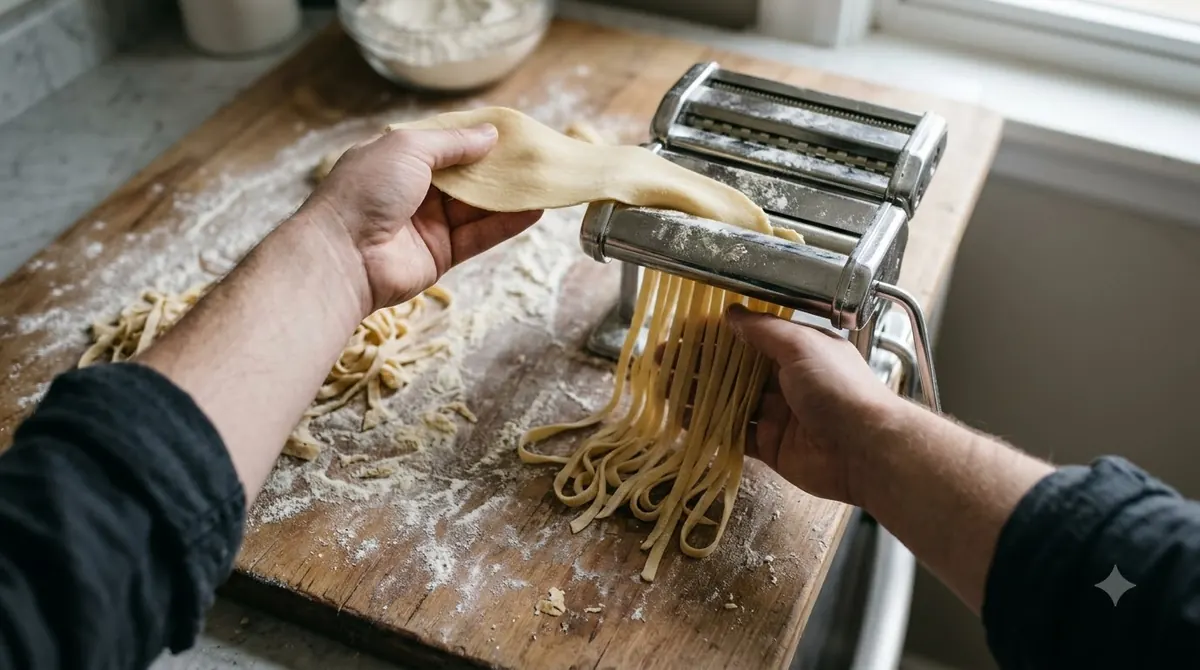
- Mix 400 g of “00” flour and 4 large eggs into a smooth dough.
- Wrap the dough in a tea towel and rest it for 20 to 30 minutes at room temperature.
- Pass the dough through the widest setting of the pasta machine three times, then narrow the setting step by step (the Marcato Atlas 150 manual guide shows how the settings work).
- Stop at setting 6 for mafalde so the sheet does not get too thin.
- Feed the sheet through the mafalde cutter attachment.
- Lay the ribbons flat to dry for about 10 minutes.
- Cook the fresh ribbons in generously salted boiling water for about 3 minutes.
This method follows Pasta Evangelists’ guide to fresh mafalde, which gives the same dough amounts and roller settings.
Keep the unused dough wrapped while you work, so it stays flexible. When you finish, cleaning a pasta machine properly keeps the rollers ready for the next batch.
Cook the fresh mafaldine pasta soon after the drying step, so the ribbons keep their shape in the pot. Dried and fresh ribbons differ so much in timing that it helps to keep the two sets of numbers side by side, as in the table above.
Frequently Asked Questions
Is mafaldine the same as reginette?
Yes, reginette is another name for the same ribbon pasta. The Italian word means “little queens,” and the name refers to the same wavy-edged shape. You may see either name on a package.
What is mafaldine corte?
Mafaldine corte is the name for the short version of the shape, according to The Pasta Project. It suits recipes that call for shorter pieces rather than long ribbons.
How wide is mafaldine pasta?
Mafaldine is about ½ inch (about 1 cm) wide, according to DeLallo and Wikipedia. That makes it thicker than fettuccine and narrower than lasagna.
Do I need a special cutter to make mafaldine at home?
The Pasta Evangelists method uses a mafalde cutter attachment for the pasta machine, which shapes the ruffled ribbon. A plain knife cut gives flat ribbons without the ruffle.
Do the ruffles help the sauce stick?
The Pasta Project says the ruffled edges help sauce cling to the pasta. That is a general observation from the source, not a tested result, and thick sauces are where it matters most.
What is mafaldine pasta made from?
Dried mafaldine is made from durum wheat semolina and water, and the DeLallo version uses mountain spring water. The homemade fresh method uses “00” flour and eggs instead, so the dough and the cook time are different from the dried ribbons.
If you want a mafaldine pasta that holds chunky ragù or a rich cream sauce, this shape is a good choice. If you only have flat pasta on hand, pappardelle is the nearest swap. Cook dried mafaldine for 9 to 11 minutes and judge the texture at the end.