
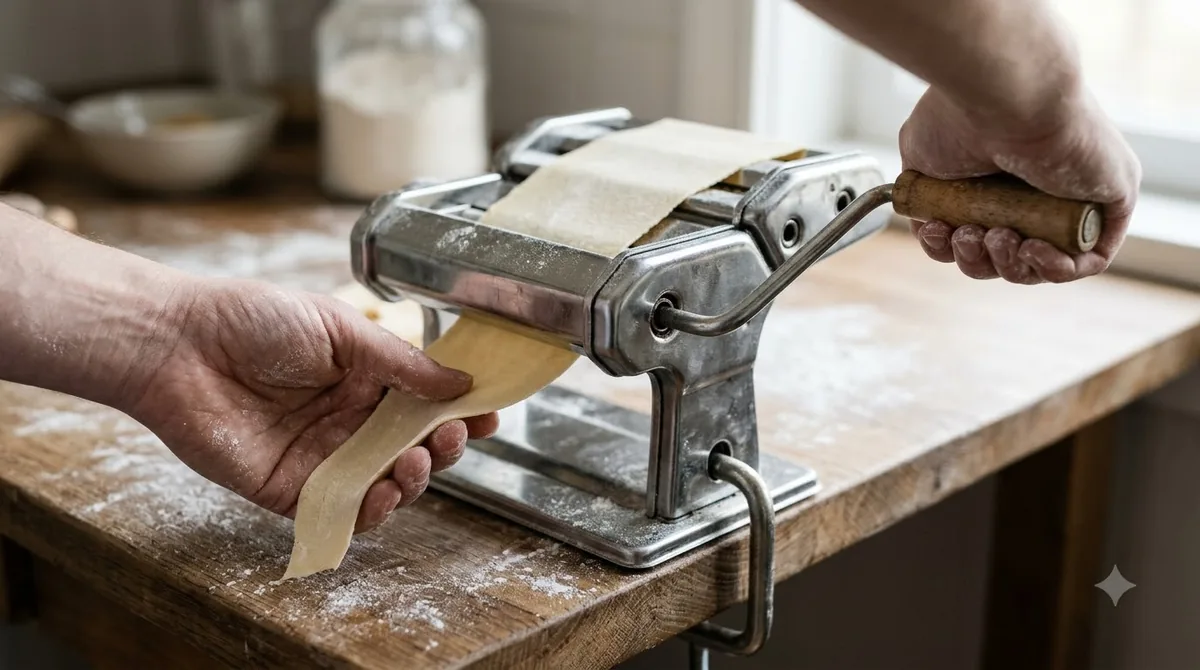

Knowing how to clean pasta machine parts correctly keeps dried dough from hardening and protects the rollers. The safe method depends on the type: manual rollers need dry brushing and a dry cloth, while electric makers allow water only on certain detachable parts. Check your model’s manual first if you cannot tell which parts come off.
Why Water Is the Main Risk for Your Pasta Machine
When you learn how to clean pasta machine rollers, keep water away, because it can rust the rollers of a manual model. The inside of that machine should stay dry. Electric makers are more forgiving, but only some of their parts tolerate water. The table below shows which parts can get wet and which must stay dry.
| Part | Water | Dishwasher |
|---|---|---|
| Manual roller and body | Dry brush and dry cloth only | Never |
| Manual cutter rods, combs and scrapers | Cold water or a food-safe disinfectant | Never |
| Philips detachable parts | Rinse under running water with washing-up liquid | Yes, on a program below 60°C (140°F), except the front panel of the 7000 Series and Avance Collection |
| Philips main unit | Never immerse; wipe with a dry cloth | No |
| KitchenAid housing, cutter and pasta plates | Damp soft cloth only; no immersion | No |
| KitchenAid pasta ring, auger and combo tool | Warm soapy water | Top rack only |
Step-by-Step: How to Clean Pasta Machine Rollers and Cutters
Remove any removable clamp or hand crank, brush off dry dough, and clean the cutter parts in cold water or a food-safe disinfectant before drying them fully. The steps below for how to clean pasta machine rollers follow the guide from King Arthur Baking’s cleaning guide, which covers a manual roller machine with a cutter attachment. For model-specific care, the Marcato Atlas 150 manual guide covers one popular hand-crank machine.
- Unplug the machine if it is electric. On a manual model, take off any removable clamp or hand crank first.
- Brush the outer surfaces and rollers with a soft toothbrush or paintbrush to lift off dry dough, then wipe the outside with a dry cloth.
- If flour or dough remains in the cutter, flip the attachment over. Push down on each of the four long metal rods with your thumbs, slide it sideways to detach it, then lift out the four plastic combs.
- Clean the rods and combs with a dish towel or microfiber cloth, or wash them in cold water or a food-safe disinfectant. Brush between the exposed cutters and wash the scrapers the same way.
- Let every part dry completely. Reassemble by reversing the removal steps, setting each comb over its matching roller and pressing the rods back into place.
Can you clean a pasta machine without taking it apart? Yes, when only light dough remains. If you only need how to clean pasta roller surfaces, brushing and a dry cloth are enough, and you should open the cutter only when dough is still stuck in it.
Cleaning Electric Pasta Makers from Philips and KitchenAid
Electric pasta makers must be unplugged before you clean them, and Philips and KitchenAid set different limits on water, soap and the dishwasher when you learn how to clean pasta machine parts. The two sections below cover each brand’s rules, so follow the one that matches your machine.
How to Clean Philips Pasta Maker Parts
Philips says detachable parts can be rinsed under running water with washing-up liquid, according to its pasta maker cleaning page. Its guidance on the shaping discs and the dishwasher is more specific for anyone learning how to clean pasta machine discs:
- Scrape off bigger chunks of dough before you rinse the parts or load them into the dishwasher.
- Let residue on the shaping discs air-dry, then push it out of the holes with the cleaning tool that came with the machine.
- Rinse the detachable parts under running water with washing-up liquid. Do not use the abrasive side of a kitchen sponge or aggressive detergents.
- For the dishwasher, select a program below 60°C (140°F). Philips says all parts except the front panel of the 7000 Series and Avance Collection can go in.
Wipe the control panel and the main unit with a dry cloth. Never immerse the main unit in water.
How to Clean a KitchenAid Pasta Press
KitchenAid says to turn the mixer off at speed 0 and unplug it before you take the press apart. If you use the roller attachment instead, see our guide to cleaning a KitchenAid pasta roller. Remove hardened dough with the cleaning tool included with the press, and do not use any metal object other than that tool to clean out the press.
For how to clean pasta machine housings on this press, clean the housing, cutter and pasta plates by hand with a damp, soft cloth, then dry them with a dry, soft cloth. The pasta ring, auger and combo tool can be washed in warm, soapy water with a soft cloth, or placed on the top rack of the dishwasher.
Removing Stuck Dough and Rust
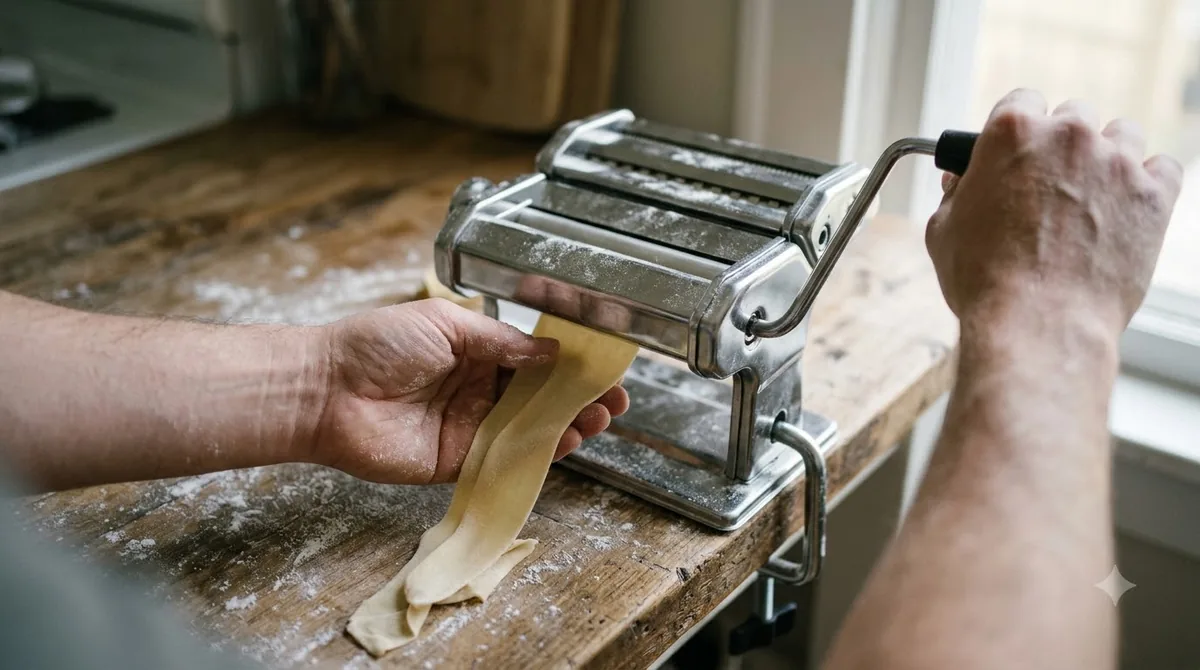
Knowing how to clean pasta machine dough residue and rust helps: let dried dough harden, then brush or push it out, and for rust, lightly oil the roller and run scrap dough through until it stops discoloring.
King Arthur’s guide does not describe a soaking method for dough stuck in the cutters. It only says to brush off the residue, including between the cutters. For rust, these steps help:
- Dry the machine completely after any contact with water, because water can cause rust and that matters in how to clean pasta machine work.
- If rust has formed, lightly oil the roller and run scrap dough through the machine until the dough stops discoloring, as described in Tasting Table’s guide to not washing a pasta machine with water.
- If rust remains after that, check the manufacturer’s support page for repair options before you use the machine again.
Storage and Maintenance Tips
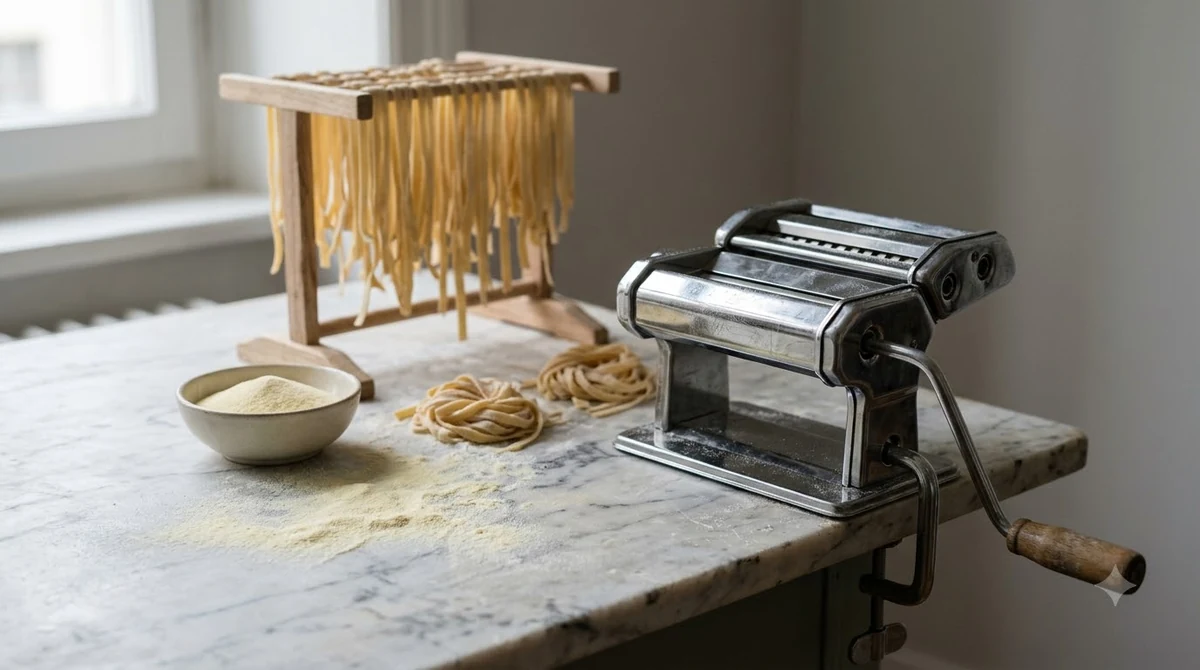
Store a pasta machine fully dry, in a dry place and covered if possible, to prevent rust, corrosion, mold and mildew.
- Make sure every part is completely dry before you reassemble and store the machine.
- Finish how to clean pasta machine steps before putting it away, so dough residue does not sit inside it.
- Keep it covered when you can.
- If the rollers squeak, add a few drops of food-grade oil at the roller ends. Oil is a fix for squeaking, not a routine cleaning step.
Mistakes to Avoid When Cleaning a Pasta Machine
Water on manual rollers, the dishwasher, metal tools and harsh cleaners are the mistakes these brand and publisher guides warn about most often. Avoid them whenever you learn how to clean pasta machine parts.
- Putting cutter parts in the dishwasher. King Arthur says no part of a manual machine should go in the dishwasher, and KitchenAid’s cleaning FAQ bars its press housing, cutter and plates from the dishwasher.
- Running a manual roller or cutter under water, since water can cause rust.
- Immersing a Philips main unit in water.
- Using the abrasive side of a kitchen sponge or aggressive detergents on Philips parts.
- Using metal objects other than the included cleaning tool on a KitchenAid press.
- Cleaning an electric press while it is still plugged in.
Frequently Asked Questions
Can you wash a pasta machine in water?
Before you learn how to clean pasta machine parts, know that manual roller machines should not be washed in water, because water can cause rust on the rollers. Electric makers differ: Philips allows detachable parts to be rinsed under running water with washing-up liquid, but its main unit must never be immersed in water. Always check your model’s manual before you rinse any part.
Is a pasta machine dishwasher safe?
Only some parts are. Philips allows most detachable parts in the dishwasher on a program below 60°C (140°F), while King Arthur says cutter parts never go in the dishwasher. KitchenAid bars the housing, cutter and pasta plates of its press from the dishwasher, and only the pasta ring, auger and combo tool can go on the top rack.
How do you remove dried dough from a pasta machine?
Let the dough dry, then brush it off with a soft brush or toothbrush as part of how to clean pasta machine rollers. On an electric press, use the cleaning tool that came with the machine to push out dried dough from the holes. Avoid metal objects other than that tool.
How do you stop a pasta machine from rusting?
Dry every part completely, store the machine covered in a dry place, and keep water off the rollers. If rust forms anyway, lightly oil the roller and run scrap dough through the machine until the dough stops discoloring.
Should you oil a pasta machine?
Only if it squeaks. King Arthur says a few drops of food-grade oil at the roller ends may help, and oiling is not a regular step in how to clean pasta machine parts.
What do you clean a pasta machine with?
Use a dry cloth and a soft brush on manual machines. For electric housings, use a damp, soft cloth, and reserve warm soapy water for the KitchenAid pasta ring, auger and combo tool.
Do you need to unplug an electric pasta maker before cleaning?
Yes. Before you learn how to clean pasta machine plates on this model, KitchenAid says to turn the mixer off at speed 0 and unplug it before you take the press apart and clean it.
Unplug electric models before cleaning, and keep manual rollers dry from start to finish when you learn how to clean pasta machine parts. Brush dough off while it is dry, wipe the outside with a dry cloth, and let every part dry before storage. Once the machine is clean, try it with fettuccine pasta, and see how to care for another water-shy tool in our guide to cleaning a pizza stone. Check your model’s manual for how to clean pasta machine parts, because part names and dishwasher limits differ by brand.