
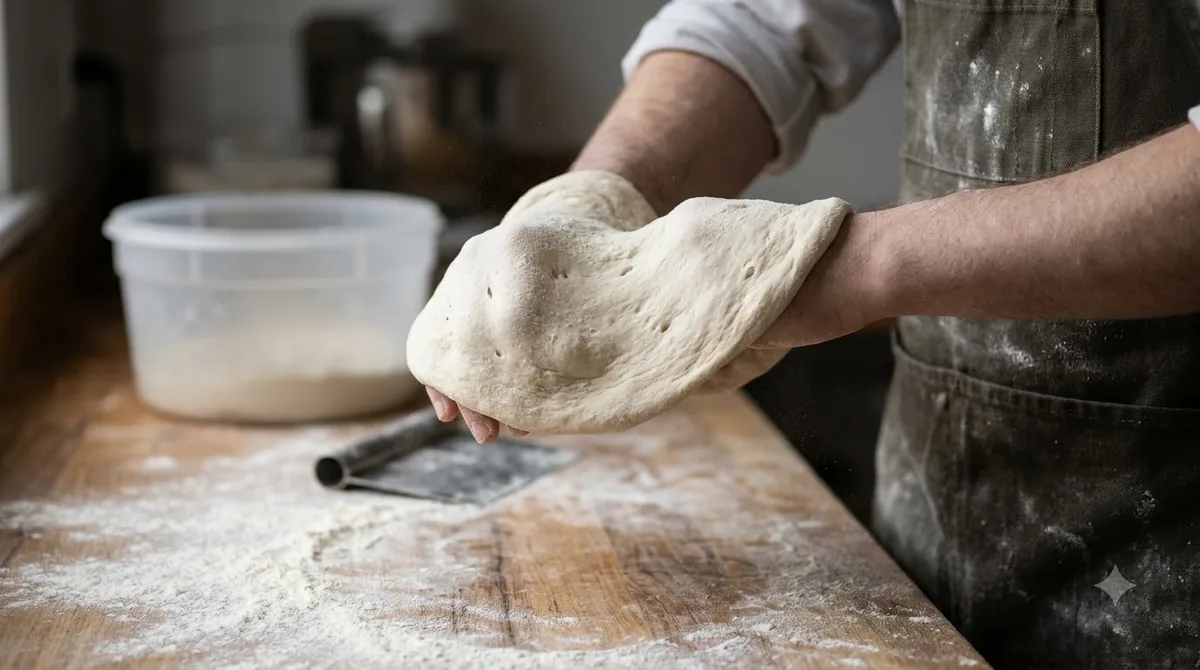

Can you freeze pizza dough? Yes, and a well-wrapped ball keeps its best quality for up to 45 days. Freezing does not kill the yeast. It only makes the yeast dormant, so the dough can rest in the freezer until you need it. The steps are simple, but the timing and the thaw decide whether your crust comes out light or dense.
Can You Freeze Pizza Dough Without Losing Quality?
Yes, you can freeze pizza dough, which makes it one of the easiest ways to plan pizza night ahead. Frozen dough keeps its best texture for a few weeks, as long as it is wrapped well and kept cold in the freezer.
Freezing does not harm the yeast. It does not die in the freezer, and the cold only makes it dormant, so it wakes up once the dough warms and starts to rise again. That is why frozen dough needs a proper thaw and a short rest before you shape it.
The trade-off is flavor. You can also freeze the dough right after mixing, but the stage matters for taste. Dough that is frozen before its first rise develops less flavor, so it tastes milder than dough frozen after fermentation.
Can You Freeze Pizza Dough Before or After It Rises?
The best point to freeze the dough is after its first rise, once bulk fermentation is finished. By then the dough has built structure and flavor, so freezing here gives the most reliable result.
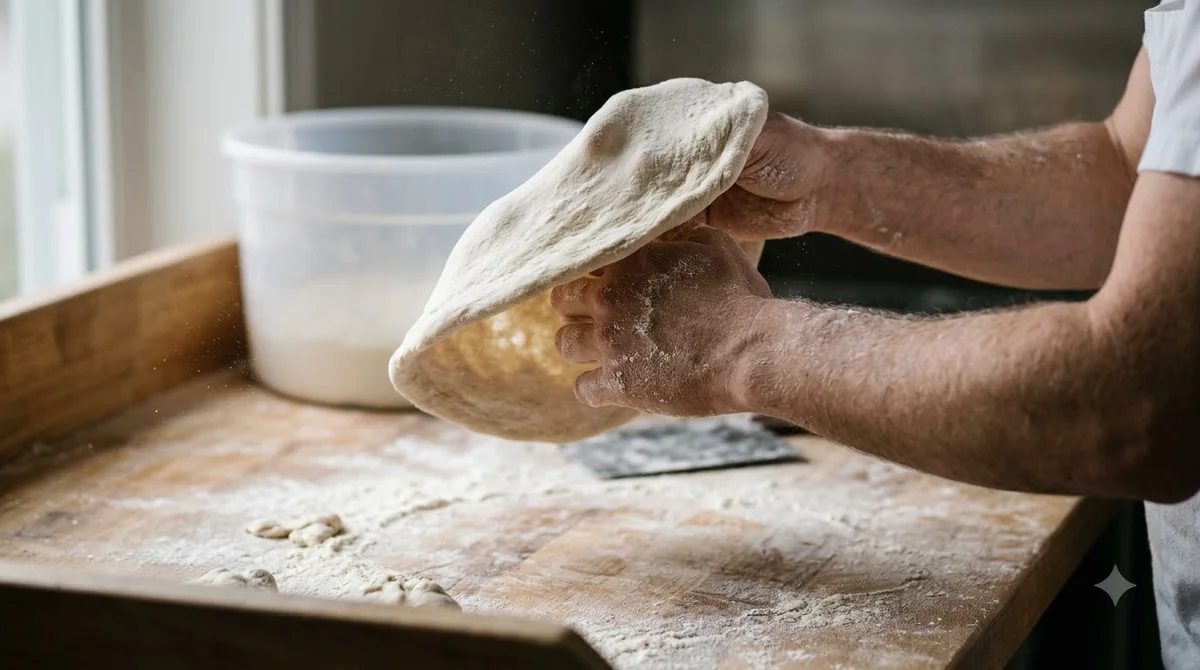
Bulk fermentation is the first rise, when the dough grows in the bowl before you divide it. Freezing then keeps the flavor from that rise, so the thawed dough is ready to shape after a short proof.
Freezing before the rise also works. The result is less flavor development, and you will need a full proof after thawing, which means more time on the counter before you can stretch it. Either way, divide the dough into balls before freezing so each portion thaws on its own. If you need a recipe to freeze, try pizza dough with bread flour or the ratios in this Neapolitan pizza dough recipe.
How to Freeze Pizza Dough Step by Step
Freezing the whole batch as one lump works, but dividing first is simpler. Divide the dough into single-pizza balls, oil each one lightly, wrap it tightly, and label it before it goes in the freezer.
- Divide the dough into balls of 250 to 280 grams each, which suits a standard pie according to Baking Steel’s freezing guide.
- Lightly coat each ball with olive oil. The oil helps stop a skin from forming on the surface of the dough.
- Wrap each ball tightly in plastic wrap. Keep as little air around the dough as possible, because air exposure leads to freezer burn.
- Place the wrapped balls in a freezer bag or a dough container.
- Label each container with the date.
Can you freeze pizza dough in a bag? Yes, a freezer bag or a dough container works as the second layer. Lay the bags flat so the balls freeze evenly, and press out as much air as you can before sealing. Keep the balls apart in the freezer so they do not fuse into one lump, and note the dough type on the label if you freeze more than one recipe.
How Long Can You Freeze Pizza Dough?
Frozen pizza dough keeps its best quality for about 45 days. The Baking Steel guide calls 45 days the sweet spot and notes that quality may decline after that point.
| Storage | Typical window | Best use |
|---|---|---|
| Refrigerated, uncooked | 3 to 5 days, peaks around 72 hours | Pizza within the next few days |
| Frozen, wrapped and labeled | Up to 45 days for best quality | Planned pizza nights |
| Thawed in the fridge | Do not refreeze | Bake after the full proof |
Can you freeze pizza dough for longer than 45 days? You can keep it longer, but quality may decline after that point. Texture and rise are the most likely to suffer after several weeks, so use the oldest balls first.
How to Thaw Frozen Pizza Dough
Can you freeze pizza dough and thaw it quickly? Not without risk to the crust. Thaw frozen pizza dough in the fridge for about 24 hours, then let it sit at room temperature for 3 to 4 hours before you shape it.
Move the wrapped ball from the freezer to the fridge the night before you plan to bake, so the yeast wakes up gradually instead of all at once.
Rushing the thaw is the most common mistake. A fast warm-up shocks the yeast, so do not speed it up with heat. So when you ask can you freeze pizza dough and still get a light crust, the answer depends mostly on the thaw.
On baking day, take the dough out of the fridge and leave it at room temperature for 3 to 4 hours. It is ready when it feels soft and stretches easily. Oven heat matters next, so check pizza oven temperature ranges before you bake.
Can you freeze pizza dough again once it has thawed? No. Do not refreeze thawed dough. Refreezing can damage the yeast and the gluten, so thaw only the balls you plan to bake.
Can You Freeze Pizza Dough Without Killing the Yeast?
Freezing makes the yeast dormant instead of killing it, so frozen dough can take longer to rise after thawing. Dough made with the usual amount of yeast can still work, but the adjustment below helps.
If you plan to freeze dough, the Baking Steel guide suggests adding about 1.5 times the usual yeast to the original recipe.
Frozen dough skips part of the flavor development that a slow cold rest in the fridge gives, so expect a slightly milder crust. If flavor is your priority, a slow ferment such as the one in our sourdough pizza dough recipe builds more of it.
How Long Pizza Dough Lasts in the Fridge
Uncooked pizza dough lasts 3 to 5 days in the fridge, and it reaches its best point around 72 hours.
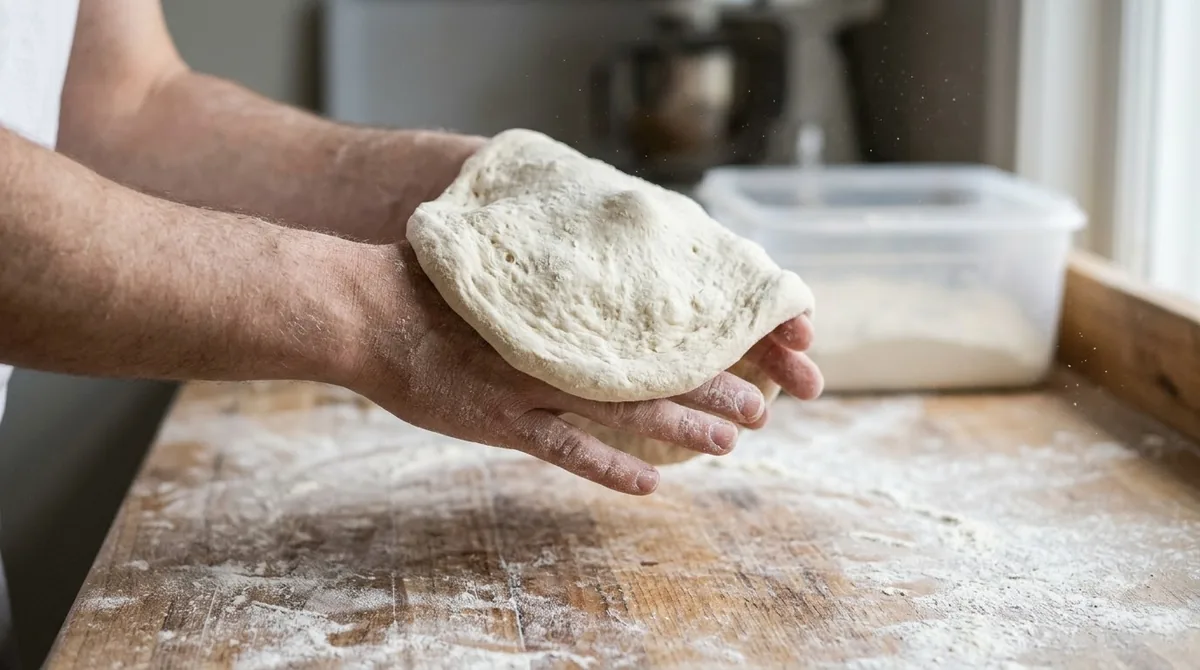
Can you freeze pizza dough that has been in the fridge for a few days? Yes, as long as you freeze it before it passes its best point. Put the dough in an airtight container, or cover the bowl tightly with plastic wrap. Lightly oil the dough ball so it does not dry out, and leave room for it to grow.
Signs the dough has gone past its best:
- A sharp, boozy or acetone-like smell, which suggests over-fermentation.
- A gray color or dark spots from oxidation.
- A dent from a poke that stays and does not spring back, so the dough will not rise.
- Mold in fuzzy pink, green or white spots. Discard the dough immediately.
If the fridge is full, can you freeze pizza dough instead? Yes, and the freezer is the better choice for anything past 5 days. Dough held past 5 days may still work if it springs back and has no solvent smell, but the crust is usually denser. Bread or flatbread is a better use for it than pizza.
Frequently Asked Questions
Can you freeze pizza dough again after thawing?
No. Once dough has thawed, do not put it back in the freezer. Refreezing can damage the yeast and the gluten, which weakens the structure of the crust.
Can you freeze pizza dough for longer than 45 days?
You can keep it longer, but frozen pizza dough holds its best quality for about 45 days when it is wrapped tightly and labeled. Check the date on each container before you bake.
Does frozen pizza dough need to rise after thawing?
Yes. Let it rest at room temperature for 3 to 4 hours until it is soft and easy to stretch. This proof helps the yeast recover after its time in the freezer.
Can you freeze pizza dough before it rises?
Yes, but the dough develops less flavor, and it needs a full proof after thawing. Freezing after the first rise is the better choice when you have the time to plan it.
How do you know if pizza dough has gone bad?
Look for a sharp, boozy smell, a gray color, liquid pooling on top, or mold. A dent that does not spring back means the dough is unlikely to rise. Discard the dough if you see mold, and throw it out if you are unsure.
What is the best way to thaw frozen pizza dough?
Move it to the fridge for about 24 hours, then leave it at room temperature for 3 to 4 hours. Rushing the thaw can shock the yeast and hurt the crust.
Can you freeze pizza dough for a pizza night planned weeks ahead? Yes, after the first rise. If your pizza night is only a few days away, keep the dough in the fridge. For anything longer, freeze it after the first rise, wrap it well, and thaw it slowly the night before. For the full process from dough to oven, read making pizza at home from dough to oven.