
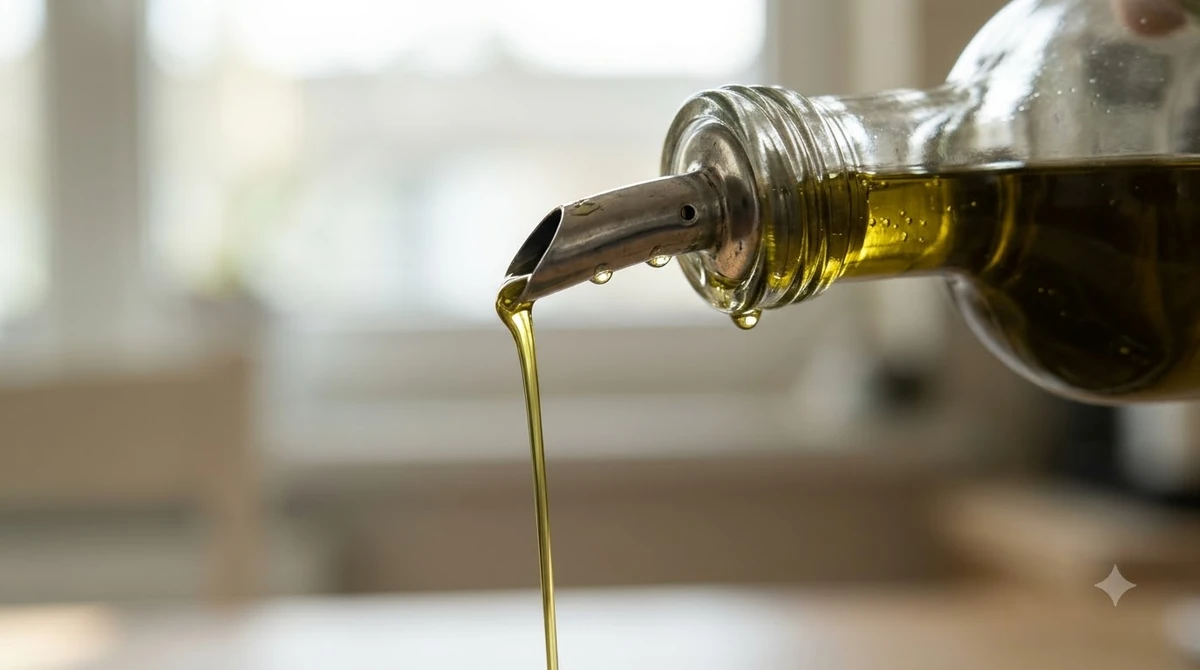

What is extra virgin olive oil? It is the highest grade of olive oil, pressed from fresh olives without heat or chemical treatment. As of 2026-11-05, the International Olive Council sets the limit for extra virgin at no more than 0.8 g of free acidity per 100 g. That single number is only part of the picture, but it is the starting point for every label.
Asking what is extra virgin olive oil also means knowing that plain olive oil can be a blend, so the word “olive” alone does not tell you the grade. Knowing the grade, the harvest date and how to store the bottle helps you get the flavor you paid for.
What Is Extra Virgin Olive Oil, Exactly?
Extra virgin olive oil is olive oil pressed mechanically from fresh olives, with no heat or chemical treatment, and it sits at the top of the grading system.
Olive oil is made by crushing olives and separating the oil from the fruit water and solids. Extra virgin is the grade made with the gentlest handling, and that is why the category is treated as the top tier. Many shoppers see the words on a bottle and assume they are only marketing. They are a grade with a defined meaning, and the rules behind it come from the International Olive Council.
Three things define what is extra virgin olive oil as a grade:
- The oil comes from fresh olives.
- It is pressed mechanically, with no heat or chemical treatment during extraction.
- It passes the chemical and tasting tests that set the top grade apart from the rest.
Each part of the definition of what is extra virgin olive oil does real work. Fresh olives matter because the oil can only be as good as the fruit it comes from. Mechanical pressing keeps the process physical rather than chemical. Testing then confirms that the finished oil meets the standard, not just the claim printed on the label. So when you ask what is extra virgin olive oil, the short answer is a standard, and the longer answer is how that standard is checked.
How the Grades Are Defined
The International Olive Council limits extra virgin olive oil to no more than 0.8 g of free acidity per 100 g, and virgin olive oil to no more than 2 g per 100 g.
Free acidity is expressed as oleic acid, and it measures how many fatty acids have split off from the glycerol in the oil. Lower numbers generally point to fruit that was handled well. Acidity is only one test, though. Extra virgin also has to meet other chemical limits and pass a sensory evaluation by a trained tasting panel. You can read the official thresholds on the International Olive Council’s olive oil grading page.
| Grade | Free acidity limit | What it means |
|---|---|---|
| Extra virgin | No more than 0.8 g per 100 g | Top grade, and it must also pass other tests and a tasting panel |
| Virgin | No more than 2 g per 100 g | Fit to eat as it is, but not labeled extra virgin |
| Plain “olive oil” | Not covered by the grades above | Often a blend, and it can include refined oil |
Grades matter because they separate oils that look alike on a shelf. A bottle that meets the extra virgin limit has passed a stricter set of checks than a virgin or plain olive oil. Knowing what is extra virgin olive oil helps you compare two bottles at the same price and choose the one with the stronger claim behind it.
What Is Extra Virgin Olive Oil vs Regular Olive Oil?
Regular olive oil is often a blend that can include refined oil, while extra virgin is the top grade pressed without heat or chemicals. You can cook with extra virgin, and many cooks save it for finishing.
The main difference between plain and extra virgin is what is inside the bottle. A plain olive oil label can cover a blend, so the word olive alone does not tell you the grade. Extra virgin is the grade to look for when flavor matters most.
Yes, you can cook with extra virgin olive oil for everyday tasks. Many cooks still reserve it for drizzling and dipping, because its flavor is easiest to notice when the oil is not heated. Use it where the taste will be the star of the dish.
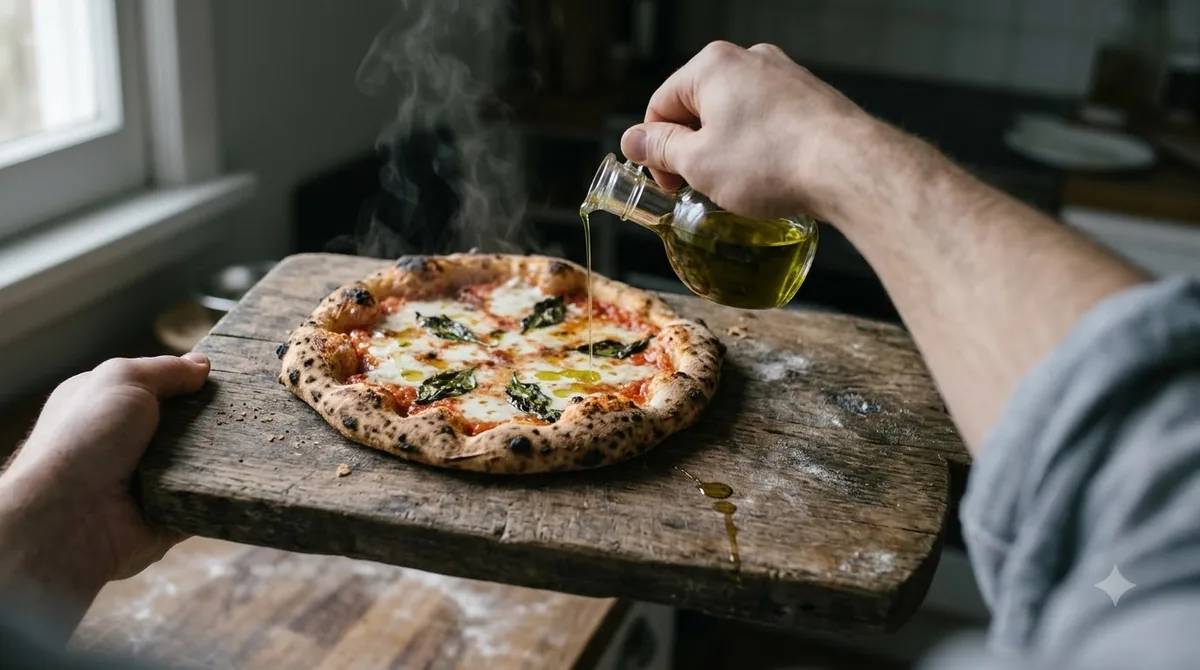
Olive oil is good on pizza when you add it at the end, and it pairs well with a simple dough such as our pizza dough with bread flour. Many home cooks drizzle extra virgin over a pizza right after it comes out of the oven, where its flavor is easy to taste.
Once you know what is extra virgin olive oil, cooking choices get simpler. Its flavor is the reason to buy it, so it earns its place where the taste is noticed.
Good uses for extra virgin olive oil include finishing spaghetti pasta or stirring it into homemade marinara sauce:
- Finishing pasta, soups and salads
- Drizzling over pizza or bruschetta after baking
- Dipping bread
- Everyday sauteing when you want the flavor to come through
What Is Extra Virgin Olive Oil on the Label? Harvest Date, Best-By Date and Real Oil
Look for a harvest date, since the most recent harvest is typically October to December in the Northern Hemisphere, and treat a best-by date as an unreliable freshness marker.
Reading what is extra virgin olive oil on a label starts with the date. Better producers print the harvest date on the bottle. The University of California’s olive oil tips note that a best-by date is often set about two years from bottling, not from when the olives were processed, so it says little about freshness. The harvest date tells you more about how recent the oil is.
| Label item | What it tells you |
|---|---|
| Harvest date | When the olives were picked, so a recent harvest is the freshest choice |
| Best-by date | Often two years after bottling, so it is not a reliable freshness signal |
| Quality seal | Standards from groups such as the California Olive Oil Council can be stricter than minimum USDA rules |
Check the Taste
When you taste what is extra virgin olive oil in the bottle, it should smell and taste fruity, with notes such as grass, apple, green banana or artichoke. It may taste bitter and spicy at the back of the throat, which the University of California describes as signs of healthy antioxidants. Be wary of a flat, generic “olivey” flavor, because that is often mislabeled as extra virgin.
What Is Extra Virgin Olive Oil? Check the Label First
Start with the grade and the harvest date, then look for a quality seal. Some Italian oils also carry a DOP label, explained in our guide to what DOP means. A bottle that shows none of these is harder to judge, so pick another one when you have a choice.
How to Store It and How Long It Lasts
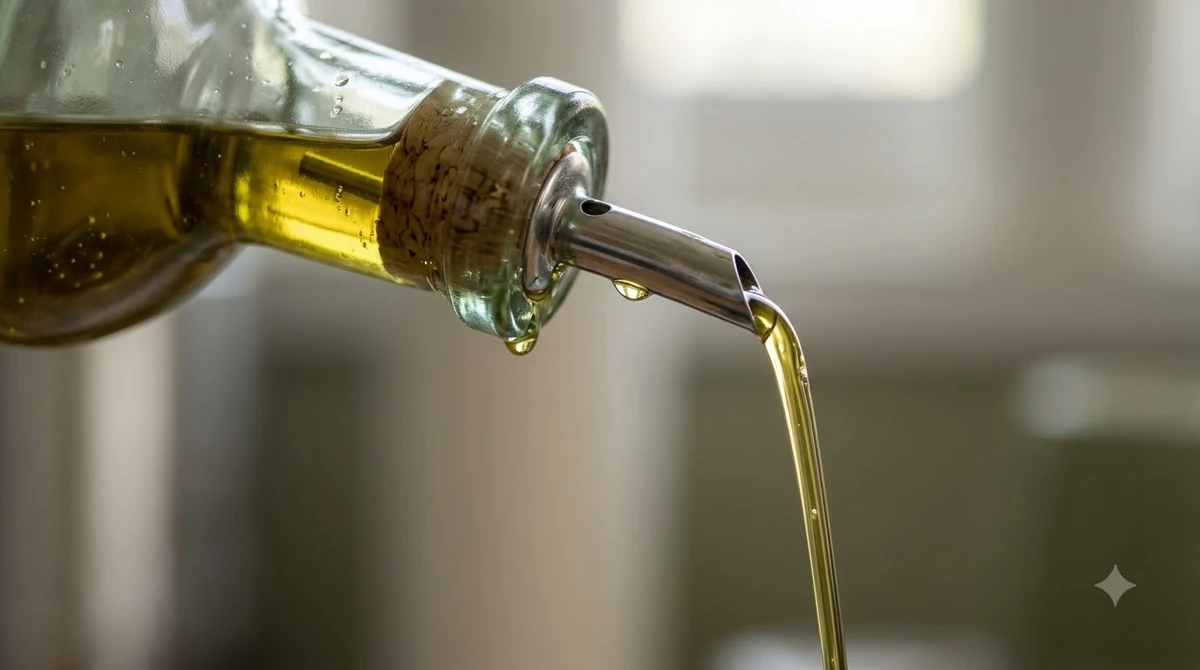
Store extra virgin olive oil in a cool, dark place, because heat and light shorten its shelf life.
The International Olive Council recommends keeping olive oil away from excessive heat, air, humidity and light. Dark glass, tin and boxed bottles all help protect the oil from light.
Part of what is extra virgin olive oil quality is storage, since shelf life depends on how the bottle is kept more than on the date printed on it. A bottle near the stove or beside a sunny window ages faster than one kept in a cupboard. If the oil smells flat, stale or musty, it has passed its best, even if the label date is still ahead.
Buy a size you can finish in about six weeks after opening, because freshness fades over time.
Storage habits that help:
- Keep the bottle in a cupboard, away from the stove and sunlight.
- Close the cap tightly after each use to limit air exposure.
- Buy a size you can finish in about six weeks.
Frequently Asked Questions
What Is Extra Virgin Olive Oil, and Is It the Same as Olive Oil?
No. Extra virgin is the top grade, while plain olive oil can be a blend that includes refined oil. Check the label for the grade, because the word olive alone does not tell you what is inside the bottle.
What Is Extra Virgin Olive Oil Used For?
Most home cooks use it for finishing pasta, salads, soups and bread, and for drizzling over pizza after baking. It can also be used for everyday sauteing. Because the flavor is the main reason to buy it, many people keep a bottle on the table rather than in the back of the pantry.
What Does the Acidity Number on the Label Mean?
It shows the free fatty acids in the oil, expressed as oleic acid. The International Olive Council sets the limit for extra virgin at no more than 0.8 g per 100 g. Lower acidity is one sign that the olives were handled well, but it is only one of several tests.
Can You Cook With Extra Virgin Olive Oil?
Yes, it works for everyday home cooking. Many cooks use it mainly for finishing, drizzling and dipping, because the flavor is easiest to enjoy when the oil is not heated. Choose the use that suits the taste you want.
Is Olive Oil Good on Pizza?
Many home cooks drizzle it on after baking to add flavor. Pick a fresh bottle with a recent harvest date, and taste the oil before you pour, so you know what you are adding to the pizza.
Does Extra Virgin Olive Oil Go Bad?
Yes, it declines over time. Heat, light and air speed up the change, so store the bottle in a cool, dark place and buy a size you can finish in about six weeks after opening.
Now that you know what is extra virgin olive oil, check the grade, the harvest date and the storage details before you buy a large size. Put simply, what is extra virgin olive oil comes down to those three checks. A fresh bottle in a dark container is the best place to start, and a smaller size keeps the flavor at its peak. For more pantry basics, see our learn guides.