
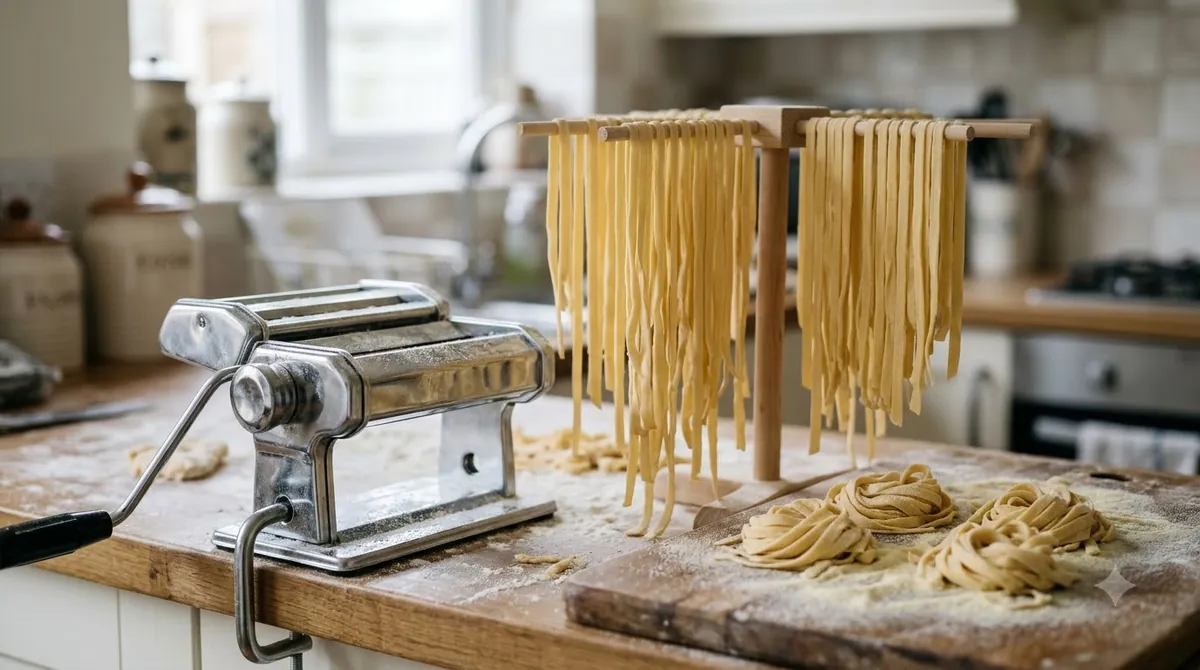

Angel hair pasta is the thinnest long pasta, a very fine spaghetti whose Italian name, capelli d’angelo, means “hair of an angel.” It works best with light sauces that cling to its delicate strands rather than heavy, chunky ones.
Its fine texture makes angel hair pasta a good match for quick, light dishes and a poor match for slow-simmered sauces. Choose a light sauce, cook the pasta briefly and taste early for the best result.
What Is Angel Hair Pasta?
Angel hair pasta is very thin spaghetti, thinner even than vermicelli, according to CooksInfo’s angel hair entry. Its fine strands cook quickly and carry light dressings well.
The name comes from Italian, where capelli d’angelo translates to hair of an angel. The name fits, because the strands are finer than most long pasta shapes you will find on a shelf.
Angel hair is sold in the same one-pound boxes as other pasta, but each box holds thinner and more numerous noodles. That means a box of angel hair pasta looks fuller than a box of spaghetti of the same weight.
Because the strands are so fine, angel hair pasta suits delicate sauces. It is not built for thick, rich sauces that need a sturdy noodle to hold them, so the sauce choice matters as much as the pasta itself.
How Angel Hair Compares With Spaghetti and Capellini
Angel hair is thinner than spaghetti, and capellini is almost the same pasta with a slightly larger diameter. The gap between angel hair pasta and capellini is less than a tenth of a millimeter, which is why capellini vs angel hair is mostly a labeling question.
Wikipedia lists capellini at about 0.85 to 0.92 millimeters and angel hair at about 0.78 to 0.88 millimeters. Tasting Table’s comparison notes that the two differ by less than a tenth of a millimeter on average, and that Italy labels them differently.
Another thin option is capellini pasta, which is covered in its own guide. Compare the three pastas on three points: thickness, sauce fit and cooking speed. Thickness is the main difference, and it drives the other two. The finer the strand, the lighter the sauce it needs and the less time it can spend in the water.
| Pasta | Thickness | Best sauce style |
|---|---|---|
| Angel hair | About 0.78 to 0.88 mm | Olive oil, light tomato, pesto |
| Capellini | About 0.85 to 0.92 mm | The same light sauces as angel hair |
| Spaghetti | Thicker than angel hair | Heavier, chunkier sauces |
Use the table as a quick shortcut. If a recipe calls for angel hair pasta, a capellini or thin spaghetti swap will behave in much the same way, so the sauce rules stay the same.
Best Sauce for Angel Hair
The best sauce for angel hair is a light one, such as good olive oil, a light tomato sauce or fresh pesto, because the fine strands hold very little sauce.
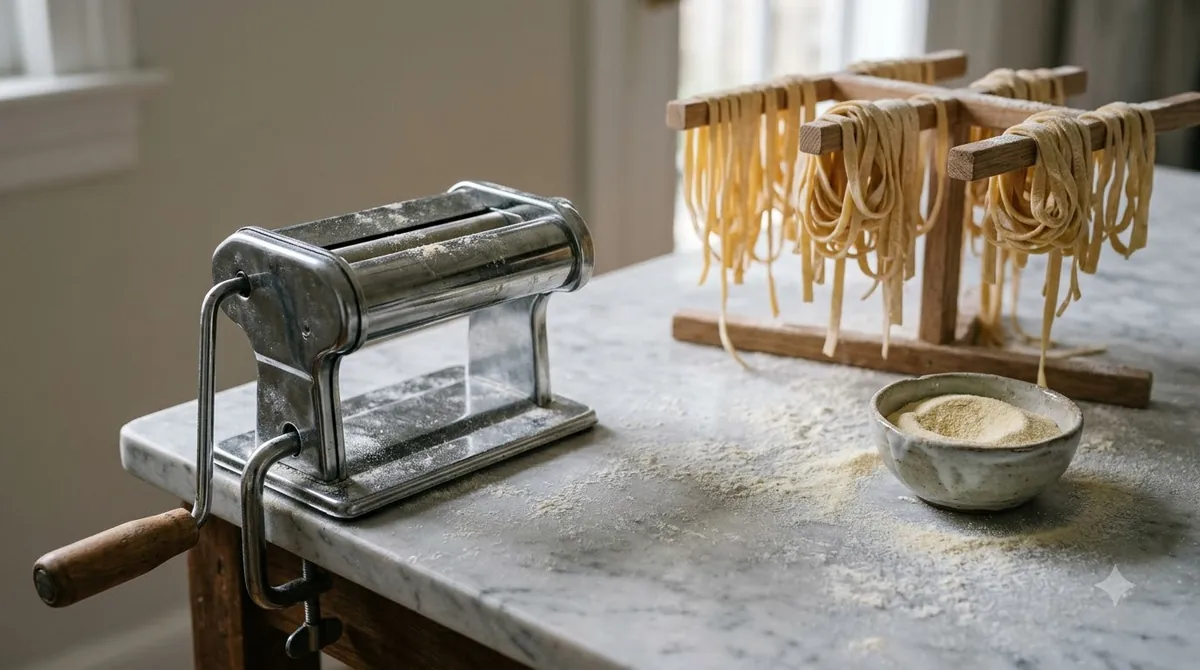
Sporked’s defense of angel hair names olive oil as the simplest route. Its author’s favorite is angel hair pasta doused in olive oil and melted butter, then showered with finely grated Asiago.
- Good olive oil with a little salt and pepper
- Melted butter with finely grated cheese
- A light tomato sauce, such as a quick marinara
- Fresh pesto, which adds richness without weighing the pasta down
- A light cheese sauce, such as cacio e pepe
Skip the bolognese. Sporked advises against serving angel hair pasta with it, and CooksInfo says heavy, rich sauces are not for it either. If a sauce feels too thick, loosen it with a splash of the cooking water rather than adding more cheese or cream.
How to Cook Angel Hair Pasta Without Overcooking
Cook angel hair in a large pot of well-salted boiling water, and check it early, because cooking times vary by brand and the thin strands turn mushy quickly.
- Bring a large pot of water to a rolling boil and salt it generously.
- Add the angel hair pasta and stir right away so the strands do not clump together.
- Start tasting well before the time printed on the box, since brands differ.
- Before draining, set aside a little of the cooking water.
- Drain once the pasta is tender with a slight bite, then toss it with the sauce at once so the strands stay separate.
Cooking time is the whole trick with angel hair pasta. Brands differ, so use the time on the box as a starting point rather than a rule.
Keep the pasta moving while it cooks, since the strands bunch up in the first minute. Boiling and draining are simple, but waiting too long between the drain and the sauce is where most plates go wrong.
Common Mistakes With Angel Hair
The most common mistakes with angel hair are overcooking it, pairing it with a heavy sauce and leaving it to sit before saucing, since each one leaves the strands soft or stuck together.
- Serving it with a meat ragu or other heavy, rich sauce
- Cooking it until soft instead of tender with a slight bite
- Letting drained strands sit in the colander while the sauce cools
- Adding too much sauce, which weighs down the fine strands
If you want a hearty, slow-simmered sauce, thicker spaghetti is the better choice, because it can carry more sauce than the finest strands. Angel hair rewards a fast, light approach, and forcing it into a heavy dish usually costs you texture.
Making Angel Hair Pasta at Home
Fresh egg ribbons such as tagliolini are cut in a similar way. Homemade angel hair starts with a plain pasta dough, rolled thin and cut into fine strands with a narrow cutter attachment or a sharp knife.
- Knead a smooth, firm dough and let it rest so it becomes easier to roll.
- Flatten the dough and pass it through a pasta machine on its widest setting.
- Fold the sheet and pass it through again, then roll it progressively thinner.
- Cut the sheet into fine strands with an angel hair cutter, or by hand with a sharp knife.
- Dust the strands with flour and toss them gently so they do not clump.
Exact dough amounts vary from recipe to recipe, so follow a trusted recipe for quantities. If you roll with a machine, step the rollers down gradually and stop at a thin setting before you cut. Fresh strands are delicate, so use the same light sauces described above and taste early.
Homemade strands need a little more attention than dried ones, because they can stick if they sit. Work them soon after cutting, and cook them in boiling water with the same care you would give a store-bought box.
Frequently Asked Questions
Is angel hair pasta the same as capellini?
They are nearly the same pasta, separated only by thickness. Angel hair measures about 0.78 to 0.88 millimeters, while capellini measures about 0.85 to 0.92 millimeters, so the two overlap. Italy labels them differently because of that small difference, and you can use them interchangeably in most recipes.
Why does angel hair pasta get mushy?
Angel hair overcooks quickly because its strands are so thin, and the texture collapses once the pasta goes past tender. Start tasting early, drain it as soon as it is tender, and toss it with the sauce right away. Keeping the strands moving in the water also stops them from clumping and cooking unevenly.
Does angel hair pasta work with tomato sauce?
Yes, a light tomato sauce is a standard pairing for angel hair pasta. A chunky or meat-based tomato sauce is usually too heavy for the fine strands, so choose a thinner sauce made with fresh tomatoes and a little olive oil.
Can you add angel hair pasta to soup?
Yes, Tasting Table notes that angel hair and capellini can be added to soups. Break the strands into shorter pieces first so they are easy to eat with a spoon, and add them near the end of cooking so they do not turn soft in the broth. If you prefer a soup pasta that is already small, ditalini pasta and rice-shaped orzo are made for the job.
Choose angel hair when you want a light, quick dish that the thin strands can carry without weighing them down. Keep the sauce simple, test the pasta early and reach for a thicker spaghetti when you want something hearty.