
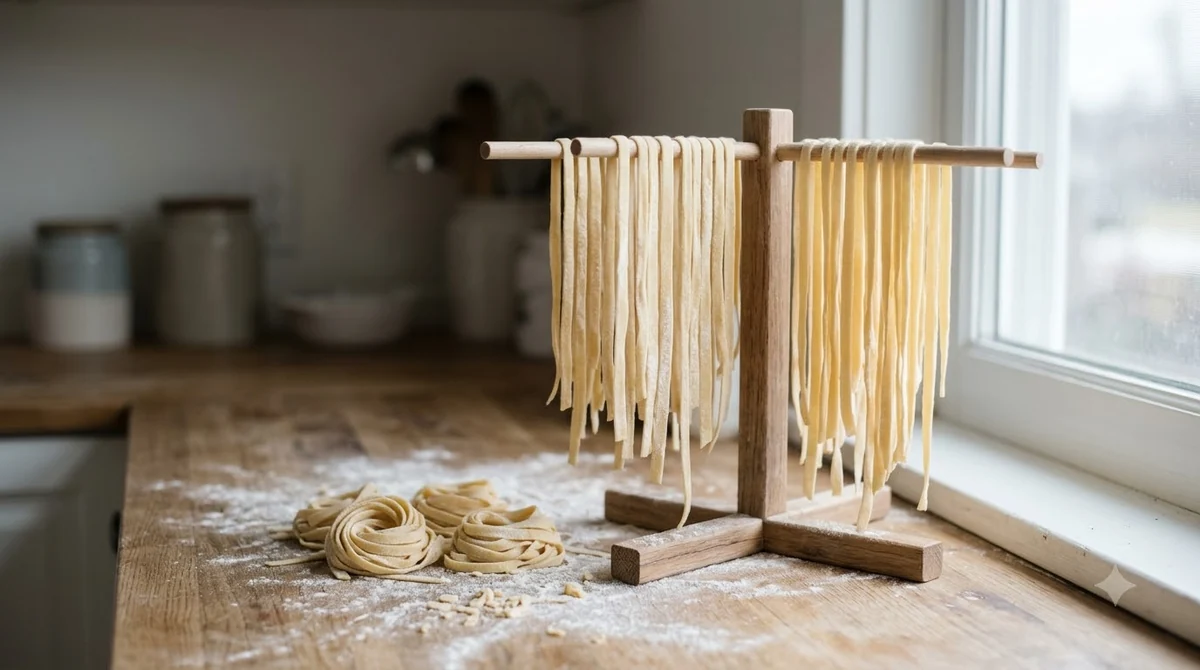

Tagliolini pasta is a long, thin egg ribbon about 2 to 3 mm wide. The name comes from the Italian verb tagliare, which means to cut. Each strand is cut from a rolled sheet of dough and cooks in only a few minutes.
Tagliolini sits between capellini and tagliatelle in width, and it suits light, smooth sauces better than heavy meat ragu. Choose it for a delicate ribbon, and pick a wider shape for chunky sauces. If you want an even finer strand than capellini, the thinnest angel hair strands suit the same light sauces.
What Is Tagliolini Pasta?
Tagliolini pasta is a ribbon pasta usually made with egg dough. Tasting Table describes each strand as roughly two to three millimeters wide and one millimeter thick. For a short egg pasta shaped by hand instead of cut into ribbons, see garganelli pasta.
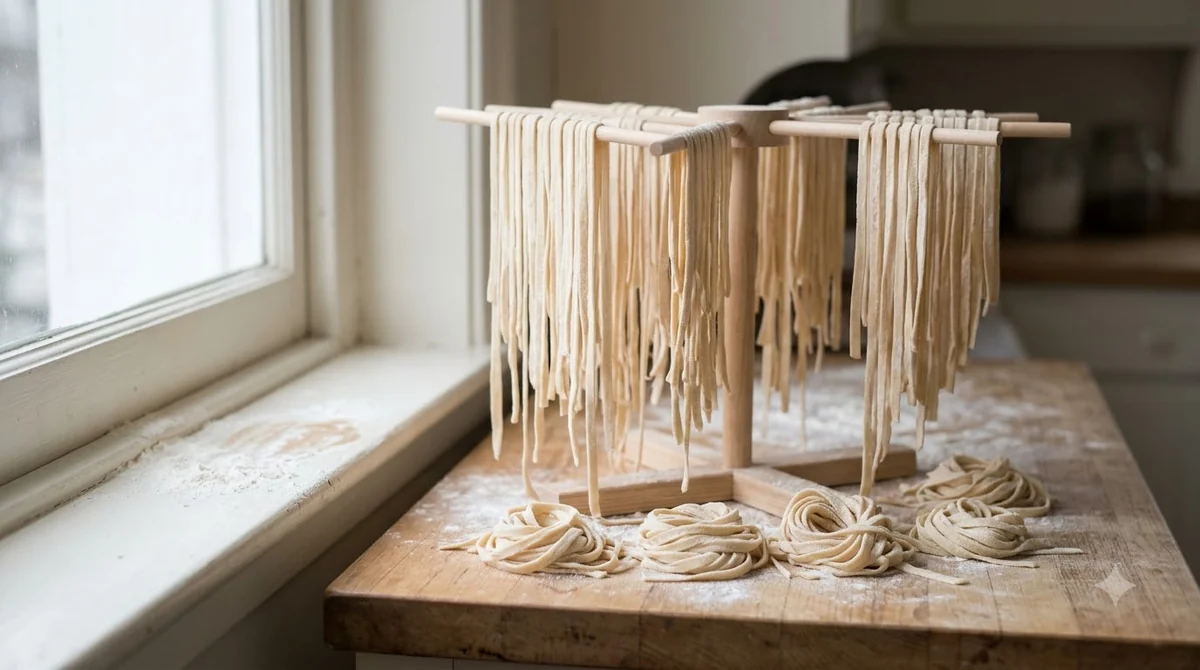
Cooksinfo says the name comes from the Italian verb tagliare, meaning to cut. That fits the process, because a sheet of dough is rolled out and then sliced into long strands.
Cooksinfo describes tagliolini as somewhat thicker than spaghetti, cut into long strips about one-eighth of an inch, or 3 mm, wide. It also notes that the strands are sometimes cylindrical rather than flat.
Sources give slightly different widths, so the safe range for a tagliolini pasta strand is about 2 to 3 mm. If a package or recipe gives a number outside that range, check whether it describes fresh or dried pasta before you compare.
Tagliolini Compared with Tagliatelle and Tajarin
Tagliatelle measures 6 to 7 mm wide, so it is at least twice as wide as tagliolini pasta (see fettuccine vs tagliatelle for another ribbon comparison). The table below shows the main differences in width, thickness and the sauces each one usually takes.
| Feature | Tagliolini | Tagliatelle |
|---|---|---|
| Width | About 2 to 3 mm | 6 to 7 mm |
| Thickness | About 1 mm | About 3 mm |
| Typical sauce | Light olive oil, cream, seafood or truffle | Bolognese meat ragu |
In Piedmont, the same kind of ribbon is called tajarin. Tasting Table places it at roughly 1 to 2 mm, and it is often made with many egg yolks. Pasta Evangelists also describes a Piedmontese tajarin style that uses far more yolks than regular egg pasta.
When you compare packages, check the width on the label or the cut in the photo. A strand near 6 mm is tagliatelle, not tagliolini pasta, and a strand near 2 to 3 mm is in the tagliolini range. For a full side-by-side, read tagliolini vs tagliatelle.
The Pasta Project describes tagliolini as slightly rounder and slimmer than taglierini, which it calls flat but thinner than tagliatelle. Many Italians use these names interchangeably, so a package may say taglierini even when the shape is the same tagliolini pasta you want.
Where Tagliolini Comes From
Several Italian regions treat tagliolini as their own, and sources do not agree on a single origin. Cooksinfo places its traditional home in Liguria, where it is usually made fresh with egg in the dough.
The Pasta Project lists Liguria, Emilia-Romagna, Molise and Piedmont as regions that consider tagliolini a typical local pasta. In Piedmont it keeps the name tajarin, which is often made with many egg yolks.
The Pasta Project also mentions a sweet version from Basilicata, so the pasta is not always served with a savory sauce.
Historically, Italians ate tagliolini pasta mostly in soups, according to The Pasta Project. Today it is more often served with light sauces, especially seafood, vegetable and creamy sauces, which suit the thin strand better than a heavy ragu.
How to Make Homemade Tagliolini
Homemade tagliolini pasta starts with about 200 g semolina, or 160 g semolina plus 40 g 00 flour, and 6 egg yolks, according to Pasta Evangelists. The steps below follow that approach.
- Mix the flour and egg yolks until they form a single dough.
- Wrap the dough in plastic wrap and rest it at room temperature for 20 to 30 minutes.
- Roll the dough until the sheet is about 1 mm thin.
- Cut the sheet into strips about 3 mm wide.
- Spread the strips on a clean kitchen towel and keep them separated so they do not stick.
- Cook for 1 to 2 minutes in boiling water, then drain.
The method gives no pasta machine setting number. Check the sheet by eye and by feel before you cut, aiming for the 1 mm thickness the method describes. For more on kneading and rolling egg dough, see our fresh pasta dough with eggs.
If you want the richer Piedmont style, expect a dough that is far heavier on egg yolks than the standard version.
If you cannot make fresh dough, dried tagliolini pasta is a practical alternative. Dried strands need longer cooking, as the cooking section below explains.
Sauces That Work Best with Tagliolini
Tagliolini pasta works best with light olive oil sauces, creamy or tomato sauces with seafood, and white truffle, according to Tasting Table.
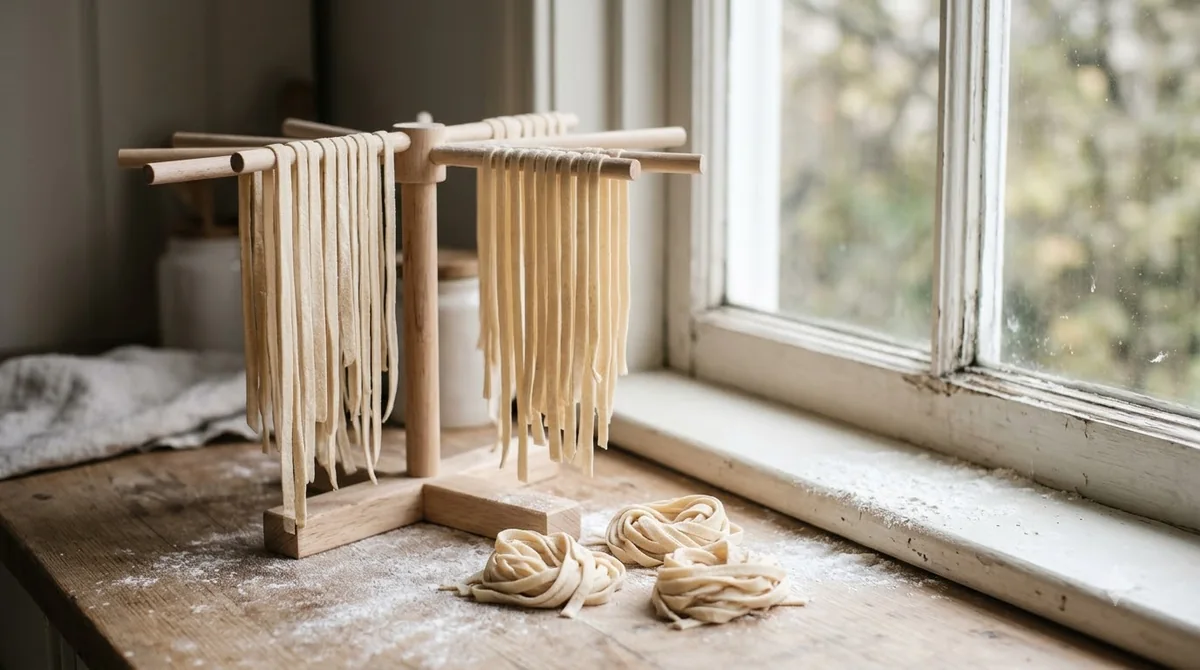
Cooksinfo says the sauces served with tagliolini are usually smooth, creamy and relatively thin. Because the sauce is thin, it suits a fine ribbon better than a dense ragu. Common pairings include the following.
- Light olive oil with prosciutto or pancetta
- Dried porcini with garlic and chives
- Light cream or tomato with seafood and vegetables
- Thin, creamy white truffle sauce from Piedmont
The Pasta Project adds two more traditional pairings: prosciutto di San Daniele with poppy seeds, and an au gratin with ham and cream. Both keep the sauce light enough to leave the ribbon visible.
Tagliolini cacio e pepe is the classic Roman version. It uses finely grated pecorino romano, black pepper and pasta cooking water, according to Cooksinfo.
Tasting Table notes that tagliolini is not the best choice for hearty meat sauces. A thick Bolognese belongs on a wider ribbon such as tagliatelle or pappardelle pasta, so match the sauce to the strand before you cook.
How Long to Cook Tagliolini
Fresh tagliolini cooks in about 1 minute and dried tagliolini in 2 to 3 minutes, according to Cooksinfo’s tagliolini guide.
Homemade tagliolini pasta made with the Pasta Evangelists method cooks in 1 to 2 minutes. Taste a strand at the shortest time, because thin ribbons soften quickly.
The Pasta Project gives no minutes, but it says tagliolini needs less cooking time than taglierini. That comparison is useful when a package label is unclear about the cut.
Cooking times vary by brand and by how dry the tagliolini pasta is, so check the package and taste before you drain. Start the sauce while the water heats, because the pasta needs only a short time in the pot.
Frequently Asked Questions
Is tagliolini the same as tagliatelle?
Not exactly. Tagliolini is narrower, about 2 to 3 mm wide, while tagliatelle measures 6 to 7 mm. The Pasta Project notes that many Italians use the two names interchangeably, and both are traditionally egg pasta cut into ribbons.
Is tajarin the same as tagliolini?
Tajarin is the Piedmont name for a similar egg ribbon. The Pasta Project says Piedmontese tajarin is often made with many egg yolks and can be cut as thin as about 1 mm. Tasting Table puts it at roughly 1 to 2 mm, so widths vary by maker.
Does tagliolini need eggs?
Traditional tagliolini is an egg pasta. Cooksinfo says it is usually made fresh with egg in the dough. Dried versions also exist, so check the label for the ingredient list before you buy.
What does tagliolini mean?
Tagliolini comes from the Italian verb tagliare, which means to cut. The name describes how the pasta is made, because a rolled sheet of dough is sliced into long strands, according to Cooksinfo.
How long should you cook tagliolini pasta?
Fresh tagliolini pasta usually takes about 1 minute, and dried pasta takes 2 to 3 minutes, according to Cooksinfo. Homemade strands made with the Pasta Evangelists method need 1 to 2 minutes. Taste a strand early, because thin ribbons go from firm to soft quickly.
Can you make tagliolini without a pasta machine?
Yes. Roll the dough by hand until the sheet is about 1 mm thin, then cut it into strips about 3 mm wide, as described by Pasta Evangelists. The method gives no machine setting, so judge the thickness by eye.
Choose tagliolini when you want a thin ribbon for a light sauce and a short cooking time. For a thick Bolognese or other hearty meat sauce, a wider ribbon such as tagliatelle is the better match.