
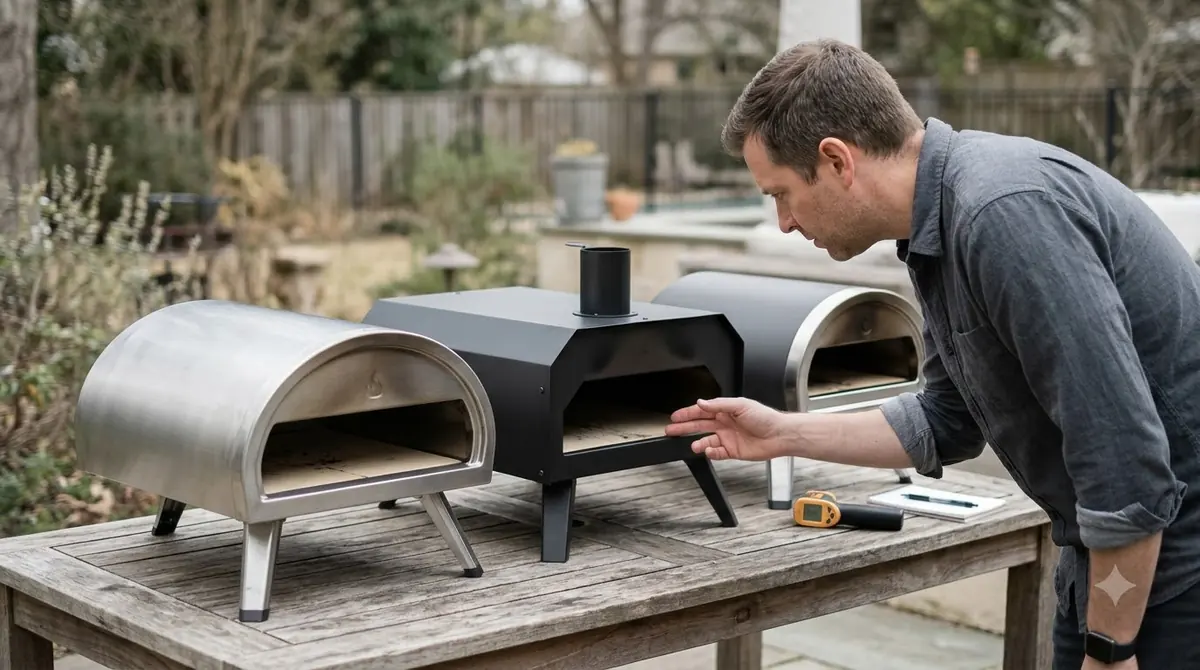

The best pellet pizza oven is the one that matches how many pizzas you cook, which fuel you can get, and whether you need to move it. A pellet pizza oven burns compressed wood pellets fed into a firebox, and it does not need electrical power to reach cooking heat. As of 2026-11-07, the market splits into three types, and each one trades fuel flexibility against portability in a different way.
Start by choosing the type, then check capacity, pellet grade and weight before you compare brands. Each best pellet pizza oven pick below follows that order, so you can match it to your own cooking.
What a Pellet Pizza Oven Is and How It Heats
A best pellet pizza oven, in plain terms, is a wood-fired cooker that uses pellets as fuel, so it runs without an electrical outlet. A seller buying guide from VEVOR states that pellet ovens “do not require any electrical power,” which makes them a practical choice for patios and campsites where no outlet is nearby.
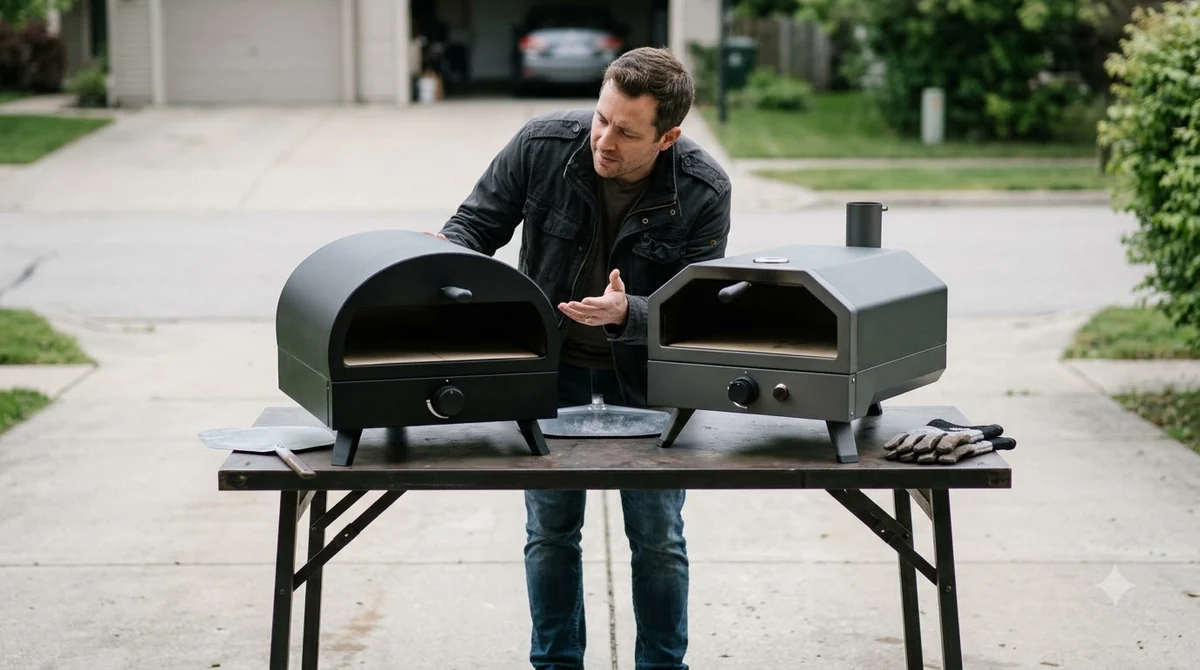
Heat-up follows a simple pattern on any best pellet pizza oven. The same guide recommends preheating at 500 C (950 F) for about 15 minutes, and it states that a pizza cooks in about 60 seconds once the oven is at temperature. Those figures come from one seller’s guide and describe a portable model, so treat them as a starting point and check your own manual before you rely on them. For a wider look at heat, see our guide to how hot a pizza oven gets.
- Load a small starter bed of dry, seasoned hardwood pellets and light it.
- Preheat the oven with the door or vent set as the manual describes, for about 15 minutes.
- Check the stone surface temperature before the first pizza goes in.
- Turn the pizza during the bake, because the heat source sits on one side of most designs.
The Three Types: Pure Pellet, Multi-Fuel and Grill Attachment
The best pellet pizza oven for you starts with the type, not the brand. The main difference between models is what else they can burn. A pure pellet oven runs only on pellets, a multi-fuel oven adds gas or electric heat, and a grill attachment depends on the grill it sits on. Choose the type first, because it decides how much fire tending you do and how easily you can move the oven. If you are still weighing pellets against logs, read our pellet vs wood pizza oven comparison.
| Type | Best for | Main trade-off |
|---|---|---|
| Pure pellet | Cooks who want wood flavor and no gas or electric line | You must keep feeding pellets and watch the fire |
| Multi-fuel (pellet and gas or electric) | Cooks who want a backup heat source | More parts to maintain |
| Grill attachment | Owners who already have a suitable grill | Heat depends on the grill, and the fit must be secure |
The best pellet pizza oven shortlist below follows those three types. The Mimiuo is a pure pellet oven, the BIG HORN takes pellets and accepts gas or electric burner attachments sold separately, and the Stanbroil turns a compatible pellet grill into an oven. The VEVOR is a second pellet-fed 12-inch model. Use each listing’s pros and cons as a starting point and confirm the details on Amazon before you order.

Mimiuo 12" Wood Pellet Pizza Oven Outdoor 35 Lbs
Pros & ConsViewHide
Reasons to buy
- Pellet-fed 12-inch oven that preheats to about 900°F in 15 minutes, per the listing
- Comes with a 13-inch square cordierite stone, foldable peel and cover
- Thicker stainless build, listed at about 35 lb
- Folding legs, no tools needed to set up
Reasons to avoid
- Around 35 lb is heavier than many portable ovens
- 12-inch class, so one pizza at a time
- Heat-up and bake times are maker claims, not independently tested

BIG HORN 12" Outdoor Pizza Oven, 1110°F
Pros & ConsViewHide
Reasons to buy
- Pellet-fired by default, with gas or electric burner attachments available
- Listed at 1110°F and ready in about 18 to 20 minutes
- Folding legs and a compact body for easy storage
- Strong Amazon track record with a large review count
Reasons to avoid
- Gas and electric burners are sold separately
- 12 x 12 inch stone fits one small pizza at a time

Stanbroil Pellet Grill Pizza Oven Attachment
Pros & ConsViewHide
Reasons to buy
- Turns a compatible pellet grill into a wood-fired pizza oven
- Includes a 13-inch square pizza stone
- Fits over 60 pellet grill models, per the listing
- Heat-capturing extension helps raise the internal temperature
Reasons to avoid
- Only works if you already own a compatible pellet grill, and you must measure the grill depth first
- Heat depends on your grill, so results vary more than with a standalone oven

Pros & ConsViewHide
Reasons to buy
- Burns wood pellets, wood chips or charcoal
- Built-in thermometer and a large hopper
- Listed max of 1000°F with a 15-minute preheat to 600°F
- Three-layer insulated body for heat retention
Reasons to avoid
- Fewer reviews and a lower 4.0 average than the better-known brands
- 12-inch size, so one pizza at a time
- Bake times and temperatures are maker claims, not independently tested
Pellet Quality Matters: Grades, Hardwood and Moisture
For any best pellet pizza oven, pellet grade affects ash, moisture and how cleanly the oven burns. The Bioenergy Association of New Zealand’s technical note on wood pellet standards describes three household and commercial grades under ISO 17225-2: A1 for virgin wood with low ash and nitrogen, A2 for slightly higher ash and nitrogen, and B, which also allows forest residues, bark and untreated industrial by-products. Bioenergy Association NZ technical note lists the mandatory properties that a graded pellet must state, including diameter, length, moisture, ash and durability. Because the grades depend on stated properties, a bag with no grade or property figures leaves you guessing about ash and moisture, so prefer brands that publish them.
For a pizza oven, hardwood is the safer choice, and the fuel you pick shapes how well the best pellet pizza oven performs. The VEVOR buying guide recommends hardwood and seasoned wood, and it advises against green wood, which carries moisture and smokes heavily. It also advises against softwood such as pine, because the sap produces smoke that can change the taste of the pizza.
- Look for a grade label on the bag, not just a brand name.
- Check the bag for moisture and ash figures, and prefer dry pellets stored off the ground.
- Avoid pellets that do not state their grade or properties, because you cannot judge ash or moisture without them.
- Use the pellet length and size your manual specifies, because burn behavior changes with size. Our guide to using wood pellets in a pizza oven covers loading and feeding.
Capacity, Footprint and Portability
For a group, the best pellet pizza oven is usually the larger model with a bigger stone. Capacity is the first size question, and portable pellet ovens are usually sized for one or two pizzas at a time. If you cook for a group, look for a larger stone, because a 12-inch class oven will run out of room quickly. For small spaces, compare our best portable pizza ovens as well. The VEVOR guide describes the amount of food you plan to cook as perhaps the most important factor.
- One or two pizzas: a compact unit with folding legs suits a balcony or a small patio.
- Three or more pizzas: a larger stone and a stable base suit a backyard.
- Weight: one portable pellet model in the VEVOR guide is listed at 10 kg, so check the weight of the model you choose.
- Carrying case or storage: check the footprint for storage and transport before you buy.
Build Quality and the Cooking Stone
When you compare any best pellet pizza oven pick, check the build first. Build quality decides how well the oven holds heat and how long it lasts. A buying guide for pellet ovens points to heavy-gauge stainless steel, with 304-grade preferred, and a thick cordierite stone of at least about half an inch. These are guide recommendations, and no independent test of the builds was run for this article.
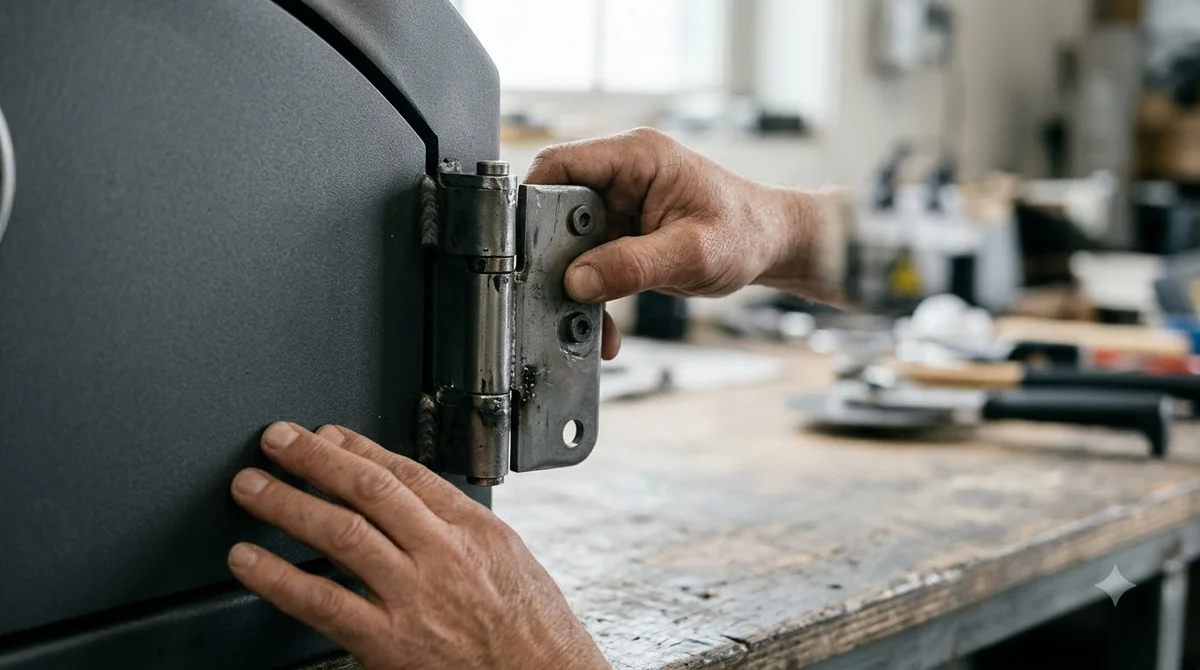
- Stainless steel, 304 grade preferred, for the body.
- Cordierite stone, at least about 1/2 inch thick, for heat retention.
- A stable base that will not rock when the door is opened.
- A thermometer or a clear way to read the stone temperature.
How Long a Pellet Oven Lasts and How to Care for It
A best pellet pizza oven can last up to 25 years, but the average life is around ten years, depending on use and maintenance, according to the VEVOR buying guide. Keeping the firebox and cooking surface clean is part of any maintenance plan. Check your manual for the cleaning interval, because it depends on the model and how often you cook. Upkeep is part of choosing the best pellet pizza oven, not an afterthought.
How to Choose the Best Pellet Pizza Oven for Your Kitchen
To find the best pellet pizza oven, choose in this order: type, capacity, pellet supply, then portability, and compare prices last. Each step narrows the field so that you do not pay for features you will not use.
- Pick the type: pure pellet if you want wood only, multi-fuel if you want a backup heat source.
- Set the pizza count: one or two pizzas points to a portable unit, more points to a larger oven.
- Confirm you can buy hardwood pellets of a known grade where you live.
- Check weight and footprint against where the oven will sit.

What We Could Not Verify About Each Best Pellet Pizza Oven
Current prices and model-level specifications could not be confirmed from manufacturer pages during this research, so this guide leaves them out of the best pellet pizza oven comparison. The product boxes above show Amazon listings, and the specs in them are the sellers’ own claims. Before you buy, check the current price and the specifications on the manufacturer’s listing, and check the pellet bag’s spec sheet for ash and moisture.
Frequently Asked Questions
Do pellet pizza ovens need electricity?
No. A seller buying guide states that pellet ovens do not require any electrical power. Multi-fuel models may add an electric or gas option, so check the spec if you want a single fuel.
What is the best pellet for a pizza oven?
Hardwood pellets of a known grade are the usual choice. The VEVOR guide recommends hardwood and seasoned wood, and it advises against green wood and softwood.
How many pizzas can a portable pellet oven cook?
Portable pellet ovens are described as cooking one or two pizzas at a time. For a group, the best pellet pizza oven is a larger one with a bigger stone.
How long does a pellet pizza oven last?
The VEVOR guide gives up to 25 years, with an average of around ten years, depending on use and maintenance. Your own result will depend on how often you cook and how well you clean it.
Can I use softwood pellets in a pizza oven?
The guide does not recommend softwood such as pine, because its sap produces smoke that can affect the taste of the pizza. Choose hardwood pellets made for cooking.
If you cook for one or two people and want wood flavor without an outlet, a pure pellet oven is the simplest starting point for the best pellet pizza oven fit. If you want a backup heat source or plan to cook for a group, look at multi-fuel models and larger stones first. Check the current price and the manufacturer specs before you buy.
 9 min readBest PicksBest Dual Fuel Pizza Ovens: Types, Fuels and How to ChooseUpdated Nov 12, 2026
 8 min readBest PicksHow to Use Wood Pellets in Pizza Oven: Step-by-Step GuideUpdated Nov 12, 2026
 9 min readBest PicksThe Best Multi Fuel Pizza Oven for Home CooksUpdated Nov 14, 2026
 9 min readBest Picks16 Inch Pizza Oven: Best Picks by Fuel and Cooking SpaceUpdated Nov 14, 2026
 8 min readBest PicksBest Outdoor Pizza Oven: Top Picks by Fuel and SizeUpdated Nov 14, 2026
 7 min readBest PicksPizza Oven Buying Guide: Fuel, Size and Heat TipsUpdated Nov 13, 2026