
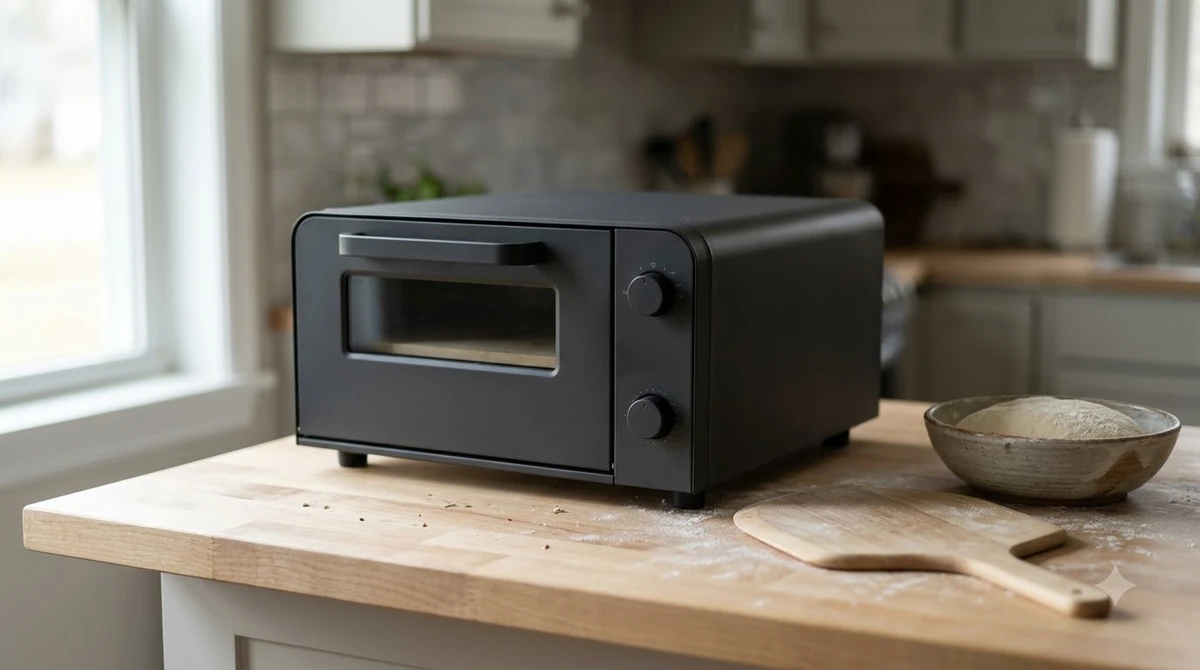

The Breville Pizzaiolo dough recipe starts with a 10-minute low-speed knead and a 45-60 minute proof, according to Breville’s official instruction book for the Pizzaiolo countertop oven. The method is short, but the cold rest and the oven settings decide how the crust turns out. This guide walks through each step, from the bowl to the stone deck.
The manual gives the method, timings and oven presets, but it does not print flour or water weights. Use a formula you already trust, and follow the timings and handling steps in this Breville Pizzaiolo dough recipe guide.
Breville Pizzaiolo dough recipe: the mixing and proofing method
The official Breville Pizzaiolo dough recipe is a bench mixer process: combine, knead, then proof until the dough doubles. Each step has a fixed time, so you can plan the batch around your oven schedule. The Breville BPZ820 instruction book lists these steps in its Neapolitan pizza dough section.
- Add the flour, yeast and salt to the bowl of a bench mixer and stir to combine.
- Add the water and knead on low speed until the dough is smooth and elastic, about 10 minutes.
- Cover the bowl with plastic wrap and proof until the dough has doubled in size, 45-60 minutes.
The goal of the knead is a dough that is smooth and elastic before it goes into the proof. The doubled size at the end of the proof is the signal that the dough is ready for the next step. Because the manual prints no flour or water weights, a ratio-based formula such as this Neapolitan pizza dough recipe can supply the quantities while you keep Breville’s timings.
Breville Pizzaiolo dough recipe: dividing and chilling the balls
After the proof, divide the dough into pieces of about 240 g and shape each one into a smooth ball. The official method then chills the balls on semolina-dusted trays for at least 6 hours, and up to 4 days. This cold rest is part of the Breville Pizzaiolo dough recipe, not an optional extra, and it is the same idea behind cold ferment pizza dough.
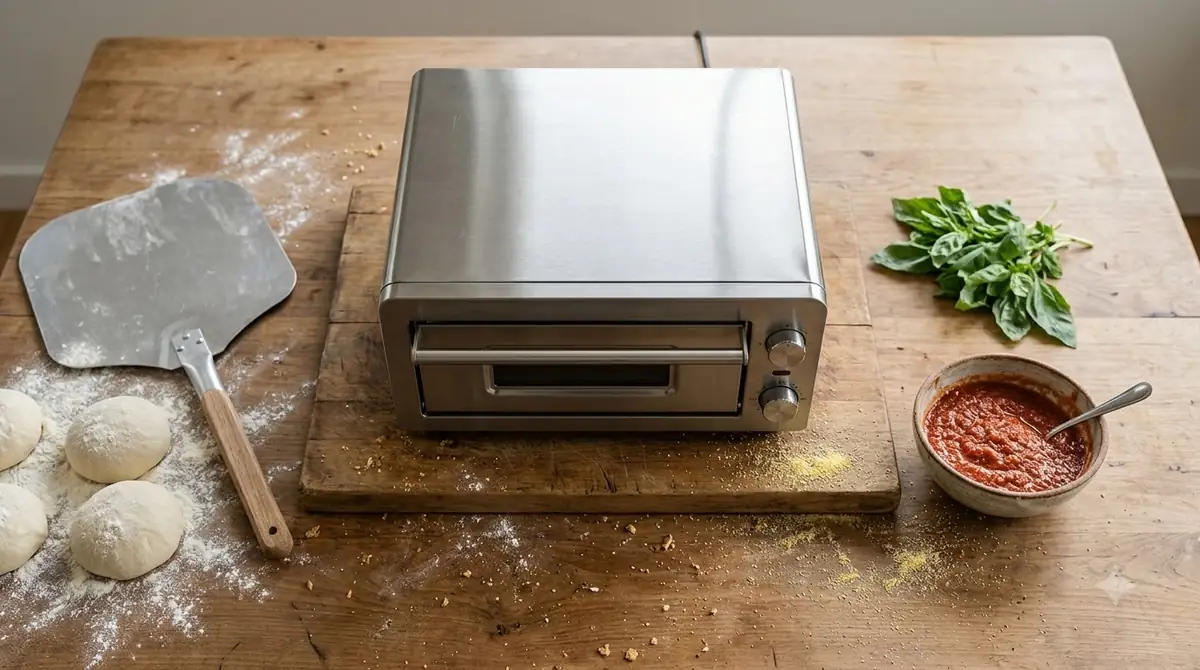
Lightly dust two baking trays with the semolina mix and place the balls about 10 cm apart so they do not touch. Oil the top of each ball lightly, then wrap each tray tightly in plastic wrap. Keep the trays in the refrigerator until you need them, since the breville pizzaiolo dough recipe depends on that cold rest.
Plan the chilling step ahead of time, because the breville pizzaiolo dough recipe always includes at least 6 hours in the refrigerator, so the dough is usually made the day before or earlier. The manual’s range runs from 6 hours to 4 days.
Bringing the dough to room temperature before stretching
Take each dough ball out of the refrigerator and let it stand, still wrapped, at room temperature for 1 hour before use. A cold ball is stiff and resists stretching, so this rest makes shaping easier. Keep the other balls covered until you are ready for them. Each ball in the Breville Pizzaiolo dough recipe is handled one at a time.
Create a generous mound of the semolina mix on a clean work surface. Use a bench scraper or a spatula to lift one ball and set it on top of the mound. Keep the rest of the dough covered so it does not dry out while you work.
Dust the ball with the flour and semolina mix before you shape it. Too little dust and the dough sticks to the bench. Too much and the excess burns on the stone later.
Stretching the dough into a 25-30 cm base
Press the center of the ball to a 15 cm circle, leaving a 2 cm border around the edge. Then stretch the dough gently to a 25-30 cm circle. Work from the center outward so the border stays intact.
- Press from the center outward into a 15 cm circle, keeping a 2 cm border.
- Stretch the dough gently to a 25-30 cm circle on a lightly floured surface.
- If it snaps back, rest it under a damp cloth for a further 15-30 minutes.
If the dough is hard to stretch, place the floured dough on top of an upside-down bowl and gently stretch it down the sides. The manual offers this as a tip for difficult dough. Work slowly and keep the dough from tearing.
The manual gives a simple test for readiness. A well-made dough can be stretched into a very thin, almost transparent sheet without tearing. If it tears, let it rest a little longer and try again.
Preheating the Pizzaiolo and choosing a setting
Preheat the Pizzaiolo with the stone deck inside before you load any Breville Pizzaiolo dough recipe pizza. The preheat takes 10-20 minutes, depending on the preset you choose. Wait until the AT TEMPERATURE light stops flashing and stays on before placing the pizza.
- Insert the stone deck into the oven cavity.
- Turn the STYLE dial to the setting you want, such as Wood Fired or Thin & Crispy.
- Wait for the AT TEMPERATURE light to stop flashing and stay solid.
- Load the pizza with the peel, close the door, and press the TIME dial to start the timer.
The DARKNESS dial changes the oven temperature, so turning it clockwise makes the crust darker. The recommended time shows on the TIME dial, and you can adjust it before or during cooking.
Keep at least 10 cm of clear space on both sides of the oven and 15 cm above it.
Manual Mode settings by dough style
Manual Mode lets you set the deck and top temperatures yourself for any Breville Pizzaiolo dough recipe style, and the manual lists suggested times and ranges for each style. Neapolitan dough uses the shortest time and the hottest deck. Thin & Crispy uses a longer time with a cooler top element, as the table below shows.
| Style | Time | Deck temperature | Top temperature |
|---|---|---|---|
| Neapolitan (Wood Fired) | 2 min | 370-400°C | 370-400°C |
| Thin & Crispy | 7 min | 295-325°C | 220-250°C |
| Thick crust | 9 min | 295-325°C | 235-265°C |
| Pan pizza | 18 min | 325-355°C | 205-235°C |
| Frozen | 12 min | 220-250°C | 190-220°C |
The manual notes that the deck and top temperatures affect each other, so not every combination is possible. Treat these numbers as the manual’s suggested ranges for each bake and start from them. The Neapolitan row is the hottest, which is why it bakes in just 2 minutes; see how hot a pizza oven gets for how that compares with other ovens, and note that 370-400°C is about 700-750°F.
If you prefer not to adjust anything, use the STYLE dial presets. Manual Mode is for cooks who want to control the heat distribution themselves. Breville’s manual mode guide for the Pizzaiolo lists the same Manual Mode controls.
Using the peel without sticking
The peel step matters as much as the Breville Pizzaiolo dough recipe itself. Use the peel to move the dough onto the stone, and keep the dough moving so it does not stick. Make sure the oven is already preheated before you place the stretched dough on the peel. Keep the peel cool and clean, and do not leave it under the oven while you wait.
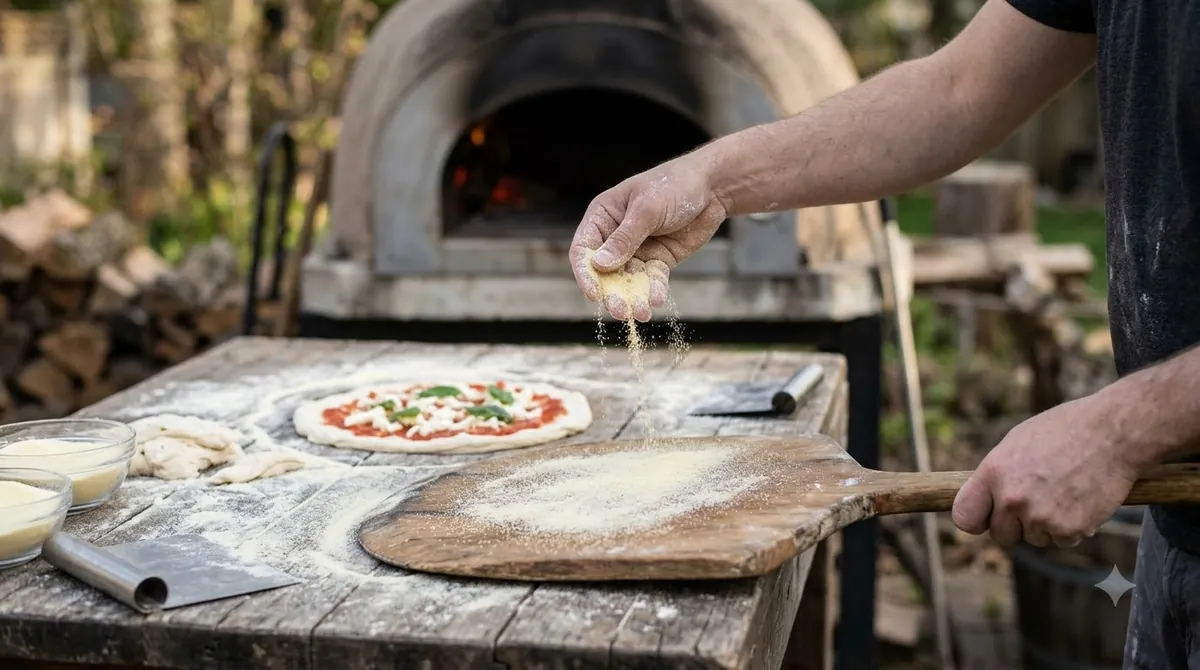
- Sprinkle about half a teaspoon of the flour and semolina mix over the peel.
- Place the stretched dough on the peel and add sauce and toppings quickly.
- Do not let the dough sit on the peel for more than about 2 minutes.
- Slide the pizza onto the deck, then remove it with the peel once it is cooked.
Too much flour on the peel is a common mistake because the excess burns on the stone. Use just enough dust to keep the dough from sticking.
The 2-minute limit is the manual’s guard against sticking, so have the sauce and toppings ready before the stretched dough touches the peel. For a topping idea, try a diavola pizza recipe with tomato, mozzarella and spicy salami.
Freezing, storage and caring for the stone deck
Extra dough from this breville pizzaiolo dough recipe can be frozen for up to one month in airtight containers or zip-lock bags, and the general rules for freezing pizza dough apply. Thaw it overnight in the refrigerator before you use it, then follow the room-temperature rest described above.
The stone deck cannot be soaked or put in a dishwasher. Let the deck cool completely before you clean it, as explained in how to clean a pizza stone.
Frequently Asked Questions
Does Breville publish flour and water amounts for this dough?
The official instruction book gives the steps, timings and dough piece size, but it does not print flour or water weights. Use a formula you already trust, and keep the knead, proof and rest times from the manual for your breville pizzaiolo dough recipe.
Can the dough be made the day before?
Yes. For this Breville Pizzaiolo dough recipe, the manual says the balls can be refrigerated for at least 6 hours and up to 4 days. Take them out and let them stand for 1 hour before stretching, as the breville pizzaiolo dough recipe method directs.
How long does the Pizzaiolo take to preheat?
The preheat takes 10-20 minutes depending on the preset. Wait until the AT TEMPERATURE light stays solid before you load the pizza.
How do I get leopard spotting on the crust?
The manual says that increasing the salt in the dough helps with leopard spotting. The Wood Fired setting is the high-heat Neapolitan option in Manual Mode.
Can I use the Neapolitan settings for pan pizza?
No. The manual lists pan pizza at 18 minutes, with a deck temperature of 325-355°C and a top temperature of 205-235°C.
How do I know the dough is ready to stretch?
In the breville pizzaiolo dough recipe, the readiness test is a very thin, almost transparent piece that stretches without tearing. If it snaps back, rest it under a damp cloth for 15-30 minutes.
Follow the manual’s timings, keep the dough covered until you need it, and check the stretch test before baking. Done in that order, the Breville Pizzaiolo dough recipe is a reliable routine.