
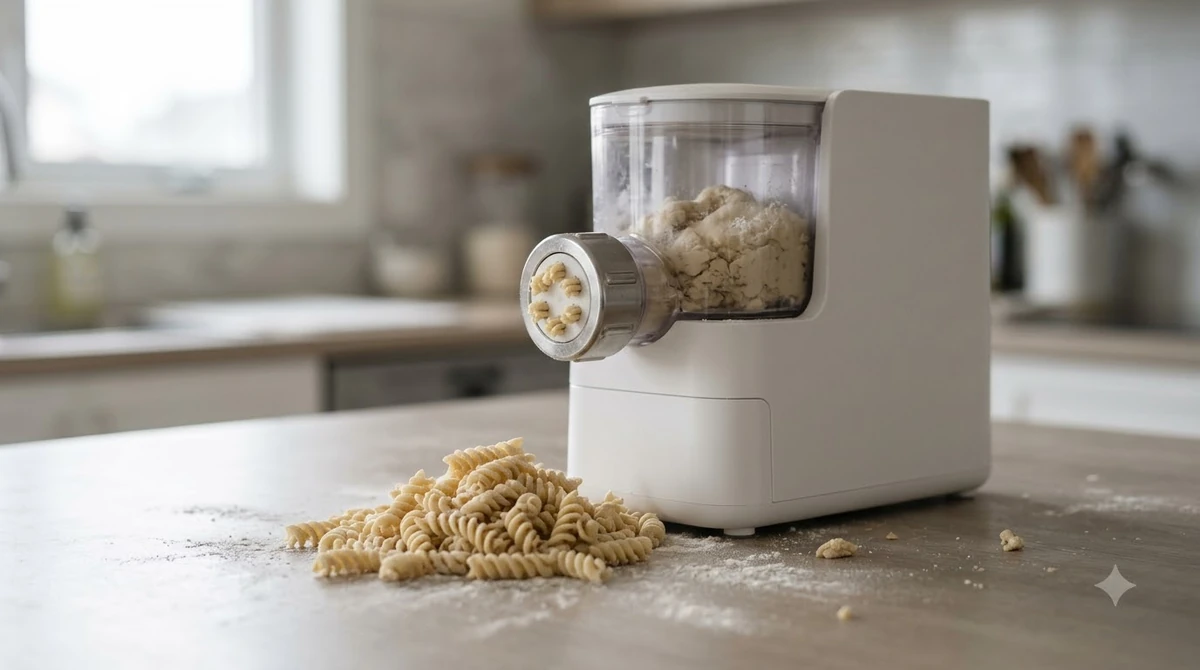

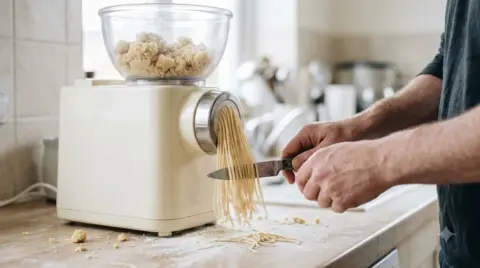
Making homemade rotini means extruding a firm, low-moisture dough through a spiral die, using a pasta extruder. Unlike fusilli, which is twisted by hand from flat strands, rotini comes out of the machine already spiraled. The dough needs to be firmer than the dough for rolled pasta, and it should be cut and dried soon after it leaves the die.
What Makes Rotini Different From Fusilli
Rotini and fusilli look alike, but they are made differently. Mashed describes fusilli as flat strands that are twisted afterward, while rotini is extruded into a spiral shape with a slightly smaller and tighter twist.
That difference matters at home. A rotini die needs an extruder, while fusilli can be shaped by hand from a rolled sheet. The grooves that come from the extruded spiral also help rotini hold light tomato, dairy and oil-based sauces, according to the same article.

Choosing the Right Dough
The dough should be drier and tougher than dough for sheets of pasta. Boroughkitchen’s guide to a Marcato extruder describes the right texture as soft but not elastic, and says it should not stick to your fingers. Knead it, then extrude it straight away rather than letting it rest.
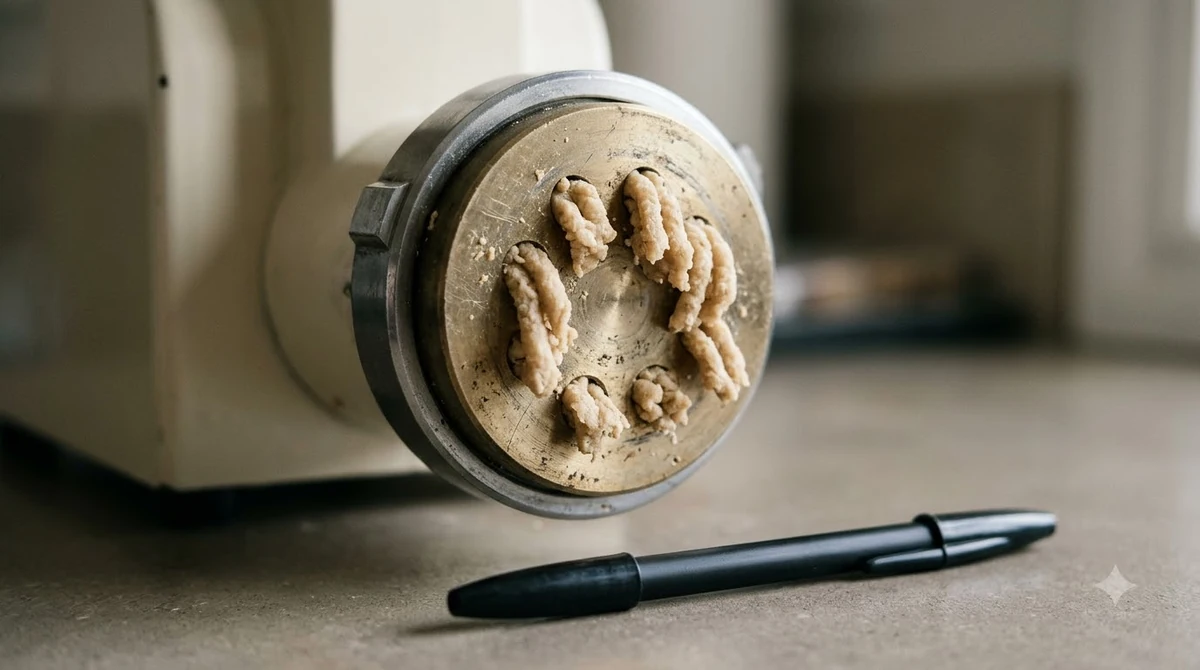
Many extruder recipes use a mix of ’00’ flour and semolina. Semolina gives the dough the firmness it needs to hold a spiral shape, and it also helps keep the cut pieces from sticking together after extrusion.
- Mix the flour and water, or flour and egg, until the dough forms a firm ball.
- Knead until smooth but not sticky, then cut it into small pieces that fit the feed opening.
- Feed the pieces into the cylinder and turn the crank slowly so the screw pushes the dough toward the die.
- Cut the strands to length as they emerge, then spread the pieces out so they do not stick together.
Loading and Extruding the Dough
Loading the machine evenly makes the shape more consistent. Boroughkitchen recommends breaking the dough into pieces that fit the top window, then testing both the slow and fast crank holes to find the one that moves the dough forward. If the dough refuses to move, it is usually too dry, so add a few drops of water and try again.
Extrude a small test amount first. The first strands often come out uneven, and it is normal to discard them before you start collecting the spirals you want to keep.
Drying, Storing and Cooking Your Rotini
Once the pieces are cut, spread them on a floured or semolina-dusted tray so they do not stick. Boroughkitchen advises sprinkling the pieces with semolina to keep them separate, and it recommends refrigerating fresh pasta for up to two days or freezing it for up to two months.
Cook the rotini in well-salted boiling water for 2 to 3 minutes, until it floats and is tender. Fresh extruded pasta cooks much faster than dried, so start tasting early and drain it as soon as it is just done.
| Step | What to look for | If it goes wrong |
|---|---|---|
| Dough | Soft but not elastic, not sticky | Too soft: add semolina; too dry: add a few drops of water |
| Extruding | Steady, even spirals | Stalled: check the crank hole and dough dryness |
| Drying | Pieces stay separate | Sticking: dust with more semolina |
| Cooking | Floats and is tender | Mushy: pull it earlier next time |
Sauces That Work Well With Homemade Rotini
Mashed says the sauce-hugging grooves in rotini suit light tomato, dairy and oil-based sauces. That makes homemade rotini a good base for a simple dish rather than a heavy one, since the spirals trap sauce without needing a thick ragù to hold it.
Tomato sauce is the easiest starting point. A quick sauce of tomatoes, garlic and olive oil clings to the grooves, and a spoon of pasta water helps it spread. Dairy sauces such as a butter and Parmesan toss also suit rotini, because the spirals hold the cheese in the gaps between the turns.
Oil-based sauces work well for a lighter dinner. Toss the rotini with olive oil, herbs, and a little grated cheese while the pasta is still hot. The oil coats the surface evenly, and the grooves keep the herbs in place rather than letting them fall to the bottom of the bowl.
Troubleshooting Common Problems When Extruding Rotini
If the spirals come out cracked, the dough is usually too dry. Add water a few drops at a time, kneading between additions, until the dough feels soft but not sticky. Check it again before loading, because a dough that is right when mixed can dry out on the counter.
If the dough is too soft and sticks inside the cylinder, add semolina before extruding. Boroughkitchen’s guide describes semolina as the way to keep the dough firm and moving through the die. Working in small batches also helps, since a large lump of soft dough is harder to push evenly.
If the pieces stick together after cutting, spread them out on a tray and dust them with semolina straight away. Do not stack them while they are still moist, and keep them away from direct heat while they dry.
Frequently Asked Questions
Can you make rotini without a machine?
Not in the true spiral shape. Rotini is extruded through a die, so a machine is needed. Hand-twisted pasta is closer to fusilli.
What flour is best for homemade rotini?
Many extruder recipes mix ’00’ flour with semolina. Semolina gives a firmer dough that holds its shape better.
How long can homemade rotini be stored?
Boroughkitchen says fresh pasta can be refrigerated for up to two days or frozen for up to two months.
Which sauces suit homemade rotini?
Light tomato, dairy and oil-based sauces suit rotini, because the grooves hold them well. See our guide to the best sauce for rotini for more pairings.
Homemade rotini takes practice, so start with a small batch and adjust the dough until it moves through the die smoothly. Keep the pieces well dusted with semolina, cook them soon after drying, and taste as you go.
 6 min readLearnHomemade Paccheri: Hand-Rolled and Extruder MethodsUpdated Nov 13, 2026
 6 min readLearnRotini Substitute: Fusilli and 4 Other Pasta SwapsUpdated Nov 13, 2026
 7 min readLearnRotini Pasta: What It Is, How to Cook It and What to Serve With ItUpdated Nov 10, 2026
 6 min readLearnHomemade Orzo: How to Make Tiny Pasta Grains at HomeUpdated Nov 13, 2026
 6 min readLearnBest Sauce for Rotini: What Clings to the TwistsUpdated Nov 13, 2026
 6 min readLearnCasarecce Substitute: Fusilli, Rotini and Other TwistsUpdated Nov 13, 2026