
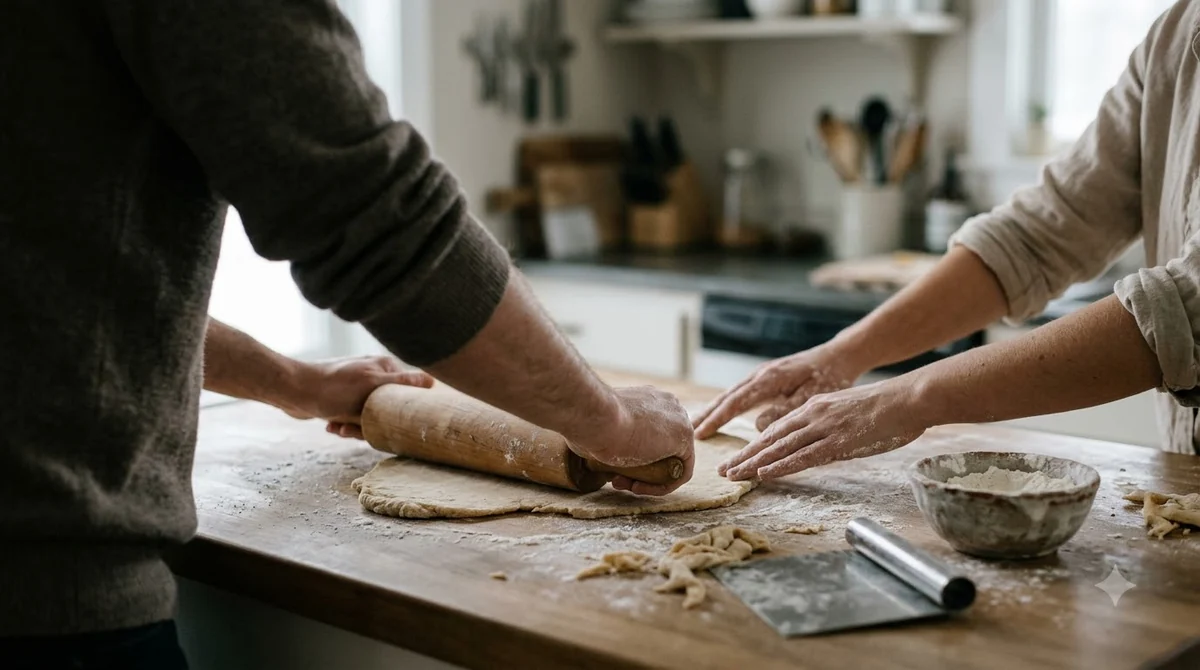

Homemade paccheri are wide pasta tubes you can make by hand, either by wrapping thin rectangles of dough around a rod or by pushing a stiff dough through an extruder. The hand method uses fresh egg dough and a rolling pin, while the extruder method uses a drier semolina dough. Both take patience, but neither needs special skill to get a result you can cook and eat.
Paccheri are large tubes, so the shape is the main challenge. The dough has to be sturdy enough to hold its tube form when you wrap it, and thin enough that the finished pasta cooks through without a raw center. The guide below covers both methods, the dough to start with, and how to dry and cook the finished tubes.
Two Ways to Make Paccheri at Home
You can shape paccheri by hand from fresh dough or extrude them from a stiff semolina dough if you own a machine with the right die.
The Pasta Project’s paccheri guide describes both routes. The hand method suits a first attempt because it needs only flour, eggs, and a rolling pin. The extruder method produces a more uniform tube but depends on owning a die sized for paccheri.
Dough for Hand-Rolled Paccheri
Fresh paccheri use a soft egg dough made from 00 flour, a pinch of salt, beaten eggs, and optional olive oil. The dough should come together smoothly without being sticky.
- 00 Italian flour
- A pinch of salt
- Beaten eggs
- Olive oil, optional
The Pasta Project guide lists these ingredients without amounts. Weigh your flour and add the eggs gradually, adjusting by feel. If the dough feels dry and cracks, add a little more egg or a few drops of water, one at a time.
How to Shape Paccheri by Hand
Roll the dough into thin sheets, cut rectangles, and wrap each one around a rod to form a tube that you seal with water.
Make a well in the flour, mix in the wet ingredients, and knead until the dough is smooth. Cover it and let it rest so the gluten relaxes, which makes it easier to roll without tearing. Then follow these steps:
- Roll the dough into thin sheets. The guide does not give a thickness, so aim for a sheet thin enough to wrap without cracking.
- Cut the sheet into rectangles that are large enough to wrap around your rod.
- Wrap each rectangle around a rolling pin or a thin wooden rod to form a tube.
- Seal the edge with a little water, then slide the tube off the rod.
Stand the tubes on a baking-paper-lined tray, or thread them onto a narrow wooden rod so they keep their shape as they dry.
Work in batches so the first tubes do not dry out while you wrap the rest. Keep the uncut dough and the rectangles under a damp towel, and wrap only as many tubes as you can finish in one session. Tubes that sit too long before sealing are harder to close neatly.
Making Paccheri With an Extruder
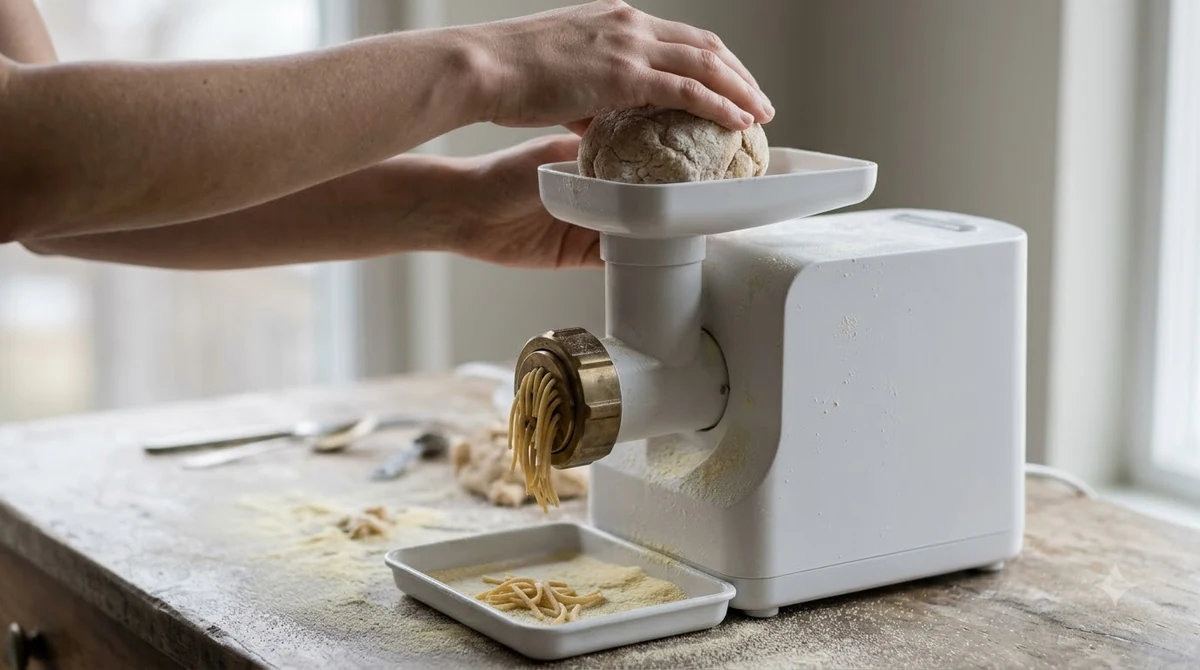
An extruder works best with a dough that is firm, stiff, and still manageable, made from durum wheat semolina and water.
Feed the dough into the extruder fitted with a die for this shape. Cut the tubes to length as they emerge, then dry them slowly on racks in a controlled environment. The guide does not give a drying time, so judge the dryness by feel and the advice printed on your machine’s manual.
Because extruded dough is drier than fresh egg dough, it needs more time to dry before cooking. Keep the tubes away from direct heat and turn them occasionally so they dry evenly.
Drying and Cooking Homemade Paccheri
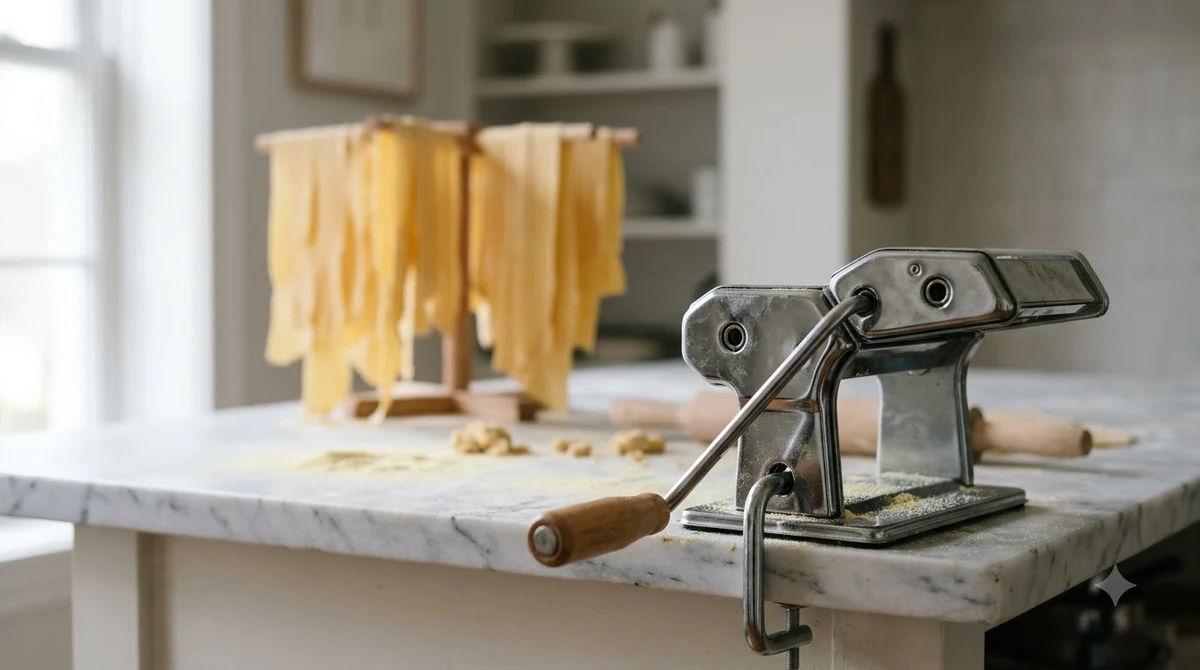
Fresh paccheri should dry slightly before cooking, and dried ones should be cooked according to their package timing.
| Type | Dough | Cooking time |
|---|---|---|
| Fresh, hand-rolled | 00 flour, salt, beaten eggs, optional oil | 3 to 5 minutes |
| Dried, extruded | Durum semolina and water | Follow the package or your recipe |
The table lists the cooking times from the Pasta Project guide for fresh paccheri, and the package instructions for dried ones. Test a tube at the earlier end of the range and keep it a little firm in the center, since large tubes continue to soften after you drain them.
Cook the tubes in a large pot of well-salted boiling water and stir once or twice so they do not stick together at the start. Before cooking, check that the tubes feel firm to the touch and that every seam is closed, since a damp or open seam can split in the water.
Drain the tubes once they are tender but still firm in the center. Large tubes hold heat, so they keep cooking for a short time after you drain them, which is why an early check helps.
Frequently Asked Questions
Do I need an extruder to make paccheri?
No. The hand method uses a rolling pin and a rod, so you can shape them with ordinary kitchen tools. An extruder gives more even tubes, but it is not required.
What can I use as a rod for wrapping?
The guide suggests a rolling pin or a thin wooden rod. Choose one that is narrow enough to slide the tube off without tearing it.
Why did my tubes split or open up?
The seam probably was not sealed well, or the sheet was too thick to bend around the rod. Seal the edge with a little water and roll the sheet thinner next time.
How do I stop the tubes sticking together?
Keep the water at a full boil, add the tubes all at once, and stir them gently in the first minute. Dust the drying tubes lightly with semolina so they do not stick to each other or to the rack.
Can I cook fresh paccheri straight away?
Yes. Let the tubes dry slightly first, as the guide suggests, then cook them in boiling salted water until just tender.
Homemade paccheri reward a little practice. Start with the hand method, keep the seams sealed, and dry the tubes before cooking. Once you have shaped a first batch, the next one will hold its shape more easily.
 6 min readLearnHomemade Pici: Hand-Rolled Tuscan Strands and Dough StepsUpdated Nov 13, 2026
 6 min readLearnHomemade Rotini: How to Make Rotini With a Pasta ExtruderUpdated Nov 13, 2026
 6 min readLearnHow to Make Trofie: Hand-Rolled Dough and Shaping StepsUpdated Nov 13, 2026
 6 min readLearnHow to Make Pici: Hand-Rolled Tuscan Pasta GuideUpdated Nov 13, 2026
 7 min readLearnUmbricelli Pasta: The Thick Hand-Rolled Noodle of UmbriaUpdated Nov 6, 2026
 7 min readLearnPaccheri Pasta: Sauces, Substitutes and Homemade GuideUpdated Nov 6, 2026