

The answer to how long to proof pizza dough depends on temperature: room-temperature proofs usually take 1 to 24 hours, and cold proofs in the fridge take 24 to 72 hours. Gozney’s dough guide gives both ranges, and the right time for your dough depends on the recipe and your kitchen.
Dough is ready when it has roughly doubled and springs back slowly when pressed. Dough left too long turns floppy and sour, so check the dough, not just the clock.
How Long to Proof Pizza Dough at Room Temperature
Room-temperature proofing usually takes 1 to 24 hours, according to Gozney’s dough guide, and its quick-proof range is 20 °C to 38 °C (about 68 °F to 100 °F).
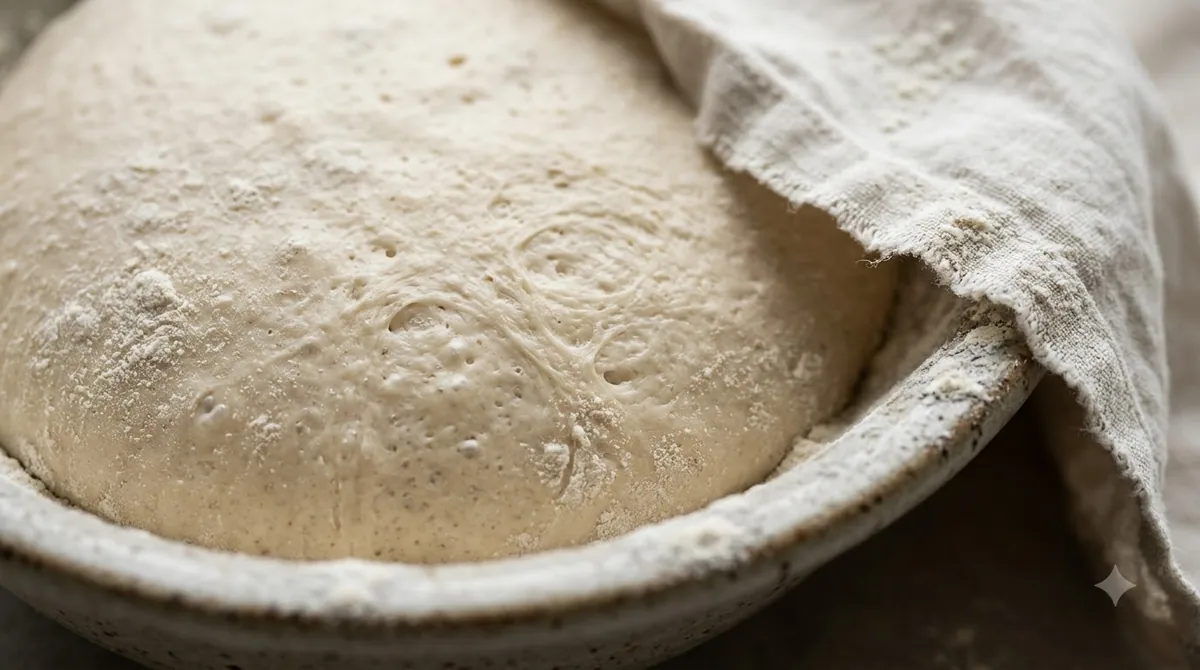
Warm kitchens speed up the rise, and the same dough can take much longer in a cool room. Gozney’s proofing guide describes the final room-temperature proof as anywhere from 1 to 24 hours or even more, which is why a single number never settles how long to proof pizza dough for every batch.
The table below sums up how long to proof pizza dough by method. Treat the figures as a starting point, then confirm the dough with the checks in the sections that follow.
| Method | Typical time | Temperature |
|---|---|---|
| Room-temperature proof | 1 to 24 hours | 20 °C to 38 °C (about 68 °F to 100 °F) |
| Cold proof in the fridge | 24 to 72 hours | At or below 40 °F (4.4 °C) |
If you are asking how long to let pizza dough sit out on the counter, Gozney’s 1 to 24 hour window is a baking guide, not a food safety rule. The general limit for perishable food left out is only 2 hours (covered in the food safety section below), so use the fridge for any proof that will run long.
The two methods also differ in yeast. Gozney says a quick proof uses more yeast plus a touch of sugar, while a cold proof uses less yeast and no sugar. Because the yeast amount changes with the method, the same recipe does not give the same timing on the counter and in the fridge, so check the dough at each stage rather than trusting one number. If your dough feels wet and slack at this point, read why pizza dough gets too sticky.
How Long to Proof Pizza Dough in the Fridge
Cold-proofed pizza dough usually needs 24 to 72 hours in the fridge, with a 24-hour minimum and an optimum of 2 to 3 days, according to Gozney.
Gozney calls 24 hours a good minimum for a cold proof and says the dough starts to deteriorate after roughly 2 to 3 days. Cold slows fermentation without killing the yeast, so the dough keeps developing at a slower pace. That slow pace is the reason a fridge rest changes how long to proof pizza dough compared with a counter rise.
When you plan a cold proof, count back from the bake time. If you want to bake on Friday evening, mix the dough at least 24 hours earlier, since 24 hours is the minimum Gozney gives for how long to proof pizza dough in the fridge. Keep the fridge at or below 40 °F, and check it with a fridge thermometer rather than trusting the display. The LSU AgCenter extension service gives the same 40 °F limit for cold perishable food.
Cold Proof Uses Less Yeast
Gozney advises less yeast and no sugar for a cold proof, compared with a quick proof that uses more yeast plus a touch of sugar. The page does not give exact amounts, so follow your recipe for quantities and use the method above to decide how long to proof pizza dough.
How to Bring Cold Pizza Dough to Room Temperature
Cold dough needs about 2 hours to return to room temperature before you shape and bake it, according to Gozney’s guide.
- Take the dough out of the fridge and leave it in its covered, food-safe container.
- Let it sit at room temperature for about 2 hours so it warms and softens.
- Press it gently with a fingertip. Shape and bake it once it springs back slowly.
Because the dough has already spent a day or more in the cold, the warm-up is a short second step, not a full proof. If you have spare dough, you can also read whether you can freeze pizza dough instead of proofing all of it. Plan for about 2 hours on the counter, then use the poke test before shaping.
How to Tell When Pizza Dough Is Ready
Pizza dough is ready when it has roughly doubled in volume and springs back slowly, leaving a small indent, when you press it with a fingertip.
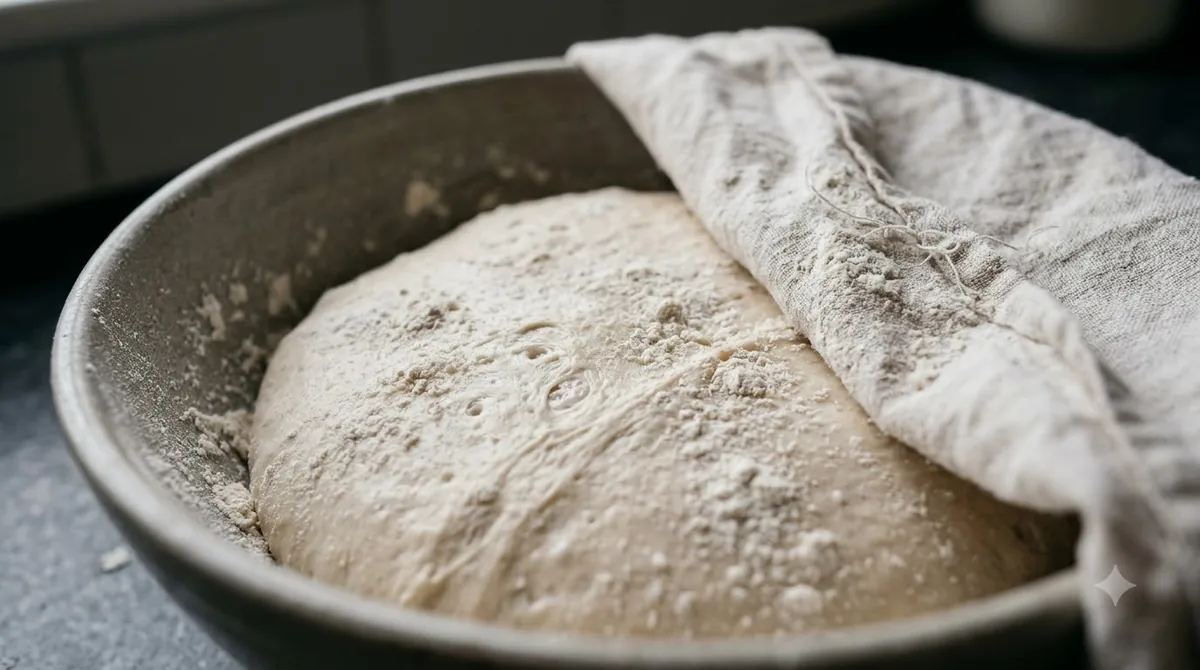
Gozney says most doughs roughly double when fully proofed, and little growth means the dough needs more time. Use the doubling check and the poke test together to decide how long to proof pizza dough in your own kitchen.
- The dough springs back right away: give it more time.
- The dough springs back slowly and leaves a small indent: it is ready.
- The surface shows bubbles and looks slightly puffy: fermentation is under way, as Cambro describes.
Cambro lists increased volume, surface bubbles and a slightly puffy look as signs of fermentation. These signs help when the clock and the recipe disagree.
Can Pizza Dough Rise Too Long?
Yes. Dough left too long becomes floppy and sour, and Cambro says an overproofed dough bakes into a flat, less flavorful crust.
Overproofing describes dough that has risen for longer than its best result allows. Cambro’s proofing article notes that the ideal timing depends on the recipe, the yeast type and the room temperature, so a time copied from another recipe may not fit yours.
Watch for these signs of an overproofed batch:
- The dough is floppy and does not hold its shape when lifted.
- The dough tastes sour rather than mildly tangy.
- The baked crust comes out flat and less flavorful.
If you see these signs, shape the dough and bake it soon rather than waiting for it to recover. Next batch, shorten the room-temperature time and check the poke test earlier.
A dough that has been left too long is hard to rescue, so the safest approach to how long to proof pizza dough is to check it before it reaches that stage. Start the poke test well before the end of the range, and repeat it until the dough shows the slow spring-back described above.
Keeping Proofing Dough Safe
Perishable food left out more than 2 hours should be thrown away, and the limit drops to 1 hour when the temperature is above 90 °F, according to LSU AgCenter.
The LSU AgCenter danger-zone guide defines the temperature danger zone as 40 °F to 140 °F (about 4.4 °C to 60 °C). When you ask how long to proof pizza dough on the counter, treat that 2-hour limit as the boundary to respect, and move longer proofs to the fridge.
Whatever you decide about how long to proof pizza dough, Cambro recommends a food-safe container with an airtight lid. An airtight seal keeps the top of the dough from crusting and helps the proof stay consistent.
Why Pizza Dough Needs to Rest
Resting lets the yeast build volume, bubbles and flavor, and Cambro says extending the proofing time lets the dough develop flavor and texture.
Cambro says longer proofing helps the dough develop flavor and texture, and that a cool area such as a refrigerator is a common choice for a slow rise. That is why a short counter rest and a multi-day fridge rest give different results from the same recipe. The flour matters too, as covered in our guide to pizza dough with bread flour, and a full recipe is in our Neapolitan pizza dough recipe.
Knowing why the rest matters helps you choose how long to proof pizza dough for a given bake. Before you shape the dough, Cambro’s guide says to press it with your fingertips to deflate it, so the gas is released before you shape it.
Frequently Asked Questions
Can I proof pizza dough for 3 days?
For how long to proof pizza dough in the fridge, Gozney gives 2 to 3 days as the optimum and says the dough starts to deteriorate after that. Keep it covered in the fridge at or below 40 °F, and check it before you bake.
Is 1 hour enough to proof pizza dough?
For some doughs, yes. Gozney gives a room-temperature range of 1 to 24 hours, so one hour can be enough when the dough has doubled and passes the poke test. When deciding how long to proof pizza dough, check the dough rather than the clock alone.
What happens if pizza dough over-proofs?
Gozney says it becomes floppy and sour tasting, and Cambro says it bakes into a flat crust with less flavor. Shape and bake it soon once you see those signs, rather than letting it rest longer.
Can I leave pizza dough out overnight?
LSU AgCenter says perishable food left out more than 2 hours should be thrown away. For a long rest, use the fridge at or below 40 °F instead of the counter.
Does the recipe change how long pizza dough needs to proof?
Yes. Cambro says the ideal proofing time depends on the recipe, the yeast type and the room temperature. Use your own recipe’s timing as the main guide, and the doubling and poke checks to confirm how long to proof pizza dough in your kitchen.
If you are unsure how long to proof pizza dough for your recipe, start with the room-temperature or fridge range, then decide with the doubling and poke checks. Stop before the dough turns floppy, and keep it covered at a safe temperature the whole time.