
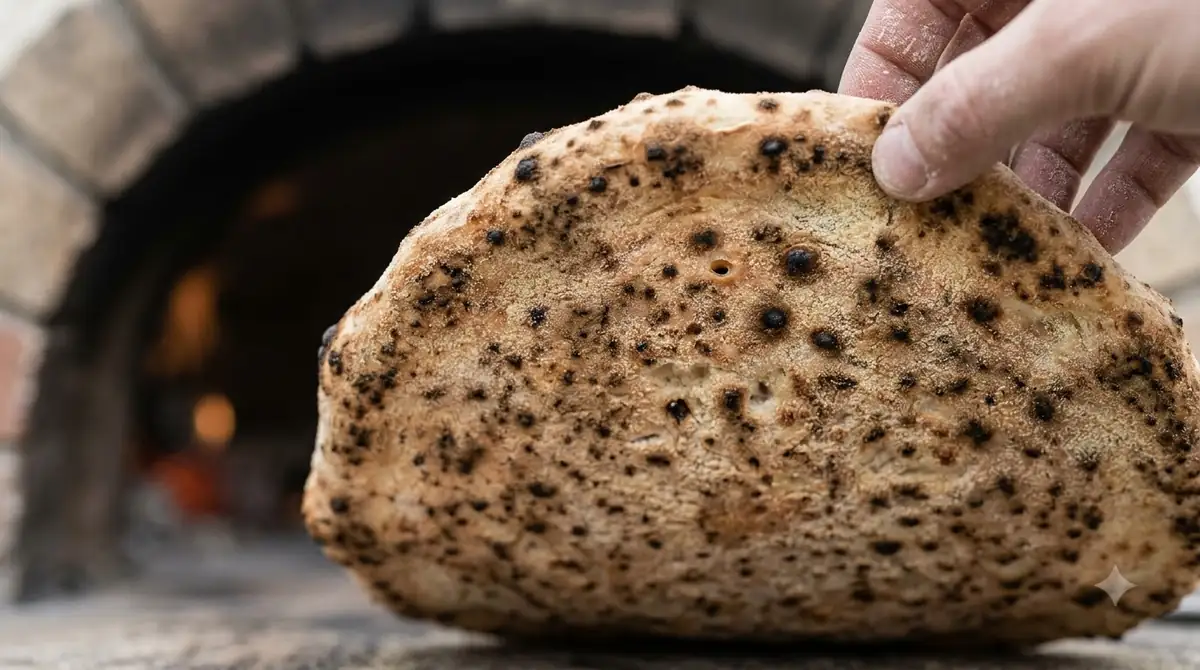

Learning how to get crispy pizza crust at home comes down to two things: a very hot base and a dry dough. Most soggy pizzas come from a cool stone, wet toppings, or too much sauce, not from a bad recipe. The steps below fix each cause, in order.
Most of the fix happens before the pizza goes in. Preheat your stone or steel for a long time, then control moisture so the base browns instead of steaming.
What Makes a Pizza Base Crisp: How to Get Crispy Pizza Crust at Home
A crisp base needs heat that reaches the bottom quickly and moisture that leaves the dough fast. Knowing how to get crispy pizza crust means focusing on the surface under the pizza as much as the air in the oven.
Home ovens heat mostly from the air around the food. A baking stone works differently because it stores heat and passes it into the base. According to the baking stone article on Wikipedia, a porous stone may absorb some moisture, which can make food crisper.
The reverse is also true. If the stone is cool, the dough sits on a surface that heats slowly, so it steams before the bottom sets. That is why a pizza from a cold stone often looks pale and feels soft underneath.
Preheat the Stone for at Least 45 Minutes
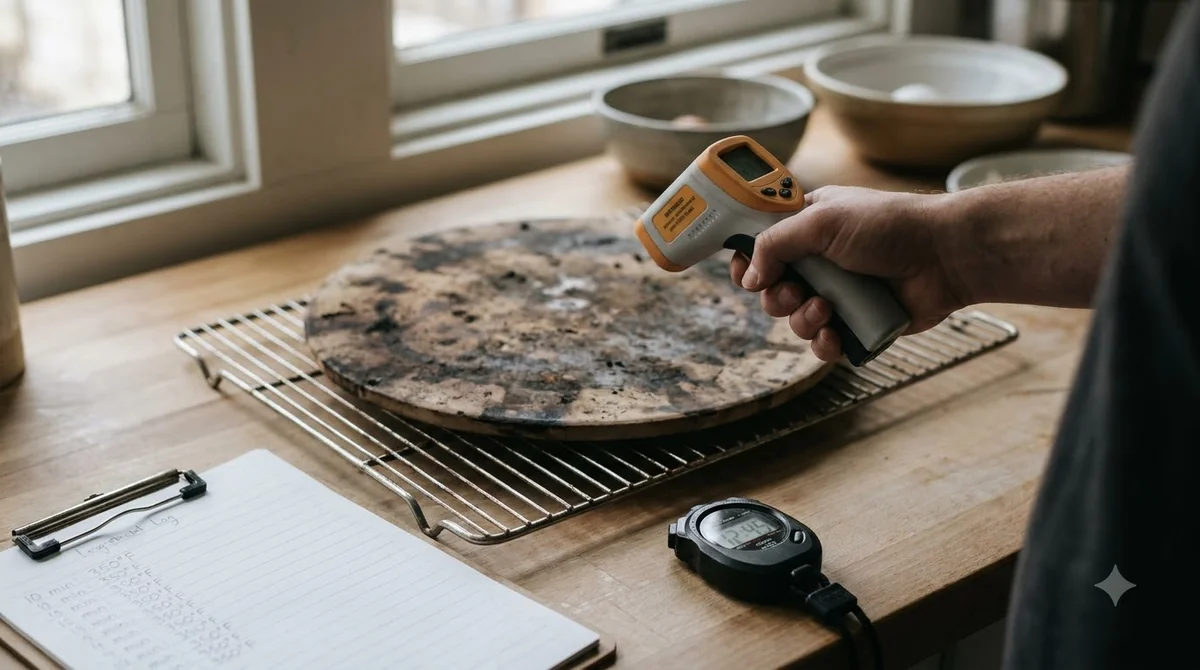
Put the stone in a cold oven and let it heat for at least 45 minutes before the first pizza goes in. The stone needs that time to store enough heat for the base.
Some bakers start the stone in a cold oven and heat it for at least 45 minutes, which also helps avoid cracking from sudden heat. The baking stone article on Wikipedia describes this approach. Starting cold and waiting is the most dependable way to get crispy pizza crust, because the stone has time to store heat.
Follow these steps for a stone in a standard home oven:
- Place the stone on the middle rack, then set the oven to its highest setting.
- Let the oven and stone heat together for at least 45 minutes.
- Dust a peel with cornmeal or flour so the pizza slides off easily.
- Launch the topped pizza quickly so the base does not sit on the peel and take on moisture. If it sticks, see why pizza sticks to the peel.
Do not skip the wait. A stone can look hot on the surface while the middle is still cool, and the center is where a thin base needs the most heat.
Set the Oven as High as It Will Go
Use the highest setting your oven offers, because a hotter base sets the dough before it can turn soft. A home oven cannot match professional heat, so the goal is maximum heat plus a long preheat. For what different ovens reach, see pizza oven temperature.
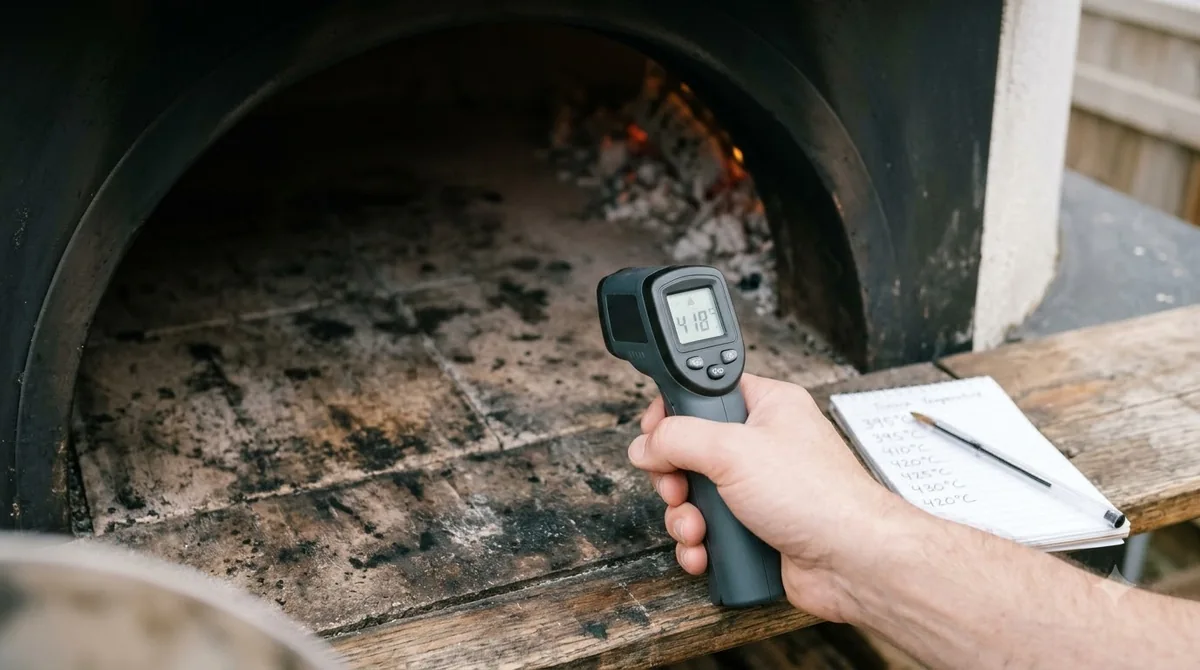
Traditional Neapolitan pizza is baked at 485 °C (905 °F) in a wood-fired oven for 60 to 90 seconds, according to the Neapolitan pizza article on Wikipedia. A home oven rarely matches that, so bake times run longer and the base has more time to take on moisture.
Built-in dials can be inaccurate. An independent oven thermometer placed near the stone shows what the cooking zone is really reaching, and it is the simplest check on whether your preheat is working.
Keep the oven door closed once the pizza is in. Each time you open it, heat escapes and the base loses ground, so check the bottom with a quick lift of the pizza rather than opening the door again and again.
How to Get Crispy Pizza Crust by Keeping Moisture Out
Water from sauce, cheese and vegetables turns to steam on the base, which keeps the crust soft. Dry or drain each wet ingredient before it goes on the dough.
Moisture is the main enemy of a crisp bottom. Wet toppings give off water as they heat, and that water sits between the dough and the stone, so the base steams instead of browning.
Use these habits to reduce the water on the dough:
- Pat fresh mozzarella dry with paper towels before it goes on.
- Spread sauce in a thin layer and leave a clear border.
- Drain or pat dry watery vegetables such as mushrooms, zucchini and peppers.
- Stretch the dough thin, so less dough sits in the center to hold water. A thin crust pizza dough recipe is built for this.
Dough hydration matters too. A very wet dough is harder to stretch thin, and a thick center stays soft even on a hot stone. If your dough feels sticky, a little extra flour during stretching is a better fix than adding more water to the mix, and pizza dough that is too sticky has its own fixes.
Stone, Steel, or Pan: Which Gives the Crispest Base
A baking steel conducts heat faster than a stone, so the base usually browns sooner. A metal pan or sheet heats the base quickly too, but the heat can be harsh on the crust.
The baking stone article on Wikipedia says steel conducts heat better than stone, and it adds that steel can give off too much heat for some breads. Wikipedia’s pizza article adds that a metal surface can transfer heat too fast and burn the crust. Stone is the more forgiving choice for a standard oven, while steel rewards a long preheat and quick launching.
| Surface | How it heats the base | Best for |
|---|---|---|
| Baking stone | Stores heat and releases it into the base; may absorb some moisture | Everyday home pizza and forgiving launches |
| Baking steel | Conducts heat quickly into the base | Faster browning with a long preheat |
| Pan or sheet | Transfers heat fast; can burn the crust if the bake runs long | Thicker pan-style pizza |
Whichever surface you use, preheat it fully. A cool stone or steel gives a soft result no matter how good the dough is, and our guide to how to clean a pizza stone covers keeping the stone in good shape.
Quick Fixes When the Base Still Comes Out Soft
When a pizza still comes out soft, the cause is usually a short preheat, heavy toppings, or a thick center. Match the symptom to the fix in the table below.
| Symptom | Likely cause | Fix |
|---|---|---|
| Pale, soft bottom | Stone not hot enough | Preheat for at least 45 minutes |
| Soggy middle | Too much sauce or wet toppings | Thin the sauce and dry the toppings |
| Thick, chewy rim with a soft center | Dough too thick in the middle | Stretch the center thinner |
| Burnt bottom, raw top | Stone often sitting too close to the bottom heat | Move the stone to a lower rack position |
Change one thing at a time, so you can see which fix made the difference.
Common Mistakes When Learning How to Get Crispy Pizza Crust
Most soft bases come from a short preheat, heavy toppings, or a pizza that sits too long on the peel. Avoiding these habits is part of the answer, and it costs nothing.
- Starting the stone in a hot oven and baking straight away.
- Leaving the topped pizza on the peel while the stone heats up.
- Adding a thick layer of cheese and sauce.
- Opening the oven door over and over while the pizza bakes.
A quick check helps. Ask whether the stone had at least 45 minutes, whether the dough is dry, and whether the sauce is thin. If the answer is no to any of them, fix that first.
Frequently Asked Questions
Can I get crispy pizza crust without a pizza stone?
Yes. A preheated baking steel or a heavy baking sheet can also help you get crispy pizza crust, though the browning will differ. Preheat the surface fully and check the bottom near the end of baking.
Should I use parchment paper on a pizza stone?
Parchment keeps dough from sticking during the launch, and many cooks dust the peel with cornmeal or flour instead. If you use parchment, slide it out once the pizza has set, since it sits between the dough and the stone and slows heat transfer.
Does thinner dough always make a crispier crust?
Thinner dough usually crisps faster because there is less moisture to drive out of the center. Very thin dough can dry out or burn at the edges if the oven is too cool or the bake runs too long.
Why are the edges crispy but the center soft?
The center holds the most sauce and toppings, so it releases more steam. Spread sauce thinly, keep the middle of the dough thin, and make sure the stone was fully heated before the pizza went in.
For most home ovens, the biggest gain comes from a full preheat and a dry base. Start with those two steps before you change your dough recipe, since they fix the most common causes of soft crust, and they are the core of how to get crispy pizza crust at home.