
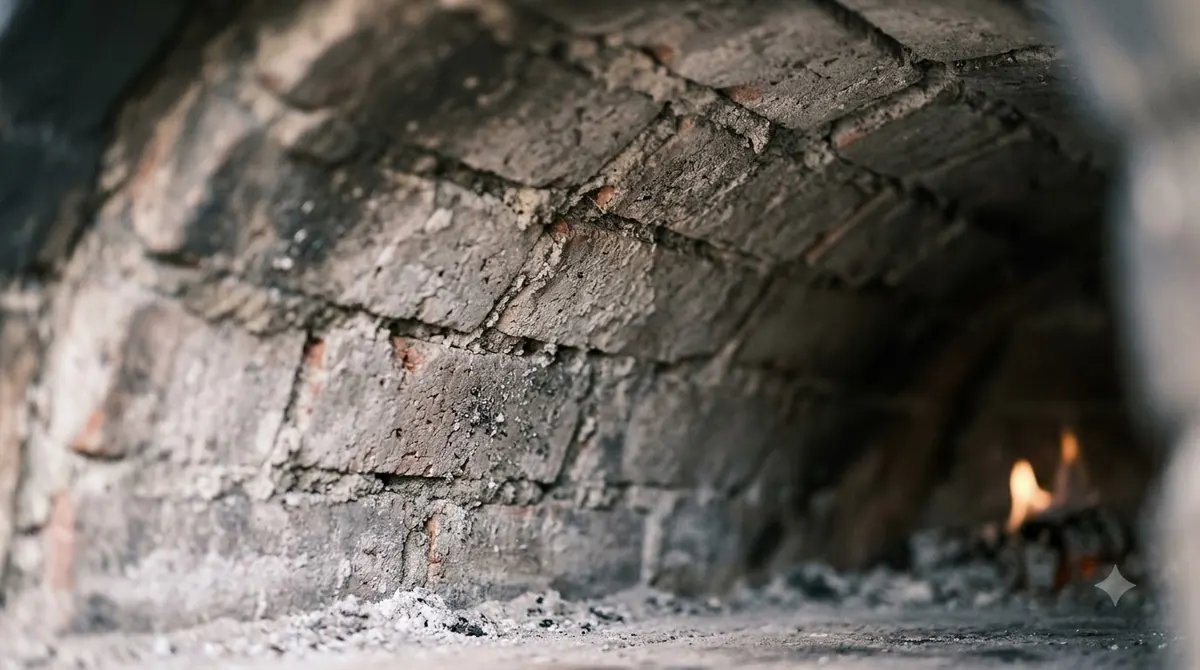

Knowing how to keep a pizza oven fire going comes down to small, dry fuel added often, with enough air moving through the firebox. The same logic applies to wood-fired and pellet-fed ovens, although feeding timings differ by model. Use the steps below as a general guide, then check your oven manual for exact intervals.
Why a Pizza Oven Fire Goes Out
A pizza oven fire usually dies for one of three reasons: it is starved of air, smothered by a large log, or fed wet fuel. Each problem has clear warning signs, so you can correct it before the heat drops.
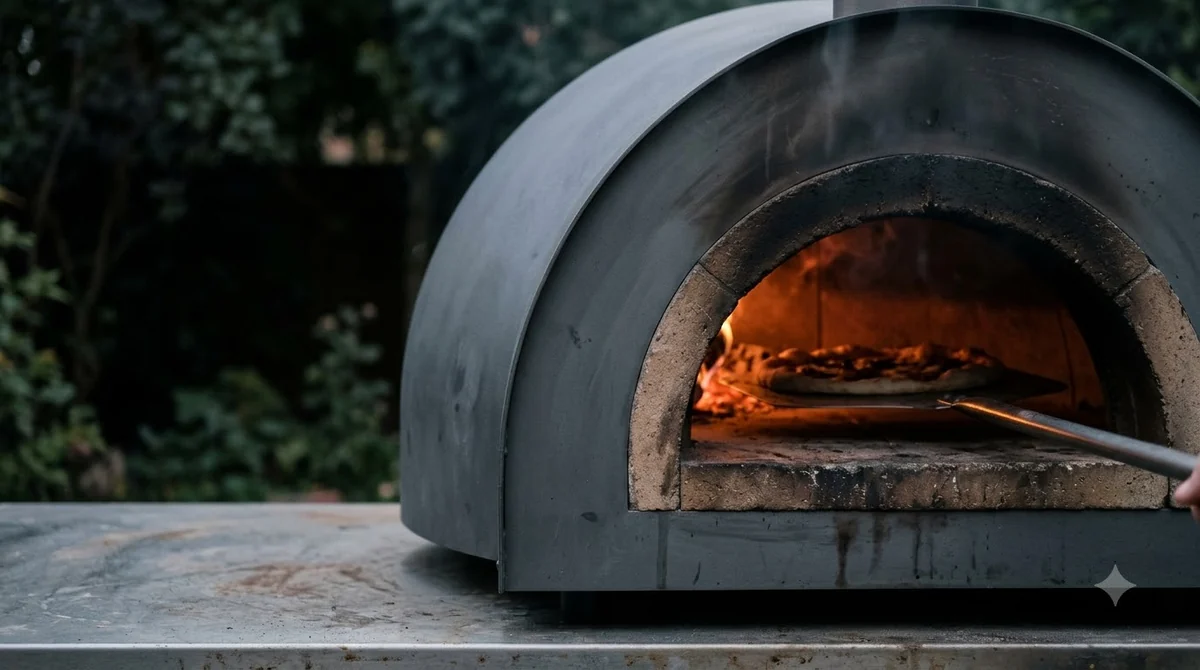
Packing the firebox tightly leaves no room for air to move between pieces, and a choked fire smokes and cools. A large log dropped onto a working fire has a similar effect. Pizza Oven Review’s wood fire guide warns that it can smother the fire, cool the chamber and smoke, then flare up later.
Wet fuel is the third cause. Water in the wood turns to steam and smoke instead of heat, so the oven gains less temperature from each piece you add.
Knowing these causes makes it much easier to learn how to keep a pizza oven fire going, because each sign points to one fix: drier fuel, more air or fewer large pieces. Most flare-ups and dead fires trace back to one of them, so check them in that order before you add more wood.
Choose the Right Fuel to Keep It Burning
Dry hardwood is the safest choice for steady heat. The US EPA says wood burns best at a moisture content of less than 20 percent, and it recommends seasoning wood for at least six months. Its best wood-burning practices page also suggests testing wood with a moisture meter before you burn it.
- Season wood for at least six months and store it off the ground, with only the top covered.
- Avoid coated, painted or pressure-treated wood, plywood, particle board, ocean driftwood, and wet or rotted wood.
- Choose hardwoods such as beech, oak or ash, which Burnhard’s pizza oven guide describes as burning hot and long. Our guide to the best wood for a pizza oven compares more options.
If your oven runs on pellets, use only completely dry grill or smoker pellets. Heater pellets can contain sawdust, glue and solvents, and pellets that absorb moisture from the air will burn weakly. Store the bag in a dry place and reseal it between sessions.
Plan the fuel before you start cooking, because the supply decides how to keep a pizza oven fire going for the whole session. Stack enough dry wood or pellets within reach for the whole session, because searching for fuel mid-cook is when most people open the door and lose heat. A simple rule is to have one more load ready than you think you will need, so the fire never has to wait on you.
Build a Base Fire Before You Add Wood
A steady fire starts small and builds gradually, so the base burns well before you add anything large. Follow these steps when you light a wood-fired pizza oven.
- Light the fire with newspaper, dry kindling or an all-natural fire starter. EPA guidance also rules out gasoline, kerosene and charcoal starter.
- Place the kindling toward the center or back of the deck, and leave gaps between the pieces so air can circulate.
- Let the small fire establish for a few minutes, then add slightly larger pieces.
- Hold back the biggest logs until the base flame is strong, since large pieces added too early can smother it.
If the flame looks weak a few minutes after lighting, resist the urge to add more wood right away. Check the airflow and the size of the pieces first, because a crowded firebox is the most common reason a new fire struggles. Once the flame stands up on its own, you can build the fire up toward cooking heat.
How to Keep a Pizza Oven Fire Going: Feeding It Little and Often
Feed the fire in small amounts rather than adding a big log now and then, which is the simplest way to keep a pizza oven fire going. Pizza Oven Review suggests adding a small piece roughly every few minutes during cooking, and feeding the fire before it sags rather than after.
Pellet-fed ovens follow a different rhythm. Burnhard’s guide for its pellet oven says to add a few pellets and pieces of wood after every two or three pizzas, then wait about 5 to 10 minutes until everything is burning and smoke stops coming from the chimney. Your model may use different numbers, so compare with its manual.
Keep the wood within arm’s reach before you light the oven. That way you can feed the fire on schedule without stepping away from the opening.
Timing is the other half of the routine when you want to keep a pizza oven fire going. A fire that is fed on a regular rhythm holds its temperature better than one that is fed in bursts. Set a loose pattern for yourself, such as checking the flame before each pizza, and adjust it once you see how fast your oven burns through fuel.
Rake the Fire and Manage the Ash Bed
Once the oven is hot, rake the fire to one side and keep a small, live flame during cooking. Between pizzas, add fuel and rake the fire again so the deck recovers its heat. This is the cooking phase described in the wood fire guide above.
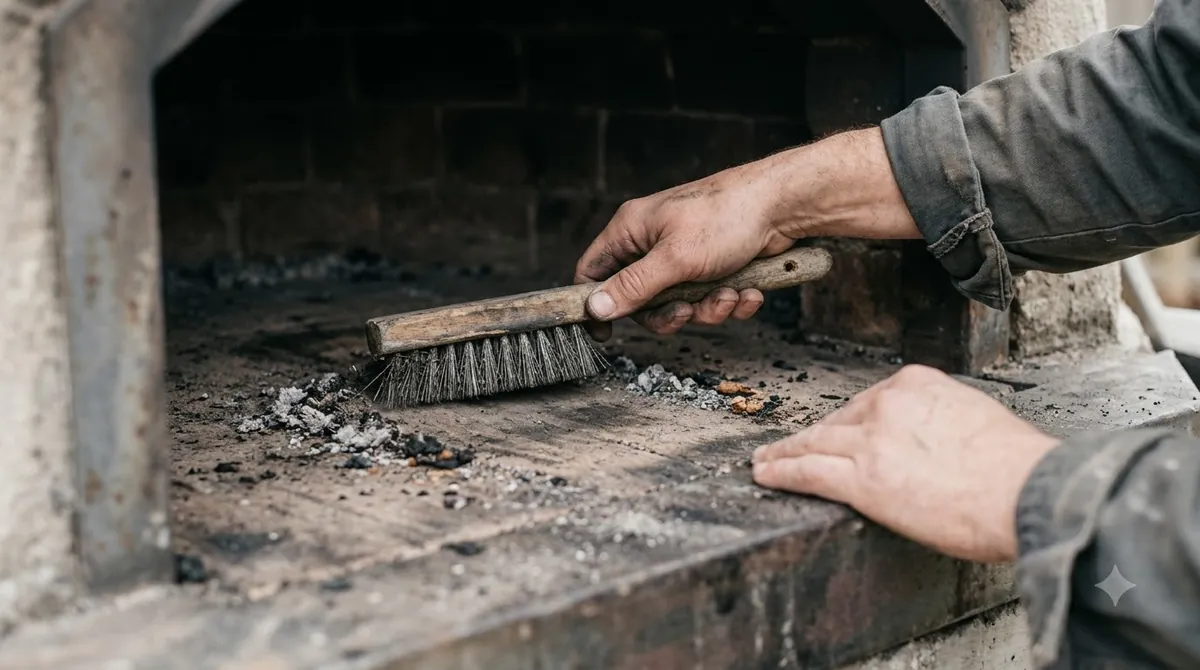
Raking is also how you move heat around the oven while you keep a pizza oven fire going. Pull the fire to the side you are not cooking on, so the deck stays hot where the pizza goes. Then rebuild the flame toward the cooking area only when you need more heat there. Good raking keeps the cook zone hot without overfeeding the fire.
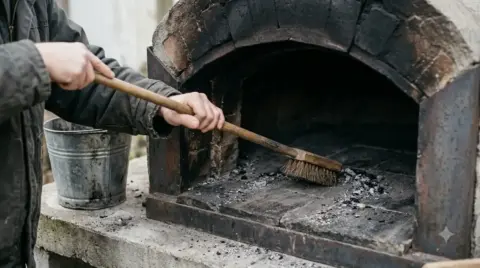
Ash matters too. A modest layer insulates the coals and helps them hold heat, but a thick bed buries the embers and blocks air from below. Rake ash back during long sessions to keep the airflow open, and see our guide to cleaning a wood-fired pizza oven for the cleanup afterward.
For the pellet oven in the Burnhard guide, the firebox should be emptied about every 8 to 10 pizzas, because excess ash can smother the fire or block airflow.
Read the Smoke and Flame
Reading the smoke and flame is the quickest way to tell how to keep a pizza oven fire going on track. White smoke with a hissing sound points to moisture, and dark, lazy smoke points to too little air. Use the table below to match each signal to a fix.
| Signal | What it usually means | What to do |
|---|---|---|
| White smoke with hissing | Water in the wood | Switch to drier fuel and check moisture with a meter |
| Dark, lazy smoke | Too little air | Loosen the pieces, leave gaps and rake out excess ash |
| Weak, low flames | Logs too large or not fully dry | Add smaller, drier pieces and wait for the flame to rise |
| Flames reaching the oven ceiling | Healthy burn for the pellet oven in the Burnhard guide | Keep feeding on your normal schedule |
Chimney and vent settings also change how the fire breathes, and they matter when you keep a pizza oven fire going at steady heat. Pizza Oven Review advises following the manual for those settings, so adjust them before you assume the fire itself is the problem. A well-set vent keeps the fire steady without starving it of air. If the oven still smokes heavily with dry wood, read our guide to a pizza oven producing too much smoke.
Soot burning off the dome and a pale crown are signs the oven is ready for cooking, according to Pizza Oven Review. Confirm the deck temperature with an infrared thermometer before you start.
Safety While the Fire Burns
A pizza oven fire is an open flame, so safety rules apply from lighting to cleanup, every time you keep a pizza oven fire going. Follow the manufacturer’s safety instructions for your model, and keep these habits in mind.
- Wear long leather or heat-resistant gloves before you light the fire or add fuel.
- Never use gasoline, kerosene, lighter fluid or alcohol to start or boost the fire.
- Shield the oven from wind, which reduces performance and can disturb the flame.
- Never move, cover or store an oven that still has live embers, and let the ash cool fully before disposal.
Keep combustible items such as cushions, paper and dry leaves well clear of the oven while you keep a pizza oven fire going. Heat travels further than most people expect, and a fire that stays inside the oven is the goal in every step above.
Frequently Asked Questions
How often should I add wood to a pizza oven?
Add small pieces every few minutes during cooking, before the fire sags, which is the core habit in how to keep a pizza oven fire going. Pellet-fed ovens follow a different schedule, such as a few pellets after every two or three pizzas, so check your model’s manual for exact numbers.
Why does my pizza oven fire keep going out?
The usual causes are wet fuel, too little air and a large log dropped onto a working fire, and fixing them is the first step in how to keep a pizza oven fire going. Read the smoke to tell them apart: white hissing smoke points to moisture, while dark, lazy smoke points to too little air.
Can I use softwood to keep a pizza oven fire going?
Hardwood is the better choice when you want to keep a pizza oven fire going steadily. Burnhard describes beech, oak and ash as burning hot and long. If you only have softwood, use small, very dry pieces and check your oven manual for fuel guidance.
What should I do when the fire dies down mid-session?
Rebuild it with dry kindling and small pieces, leave gaps for air, and add larger wood only after the flame has returned. Rake out excess ash first if the bed has become thick, since the same base-fire method used at lighting also works when you need to keep a pizza oven fire going after a dip.
Is it safe to leave a pizza oven burning unattended?
Safety guidance from the manufacturer comes first, and it should be followed for your model. In practice, stay close enough to manage the fire, keep wood within reach, and never move an oven that still holds live embers.
Learning how to keep a pizza oven fire going is mostly a matter of habit: small, dry fuel, fed on a steady rhythm, with air moving through the firebox. When you finish, stop feeding and let the fire burn down completely before you move or store the oven. Our guide on how to put out a pizza oven fire covers the shutdown.
 10 min readBy Use & ModelHow to Put Out a Pizza Oven Fire SafelyUpdated Nov 11, 2026
 9 min readBy Use & ModelHow to Clean Ooni Karu 12 Without Damaging ItUpdated Nov 7, 2026
 9 min readBy Use & ModelHow to Move a Pizza Oven SafelyUpdated Nov 11, 2026
 8 min readBy Use & ModelHow to Connect a Propane Tank to a Pizza OvenUpdated Nov 15, 2026
 9 min readBy Use & ModelPizza Oven Producing Too Much Smoke: Causes and FixesUpdated Nov 11, 2026
 9 min readBy Use & ModelHow to Clean a Wood Fired Pizza Oven SafelyUpdated Nov 11, 2026