
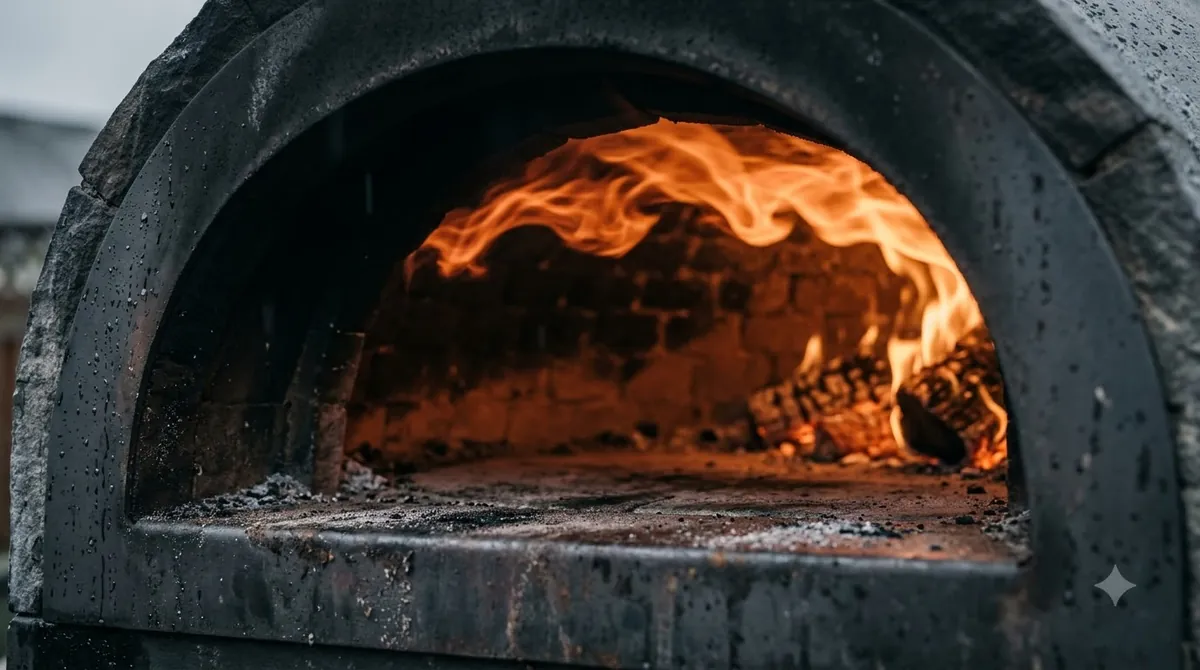

The best wood for pizza oven use is dry, well-seasoned hardwood with a moisture content of 20% or less. Wood at that moisture level puts more of its energy into heat and less into steam and smoke. This guide explains how to check moisture, season and store wood, and avoid fuels that can harm your food or your chimney.
Moisture and seasoning matter more than the name printed on the bag, so start there before comparing species for any wood for pizza oven purchase.

Kiln-Dried Oak Wood for Pizza Ovens
Pros & ConsViewHide
Reasons to buy
- Kiln-dried oak sized for compact pizza ovens and Solo Stove style units
- 5-inch barkless logs are easy to load and stack
- 82% of 411 Amazon ratings are 5-star
Reasons to avoid
- About 12 lb per box, so a long session may need a second box
- Hardwood logs cost more per session than pellets or charcoal
Why Moisture Matters Most in a Wood for Pizza Oven
Seasoned firewood usually has 20% or less moisture content, according to Wikipedia firewood reference. Anything wetter asks the fire to do extra work before it produces useful heat.
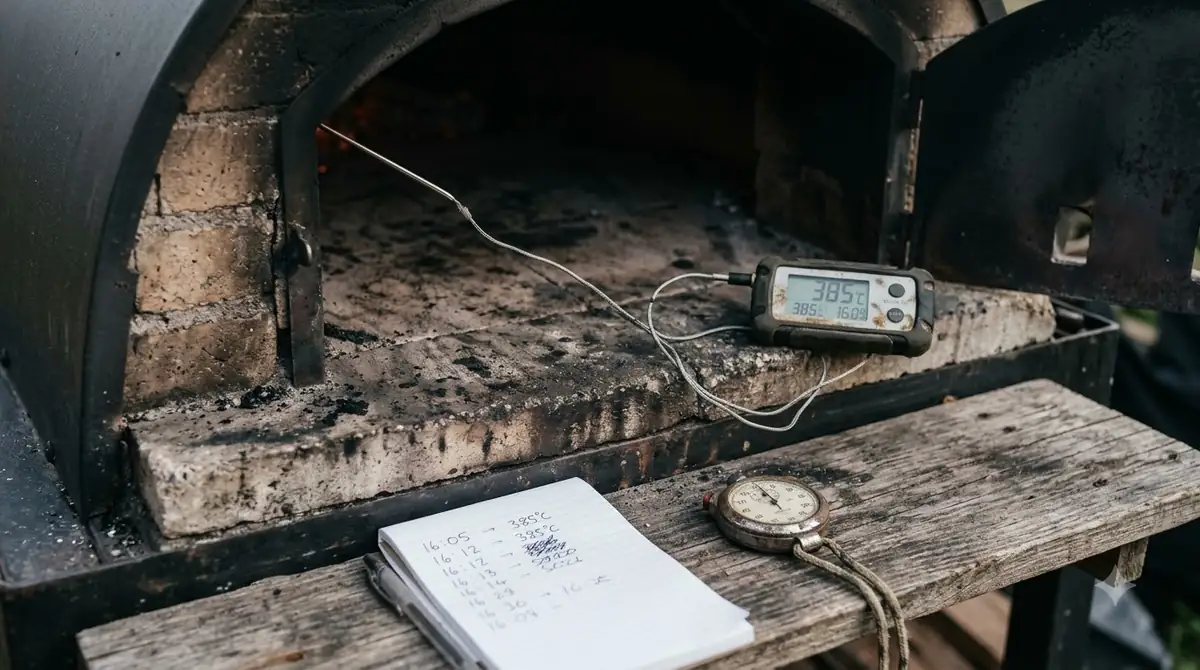
The reason is simple physics. Water in the wood must evaporate before the wood can burn, so wetter wood takes more energy to ignite and keep burning. That energy goes into boiling water rather than heating your oven dome and floor. For a wood for pizza oven, dry wood delivers more energy for heating than green wood of the same species.
The gap is large. Green wood can weigh 70 to 100 percent more than seasoned wood of the same kind, because the extra weight is water. The same source notes that green wood at 65% moisture contains less usable energy than the same wood dried to 20%. For a pizza oven, that difference shows up as slow heat-up, low dome temperature and a fire that smokes instead of blazing.
When you shop for wood for pizza oven use, look for three signals:
- A moisture reading of 20% or less, taken with a pin or pinless moisture meter.
- A label or receipt that shows when the wood was cut and split.
- Split pieces with cracks on the ends, dry-sounding knocks when two pieces are struck together, and bark that comes off easily.
How to Season and Store Firewood for Your Oven
Natural drying takes one to three years, according to the same firewood reference. Kiln or oven drying can reduce that to a number of days, which is why kiln-dried bundles are a practical option if you cannot wait.
If you season your own wood for pizza oven cooking, split it first. Split surfaces let moisture leave faster than the round log does. Stack the pieces off the ground on a rack or pallets with a gap between rows, so air moves through the pile. Cover only the top of the stack so rain cannot soak in while the sides can still breathe. Stored this way, the wood has time to reach a low moisture reading before the first pizza night.
Storage matters after you buy any wood for pizza oven stock, too. Wood that has been sitting in a damp garage can take on moisture again, so bring in only what you plan to burn within a few days. Check the moisture reading again before each cook if the weather has been wet.
The table below shows the timelines in plain terms. Use it as a planning tool, not as a guarantee, because local humidity and wood density change how fast a pile dries.
| Wood state | Moisture guide | Time to get there |
|---|---|---|
| Green, freshly cut | High, can weigh 70 to 100 percent more than seasoned wood | Not ready for a pizza oven |
| Naturally seasoned | 20% or less | One to three years |
| Kiln or oven dried | Dried to a low moisture level in a controlled process | A number of days |

Hardwood and Softwood: What the Labels Actually Tell You
Firewood is sorted as hardwood or softwood depending on the species of tree it came from, according to the Wikipedia firewood article. The label describes the tree, not the burn quality of the log.
That matters for a wood for pizza oven purchase. A bag marked hardwood still needs a moisture check, and a softwood bag with a low moisture reading may burn better than a wet hardwood bag. The source does not compare the heat output of the two groups, so do not assume one class is better on the label alone.
Use the label as a starting point for any wood for pizza oven choice, then check four details: the species name written on the bag, the moisture reading, the cut or split date, and the condition of the bark and ends. A seller who cannot name the species or give a moisture figure is asking you to trust a guess.
Heat Output: What BTU per Cord Means for Your Oven
Wood heat is often quoted as million British thermal units (BTU) per cord, and the Wikipedia firewood article gives a range of 15.5 to 32 million BTU per cord across species. A cord is a stacked volume of wood, so these figures describe how much heat a full cord holds, not how hot your oven will get.
The same source lists specific species as follows:
- Tamarack: 22.3 million BTU per cord
- Birch: 21.3 million BTU per cord
- Red fir: 20.6 million BTU per cord
- White fir: 16.7 million BTU per cord
Ask whether a species figure applies to the bag you are buying, because a listing for one species does not describe a mixed load. Those numbers are useful for comparing firewood by volume, but they do not tell you how a species behaves in a dome oven. Heat output also depends on how dry the wood is, how well it is split, and how much air reaches the fire. A dense, dry piece can outperform a light, wet one even when the BTU listing looks lower. An infrared thermometer shows how hot the dome and floor actually get when you burn wood for pizza oven cooking.
If you want a pizza-specific answer about wood for pizza oven fuel, check the manual for your oven. Many manufacturers name the fuel they design for, and that guidance overrides a general chart. For target dome temperatures, see our wood pizza oven temperature guide.
Woods and Fuels to Avoid in a Pizza Oven
Avoid painted, glued, varnished, or chemically treated wood, because burning these releases residues you do not want near food. Pallet boards are a common trap, since they are often treated or painted, and their origin is hard to confirm.
Wood high in resin and sap has a different smoke profile. The creosote entry on Wikipedia links creosote to incomplete combustion, where oils in the wood leave the fire as smoke volatiles. Burn with enough air and use dry wood to limit that residue.
We could not confirm from a primary source which species suit pizza ovens best. Search results name oak, maple, hickory, ash and beech, but those pages were thin and repetitive, so treat those names as unverified. Read the oven maker’s fuel guidance before you buy a full season’s supply of wood for pizza oven fuel.
Also avoid burning household trash, cardboard with coatings, and lighter fluid soaked wood. These fuels produce smoke and residue that are hard to clean from the oven floor, where a pizza oven brush helps with routine ash. Wondering about charcoal instead? Read can you use charcoal in a pizza oven.
Smoke, Creosote and Fire Safety With Pizza Oven Wood
Creosote forms when wood burns with too little air, and the Wikipedia creosote article describes it as a residue that condenses as smoke cools. That residue is highly combustible, and a thick buildup creates a chimney fire hazard, according to the same source.
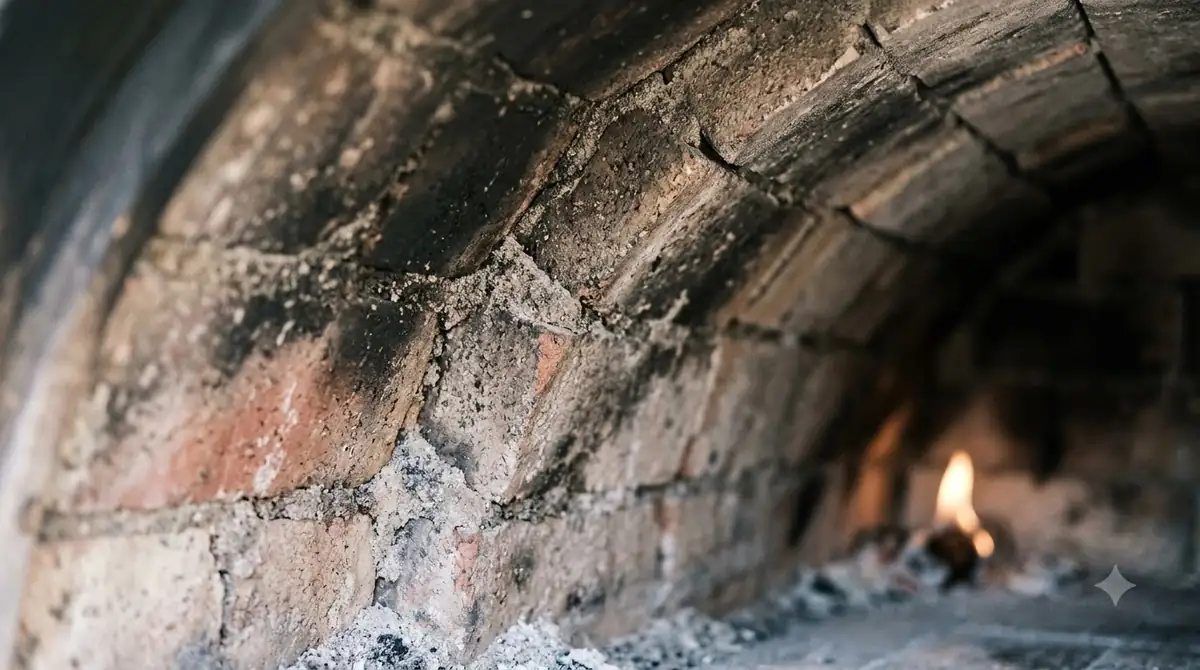
Keep these habits to lower the risk when you burn wood for pizza oven cooking:
- Burn dry wood with the air control open enough for a clean, bright flame, as covered in how to light a wood-fired pizza oven.
- Clean the flue on a schedule that matches how often you cook, and call a chimney sweep if deposits build up.
- Never leave a fire unattended, and keep a fire extinguisher or water source nearby.
The creosote source notes that chimney sweeps perform removal for a fee, which is the safest route when deposits are heavy. Plan the cleaning routine around how often you cook each week, not only the calendar, because a busy oven builds residue faster. Scope note: this advice applies to wood-burning appliances in general. Follow your oven maker’s instructions for clearance, ventilation and any local fire codes.
Frequently Asked Questions
Can I use pine as wood for pizza oven fuel?
We could not confirm from a primary source whether pine suits pizza ovens. Check your oven manual before burning softwood, and use only dry, seasoned wood for pizza oven cooking with a moisture reading of 20% or less either way.
How dry should wood for a pizza oven be?
Seasoned firewood usually has 20% or less moisture content, according to the Wikipedia firewood article. For wood for pizza oven use, a pin moisture meter gives a quick check before you load the fire. Once the logs are ready, pair them with one of the best natural fire starters for pizza ovens so the oven lights without smoke or a chemical smell.
How long does firewood need to season?
Natural drying takes one to three years, while kiln or oven drying can finish in a number of days. Stack split wood off the ground with air gaps and cover only the top of the pile.
Is kiln-dried wood worth buying for a pizza oven?
Kiln-dried wood saves the waiting time, and it still needs a moisture check at delivery and before each cook. Ask the seller for the species and the reading, and avoid bundles with no information at all.
Can I burn pallet wood in my pizza oven?
Pallet wood is often treated, painted, or stamped with chemicals, and its origin is hard to confirm. Use clean, untreated, seasoned wood with a known species instead.
Choose a wood for pizza oven use by checking moisture first, then species, then the seller’s paperwork. Dry, seasoned wood gives steady heat and less residue. Confirm the fuel guidance in your oven manual before you commit to a season’s supply.
 9 min readGear & PantryBest Wood Pellets for Pizza Oven: Types and How to ChooseUpdated Nov 10, 2026
 9 min readGear & PantryBest Pizza Oven Fire Starters: What to Choose for a Wood-Fired OvenUpdated Nov 17, 2026
 5 min readGear & PantryBest Mozzarella for Pizza: Low-Moisture or Fresh at HomeUpdated Nov 13, 2026
 9 min readGear & PantryBest Cover for Solo Stove Pi: Fit, Safety and Storage ChecksUpdated Nov 11, 2026
 9 min readGear & PantryPizza Oven Brush Guide: 4 Easy Bristle Types ComparedUpdated Nov 10, 2026
 8 min readGear & PantryPizza Oven Table: How to Choose a Stand That Is Stable and Heat-SafeUpdated Nov 17, 2026