
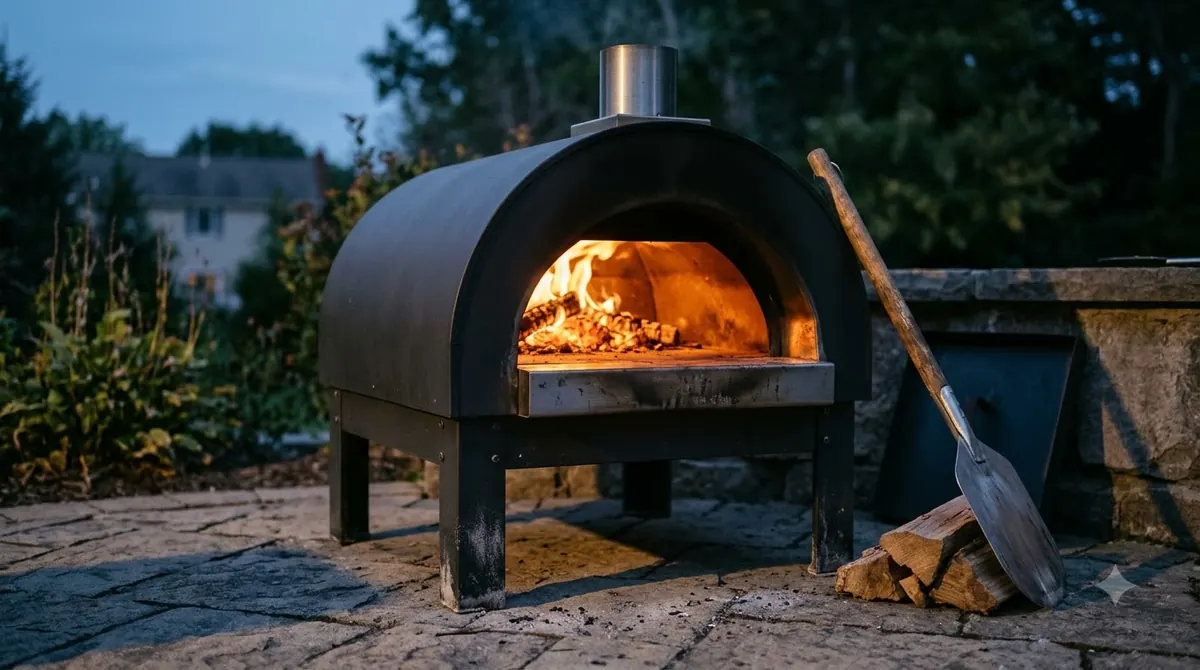

A pizza oven producing too much smoke is usually burning wood that still holds too much water. Wood with moisture below 20% gives off far less smoke, according to university extension guidance, so dry fuel is the first thing to check. Test your wood before you change anything else.
Fuel is the most common suspect, but airflow, the flue and leftover residue can also keep smoke rising. Work through the causes below in order, starting with the wood in your pile.
Causes of a Pizza Oven Producing Too Much Smoke
Wetter wood produces more smoke and less heat, according to University of Illinois Extension’s firewood burning guide. Water in the wood has to boil off before the fuel can burn cleanly, so a pizza oven producing too much smoke often has a fuel problem before it has an oven problem.
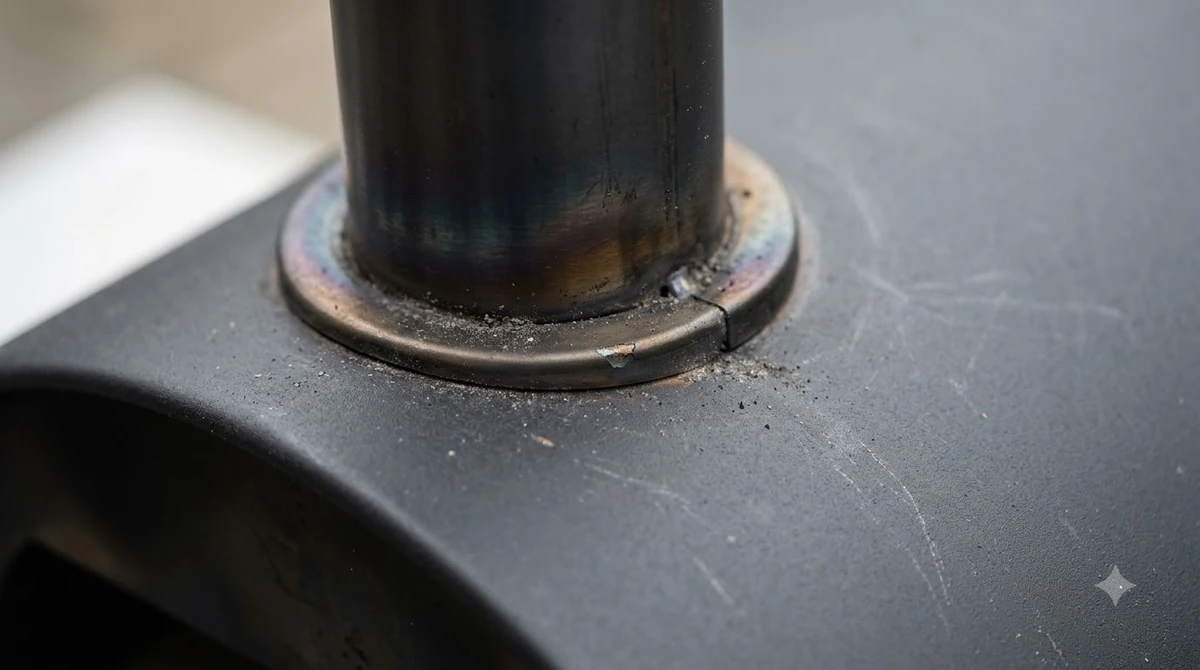
Damp wood also burns at a lower temperature. University of New Hampshire Extension describes this as incomplete combustion, which releases more smoke. A fire that never gets hot enough will keep smoldering, and the smoke you see is unburned fuel leaving the chamber. For a pizza oven producing too much smoke, this is usually the first thing to rule out.
The most common causes of a smoky fire are easy to group:
- Freshly cut or stored wood that has not dried long enough.
- Wood that has taken on moisture from rain or a damp woodpile.
- Too much fuel added at once, which can smother the flame.
- Restricted airflow through the door, vents or flue.
- Old soot, ash or food residue that smokes when it heats again.
Smoke from burning green wood also adds to creosote buildup in chimneys, as the same Illinois guide notes. A pizza oven flue is not a home chimney, but the same fuel problem leaves deposits, so fixing the wood protects the flue as well as your cooking.
How to Check Whether Your Wood Is Dry Enough
Dry firewood shows deep cracks at the ends, rings when struck and reads below 20% on a moisture meter, according to University of New Hampshire Extension. You can run these checks in a few minutes before you light the oven. They matter most when a pizza oven producing too much smoke has been fed from the same pile before.
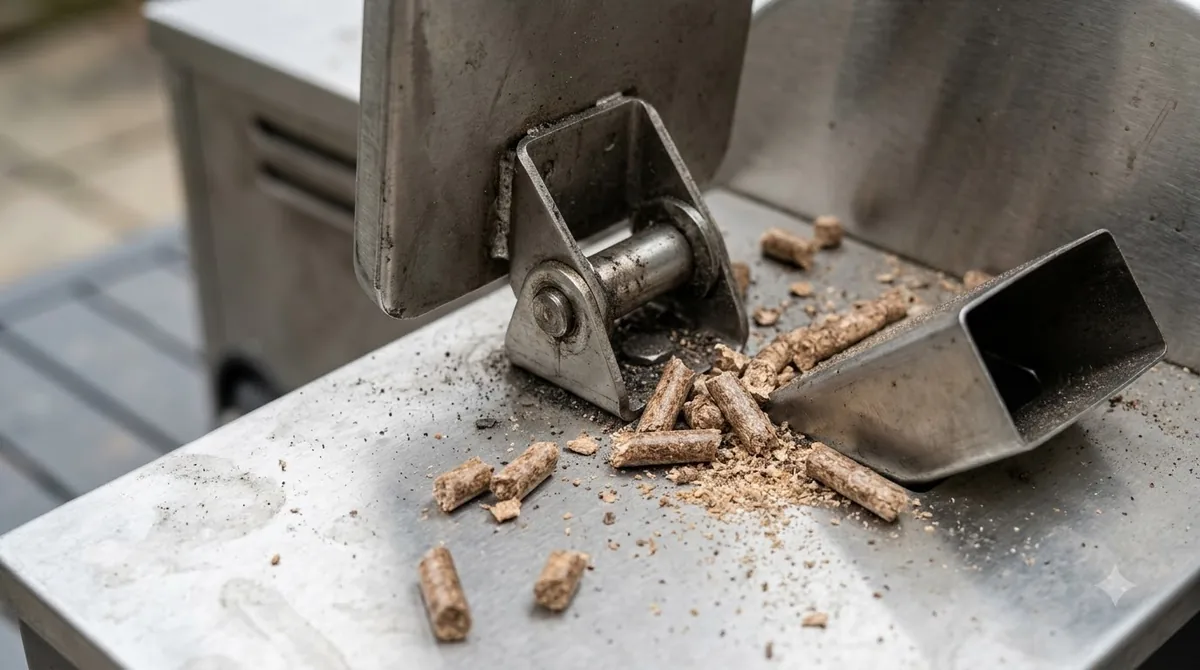
Start with the ends of the split pieces, because a pizza oven producing too much smoke often has a mixed pile where only some pieces are wet. Deep radial cracks at the ends of split logs are one sign of dryness, and the Illinois guide adds that small splits in the ends are a good indicator of low moisture. Wood without those signs should stay out of the oven until it has dried longer.
Sound and weight are the next checks. Knock two pieces together. Dry wood makes a clinking sound, while green wood sounds more subdued.
| Check | Dry wood | Wet wood |
|---|---|---|
| Ends of split pieces | Deep radial cracks | Few or no cracks |
| Sound when struck | Rings on impact | Thuds |
| Knocked together | Clinking sound | Subdued sound |
| Moisture meter reading | Below 20% | Above 20% |
A moisture meter is the most reliable test for a pizza oven producing too much smoke, according to the New Hampshire guide, which advises checking several pieces from different places in the pile. A single split piece from the top of the stack can mislead you, so test from the middle and the bottom as well.
Give Your Wood Enough Time to Dry
Firewood needs time before it is ready to burn. University of New Hampshire Extension advises that wood burned indoors should be dry and seasoned for at least 6 to 12 months. Pizza ovens burn the same kind of wood, so the same rule is a safe starting point until your own moisture readings confirm the wood is ready. For species, see our guide to the best wood for a pizza oven.
Drying speed depends mostly on what happens after the tree is cut. University of Alaska Fairbanks researchers found that drying time is set primarily by the conditions following the harvest. Their guidance also says to cut and stack wood to length right away, because stacking whole logs leads to much longer drying times.
Store the wood off the ground and under cover, but with air moving around it. A tarp that traps moisture underneath can slow drying and put damp wood back into your fuel supply.
Firing Habits That Stop a Pizza Oven Producing Too Much Smoke
Even dry wood can smoke if the fire is starved of air or fed too much at once. Once the wood is dry, a pizza oven producing too much smoke is often a firing problem rather than a wood problem. Build the fire so the flame establishes first, then add fuel in small amounts as the oven heats. Our guide to lighting a wood-fired pizza oven walks through the sequence.
The Alaska guidance adds one more point: the wood needs to be dry in the 10% to 20% range to burn efficiently. Wood drier than 10% burns more quickly and gives less useful heat. A pile that is very dry can therefore burn fast and leave the oven under-heated, which makes it tempting to add more fuel and create more smoke.
- Start with dry kindling and small pieces, since a pizza oven producing too much smoke is easiest to control from the first minutes.
- Let the flame establish before you add larger logs.
- Add each load in small amounts rather than a full chamber.
- Keep an eye on the smoke color as the oven heats.
A common mistake is to pile in wood to get the oven hot faster. That usually smothers the flame and turns the fire into a smoky one. Patience with a small, clean fire is the easier fix, and our guide to keeping a pizza oven fire going covers the feeding rhythm.
Airflow, Flue, and Cleaning Checks
If the wood is dry and smoke continues, look at airflow and the flue next, since a pizza oven producing too much smoke with dry fuel usually has a restricted path for air or gas. Air feeds the fire, so a restricted door, vent or flue can keep the fire smoldering even with good fuel.
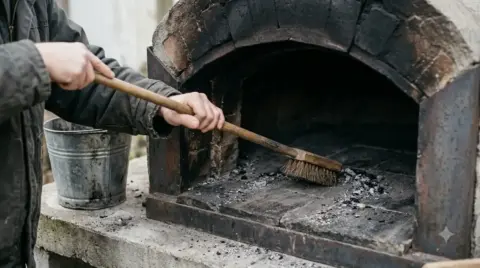
Cleaning matters too. Ash, burnt food and soot left from earlier cooks can smoke again when the oven heats up. Clear the ash and residue the way your manual describes, and keep the flue opening free of debris. Our guide to cleaning a wood-fired pizza oven covers the routine.
This guide does not give a specific airflow setting for any model. Clearance, damper positions and cleaning intervals differ between brands, so use your oven’s own manual for those details.
When Smoke Signals a Safety Problem
Smoke that keeps coming after you switch to dry wood and fix airflow is a reason to stop and check the manual. Heavy or dark smoke is a sign to stop cooking and check the manual before you keep troubleshooting.
Gas ovens follow different rules. The Gozney Dome technical manual lists clear steps for a gas smell: do not try to light any appliance, do not touch any electrical switch, and call your gas supplier from a neighbor’s phone. If a gas oven smells of gas, treat it as a safety event rather than a smoke problem.
Points This Article Could Not Confirm
Some common claims about a pizza oven producing too much smoke were not confirmed on a manufacturer page for this guide, so they are left out of the advice above. Treat the following as questions for your manual or the brand’s support team.
- Whether smoke at lighting is normal for your specific model, and for how long.
- The moisture limits a brand gives for its own pellets or logs.
- Which wood species smoke the most in your oven.
- What dark smoke means for your model, beyond the general wet-wood cause.
Check the manual’s fuel list, the brand’s support pages and your own moisture meter readings. Those three sources give the most reliable answers for your oven, and Gozney owners can also read our Gozney Dome smoking guide.
Frequently Asked Questions
Is some smoke normal when I light a pizza oven?
Some smoke at lighting is common, but it should thin as the fire takes hold and the oven heats. If a pizza oven producing too much smoke keeps smoking after the oven is hot, check the wood and the fuel load. If smoke stays heavy, check the wood’s moisture and how much fuel you added. Your manual sets the expected behavior for your model.
Does wet wood make a pizza oven smoke more?
Yes. Wetter wood produces more smoke and less heat, according to University of Illinois Extension. For a pizza oven producing too much smoke, wet wood is the first suspect. Water has to boil off before the wood can burn cleanly, which leaves the fire smoky and slow to heat.
What moisture level should firewood be before I burn it?
Below 20% is the level both University of Illinois and University of New Hampshire Extension give. University of Alaska Fairbanks identifies 10% to 20% as the most efficient range for burning.
How long should firewood dry before a pizza oven?
University of New Hampshire Extension advises at least 6 to 12 months for firewood burned indoors. Use that as a minimum, then confirm dryness with a moisture meter or the crack and sound checks above.
What does black smoke from a pizza oven mean?
Dark smoke that continues after you switch to dry wood and clear the airflow means you should stop and check the manual. This guide did not confirm what dark smoke signals for each model, so do not guess at the cause.
Start with the wood, since damp fuel is the cause this guide can support most clearly. If a pizza oven producing too much smoke still smokes with dry wood, check airflow, the flue and cleaning in your manual before you add more fuel. Treat any gas smell as a safety matter, not a tuning issue.
 7 min readBy Use & ModelOoni Fyra 12 Wood Pellets: What to Burn and How MuchUpdated Nov 8, 2026
 8 min readBy Use & ModelOoni Koda 12 Won’t Light? Step-by-Step FixesUpdated Nov 10, 2026
 8 min readBy Use & ModelHow to Connect a Propane Tank to a Pizza OvenUpdated Nov 15, 2026
 9 min readBy Use & ModelHow to Move a Pizza Oven SafelyUpdated Nov 11, 2026
 10 min readBy Use & ModelHow to Keep a Pizza Oven Fire Going Without Smothering ItUpdated Nov 11, 2026
 9 min readBy Use & ModelHow to Clean a Wood Fired Pizza Oven SafelyUpdated Nov 11, 2026