
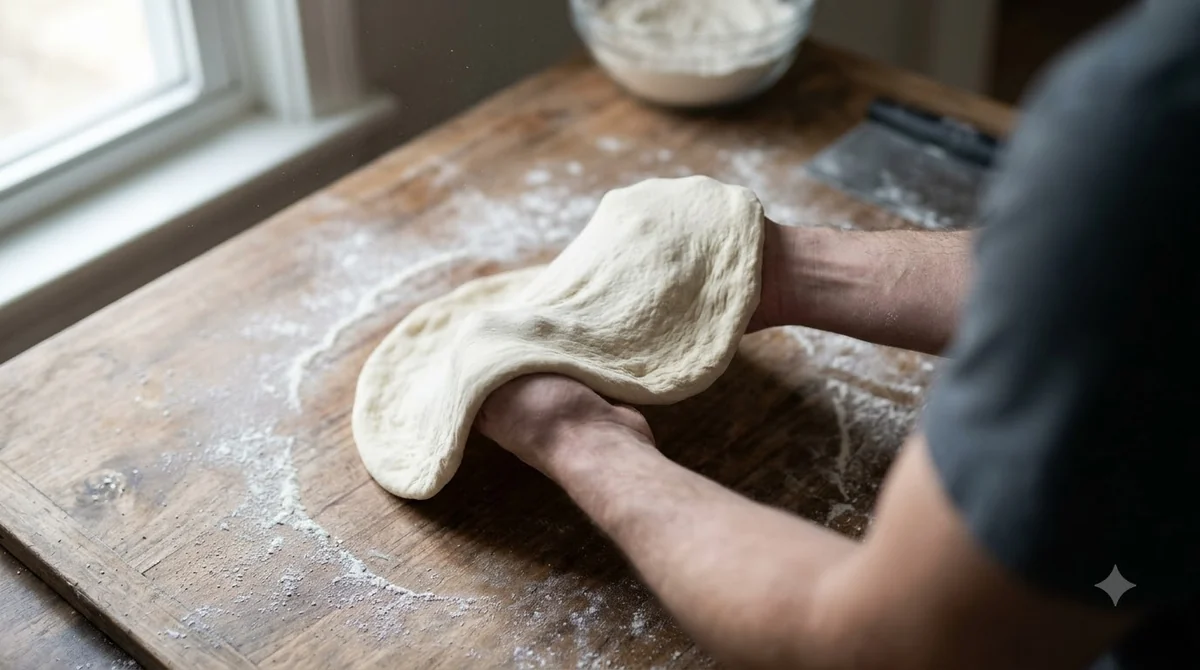

Knowing how to make pizza crust puffy comes down to three things: a wetter dough, a generous rise, and a very hot oven. A dough around 70% hydration, fermented properly and baked at high heat, produces a light, open crumb and a crust that puffs up around the edge. Each step matters, and the oven temperature matters most for the final rise.
A puffy crust is not the same as a thick crust. Thick pizza is dense and bready, while a puffy pizza has big air pockets in the crumb and a soft, airy edge. The good news is that you do not need special equipment to get closer to that result. You need a dough with enough water, careful handling so the gas stays in the dough, and an oven that is fully hot before the pizza goes in.
Why Does Hydration Make a Crust Puffy?
Hydration is the weight of water divided by the weight of flour, shown as a percentage. A dough at 70% hydration holds 700 g of water for every 1000 g of flour.
The Ooni guide to dough hydration describes a 70% dough as stretchy and sticky, and says that once baked it has an open crumb with large, irregular holes and a crispy base. More water gives steam more room to push the dough up, which is the source of the puff. The trade-off is that a wetter dough is harder to shape, so you need to work quickly and gently.
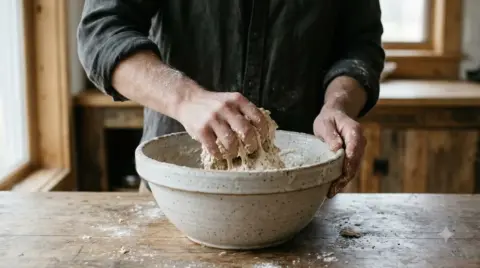
When you learn how to make pizza crust puffy, the first habit to build is accepting a dough that feels a little wet. Judge the dough by how it behaves after a short rest, not by how it looks in the bowl.
If your dough is too wet for your hands, do not add flour right away. Let it rest for a few minutes and try again, because the dough often firms up as the gluten relaxes.
How to Make Pizza Crust Puffy Through Fermentation
A slow, cool fermentation builds the gas and flavor that a puffy crust depends on, and a dough that is rushed usually bakes flat and dense.
Give the dough enough time to rise, then shape it into balls and let them rest before stretching. Dough that is still tight will not puff properly in the oven. Keep the dough covered so the surface does not dry out, since a dry skin stops the edge from expanding evenly.

Fermentation times vary with temperature, yeast amount and flour, so check the dough by feel and appearance rather than by the clock alone. A well-risen ball feels soft and airy, and it springs back slowly when pressed.
How Do You Stretch Dough Without Deflating It?
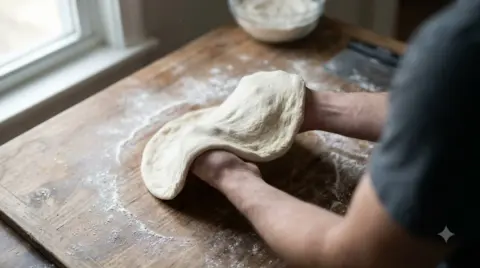
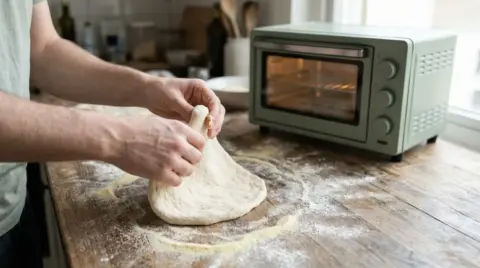
Stretch the dough by hand from the centre outward, and leave a thicker rim at the edge, since that rim is the part that puffs.
Avoid a rolling pin, which pushes out the gas and leaves a flat, dense disc. Lift the dough over your knuckles and let gravity do some of the work. Handle the edge gently, because pressing it hard squeezes out the air pockets you are trying to keep.
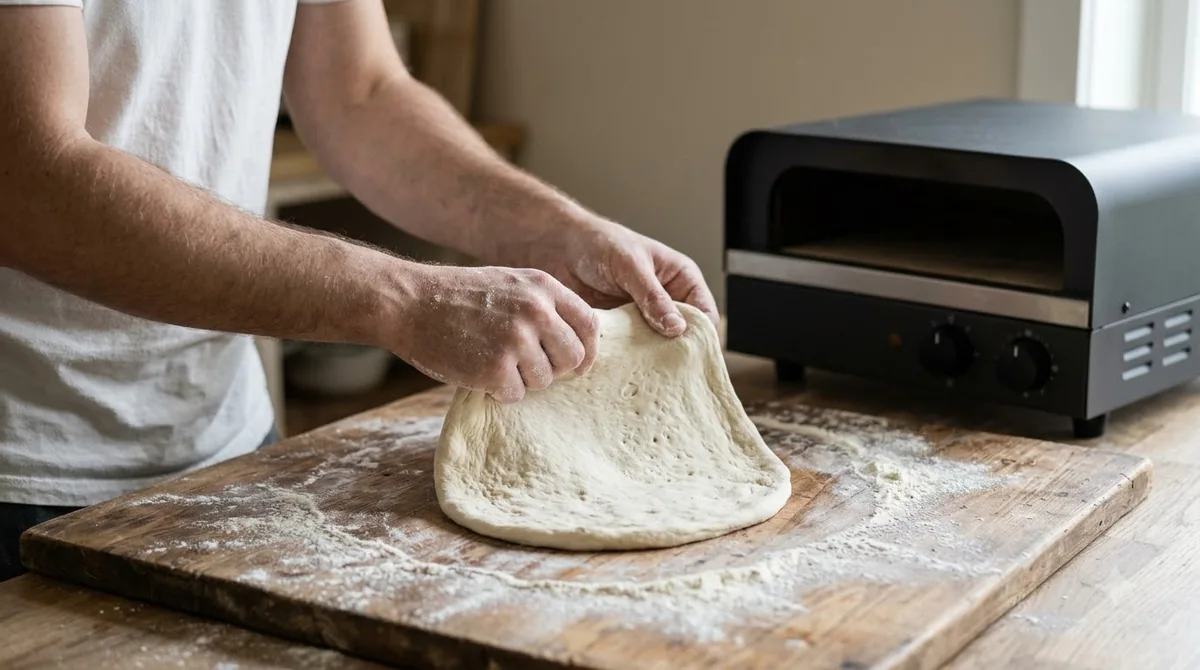
Dust the peel lightly with semolina or flour so the dough slides off, and move the pizza with a confident, single motion.
What Oven Temperature Makes Pizza Crust Puff?
The crust puffs fastest in a very hot oven, where the steam and gas expand quickly before the outside sets.
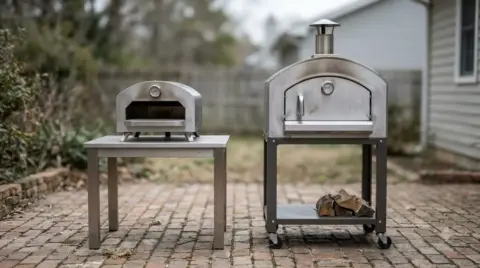
The Alfa Forni guide to baking Neapolitan pizza gives a range of 430 to 500 °C (800 to 930 °F) and a bake time of 60 to 90 seconds, and it notes that home ovens may take 2 to 3 minutes. The same guide says to turn the pizza 180 degrees every 20 to 30 seconds so it browns evenly, which also helps the edge rise on all sides.
A standard home oven usually tops out near 500 °F, so the result will be softer and slower. Preheat the oven and stone or steel for a full hour so the floor is hot enough to set the base before the top overcooks.
Common Mistakes That Flatten a Crust
Most flat pizzas come from the same few mistakes, and each one is easy to fix. Knowing these pitfalls is as useful as knowing the right steps, because a single error can undo a good dough.
- Too much flour on the dough: it dries the surface and stops the edge from expanding.
- Pressing out the air: stretch from the centre and keep the rim thick.
- A cool oven: the dough heats slowly, and it dries out before it puffs.
- Overproofing: a dough that has risen too long collapses and bakes dense.
Frequently Asked Questions
Does a higher hydration always make a puffier crust?
Not always. More water helps the open crumb, but a dough that is too wet is hard to shape and can bake unevenly. Around 70% is a common starting point for home cooks who want an airy result.
Can I make a puffy crust without a pizza oven?
Yes, but the result will usually be softer and slower to set than in a very hot pizza oven. Preheat your oven and baking surface fully, and use the highest setting it can reach.
Why does my pizza crust come out dense?
Dense crust usually points to too little rise, a dough that was deflated during shaping, or an oven that was not hot enough. Check the dough after fermenting and handle the edge gently.
Should I turn the pizza during baking?
In a very hot oven, yes. Turning the pizza a half turn every 20 to 30 seconds helps the edge brown and rise evenly, as the Alfa Forni guide recommends.
A puffy crust comes from a wetter dough, patient fermentation, gentle stretching and a very hot oven. Change one thing at a time so you can see what made the difference. Keep notes on hydration and bake time, and the next pizza will come out a little lighter.
 8 min readLearnWhat Is Pizza Hydration and Why It Changes Your CrustUpdated Nov 10, 2026
 8 min readLearn70 Hydration Pizza Dough Recipe: What 70% Water Does to Your CrustUpdated Nov 10, 2026
 9 min readLearnHot Honey Pizza Recipe: Sweet Heat on a Homemade CrustUpdated Nov 6, 2026
 5 min readLearnHow to Make Calzone Dough: Flour Blend, Rise Time and Make-Ahead TipsUpdated Nov 13, 2026
 6 min readLearnHow to Make Low Carb Pizza Crust With Almond Flour and CheeseUpdated Nov 13, 2026
 8 min readLearnStuffed Crust Pizza Recipe: How to Make a Cheese-Filled Rim at HomeUpdated Nov 11, 2026