
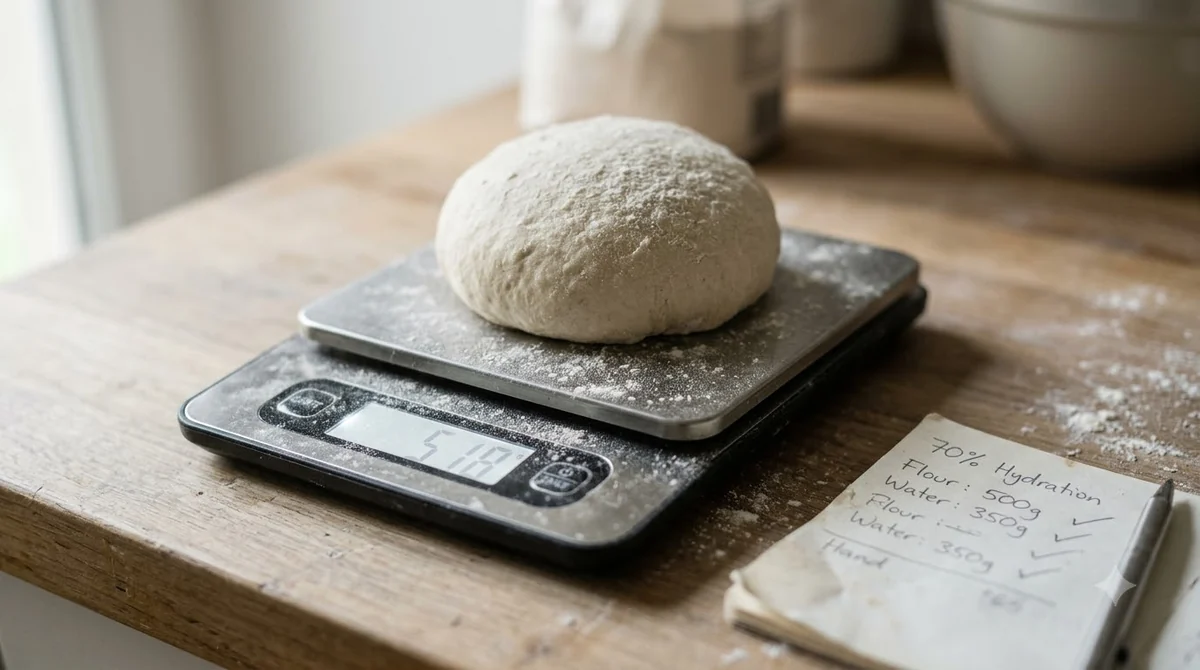

A 70 hydration pizza dough recipe uses 700 g of water for every 1,000 g of flour, which is 70 percent of the flour weight. Hydration is simply the water in a recipe measured against its flour, and 70 percent is where pizza dough starts to feel wet and stretchy.
The dough bakes into a softer, more open crust than drier doughs, but it is stickier to shape. Weigh every ingredient in your 70 hydration pizza dough recipe and work slowly.
What Does 70 Hydration Mean in Pizza Dough?
70 hydration means the dough holds water equal to 70 percent of the flour weight, so 1,000 g of flour takes 700 g of water.
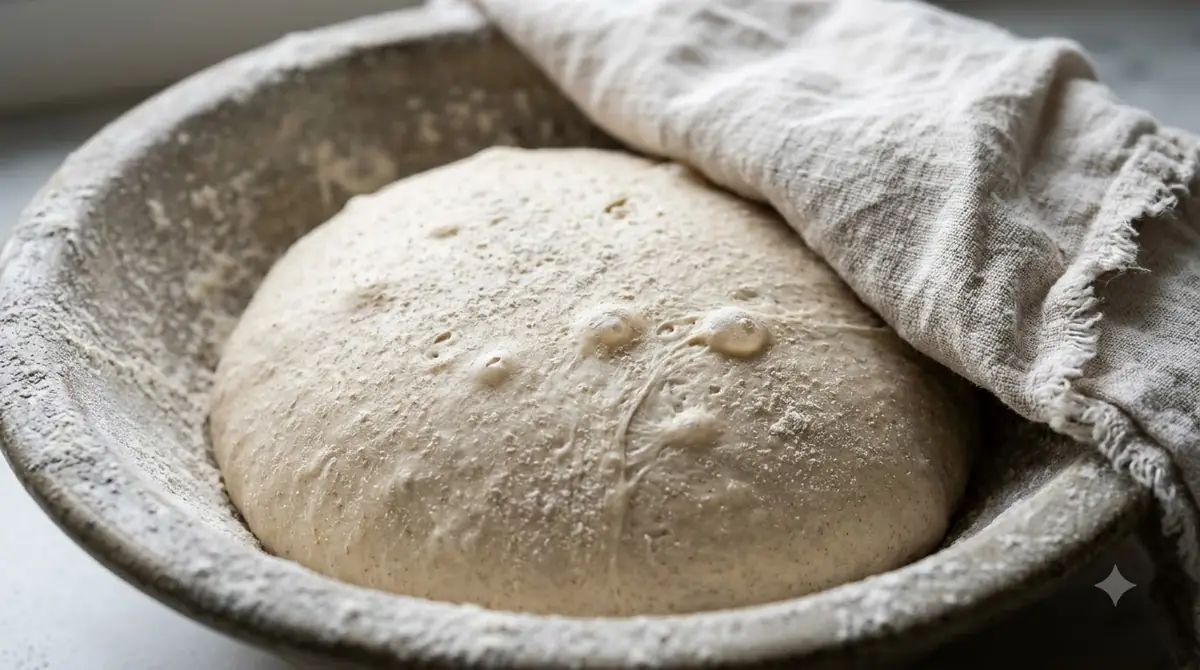
Bakers write hydration as a baker’s percentage. Flour is always 100 percent, and every other ingredient is a share of the flour weight. Gozney’s hydration guide gives the simple case: 1,000 g of flour and 600 g of water is 60 percent hydration. Keep the same flour and raise the water to 700 g, and the dough is 70 percent.
Because every ingredient is measured against flour, the percentages describe the ratio, not how wet the dough looks in the bowl. A dough can look sticky at one percentage and firm at another, depending on the flour and how it is mixed. Use the ratio in this 70 hydration pizza dough recipe as your starting point, and adjust by feel after the first mix. Ooni also notes that higher hydration increases yield, so the same flour makes more dough.
70 Hydration Pizza Dough Recipe: The Baker’s Math
A typical pizza formula is 100 percent flour, 65 to 70 percent water, 3 percent salt and 0.2 percent yeast, according to Baking Steel’s baker’s percentage guide. Its worked example uses 70 percent water.
| Ingredient | Baker’s percentage | Amount for 1,000 g flour | Amount for 500 g flour |
|---|---|---|---|
| Flour | 100% | 1,000 g | 500 g |
| Water | 70% | 700 g | 350 g |
| Salt | 3% | 30 g | 15 g |
| Yeast | 0.2% | 2 g | 1 g |
The gram amounts in the table are calculated by multiplying each percentage by the flour weight. The percentages come from the Baking Steel formula, and the grams follow from simple arithmetic. To scale the same ratios to a different number of dough balls, use a pizza dough calculator.
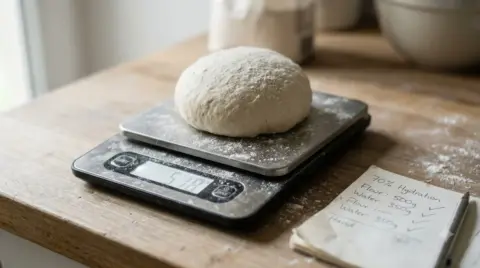
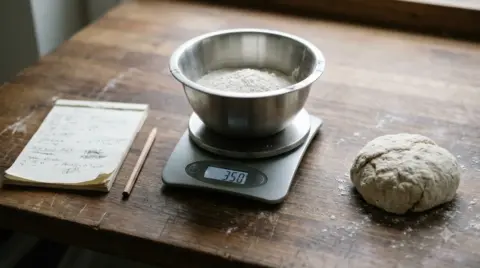
Weigh the flour rather than scooping it, because a 70 hydration pizza dough recipe depends on exact grams. Ooni notes that flour volume can vary by several percentage points, which is enough to turn a 70 percent dough into a noticeably drier one. A digital scale that reads grams is the single most useful tool for this recipe.
Yeast is the easiest ingredient to get wrong. Baking Steel points out that a change of only 0.1 g can shift fermentation time and final texture. The page does not name a yeast type, so check your package for how much to use for your type.
How 70 Percent Dough Handles Compared With Lower Hydration
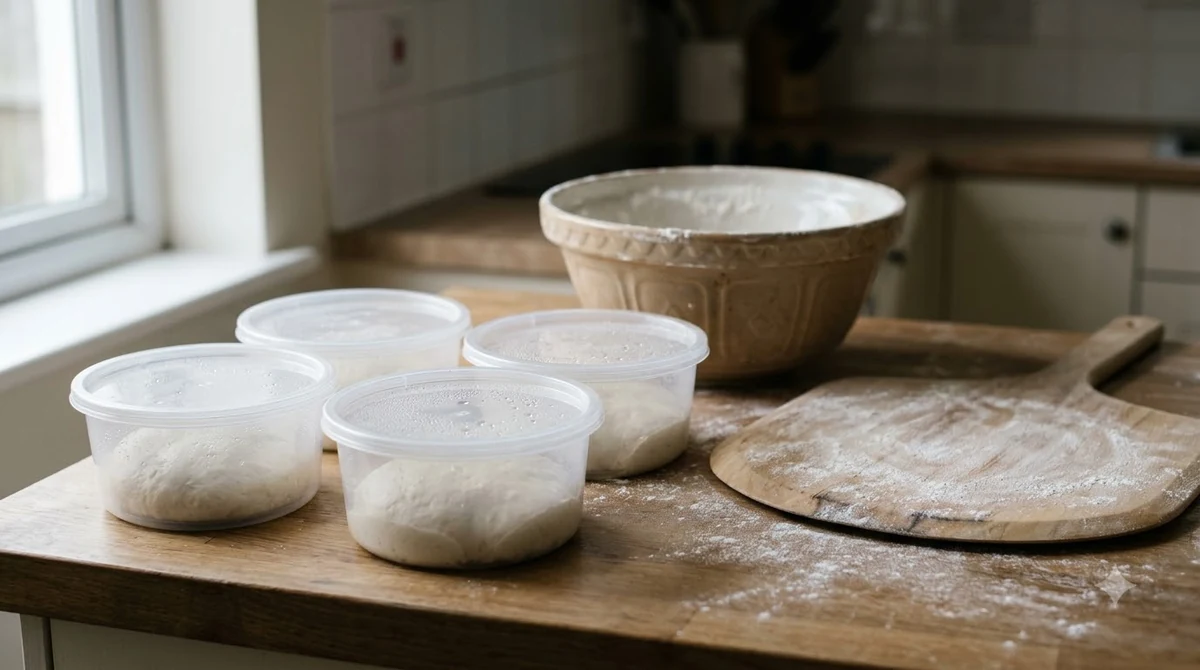
A 70 hydration pizza dough recipe is stretchier and stickier than a 60 percent dough, so it is harder to shape, but it gives a lighter, more open crust.
| Hydration | How the dough feels | Typical result |
|---|---|---|
| 60% | Easier to handle, not sticky | Crispier base |
| 65% | Firmer, needs more kneading and stretching | Tighter crumb |
| 70% | Stretchy and sticky, harder for beginners | Lighter, softer crust with an open crumb |
| 75% and above | Increasingly challenging | Highest yield, most skill needed |
Ooni’s hydration explainer describes 70 percent dough as stretchy and sticky, with an open crumb full of irregular holes and a crispy base. It also suggests testing 75 percent, then 80 percent, then 90 percent when you want to go higher, because each step adds more water and more yield. Gozney adds that the best hydration depends on the texture you want, how you bake and the flour you use, so this 70 hydration pizza dough recipe is a starting point to test rather than a fixed rule. When 70 percent feels comfortable, our guide to high hydration pizza dough covers the steps above 75 percent.
Baking Steel says lower hydration, around 60 to 62 percent, is easier to handle. It describes 65 to 70 percent or more as capable of a lighter, airier crust, especially when baked on a steel. It also says most home pizza dough recipes fall between 60 and 70 percent hydration, so 70 percent sits at the upper end of the usual home range.
Step-by-Step: Mixing and Handling 70 Percent Dough
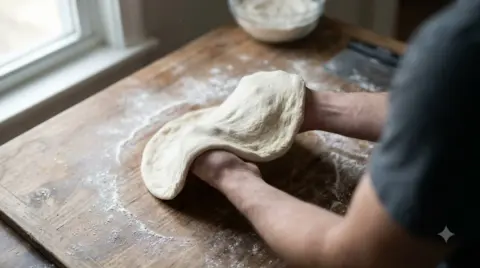
Mix this 70 hydration pizza dough recipe until no dry flour remains, then rest and shape the dough with wet hands rather than a heavy dusting of flour.
- Weigh the flour, water, salt and yeast on a digital scale.
- Mix the flour and water first until no dry flour is left, then add the salt and yeast.
- Rest the dough for the time your recipe gives, so the flour fully absorbs the water.
- Wet your hands when you shape the dough. Ooni suggests wetting hands rather than dusting with flour at 70 percent and beyond.
- Avoid adding flour during kneading, because extra flour lowers the final hydration.
- Check the dough early. Gozney notes that extra water speeds up yeast activity, so the dough can rise faster than a drier dough.
- Dust the peel well before loading the dough. Gozney notes that wetter dough is stickier and can stick to the peel when moved to the oven.
Gozney also notes that wetter dough becomes more elastic, and that the softer gluten lets larger air pockets form. That is why a 70 hydration pizza dough recipe puffs more at the edge and bakes into a more open, airy crust. For the shaping itself, see how to stretch pizza dough without tearing the skin. If you want softer, more extensible gluten without extra kneading, try autolyse pizza dough, where flour and water rest before the rest of the ingredients go in.
What Changes the Real Hydration of Your Dough
Humidity, flour added during kneading and altitude can move the real hydration of a recipe away from the 70 hydration pizza dough recipe you planned.
- Humidity: high humidity raises effective hydration because flour takes moisture from the air.
- Added flour: flour added during kneading lowers the final hydration.
- Added water: water added during kneading raises it, so measure it in grams.
- Altitude: flour is drier at high altitude, so the dough may need more water.
These effects all come from the same logic: the ratio in a 70 hydration pizza dough recipe is only a plan, and the dough’s final water content depends on what actually goes into the bowl.
Baking 70 Percent Dough at Home
Baking Steel says a 70 hydration pizza dough recipe, in the 65 to 70 percent range, can produce lighter, airier crusts, especially when the dough is baked on a steel.
Ooni describes the bake of a 70 hydration pizza dough as giving an open crumb with irregular holes and a crispy base. That result depends on your oven, your flour and the bake time, so test one small batch before you bake a full tray. If the dough fights you at this stage, our notes on pizza dough that is too sticky explain the usual causes.
What This Article Does Not Verify
The sources read for this guide did not confirm four details, so this 70 hydration pizza dough recipe gives ratios and checks in place of numbers for them.
- Flour protein and brand: the sources read did not give a value. Check the protein figure on your bag and compare it with the recipe you follow.
- Yeast type: the Baking Steel formula does not name one. Follow the guidance on your yeast package for your type.
- Rest and proof times: no time was confirmed. Use the rest time in your own recipe and judge the dough by its size and feel.
- Home oven temperature and bake time: no value was confirmed. Use your oven’s manual and an oven thermometer.
Frequently Asked Questions
What is the water ratio for a 70 hydration pizza dough recipe?
In a 70 hydration pizza dough recipe, the ratio is 700 g of water for every 1,000 g of flour, which is 70 percent of the flour weight. Baking Steel’s formula adds 3 percent salt and 0.2 percent yeast on top of that ratio, so those ingredients are calculated from the flour weight too.
Is a 70 hydration pizza dough recipe hard to make?
A 70 hydration pizza dough recipe is harder than a 60 or 65 percent dough. Ooni describes 70 percent dough as stretchy and sticky, and harder for beginners to shape. Wet hands and a scale make the process much easier.
Why does my 70 hydration pizza dough stick to the peel?
Wetter dough is stickier, and Gozney notes it can stick to the peel when you move it to the oven. Dust the peel generously and launch the pizza with a quick, confident motion. If a pizza still catches, read about pizza sticking to the peel.
Does 70 percent hydration make a lighter crust?
Yes, according to Baking Steel, which says 65 to 70 percent or more can produce a lighter, airier crust. The larger air pockets in a 70 hydration pizza dough also give the open crumb that Ooni describes.
Should I weigh flour or measure it by cup?
Weigh it. Ooni notes that flour volume can vary by several percentage points, so a cup measure can change the hydration you actually get.
Is 70 percent dough too wet for a home oven?
The sources read for this guide do not give a home oven limit. Baking Steel says most home pizza dough recipes fall between 60 and 70 percent, so 70 percent is within the usual range. Test one small batch in your own oven first.
Start with a 65 percent dough if this 70 hydration pizza dough recipe feels too wet at first. Move to 70 percent once your scale is accurate and you can shape the dough without tearing it.
 9 min readLearnRoman Pizza Dough Recipe: Hydration, Flour and MethodUpdated Nov 7, 2026
 8 min readLearnWhat Is Pizza Hydration and Why It Changes Your CrustUpdated Nov 10, 2026
 5 min readLearnHow to Make Pizza Crust Puffy: Hydration, Rise and HeatUpdated Nov 13, 2026
 9 min readLearnStarchy Pasta Water for Sauce: What It Does and How to Use ItUpdated Nov 10, 2026
 8 min readLearnHigh Hydration Pizza Dough: What It Is and How to Handle ItUpdated Nov 10, 2026
 7 min readLearnPizza Dough Hydration Chart: What Each Percentage MeansUpdated Nov 11, 2026