
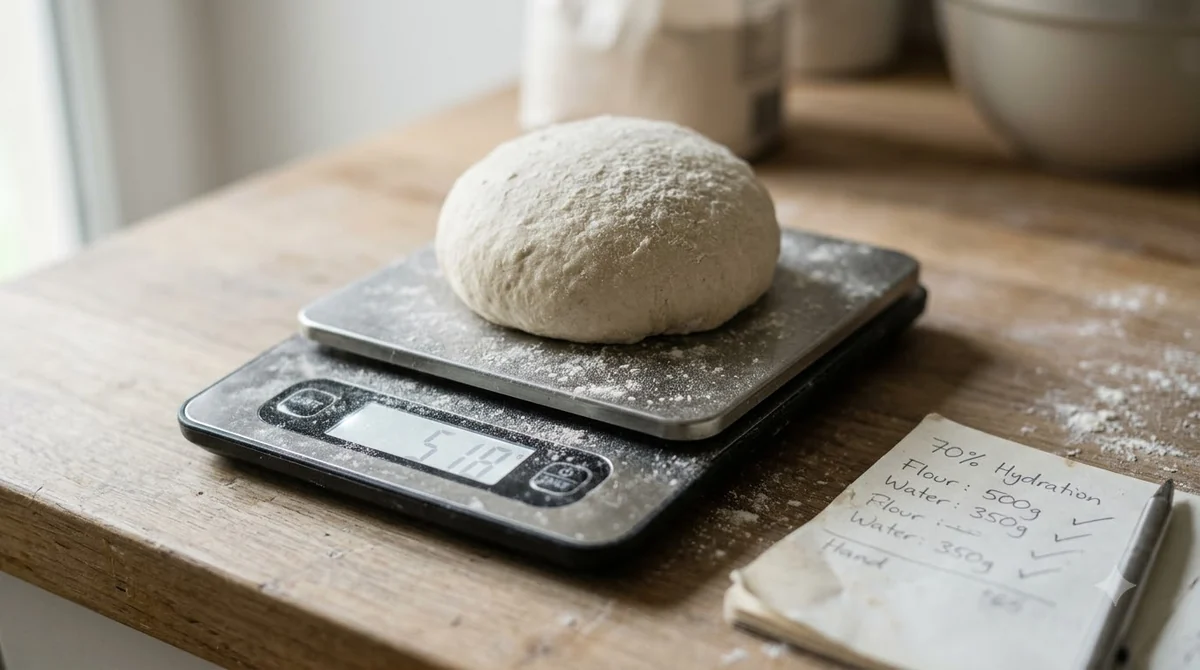

In plain terms, what is pizza hydration comes down to one ratio: the weight of water divided by the weight of flour, shown as a percentage. A dough with 600 g of water and 1000 g of flour has 60% hydration. That single number tells you how wet the dough is and how it will behave.
Knowing what is pizza hydration helps you predict how the dough stretches, how sticky it feels and what the crumb looks like. Wetter doughs give a lighter crust but are harder to shape, so the right number depends on your style and skill.
What Is Pizza Hydration and What Does It Measure
Pizza hydration is the water weight divided by the flour weight, multiplied by 100, so 600 g of water in 1000 g of flour gives 60%.
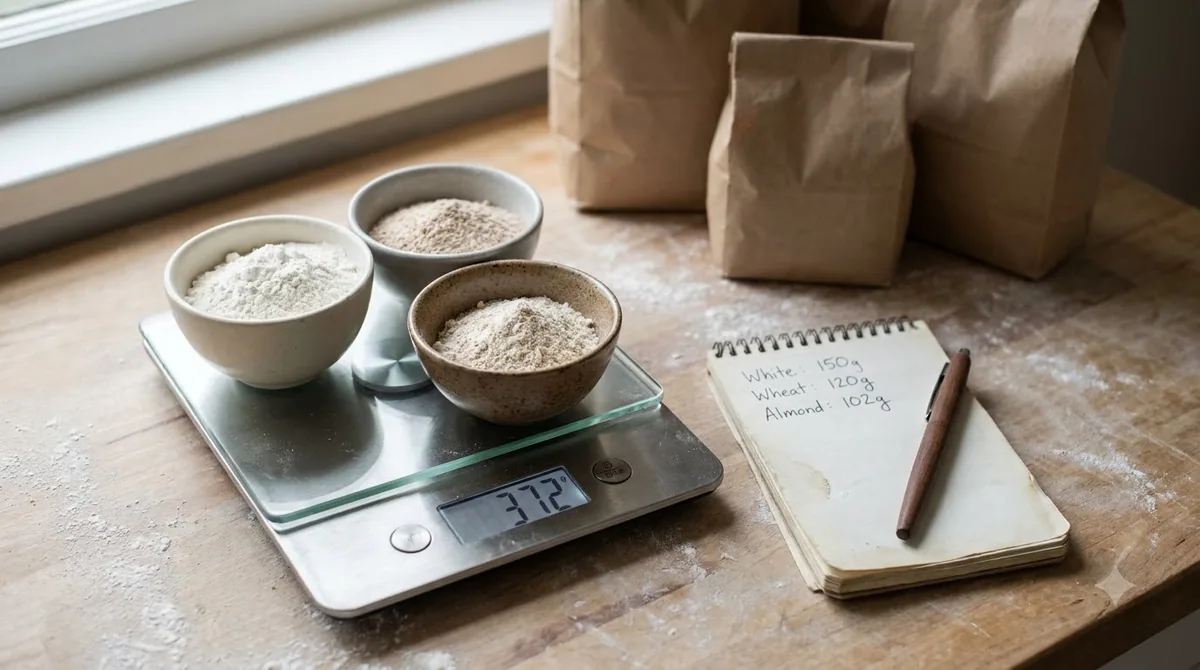
Gozney’s hydration explainer sets out the convention behind the number. Flour is always stated at 100%, and every other ingredient is expressed as a percentage of that flour weight. Because flour is the fixed base, a formula written this way scales the same way whatever batch size you make.
How to Calculate It
- Weigh the flour in grams.
- Weigh the water in grams.
- Divide the water weight by the flour weight.
- Multiply the result by 100.
To see what is pizza hydration in numbers, take Ooni’s example: 1000 g of flour and 600 g of water gives 60% hydration. Gozney’s example of 500 g of flour and 250 g of water gives 50%. Both use the same formula, so you can check any recipe in seconds with a calculator, such as our pizza dough calculator. In a baker’s percentage formula, salt, yeast and other ingredients are also listed as shares of the flour weight, so read the whole formula before you change the water.
Understanding what is pizza hydration starts with the flour, because every other number in a formula is measured against it. Hydration counts only the water, so ingredients that are not water need a separate check. Flour choice affects handling too, so see bread flour vs all-purpose flour for pizza. Fontana Forni’s hydration guide notes that olive oil and butter do not count toward hydration, although they still change the texture. Milk is about 87% water, so it counts in part.

Hydration Levels and Styles
The answer to what is pizza hydration in use is a range: levels run from about 50% for firm doughs to 75% and above for very wet ones, and Neapolitan dough usually sits at 58-65%.
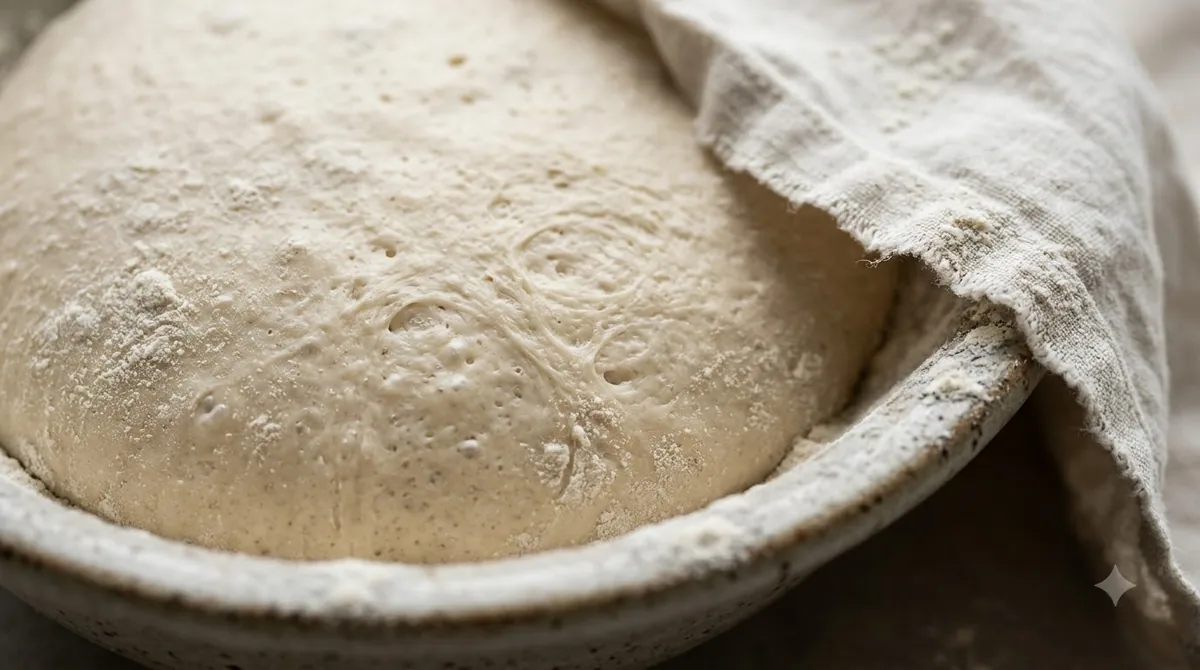
Ooni’s hydration explainer groups doughs into bands and links each band to a style or use. The table below lists those bands with the handling each one tends to give.
| Hydration | Typical use | What to expect |
|---|---|---|
| 50-57% | Focaccia, ciabatta, brioche; some Sicilian-style doughs | Firmer, slightly denser, holds toppings well |
| 60% | Common in beginner recipes; Sicilian and Chicago deep-dish | Easier to handle, firmer, not sticky, crispier crust |
| 65% | Neapolitan, New York-style and Detroit-style (per Ooni) | Slightly tacky, needs more kneading and stretching time |
| 70% | Neo-Neapolitan | Stretchy and sticky, ball quickly, light and soft crust |
| 75% and above | Experimental, higher-yield doughs | Lighter dough, harder to handle |
The two sources do not agree on every style. Gozney gives Neapolitan at 58-65% and New York-style at around 65%, while Ooni gives Neapolitan at around 60-65%. For Detroit-style, Gozney says around 65%, but Ooni’s introduction gives 70 to 80%. Neither source gives a figure for Roman or pan-style dough, so the recipe you follow is the best reference for those.
When people ask what is pizza hydration in practice, the answer is a range rather than one number. Fontana Forni’s guide says 75% or 80% can produce an incredibly light and airy pizza but calls for advanced handling techniques, which matches Ooni’s advice to climb in small steps.
How Hydration Changes Handling and Crust
Higher hydration makes dough more elastic, softer and stickier, and it rises faster, which gives the crumb an open, airy texture.
- Elasticity: a wetter dough becomes more elastic and stretchy.
- Shaping: softer dough is harder to open up and form into a round.
- Stickiness: the dough clings to your hands and to the peel, which makes transfer harder.
- Rise: the extra water speeds up yeast activity, so the dough rises faster.
- Crumb: softer gluten lets larger air pockets form, for a lighter and airier crust.
In short, what is pizza hydration changing at the bench? A wetter dough gives a more open crumb but asks for more skill. Ooni notes that 60% is easier and firmer to work with, which is why it turns up so often in beginner recipes.
Knowing what is pizza hydration does little good unless it changes how you handle the dough. Fontana Forni’s guide suggests raising the water for a softer, airier crust and using a lower level for a crisper, chewier bite. It gives no exact amounts for those changes, so adjust in small steps and note the result.
Choosing the Right Hydration for Your Dough
Once you know what is pizza hydration, pick a level that matches your skill and your oven, and raise it in small steps rather than jumping straight to 75% or higher.
- Start near 60%, where Ooni says the dough is easier to handle and not sticky.
- Move to 65% once you are comfortable with more kneading and stretching time.
- Try 70% when you can ball the dough quickly and shape it without adding a lot of extra flour; a 70% hydration pizza dough recipe shows how that looks in a full formula.
- Test 75%, then 80%, then 90%, as Ooni suggests, and keep notes on each batch. Very wet doughs are covered in high hydration pizza dough.
Higher hydration gives a higher yield and a lighter dough, but each step up demands faster handling and a reliable way to move the dough. Keep notes on how each batch shaped and baked so you can compare the levels for yourself.
When you handle a wetter dough, Fontana Forni’s guide recommends wet hands rather than extra flour, which keeps the hydration you planned. It also suggests baking in a pan if freeform shaping becomes too hard. Once you understand what is pizza hydration in your own kitchen, these small choices matter more than any single number.
Common Mistakes With Hydration
The most common error when working out what is pizza hydration for your dough is adding water by estimate rather than by weight, so the hydration you planned is not the one you bake with.
- Measuring water by the cup or by eye instead of weighing it in grams.
- Raising the water to 70% or above before the handling feels comfortable at a lower level.
- Reading one ingredient in a formula without the others, when every ingredient is written against the flour weight.
- Adding extra flour to very wet dough while shaping, which lowers the hydration you started with. If the dough clings to everything, see what to do when pizza dough is too sticky.
Frequently Asked Questions
Is 70% hydration too wet for pizza?
No. Ooni describes 70% as a higher level that gives a light, soft crust. The dough is stretchy and sticky, so ball it quickly and shape it with care.
Does hydration include milk, oil or eggs?
Hydration counts water only. Olive oil and butter do not count toward it, according to Fontana Forni’s guide, while milk is about 87% water and counts in part. Read your recipe’s ingredient list to see how each liquid is written. Because every ingredient is expressed against the flour weight, a liquid that is only partly water counts only for its water share.
Can hydration go above 80%?
Ooni suggests testing 75%, then 80%, then 90%, and notes that more water gives a higher yield and a lighter dough. Very high levels are harder to handle, so raise the number in small steps. Once you know what is pizza hydration, numbers above 80% are easier to read as a trade-off between a light crumb and harder handling.
Does hydration change cooking time?
Neither source ties a cooking time to a specific hydration level, so do not assume one. Check the oven maker’s guidance and watch the crust as it bakes.
What is pizza hydration used for?
Hydration tells you how wet a dough is, which predicts how it will stretch, rise and bake. Writing it as a percentage lets you compare recipes on the same scale, whatever the batch size.
Which hydration gives the crispiest crust?
According to Fontana Forni’s guide, 60% bakes into a crispier crust with a chewy bite, while 70% gives a light, airy crust with a crispy base. Ooni also describes 60% as crispier, so a moderate level is a good place to start. That is a practical answer to what is pizza hydration for a crisp crust.
Start at a moderate hydration you can handle, weigh every ingredient, and move up in small steps. Once you know what is pizza hydration in practice, you can compare recipes and choose the dough that suits your oven and your skill.
 8 min readLearn70 Hydration Pizza Dough Recipe: What 70% Water Does to Your CrustUpdated Nov 10, 2026
 5 min readLearnHow to Make Pizza Crust Puffy: Hydration, Rise and HeatUpdated Nov 13, 2026
 10 min readLearnWhy Is My Pizza Crust Gummy? Causes and FixesUpdated Nov 10, 2026
 8 min readLearnLeopard Spotting Pizza: Why the Spots Form on the CrustUpdated Nov 8, 2026
 8 min readLearnWhy Is My Pizza Crust Hard? Causes and FixesUpdated Nov 10, 2026
 7 min readLearnPizza Dough Hydration Chart: What Each Percentage MeansUpdated Nov 11, 2026