


Tracking golf stats on paper works when you record just three to five key numbers by hand, right after each hole, using a simple shorthand you can read at a glance later. That’s the entire method. The only real decisions are which numbers are worth writing down and whether you’ll actually look at them again once the round is over.
The Simplest Way to Track Golf Stats on Paper
Paper stat tracking means writing marks on your scorecard, or a small notepad, during the round, not analyzing your swing on a laptop afterward. It’s a logging habit, not a research project.
On paper, you can reliably track anything with a clear yes/no or simple count: whether you hit the fairway, whether you reached the green in regulation, how many putts you took, whether you scrambled after a miss, and any penalty strokes. What doesn’t work well on paper is anything that needs measurement, like club head speed, spin rate, or strokes gained broken down by shot type. Those need a launch monitor or GPS-based software to calculate accurately.
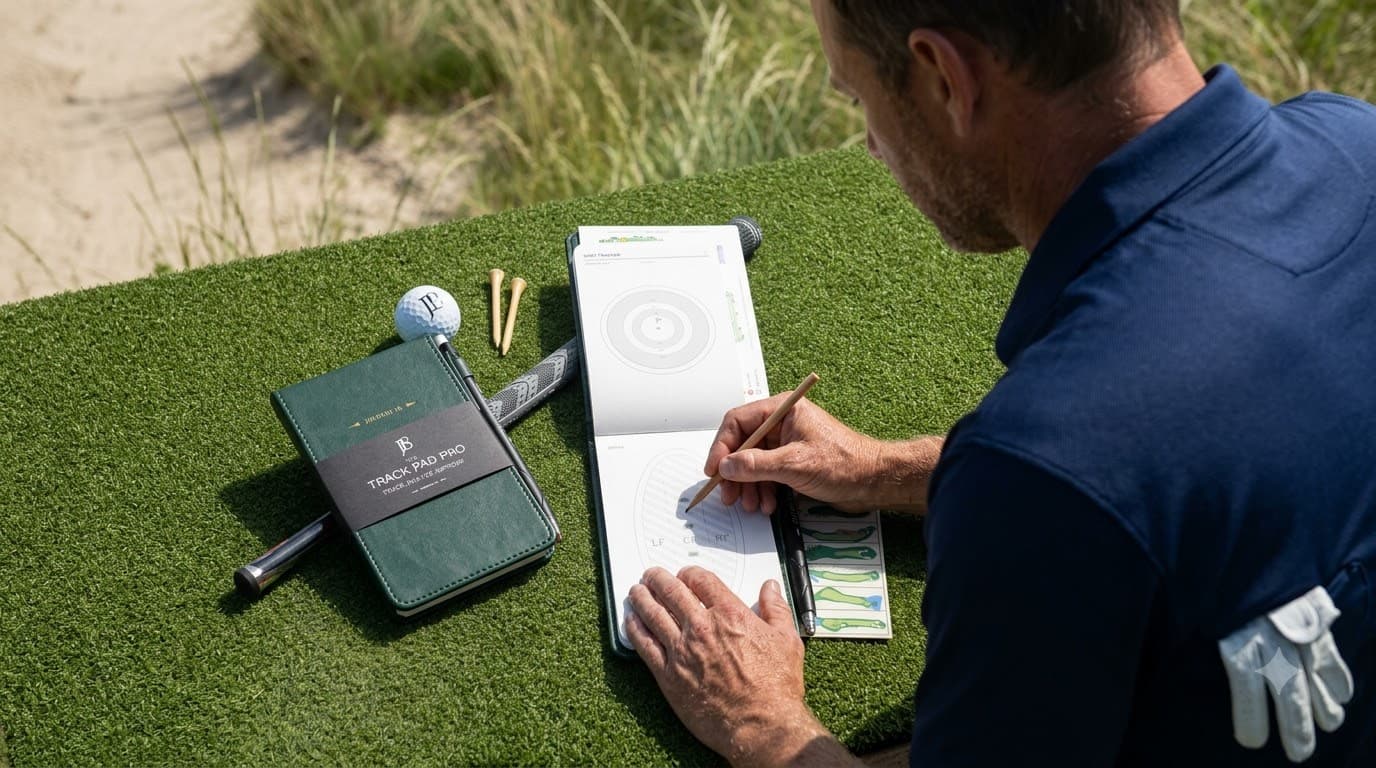
The most common failure isn’t a bad system, it’s an overloaded one. Golfers who try to log ten or twelve stats a round usually quit within a month, because there isn’t time to write that much between shots and the notes turn into a scribble nobody reviews. Start with fewer stats than feels ambitious. You can always add one more once the habit sticks.
Which Stats Are Actually Worth Writing Down
Five numbers cover almost everything useful for most golfers: fairways hit, greens in regulation, putts per hole, scrambles, and penalty strokes.
- Fairways hit. A simple yes or no off the tee. This tells you whether your driving is setting up easier approach shots or making every hole harder than it needs to be.
- Greens in regulation (GIR). Whether you reached the green in the “expected” number of strokes for that hole. Low GIR with a low score usually means your short game is saving you; low GIR with a high score usually means it isn’t.
- Putts per hole. The putt count on that green, tracked hole by hole rather than as just a round total, so three-putts don’t get buried in the average.
- Scrambles. Missing the green but still making par or better. A high scramble rate paired with low GIR is one of the clearest signs your short game, not your ball-striking, is carrying your score.
- Penalty strokes. Any stroke added for water, out of bounds, or an unplayable lie. These are usually the fastest strokes to cut once you can see where they’re happening.
Which of these matters most depends on where you’re starting. Higher-handicap golfers usually learn more from penalty strokes and scrambling, since a couple of blow-up holes tends to explain more of the score than a few extra missed greens. Lower-handicap golfers get more value from GIR and putts, since their misses are smaller and the stats need to be sharper to be useful.
If you can only track one stat, track putts. It’s the number most golfers already half-write on their scorecard out of habit, and a run of high putt counts is one of the earliest, clearest signs that your short game needs attention before your full swing does.
A Shorthand You Can Use Without Slowing Down Play
A one-symbol code for each stat keeps your notes fast enough to fill in without holding up the group behind you.
The exact symbols matter less than using the same ones every round. Here’s a system that fits in the margin of a standard scorecard:
| Stat | Quick Mark | Where to Write It |
|---|---|---|
| Fairway hit | Check, L, or R | Next to the hole number |
| Green in regulation | Circle the score if missed | Around the score itself |
| Putts | A small tally number | Under the score |
| Scramble | A star | Next to the hole number |
| Penalty stroke | P | In the margin |
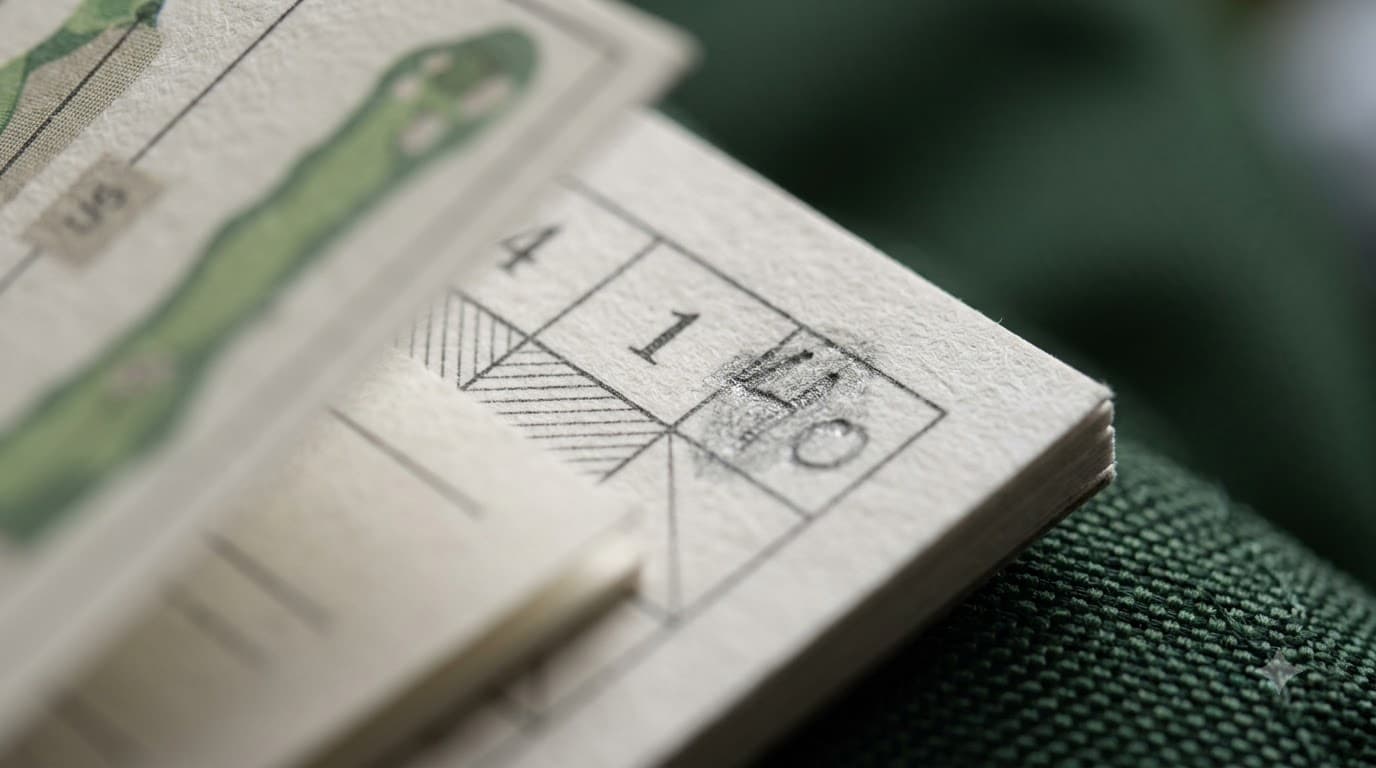
A missed fairway marked left or right is more useful than a plain miss, since a pattern of misses to one side tells you what to work on at the range. Whatever shorthand you settle on, write it down once, the back of the scorecard works fine, so you’re not reinventing it mid-round. Changing symbols partway through a season is the fastest way to end up with notes you can’t compare to each other later.
Your Hole-by-Hole Routine, Step by Step
The whole routine takes about ten seconds a hole and happens right after you hole out, before you walk to the next tee.
- Mark the fairway result as soon as you’re off the tee, using a check, L, or R (skip this on par 3s).
- Circle the score if you missed the green in regulation, once you’re on the putting surface.
- Tally your putts as you pick the ball out of the hole, while the count is still fresh.
- Add a scramble star if you missed the green but still made par or better.
- Note any penalty stroke in the margin before you tee off on the next hole, not at the end of the round.
Doing this at the end of the round instead of hole by hole is where most paper systems quietly fall apart. By hole 14, most golfers can’t accurately remember whether they missed the green on hole 6 left or right, so data pulled from memory ends up closer to a guess than a record.
Turning a Stack of Scorecards Into Useful Patterns
Once you’re home, spend about five minutes turning your marks into totals, not analysis.
- Add up each stat for the round: fairways out of 14, GIR out of 18, total putts, scrambles out of your scrambling opportunities, and penalty strokes.
- Write those totals somewhere that outlives this one scorecard, whether that’s a dedicated notebook, a simple spreadsheet, or a stack of cards you actually keep together, so you can compare rounds instead of staring at one.
- Look for the pattern across several rounds, not the outlier in one. A single round with three penalty strokes is probably just a bad day; five rounds in a row with fewer than eight greens in regulation is a real signal worth acting on.

This is the step most tracking systems skip, on paper or otherwise. Writing the numbers down only helps if you actually look back at them every few rounds. A shoebox of scorecards that never gets reviewed isn’t much different from not tracking at all.
The Habits That Quietly Kill a Paper System
A paper system usually breaks down for one of five avoidable reasons, not because paper itself doesn’t work.
- Trying to track too many stats at once. Start with three, not ten, and add one only once the first three feel automatic.
- Switching symbols mid-season, which makes early rounds impossible to compare against later ones.
- Writing everything from memory at the 18th green instead of hole by hole.
- Never adding up the totals, so scorecards pile up without ever turning into a pattern.
- Losing loose scorecards. A card left in a golf bag pocket or a cart is gone for good, along with whatever it recorded.
A scorecard margin is genuinely enough for most golfers who just want a season-long read on GIR and putting. Where a plain scorecard starts to strain is once you’re logging four or five stats every round and trying to compare dozens of cards against each other; loose paper gets torn, left behind, or lost in a bag pocket long before the season is over. That’s the point where a dedicated tracking pad, like Journal18’s Track Pad Pro, starts to earn its keep: the pages are reusable, the layout is built around this kind of hole-by-hole logging, and everything stays in one place instead of scattered across a stack of old cards.
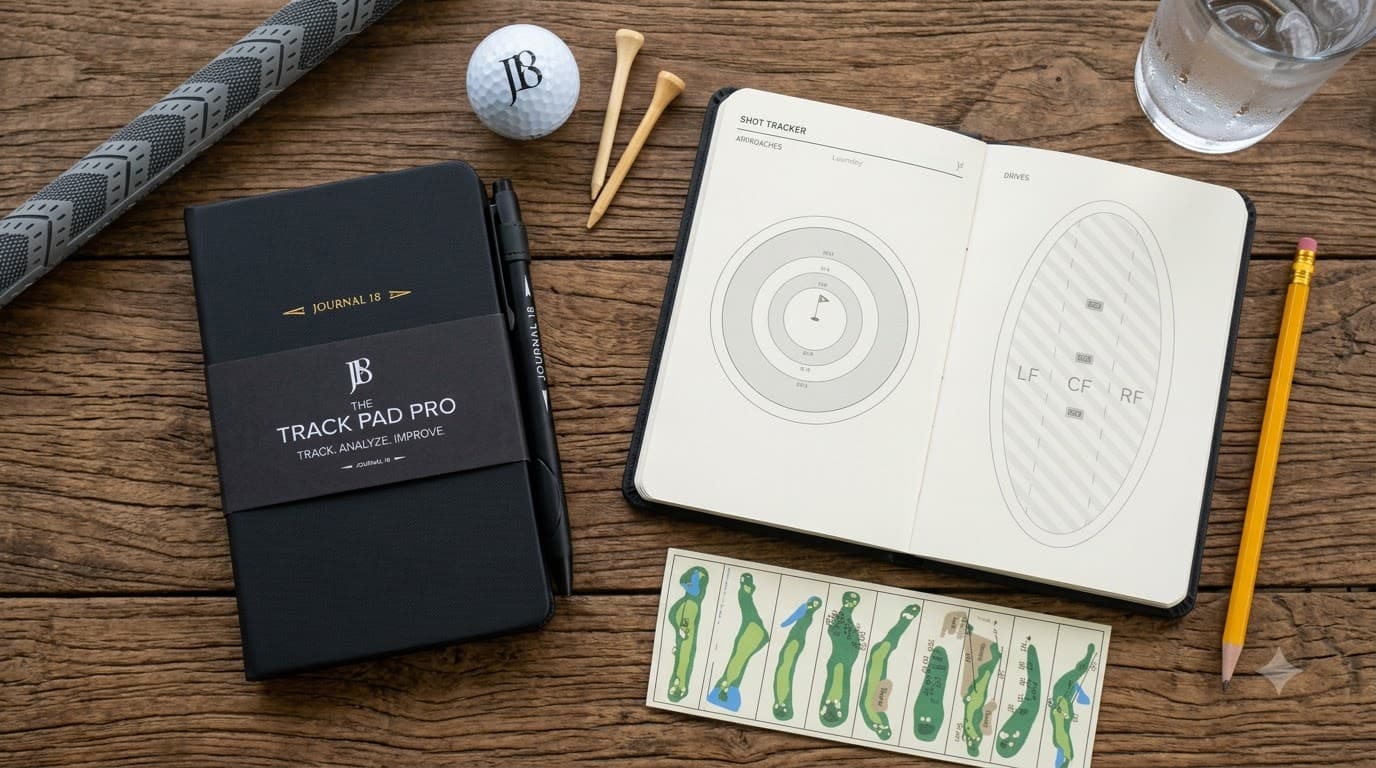
If you’re not sure the habit will stick, start with a normal scorecard first. A few rounds will tell you whether writing five numbers a hole is worth it for you, and that’s the point where upgrading the tool actually starts to matter.
Last update: 15.09.2026

Elliot Long spent seven years buying paid search and social traffic for e-commerce brands before starting Couponaro. That work taught him how much of the coupon web runs on codes that expired years ago. He runs this site on his own, dates every page he updates, and would rather tell you a brand has no working code than waste your time at checkout.