
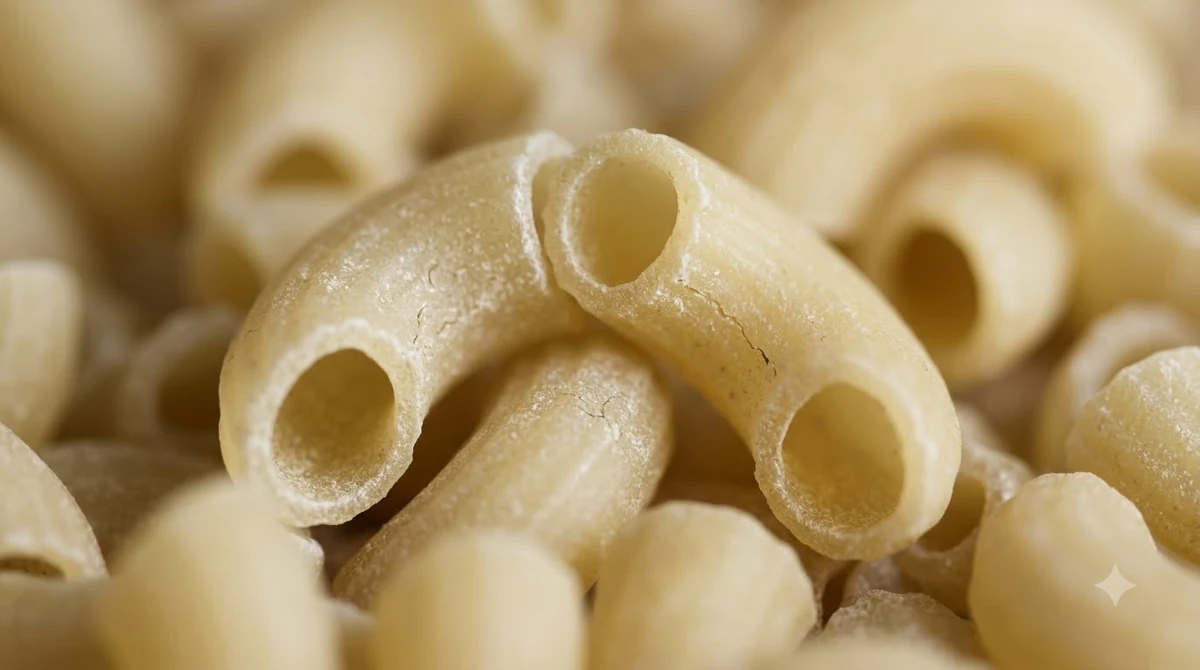

Macaroni pasta is a narrow, slightly curved, hollow tube of dried dough. It suits baked dishes and pasta salads, and it is the classic shape for mac and cheese. The name comes from the Italian word maccheroni.
In the United States, macaroni usually means elbow pasta. In Italy, maccheroni covers a much wider range of shapes, so the word alone does not tell you the size or the surface pattern.
What Is Macaroni Pasta?
Macaroni pasta is a slightly curved, tubular pasta with a hollow center, usually cut into short lengths. Its name comes from the Italian maccheroni, and the exact shape depends on where you live.
According to CooksInfo, macaroni pasta is made in a slightly curved, tubular shape with a hollow center. Wikipedia describes it as narrow tubes made from durum wheat and cut into short lengths. Most macaroni is made commercially by extrusion, and its common curve comes from unequal extrusion speeds on opposite sides of the tube.
The meaning changes by country. In the United States, macaroni usually means elbow pasta, the curved shape used in macaroni and cheese. In Italy, maccheroni refers to elongated pasta in general, and long dishes such as maccheroni alla chitarra use spaghetti.
What Is Macaroni Made Of?
Macaroni is made from dough of semolina, durum flour, farina or plain flour, with water, and US federal rules allow only egg white as an optional egg ingredient.
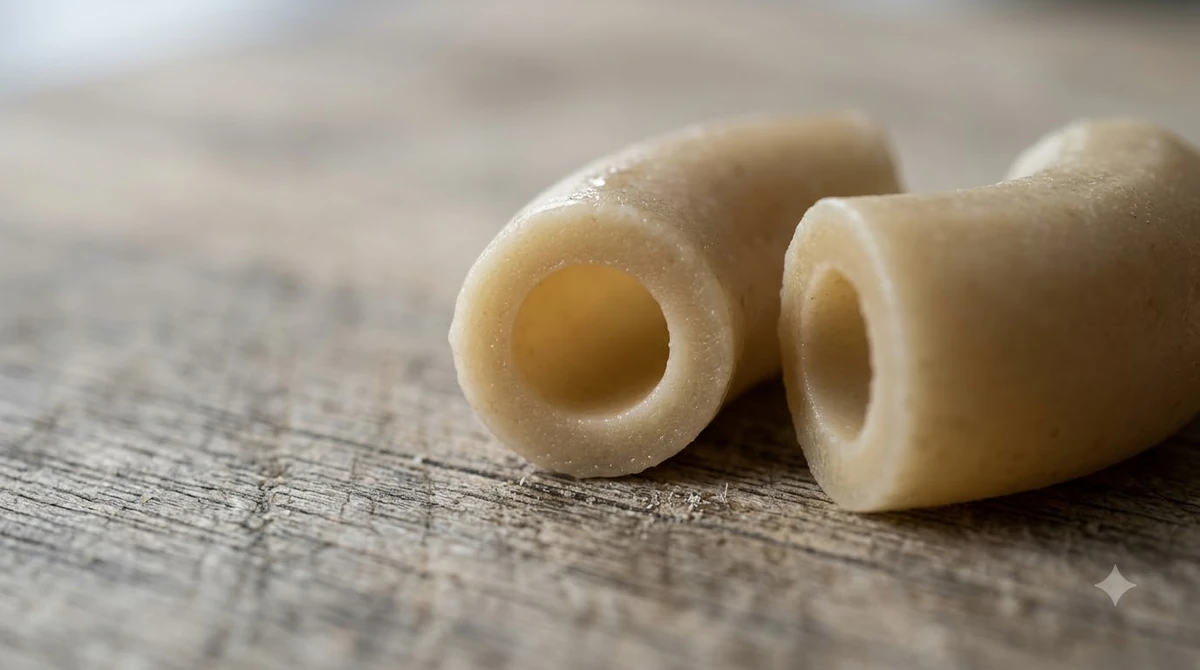
The federal definition of macaroni products describes them as foods made by drying formed units of dough, with water and optional ingredients. Durum is not required, because semolina, durum flour, farina or plain flour can be used alone or combined.
Egg is optional. The rule allows egg white only, fresh, frozen or dried, measured as solids at 0.5% to 2.0% of the finished weight. Whole egg is not named.
If you cook for someone with an egg allergy, read the label of any macaroni pasta you buy, because the rule permits egg white as an ingredient.
Homemade macaroni follows the same basic path. You mix dough, form small tubes or shapes, and dry them, which matches the regulation’s description of formed units of dough that are dried.
Common Macaroni Pasta Shapes and How They Differ
Macaroni-type shapes differ in curve, width and whether the surface is smooth or grooved, and the table below compares six common ones.
Macaroni pasta is the general name, but the shape name matters when a recipe calls for a specific cut.
| Shape | Form | Surface |
|---|---|---|
| Elbow (gomiti) | Short curved tube | Grooved (furrowed) |
| Chifferi | Short and wide tube | Smooth or grooved |
| Ditalini | Short tube, about as long as it is wide | Smooth or grooved |
| Ziti | Long, narrow tube, traditionally broken before cooking | Not stated |
| Penne | Medium tube, cut diagonally at both ends | Smooth or grooved |
| Rigatoni | Tube, straight or bent depending on extrusion | Always grooved |
A separate guide to elbow macaroni pasta covers the elbow shape in detail, so this section stays with the wider family of short tubes.
How to Cook Macaroni at Home
One cup of uncooked macaroni weighs 4 ounces (115 g) and cooks to about 2 1/4 cups, so weighing your macaroni pasta is the simplest way to plan portions.
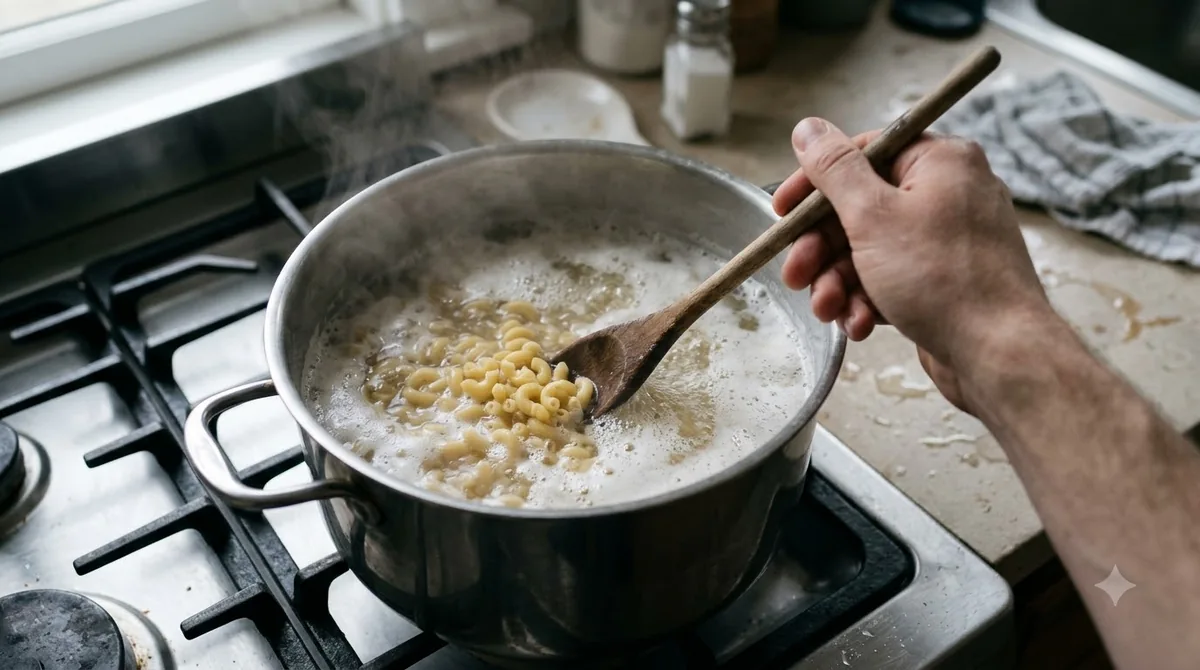
According to CooksInfo’s macaroni reference, 1 cup uncooked equals 4 oz (115 g) uncooked, which makes 2 1/4 cups cooked. Half a pound (225 g) uncooked makes 4 cups cooked.
- Bring a large pot of water to a rolling boil.
- Add the macaroni and stir so the pieces do not stick together.
- Cook until tender, following the time printed on the package, then drain.
- Serve straight away, or rinse only if your recipe asks for it.
Taste a piece of macaroni pasta before you drain, because cooking times vary by brand and by shape. For a baked dish, cooking the pasta a minute short of al dente keeps it from turning soft in the oven.
A common mistake is cooking macaroni in too little water, which lets the pieces stick together. Use a large pot so the pieces can move freely while they cook.
Best Sauces and Uses for Macaroni
Cheese sauce is the classic partner for macaroni pasta, since mac and cheese is the most popular use for macaroni in English-speaking countries.
CooksInfo also calls macaroni a good pasta for baking and for pasta salads. Baked dishes suit a thick cheese sauce that coats each piece, while cold salads suit a lighter vinaigrette or a mayonnaise-based dressing.
- Baked macaroni and cheese, the most common use in English-speaking countries
- Cold pasta salad with a light dressing
- Soups, a use that historical cookery writing quoted by CooksInfo describes
In Hong Kong, cooks rinse macaroni after cooking and serve it in clear broth with ham or sausage, peas and black mushrooms, according to Wikipedia.
What Can You Use Instead of Macaroni?
Ditalini and chifferi are the closest swaps for macaroni pasta, because both are short tubes of similar size.
Ditalini are short tubes that are about as long as they are wide, and they can be smooth or grooved. Chifferi are short and wide, and can also be smooth or grooved, so both are reasonable choices when a recipe calls for short pasta. Another small tube, mostly used in soups, is covered in our guide to tubetti pasta.
Longer shapes such as penne or ziti can also stand in, but the bite and the bake time will change, so check the package before you switch. Shapes that are not tubes, such as pasta shells or spiral rotini, also hold sauce and can work in a baked dish or a cold salad. Lumache, a ridged snail-shell shape that North American usage sometimes groups with macaroni, is covered in our lumache pasta guide.
Shape names can also differ between brands, so compare the shape on the box with the one your recipe describes before you substitute.
Where Macaroni Pasta Came From
Macaroni pasta appears in English cookery records from 1390, and the early record already links it with cheese.
According to Wikipedia, the word first appears in English as makerouns in The Forme of Cury, a 1390 cookbook that also records an early macaroni and cheese recipe.
Other regional dishes have their own histories. A similar dish, Älplermagronen, has a cream and cheese base and originated in Switzerland in the 19th century, according to Wikipedia. In Malaysia, cooks stir-fry macaroni in a style close to mee goreng.
The cheese version is the dish most readers know today.
Frequently Asked Questions
Is macaroni pasta the same as elbow pasta?
Often, in the United States, yes: the word macaroni usually means the short curved elbow shape. In Italy, maccheroni covers many tubular and elongated shapes, so check the shape name on the package before you cook.
What is macaroni made of?
Macaroni is made from dough of semolina, durum flour, farina or plain flour, with water. Under US rules, egg white is the only egg ingredient allowed, and it is optional, so whole egg is not part of the standard definition.
What is the difference between macaroni pasta and ditalini?
Macaroni is usually curved, while ditalini are short tubes whose length roughly matches their width, and they can be smooth or grooved. Ditalini are a reasonable stand-in when a recipe asks for small pasta, because their size is close.
How much cooked macaroni does one cup of uncooked macaroni make?
One cup of uncooked macaroni weighs about 4 ounces, or 115 g, and cooks to about 2 1/4 cups. Half a pound makes about 4 cups cooked, according to CooksInfo. Use these figures when a recipe gives the amount in cups but you want to weigh your dry pasta.
Can I use another pasta instead of macaroni?
Yes. Short tubes like ditalini or chifferi are the closest swaps, while longer shapes such as penne or ziti can work but change the texture and bake time. Check the package for the cooking time before you make the swap.
Do you need to rinse macaroni pasta after cooking?
Not always. In Hong Kong, cooks rinse macaroni after cooking before serving it in clear broth, according to Wikipedia. Whether to rinse depends on the dish, so follow your recipe.
Choose macaroni pasta for baked and creamy dishes, and use ditalini or chifferi when a recipe calls for another short tube. Weigh your dry pasta to plan portions, and check the package time for your brand.