
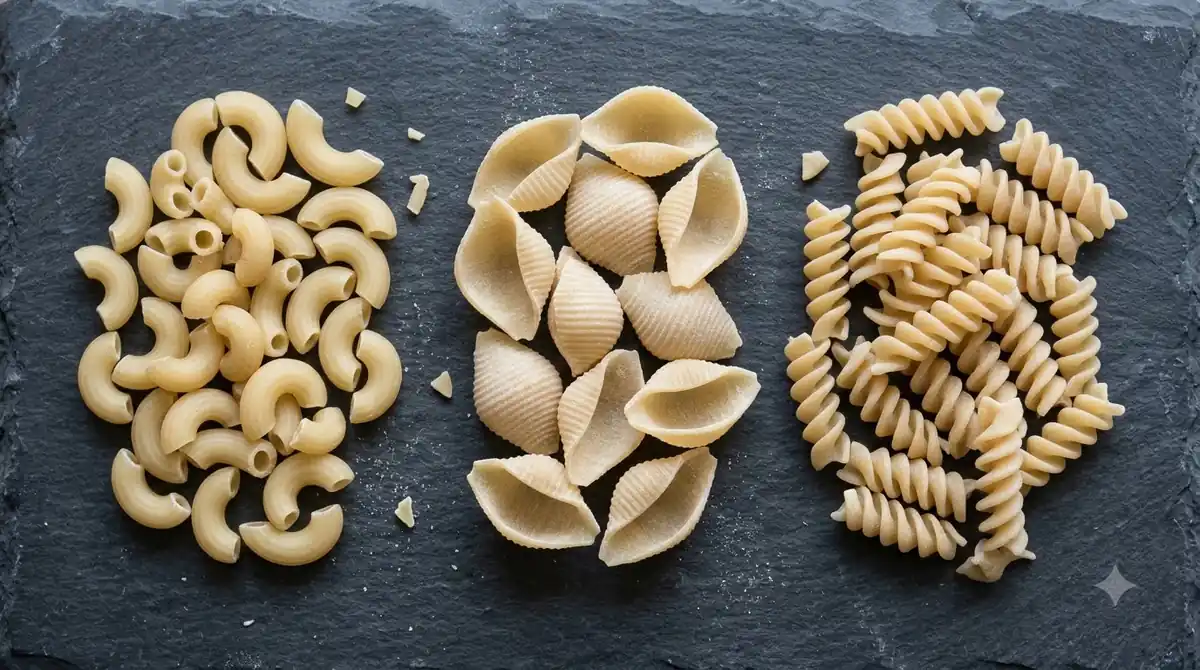

Shells pasta is a short, ridged pasta shaped like a small sea shell. In Italian it is called conchiglie, and it is one of the most useful shapes for home cooks because it holds sauce well in both stovetop and baked dishes.
Shells pasta comes in three sizes, from tiny soup shells to jumbo shells for stuffing. Choose the size that fits the dish first, then pick the brand.
What Shells Pasta Is
Shells pasta is a short pasta made from durum wheat flour and water, named after the sea shell it resembles. The Italian name conchiglie comes from the word conchiglia, which means sea shell. Wikipedia’s entry on conchiglie notes that the Italian word shares a Greek root with the English word conch. The word is pronounced roughly “con-KEEL-yay”.
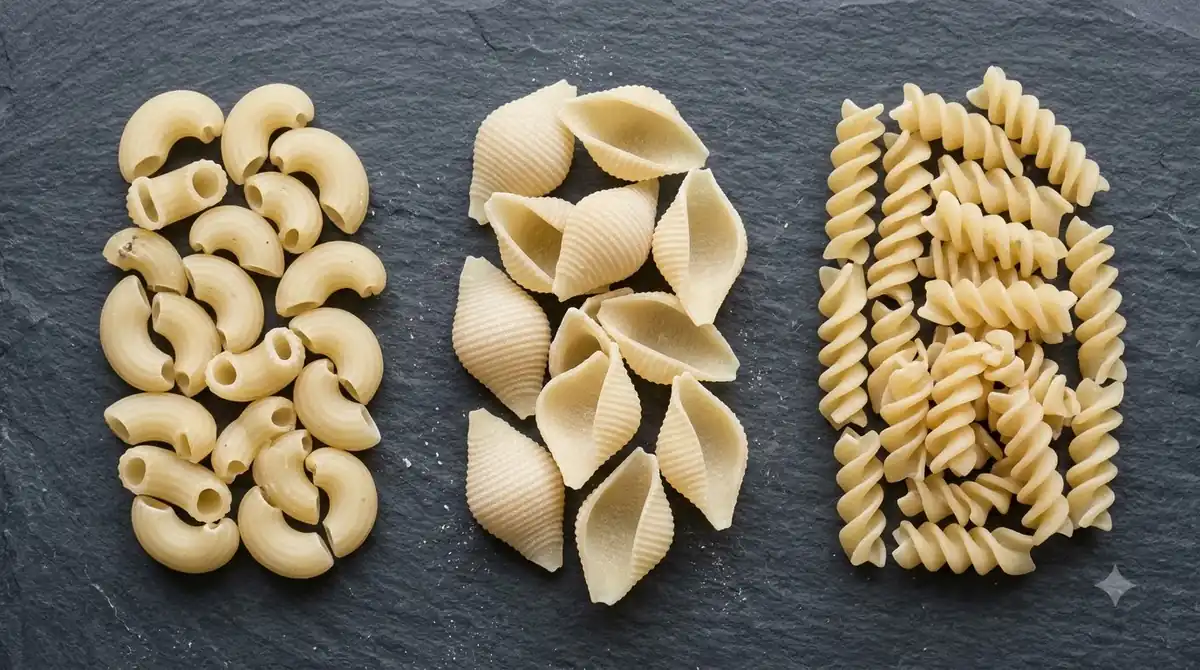
The shape does practical work. The outside is ridged and the inside is smooth, so sauce catches in the grooves and the hollow fills up as the pasta is stirred into the sauce. Dried shapes pushed through bronze dies have a rougher surface that grips even more, as explained in this guide to bronze cut pasta. That is why shells pasta suits chunky sauces that would slide off a smooth tube.
Shells are a relatively recent shape with no single region tied to them, and they are sold dried. According to The Pasta Project, they are especially popular in southern Italy, where dried pasta is eaten more often, and many specialty shapes first appeared around Gragnano near Naples.
Shells are also sold in colored versions made with natural ingredients such as tomato, spinach or squid ink. The color changes the look on the plate, but the cooking method and the shape stay the same.
The Three Sizes of Shells Pasta
Shells come in three sizes: conchigliette for soups, conchiglie for thick sauces and baking, and conchiglioni for stuffing. Each size has a clear job, so the size you choose matters more than the label on the box.
According to The Pasta Project’s guide to conchiglie, conchigliette and conchiglioni, the smallest size is the traditional choice for soups, the medium size suits thick sauces and can be baked, and the jumbo size works well when stuffed and baked. The table below sums up the three sizes.
| Size | Italian name | Best for |
|---|---|---|
| Small | Conchigliette | Soups, pesto and salads |
| Medium | Conchiglie | Thick meat, fish and vegetable sauces, and baked dishes |
| Jumbo | Conchiglioni | Stuffed shells with ricotta, spinach or seafood fillings |
The Pasta Project also notes that conchiglioni are close in size to lumaconi, the large snail-shaped pasta, so the two can be compared when a recipe calls for jumbo pasta. The trade-off is simple. Small shells suit soups and light dishes, while jumbo shells carry heavier fillings but need more care to fill without tearing. If you cook for a crowd and want one box for most meals, the medium size covers the widest range of sauces.
Best Uses for Shells Pasta
Shells work best with thick sauces, soups and baked dishes where the shell holds the filling. The ridges trap sauce and small pieces of meat, cheese or vegetables, which is why shells suit recipes that would waste a thin sauce. A homemade marinara sauce with some body is a simple place to start.
- Thick meat sauces, which cling to the ridges
- Fish and vegetable sauces, usually with medium shells
- Soups, where the smallest conchigliette work best, much like other small soup pasta such as ditalini
- Pesto and cold salads, which also suit small shells
- Baked dishes such as macaroni and cheese, where shells stand in for other macaroni-style shapes
Stuffed Shells
Jumbo shells are the usual choice for stuffing. Recipes for spinach and ricotta stuffed shells, and for shrimp or tuna fillings, all use the large size. Fill each shell once it is cooked and cooled enough to handle, much as you would layer a ricotta and mozzarella filling for lasagna. Shells made from hard durum wheat hold their shape when boiled and baked, which matters most in stuffed dishes, so the ingredient list is worth reading.
One detail catches many cooks out. Shells that will go into the oven are boiled for a shorter time than shells served straight from the pot, so they do not turn soft while baking. Check the package for the baking time before you start.
How to Cook Shells Pasta
Cook shells pasta in a large pot of boiling salted water until al dente. The package time is the final guide, because brands and shell sizes differ, so start tasting a couple of minutes before the time printed on the box.
- Bring a large pot of generously salted water to a rolling boil, so the shells have room to move.
- Add the shells and boil them uncovered, stirring once or twice so they do not stick together.
- Start tasting a few minutes before the package time. The shells should be tender with a slight bite.
- If the shells will be baked, boil them a few minutes less than the package time, then drain and spread them on a tray to cool before filling.
- Drain well and toss the shells with sauce while they are still warm, so the sauce coats the ridges.
Cooking times change with the brand and the size of the shell, so use the package time as the starting point and taste the pasta before you drain it.
Buying and Storing Shells Pasta
Dried shells pasta keeps well in a cool, dry place, so a sealed packet in the pantry is enough for everyday use. Shopping for shells is mostly a matter of choosing the size, the color and whether you need gluten-free pasta.
- Store dried shells in their sealed packet, or in an airtight container, away from heat and moisture
- Choose colored shells for a different look, made with tomato, spinach or squid ink
- Gluten-free shells are usually made from brown rice or corn, and they can have more carbohydrates and calories than wheat shells
- Read the package for the cooking time, since each brand sets its own
Making Shells Pasta at Home
Homemade shells pasta is shaped by hand from a simple flour and water dough, so the ridges and size vary from one piece to the next. The result looks rustic, and it is a different experience from buying dried shells in a box. Dried shells from a packet are the simpler route when a dish needs to be on the table quickly, while homemade shells suit a slower cooking session where the shaping itself is part of the meal.
Dough ratios, resting times and drying times differ between recipes, so choose one written by a source you trust before you start. For another filled pasta that you shape by hand, see hand-shaped ravioli. If you own an extruder, these KitchenAid pasta extruder recipes show how die-cut shapes differ from hand-shaped ones. Shell thickness also varies by hand, so check a few pieces for doneness rather than relying on one time.
Frequently Asked Questions
What is the difference between shells and jumbo shells?
Jumbo shells are the largest size, sold as conchiglioni, and they suit stuffing and baking. Medium shells, called conchiglie, suit thick sauces and baked dishes, and the smallest size, conchigliette, suits soups. Pick the size by the dish rather than by the box label.
Are shells pasta good for macaroni and cheese?
Yes. Shells pasta is a common choice for baked macaroni and cheese because the ridges and hollow hold cheese sauce well. Medium shells are the size that suits baking, according to The Pasta Project. If you prefer a different short shape, see elbow macaroni.
Are shells pasta made from durum wheat?
Most dried shells pasta is made from durum wheat flour and water. The best quality shells use hard durum wheat, which holds its shape through boiling and baking. Colored versions add natural ingredients such as tomato, spinach or squid ink.
What are conchiglie called in English?
In English they are usually called shells, pasta shells or seashells. Conchiglie is the Italian name, and it comes from the word for sea shell.
Are gluten-free shells as healthy as regular shells?
Gluten-free shells are typically made from brown rice or corn, so they suit people who avoid gluten. Some sources note they can contain more carbohydrates and calories than wheat shells, so compare the nutrition labels before you choose one.
Choose the size by the dish first, then check the package for timing, since brands differ. If you are unsure, start with medium shells, because they suit both thick sauces and baking.