
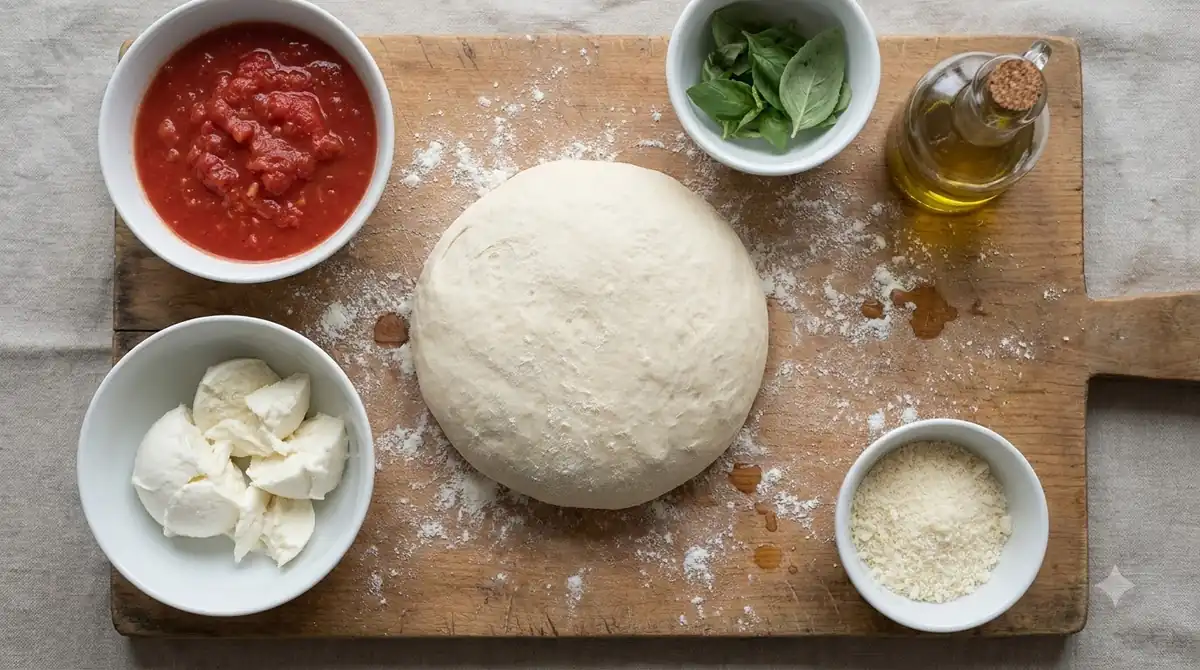

Overproofed pizza dough is dough that has risen for longer than it should, so it feels fragile and may collapse when you handle it. A gentle reshape can often still save it, as long as you catch the problem early.
A quick finger test tells you whether to bake, rescue or start over. Cold-fermented dough needs extra attention, because its window before it overproofs is longer and easy to miss.
What Overproofed Pizza Dough Means
Overproofed pizza dough has risen past the point where it is ready to shape and bake, so it feels fragile and may collapse under light pressure. King Arthur Baking describes overrisen dough in the same way, noting that it feels fragile and might even collapse when you poke it.
Proofing is the rise that happens after you shape the dough. If the rise runs too long, overproofed pizza dough loses the springiness that makes it easy to stretch and starts to sag instead of holding its shape.
Overproofing is not the same as underproofing. Underproofed dough is tight and firm and springs back when you press it, while overproofed pizza dough is loose and slack. Overproofed pizza dough usually shows some of these signs:
- It has grown far larger than the size you shaped it to, and it looks puffy and loose.
- It tears or sags when you try to stretch it or move it onto the peel.
- It collapses or dents deeply when you press it with a floured finger.
How to Tell If Pizza Dough Is Overproofed
The poke test is the simplest check for overproofed pizza dough: press a lightly floured finger about one inch into the dough. If the indent stays, the dough is ready, and if it springs back, it needs more time.
Reading the Poke Test
The method comes from King Arthur Baking’s guide to telling when bread dough has risen enough. Lightly flour your finger and poke the dough down about one inch. If the indent stays, the dough is ready to bake, and if it pops back out, it needs a bit more time.
The guide was written for bread, so use the same finger test as a guide and check how the dough feels, not only how it looks. The table below shows how to read each result.
| Poke result | What it suggests | What to do |
|---|---|---|
| The indent stays and the dough holds its shape | Ready to shape and bake | Stretch and bake without delay |
| The dough springs back quickly | Underproofed, needs more time | Let it rest and test again |
| The dough feels fragile, sags or collapses under the finger | Likely overproofed | Follow the rescue steps, or bake quickly if it still holds together |
Other Signs to Check
The finger test is the most direct check, but size helps confirm it. If overproofed pizza dough has grown well beyond the size it was when you shaped it, the rise has probably run long. For cold-fermented dough, Ooni’s cue is to take it out of the fridge when it has roughly doubled in size, so a ball much bigger than that is a warning. See our guide on how long to proof pizza dough for timing.
Why Pizza Dough Overproofs
Pizza dough overproofs when it keeps rising past the point where it is ready, and warmth speeds that rise. King Arthur Baking notes that the warmer the conditions, the quicker the dough will proof.
For bread, King Arthur Baking says doughs do well in the low to mid-70s, between 72°F and 78°F. That range is a useful reference point for a room, although the same guide says its timing advice is a guideline, not a rule. Use the finger test rather than the clock. If your dough shows the opposite problem, read why pizza dough is not rising.
Timing is the second factor. For bread, the same guide says bulk fermentation takes around one to two hours, depending on the dough and the environment. Treat any time in a pizza recipe the same way, since your kitchen may be warmer or cooler. Common causes of overproofing are:
- Leaving the dough in a warm room longer than the recipe planned.
- Using more yeast than the recipe calls for, which makes the rise faster.
- Leaving cold-fermented dough in the fridge past the window the recipe allows.
Cold Fermentation and the Overproofing Limit
Cold-fermented pizza dough can rest in the fridge for 24 to 72 hours, according to Ooni’s cold-prove pizza dough recipe, and the brand says three to five days is generally the longest you should go.
The recipe lists a wider range of 24 to 96 hours in its introduction, so treat the range as a window rather than a target. The method section is the more specific guide, and the longer the rest, the closer the dough gets to overproofing.
The recipe also gives a cue for when to take the dough out: remove it from the fridge when it has roughly doubled in size. Size is easier to judge than time in a cold fridge. Ooni warns that there is such a thing as overproofing in a cold ferment, and advises not to wait too long.
If a cold-fermented dough has passed the window and you are not sure of its state, let it come up to room temperature and then run the finger test before you stretch it. A dough that springs back needs more time, and one that collapses or tears should go to the rescue steps below. For a full dough schedule to compare against, see our Neapolitan pizza dough recipe.
How to Rescue Overproofed Pizza Dough
To rescue overproofed pizza dough, deflate it gently, reshape it into a tight ball and rest it briefly before testing it again. King Arthur Baking says there is a chance a quick reshape can save dough that has risen too long, and its loaf method follows the same logic.
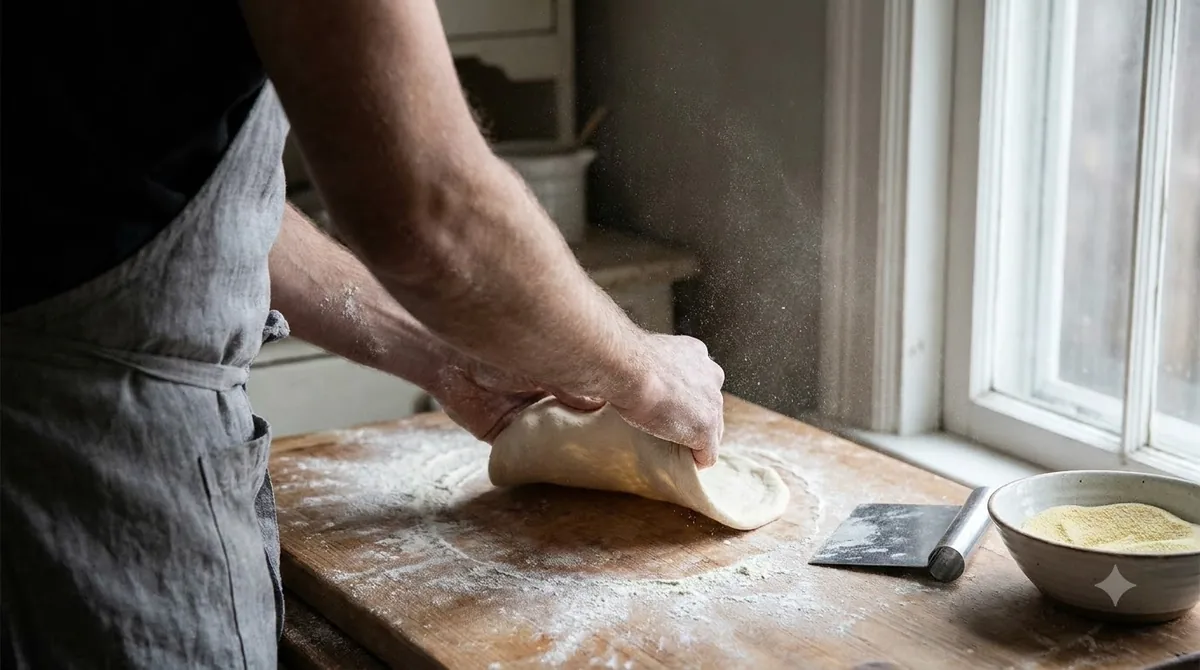
King Arthur’s loaf method is written for dough in a pan: deflate, reshape, and let it rise again no more than one inch over the rim before it goes into the oven. A pizza has no pan, so the useful part is the timing. Do not let the second rise run long, and move to the oven once the dough holds its shape.
- Press out the gas gently with your fingertips.
- Reshape it into a tight ball and pinch the seam closed underneath.
- Cover it and let it rest briefly, then repeat the finger test.
- Stretch it only when the indent stays, and bake as soon as it holds its shape.
King Arthur Baking notes that its technique generally does not work with sourdough bread, so be cautious with a sourdough pizza dough recipe. Overproofed pizza dough that has collapsed into a slack, sticky mass may not recover, even after a careful reshape. If it turns sticky, see why pizza dough is too sticky.
Can You Still Use Overproofed Pizza Dough?
Often yes. If overproofed pizza dough still holds its shape and does not tear when stretched, it can usually be baked, though the texture may not match a perfectly proofed batch.
In one of its bread tests, King Arthur Baking reports that a rescued loaf showed no discernible difference in flavor from the comparison loaf. That is a single test on bread, not proof for pizza, so judge your own dough by tasting it. The main risk with overproofed pizza dough is texture, not taste. Use this rule to decide what to do with the dough:
- Bake it if it holds its shape, stretches without tearing and passes the finger test.
- Reshape and rest it if it feels fragile but still holds together as a ball.
- Start over if it has collapsed into a slack, sticky mass that cannot be shaped.
Preventing Overproofed Dough With a Dough Log
A dough log is a simple written record of timing and temperature, and it helps you stop repeating the same overproofing mistake. Ooni’s dough log guide suggests recording:
- The time the dough went into the fridge and the time it came out, if you cold-fermented it.
- The time the dough was balled after its bulk rise.
- The temperatures of the water, the flour and the final dough.
- Short notes on how the dough felt, such as too soft, too tough or felt wet.
Ooni’s guide says to record overproofed flops alongside the good batches. Over several bakes, the log shows the timing that works in your own kitchen.
Frequently Asked Questions
How do I know if my pizza dough is overproofed?
Press a lightly floured finger about one inch into the dough. If the dough feels fragile, sags or collapses, it is likely overproofed. If the dough springs back, it needs more time, and if the indent stays, it is ready to shape and bake.
Can you still use overproofed pizza dough?
Often yes, if it still holds its shape and does not tear when stretched. Reshape it gently, rest it briefly and test it again. If it has collapsed into a sticky mass, start over.
How long can pizza dough cold ferment before it overproofs?
Ooni’s cold-prove recipe suggests 24 to 72 hours in the fridge and says three to five days is generally the longest you should go. Take the dough out when it has roughly doubled in size, then check it with the finger test before you stretch it.
Does overproofing change the taste of pizza dough?
King Arthur Baking reports that, in one bread test, a rescued loaf had no discernible difference in flavor from the comparison loaf. Overproofed pizza dough may behave differently, so taste your own dough before deciding whether to use it again.
How do I stop pizza dough from overproofing?
Check the dough with the finger test before you stretch it, and keep a dough log with fridge times, ball times and temperatures, so you can prevent overproofed pizza dough next time.
Overproofed pizza dough is usually a timing problem, so check the dough rather than trusting the clock. Use the finger test, keep a simple log, and reshape gently when the dough is fragile but still holds together. If it has collapsed, start a fresh batch.