
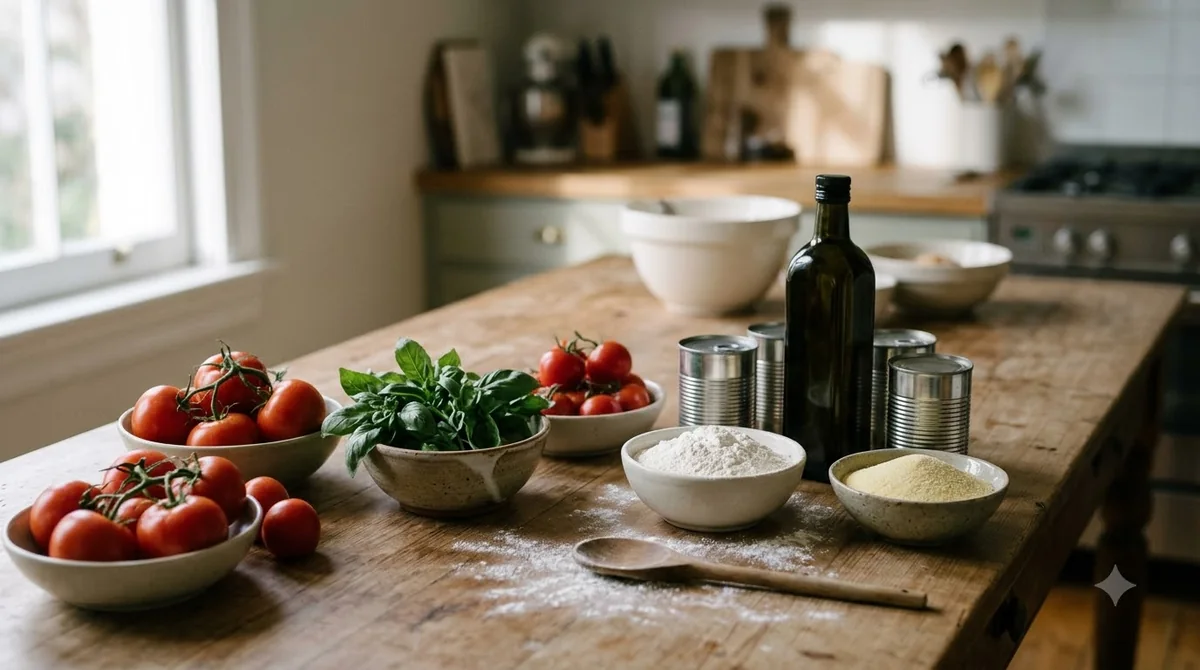

This pasta e patate recipe makes a Neapolitan dish of short pasta, potatoes and tomato cooked in one pot, and the one-pot method takes about 45 to 50 minutes. Most of that time is gentle simmering, which lets the potatoes break down into a creamy base before the pasta goes in. The potato you choose decides how velvety the sauce turns out.
What Is Pasta e Patate
Pasta e patate, Italian for pasta and potatoes, is a Neapolitan dish that belongs to cucina povera, the peasant cooking built on frugal ingredients. It sits in the same family as pasta e fagioli, pasta e ceci and pasta e piselli.
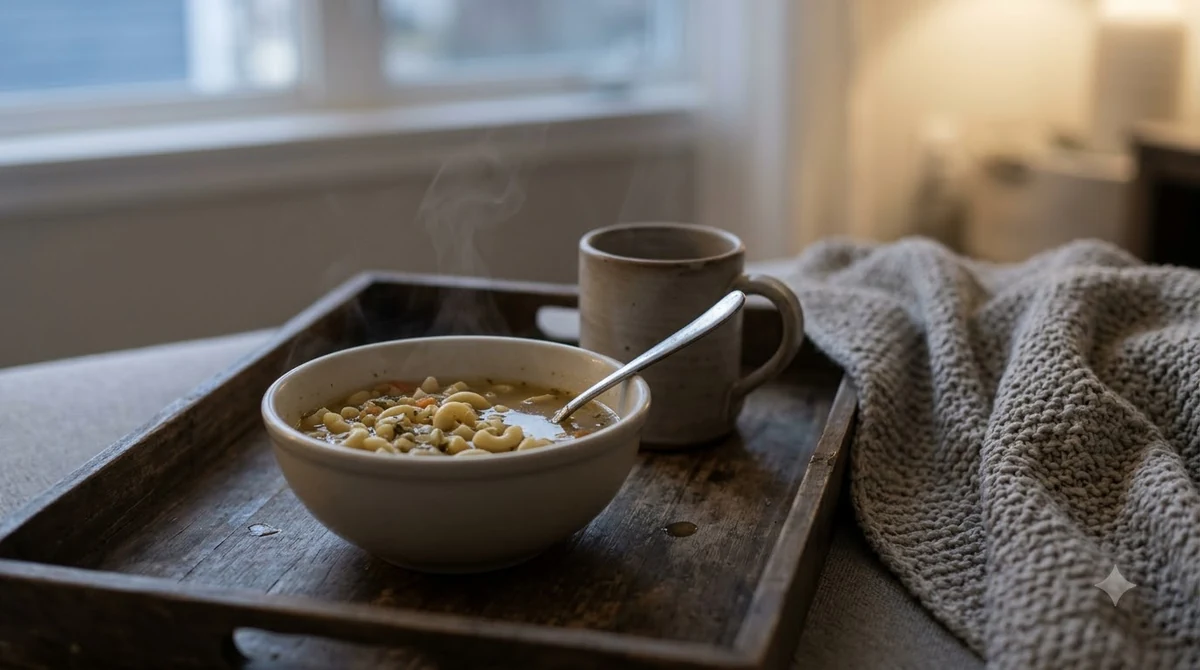
According to Memorie di Angelina’s Neapolitan recipe, the dish was born of frugality and uses leftover pasta, tomato and potatoes. Its author calls it an iconic Neapolitan dish of the peasant kitchen.
For a pasta e patate recipe, the pasta is traditionally pasta mista, which means mixed pasta. The author describes it as the odds and ends left at the bottom of pasta packages. If you do not have a mix, short pieces such as ditalini pasta (the same family as ditali) work as a substitute.
Ingredients and Amounts
For four to six servings, one version of this pasta e patate recipe uses 250 g of pasta, 500 g of potatoes and 100 g of pancetta, with one onion, one celery stalk and three to four tomatoes.
| Ingredient | Amount (4 to 6 servings) | Role in the dish |
|---|---|---|
| Pasta mista | 250 g (1/2 lb) | Body of the dish |
| Yellow-fleshed boiling potatoes | 500 g (1 lb) | Creamy base |
| Pancetta, guanciale or lardo | 100 g (3-1/2 oz) | Savory base |
| Onion and celery | 1 medium onion, 1 celery stalk | Aromatic base |
| Tomatoes | 3 to 4, fresh or canned, roughly chopped | Acidity and color |
| Parsley | A few sprigs, chopped | Fresh finish |
| Olive oil | To cook the base (amount not stated) | Fat for the base |
| Parmesan rind | Optional | Savory depth in the pot |
| Parmesan or pecorino romano | To taste | Finish at the end |
The 177 Milk Street version of the recipe serves six and lists a cook time of 40 minutes, though its full method sits behind a paywall. The amounts in the table come from the Memorie di Angelina version, so treat them as a starting point rather than a fixed rule.
A smaller version is also common. The one-pot recipe from Pasta Grammar serves two and uses 200 g of pasta mista or casarecce, one large russet potato, 3 tablespoons of olive oil, a quarter of an onion, one celery stalk, half a large carrot and five halved cherry tomatoes.
Step-by-Step Pasta e Patate Recipe
Build the base first, simmer the potatoes until they are nearly tender, then cook the pasta in the same pot with just enough warm water to cover it. Every step of this pasta e patate recipe depends on the potatoes being ready before the pasta goes in.
- Sauté the pancetta or guanciale in olive oil in a large pot until the fat is translucent and the edges just begin to brown. The author prefers terracotta or enameled cast iron.
- Add the chopped onion, celery and parsley, season lightly with salt and pepper, and sauté until the onion is soft and translucent.
- Add the tomatoes and the Parmesan rind if you use one, and let the sauce simmer.
- Peel and cube the potatoes, add them to the pot as you go, then add a ladleful of water. Cover and simmer for about 10 minutes, until the potatoes are almost tender.
- In a separate pot, bring water to a simmer. Add the pasta with enough simmering water to cover it and a generous pinch of salt. Cover and cook over moderate heat, stirring often, until al dente, adding more simmering water as needed. Check the package for the time, or see how to cook pasta al dente.
- When the pasta is nearly done, stir in a generous handful or two of grated Parmesan or pecorino, then taste and adjust the seasoning.
Pasta Grammar’s one-pot method gives the potatoes more time. It covers cubed russets with warm water and simmers them for 25 to 30 minutes, partly covered. Then it adds the pasta with just enough warm water to barely cover it and cooks for 10 to 12 minutes until al dente. The total comes to roughly 45 to 50 minutes.

Which Potatoes and Pasta Shape to Use
Use high-starch russets for the most velvety sauce, and a short pasta such as pasta mista, casarecce or ditali.
| Choice | Why it fits | What the sources say |
|---|---|---|
| High-starch russet | Breaks down into a velvety sauce | 177 Milk Street recommends it; Pasta Grammar uses it |
| Yellow-fleshed boiling potato | Traditional choice in one Neapolitan recipe | Memorie di Angelina calls for it |
| Yukon Gold or waxy potato | Not recommended for this dish | 177 Milk Street says they should not be used |
| Pasta mista | Mixed leftover shapes, the traditional choice | Memorie di Angelina |
| Ditali or broken spaghetti | Substitutes for pasta mista | Memorie di Angelina |
| Cassarecce | Short pasta for the one-pot method | Pasta Grammar |
The sources do not fully agree on potatoes. Memorie di Angelina calls for yellow-fleshed boiling potatoes, while 177 Milk Street says Yukon Gold and waxy potatoes should not be used. Choose based on the texture you want, because the potatoes are meant to break down into the sauce. Whichever potato you pick, a good pasta e patate recipe depends on that breakdown, so keep an eye on the pot as it simmers.
Soupy or Dry: How to Adjust the Texture
The dish can be served soupy or dry, and the warm water you add during the pasta step decides which.
Memorie di Angelina says the dish can be served on the soupy side or very dry. Add simmering water a little at a time while the pasta cooks, and stop once the sauce reaches the consistency you want.
Some breakdown of the potatoes is expected. 177 Milk Street says it is normal if they start to fall apart as you stir, and that this helps the sauce turn velvety. A looser bowl suits people who want a broth-like dish, while a drier one stays closer to pasta with a thick sauce.
Leftovers behave differently. Pasta Grammar says that, per its author, reheating the dish in a pan the next day gives the best result, so a pasta e patate recipe made in advance is worth reheating gently in a pan (our how to reheat pasta guide has more tips).
Common Mistakes to Avoid
The most common error with a pasta e patate recipe is adding the pasta before the potatoes are nearly tender, which leaves firm cubes next to overcooked pasta.
- Adding the pasta too early, before the potatoes have simmered until almost tender.
- Using Yukon Gold or waxy potatoes, which 177 Milk Street says should not be used.
- Trusting a fixed time for the pasta. Memorie di Angelina gives no total time beyond al dente, so check the package and taste.
- Letting the base dry out. The author adds a ladleful of water before covering the potatoes, so they simmer rather than scorch.
Variations and Substitutions
You can leave out the pork in a pasta e patate recipe, since Pasta Grammar lists pancetta as optional, and the dish still works with a cheese rind for depth.
177 Milk Street describes the Parmesan rind as added to the pot for umami. Pasta Grammar also treats it as optional, so use it only if you have one.
Pasta Grammar lists a dried chili as optional too. Memorie di Angelina credits a Neapolitan cook for adding carrot to the soffritto, so the aromatic base can include it.
Frequently Asked Questions
Can I make this pasta e patate recipe without pancetta?
Yes. Pasta Grammar lists pancetta as optional, so you can build the base with olive oil, onion, celery and carrot alone. Cook the potatoes the same way, then finish with grated Parmesan off the heat.
What pasta is best for a pasta e patate recipe?
Use a small mixed or short pasta. Memorie di Angelina describes the traditional choice as pasta mista, a mix of leftover shapes, and suggests ditali or broken spaghetti as alternatives. Pasta Grammar uses casarecce, so a pasta e patate recipe can work with either shape.
How long does a pasta e patate recipe take?
Roughly 45 to 50 minutes in the Pasta Grammar method, which simmers the potatoes for 25 to 30 minutes and cooks the pasta for 10 to 12 minutes. Check the package for your own pasta’s cooking time, since the sources give only al dente. A pasta e patate recipe is easiest to time when you start the potatoes first.
Can I use Yukon Gold potatoes?
177 Milk Street says Yukon Gold or waxy potatoes should not be used and recommends high-starch russets. Memorie di Angelina calls for yellow-fleshed boiling potatoes, so the sources differ. Russets are the safer choice for a velvety sauce in a pasta e patate recipe.
Should a pasta e patate recipe be soupy or dry?
Both are traditional. Memorie di Angelina says the dish can be served on the soupy side or very dry. Add warm water during the pasta step for a looser result, and stop once the sauce is where you want it.
When should I add the cheese?
Stir it in near the end. Pasta Grammar turns off the heat first, then adds grated Parmigiano to taste, while Memorie di Angelina adds a generous handful or two when the dish is nearly done. Both finish with the cheese, so the sauce stays creamy.
Choose your potatoes and pasta first, then match the water to the texture you want in your pasta e patate recipe. Start with less water and add more while the pasta cooks, because it is easier to loosen a thick pot than to rescue a watery one.
 8 min readLearnPasta e Lenticchie Recipe: A Simple Neapolitan Pasta with LentilsUpdated Nov 11, 2026
 7 min readLearnPasta alla Genovese Recipe with Trofie, Pesto and PotatoesUpdated Nov 11, 2026
 8 min readLearnPasta e Piselli Recipe: Italian Pasta and Peas in About 30 MinutesUpdated Nov 11, 2026
 8 min readLearnPasta e Ceci Recipe: Creamy Pasta with ChickpeasUpdated Nov 10, 2026
 9 min readLearnPasta e Fagioli Recipe: A Simple Italian Bean and Pasta SoupUpdated Nov 10, 2026
 8 min readLearnTrofie al Pesto Recipe: Potatoes, Green Beans and BasilUpdated Nov 11, 2026